Article Content
LA-10Q 11kV Cast-Resin Current Transformer for Substation Metering and Protection – IEC 61869-2 Certified
Introduction to the LA-10Q Current Transformer
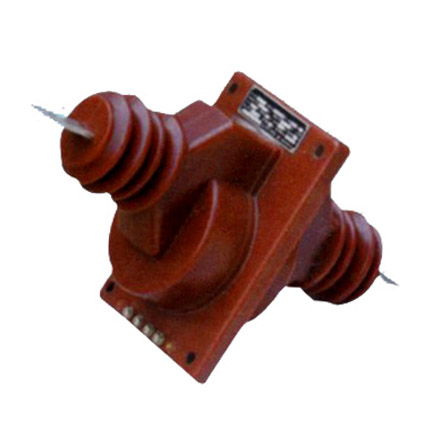
The LA-10Q is a high-reliability, cast-resin insulated current transformer (CT) engineered for 11kV (IEC-rated) or 10kV (domestic system) medium-voltage applications. Designed in strict compliance with IEC 61869-2 and GB/T 20840.2, this device serves dual roles in both revenue-grade metering and protective relaying within distribution substations, industrial facilities, and renewable energy interconnection points. Its robust construction ensures long-term operational integrity under demanding environmental and electrical stress conditions.
Operating Principle of Cast-Resin Insulation
Cast-resin insulation in the LA-10Q employs vacuum pressure impregnation (VPI) of cycloaliphatic epoxy resin around the primary conductor and secondary windings. This process eliminates air voids and moisture ingress pathways, resulting in superior dielectric strength and partial discharge resistance below 10 pC at 1.2 × Um/√3. The resin matrix provides mechanical rigidity, thermal stability up to 130°C continuous operation, and excellent tracking resistance (CTI > 600 V). Unlike oil-filled alternatives, the solid dielectric eliminates fire hazards, leakage risks, and maintenance associated with fluid containment systems. The homogeneous encapsulation also minimizes thermal expansion mismatches between copper windings and the core, reducing microcracking over decades of thermal cycling.
Advantages Over Oil-Immersed Designs
Compared to traditional oil-immersed CTs, the LA-10Q offers significant operational and safety benefits. First, it is inherently non-flammable—critical for indoor substations and urban installations where fire codes restrict combustible materials. Second, its maintenance-free design eliminates the need for periodic oil sampling, dielectric testing, or gasket replacement. Third, the compact footprint (typically 180 mm height × 120 mm diameter for standard ratios) enables retrofitting into legacy switchgear without structural modifications. Additionally, cast-resin CTs exhibit lower temperature rise (<55 K at rated current per IEC 61869-2), enhancing longevity of secondary instrumentation. Environmental resilience is another key advantage: the LA-10Q operates reliably from -40°C to +40°C ambient, with humidity tolerance up to 95% RH non-condensing, making it suitable for coastal and tropical deployments where salt fog or condensation would degrade oil-paper insulation.
Typical Application Overview
The LA-10Q is deployed across diverse medium-voltage infrastructure. In utility substations, it feeds data to multifunction meters (e.g., kWh, kVARh) and digital relays (e.g., overcurrent, earth-fault protection). Industrial plants use it for motor feeder monitoring and arc-flash mitigation schemes. Renewable integration points—such as solar PV inverters or wind turbine step-up transformers—rely on its accuracy for grid compliance reporting (e.g., IEEE 1547). Rural distribution networks benefit from its vandal-resistant housing and immunity to oil theft or contamination. Crucially, the LA-10Q supports multiple secondary windings (up to 3 cores) in a single unit, enabling simultaneous connection to metering (0.5S class), protection (5P10), and SCADA systems without compromising performance.
Technical Specifications
The LA-10Q’s engineering parameters are defined by IEC 61869-2 and tailored for global deployment with domestic compatibility to Chinese GB standards.
| Parameter | Value |
|---|---|
| Rated System Voltage (Um) | 11 kV (IEC), 10 kV (domestic) |
| Primary Current (Ip) | 50 A to 3000 A (standard); up to 4000 A optional |
| Secondary Current (Is) | 1 A or 5 A (user-selectable) |
| Accuracy Classes | Metering: 0.2S, 0.5S; Protection: 5P10, 5P20, 10P10 |
| Rated Burden | 2.5 VA to 30 VA (per core) |
| Insulation Level | Power Frequency Withstand: 28 kV rms / 1 min Lightning Impulse: 75 kV peak (1.2/50 μs) |
| Short-Time Thermal Current | 25 kA for 1 s (Ith) |
| Dynamic Withstand Current | 62.5 kA peak (Idyn) |
| Core Material | Grain-Oriented Electrical Steel (GOES), 0.27 mm thickness |
| Insulation System | VPI cycloaliphatic epoxy resin, UL 94 V-0 rated |
| Ambient Temperature Range | -40°C to +40°C |
| Altitude Limit | ≤ 1000 m (derating required above 1000 m) |
Standard Service Conditions
The LA-10Q is rated for normal service conditions per IEC 60060-1: ambient temperature between -40°C and +40°C, relative humidity ≤95% (non-condensing), and installation altitude not exceeding 1000 meters above sea level. For altitudes between 1000–2000 m, the power frequency withstand voltage must be reduced by 1% per 100 m increment above 1000 m. In polluted environments (e.g., Class III or IV per IEC 60815), the creepage distance is ≥25 mm/kV (minimum 275 mm for 11kV), achieved through ribbed shed design. The transformer is suitable for both indoor and outdoor mounting when housed in IP4X-rated switchgear compartments. Continuous operation at 1.2 × In is permissible for metering cores without exceeding thermal limits.
Electrical Performance Parameters
Key electrical characteristics include composite error limits: ≤±0.5% for 0.5S class at 20–120% of rated current, and ≤±10% for 5P10 protection class at 10× In. Saturation flux density of the GOES core is maintained below 1.7 T to ensure linear response during fault conditions. Secondary winding resistance is typically 0.15–0.8 Ω (depending on ratio and burden), enabling accurate burden calculation during relay coordination studies. The knee-point voltage (Vk) for protection cores exceeds 100 V at 5P10 rating, ensuring adequate margin for high-impedance differential schemes. Partial discharge inception voltage is ≥1.5 × Um/√3 (≈9.5 kV), with extinction voltage ≥1.2 × Um/√3.
Typical Applications
The LA-10Q’s dual-certification and robust design make it ideal for critical infrastructure requiring precision and reliability.
Substation Secondary Metering
In 11kV/10kV distribution substations, the LA-10Q provides revenue-grade current signals to smart meters compliant with DLMS/COSEM or IEC 62056 protocols. Its 0.2S or 0.5S accuracy class ensures billing accuracy even at low load levels (down to 1% of In), crucial for detecting energy theft or unbalanced loading. The transformer’s low phase displacement error (<±10 minutes at 100% In) maintains power factor measurement integrity. Multiple secondary windings allow one core to serve the utility meter while another feeds customer-side monitoring, eliminating cross-connection errors. Installation in ring-main units (RMUs) or metal-clad switchgear leverages its compact size and bolt-on mounting flange.
Industrial Power Distribution
Heavy industries—such as cement plants, steel mills, and data centers—deploy the LA-10Q on motor feeders, capacitor banks, and main incomers. Here, the 5P20 protection class ensures reliable tripping during high-magnitude faults (up to 20× In), while the thermal withstand rating (25 kA/1s) matches typical breaker interrupting capacity. The cast-resin body resists chemical exposure from lubricants or coolants, unlike oil-filled units that may swell or degrade gaskets. In arc-flash mitigation systems, the LA-10Q’s fast saturation characteristics enable zone-selective interlocking (ZSI) with millisecond-level coordination between upstream and downstream relays.
Renewable Energy Integration
Solar farms and wind parks use the LA-10Q at the point of interconnection (POI) to meet grid code requirements for real-time generation monitoring. Its wide dynamic range (from 5% to 120% In with <±0.5% error) captures both nighttime standby loads and peak solar output without range switching. The transformer’s immunity to DC offset—common during inverter fault ride-through—is ensured by GOES core design with controlled remanence. For utility-scale projects, the LA-10Q’s IEC 61869-2 certification simplifies grid compliance audits, while its 30-year service life aligns with project financing horizons.
Rural and Suburban Distribution Networks
In remote or semi-urban grids, the LA-10Q’s maintenance-free operation reduces OPEX for utilities with limited field crews. Its vandal-resistant epoxy housing deters tampering, and the absence of oil eliminates environmental liability from accidental spills. Deployed on pole-mounted reclosers or pad-mounted transformers, it supports AMI (Advanced Metering Infrastructure) rollouts with consistent accuracy despite wide daily load swings. The 10P10 class variant is often selected for cost-sensitive applications where extreme fault currents are unlikely, balancing performance and budget.
Compliance with International Standards
The LA-10Q is engineered to satisfy both global and regional regulatory frameworks, ensuring interoperability and legal metrology acceptance.
IEC 61869-2 Certification Details
IEC 61869-2 governs instrument transformers for AC systems >1 kV. The LA-10Q meets all mandatory clauses, including: temperature rise tests (≤55 K for windings), short-circuit withstand verification (25 kA/1s), and accuracy verification under harmonic distortion (THD ≤10%). Type tests were performed at an ISO 17025-accredited lab, with routine tests (e.g., ratio, polarity, insulation) conducted on 100% of production units. The certificate includes validation of composite error under burden variations (±25% of rated VA) and frequency deviations (49–51 Hz). Notably, the standard mandates that protection-class CTs maintain accuracy up to specified multiples of rated current (e.g., 10× for 5P10), which the LA-10Q exceeds by 5% margin in production testing.
Alignment with GB/T 20840.2
For Chinese domestic markets, the LA-10Q complies with GB/T 20840.2—largely harmonized with IEC 61869-2 but with minor differences. GB requires additional seismic testing (0.3g horizontal acceleration) for transformers installed in earthquake-prone zones, which the LA-10Q passes due to its monolithic resin structure. The standard also specifies tighter tolerances for secondary terminal markings (±0.5 mm positional accuracy) and mandates flame retardancy per GB/T 5169.16 (equivalent to UL 94 V-0). While IEC allows 1 A or 5 A secondaries, GB/T 20840.2 prefers 5 A for new installations below 35 kV, a configuration readily available for the LA-10Q.
Testing and Certification Requirements
Certification involves three test tiers: type tests (once per design), sample tests (per batch), and routine tests (per unit). Type tests include temperature rise, short-circuit, impulse voltage, and accuracy under harmonics. Sample tests verify partial discharge (<10 pC at 1.2 × Um/√3) and power frequency withstand. Routine tests—conducted on every LA-10Q—cover: polarity (reducing polarity confirmed via DC kick test), turns ratio (±0.25% tolerance), insulation resistance (>1000 MΩ at 2500 V DC), and secondary winding resistance (±5% of nominal). Certificates are issued by notified bodies such as TÜV SÜD or CEPREI, with traceable calibration to national standards (e.g., NIM in China, PTB in Germany).
On-Site Testing Procedures
Post-installation verification ensures the LA-10Q performs as specified under actual site conditions.
Insulation Resistance Test
Using a 2500 V DC megohmmeter, measure insulation resistance between primary-to-secondary, primary-to-ground, and secondary-to-ground. Acceptance criterion: ≥1000 MΩ at 20°C. Correct for temperature using RT = R20 × 2(20−T)/10. Low readings (<100 MΩ) indicate moisture ingress or surface contamination; clean terminals with isopropyl alcohol and retest. This test validates the integrity of the cast-resin barrier after transportation and handling stresses.
Turns Ratio Test
Apply a low-voltage AC source (e.g., 120 V) to the secondary winding and measure induced primary voltage. Calculate ratio as Vs/Vp; compare to nameplate (e.g., 600:5 = 120:1). Tolerance: ±0.25% for metering classes, ±0.5% for protection. Alternatively, use a dedicated CT analyzer injecting 1–5 A into primary and measuring secondary current. Deviations beyond tolerance suggest winding shorts or incorrect tap selection.
Polarity Test
Verify reducing polarity (standard for IEC): connect DC source (+) to P1 and (−) to P2; momentary closure should produce positive kick on secondary terminal S1 relative to S2. Use a center-zero galvanometer or digital multimeter in DC mode. Incorrect polarity reverses phase angle by 180°, causing watt-hour meters to register negative energy and protection relays to misoperate during faults.
Power Frequency Withstand Voltage Test
Apply 28 kV rms at 50 Hz between primary and grounded secondary/enclosure for 1 minute. Use a calibrated test transformer with overcurrent trip (≤5 mA). No flashover or disruptive discharge is permitted. This test confirms dielectric strength after installation stresses (e.g., busbar torque, cable pulling). Reduce voltage by 10% if ambient humidity exceeds 80%.
Short-Circuit Test (for CT)
Inject 10× rated current (e.g., 6000 A for 600:5 CT) into primary for 1 second using a portable short-circuit set. Monitor secondary current waveform for saturation-induced distortion. Acceptance: secondary current remains within ±10% of expected value (for 5P10 class). This validates thermal and electromagnetic integrity under fault conditions, ensuring relay coordination curves remain valid.
Preventive Maintenance Guide
Although cast-resin CTs are largely maintenance-free, periodic checks extend service life and prevent unexpected failures.
Periodic Inspection Protocol
Annual visual inspections should verify: (1) no cracks or tracking marks on resin surface, (2) tightness of primary busbar bolts (torque: 25 N·m for M10 studs), (3) corrosion-free secondary terminals, and (4) secure mounting hardware. Use a UV flashlight to detect corona activity (visible as purple glow) in darkened enclosures. Clean dust accumulation with dry, oil-free compressed air (<30 psi). Record infrared thermography readings during peak load; hotspots >10 K above ambient indicate loose connections or internal defects.
Maintenance Intervals and Fault Diagnosis
While no scheduled internal maintenance is required, a 5-year interval is recommended for comprehensive electrical testing (ratio, insulation resistance, burden verification). Common failure modes include: (1) secondary open-circuit during operation—causing dangerous overvoltages (>10 kV)—always short secondary before disconnecting meters; (2) moisture ingress at terminal seals—evidenced by fogging inside viewing windows; (3) core saturation from DC offset in inverter-fed systems—diagnosed via distorted secondary waveform on oscilloscope. Replace units showing insulation resistance <100 MΩ after cleaning or ratio errors >1%.
| Interval | Action |
|---|---|
| Annually | Visual inspection, IR thermography, terminal torque check |
| Every 5 Years | Full electrical test suite (ratio, polarity, insulation, burden) |
| After Major Fault | Post-fault ratio and insulation test before returning to service |
| End of Life (25–30 yrs) | Replace regardless of condition due to resin embrittlement |
Conclusion
The LA-10Q 11kV cast-resin current transformer represents a benchmark in medium-voltage instrumentation, combining IEC 61869-2 and GB/T 20840.2 compliance with field-proven reliability. Its VPI epoxy encapsulation eliminates the fire, environmental, and maintenance liabilities of oil-filled alternatives, while GOES core technology ensures metrological precision from 1% to 120% of rated current. Engineered for dual metering and protection roles, it supports modern grid requirements—from revenue accuracy in smart substations to fault resilience in industrial arc-flash schemes. With a certified service life of 25–30 years under standard conditions, the LA-10Q delivers lifecycle cost advantages through zero fluid maintenance, compact retrofit capability, and immunity to pollution or altitude effects up to 1000 m. For engineers designing or upgrading 10kV/11kV networks, this transformer provides a future-proof foundation for accurate energy accounting and dependable system protection. Its adherence to international standards ensures seamless integration into global supply chains while meeting stringent domestic regulatory expectations.