Article Content
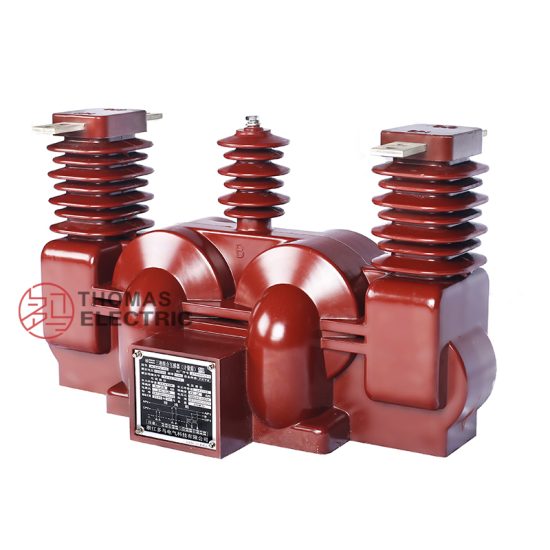
IEC 61869-3 Certified 11kV Voltage Transformer SZV-10K for Metering & Protection Applications
Introduction to the SZV-10K Voltage Transformer
The SZV-10K is a single-phase, indoor/outdoor-rated cast-resin insulated voltage transformer (VT) designed for accurate voltage measurement and reliable protective relay operation in medium-voltage power systems operating at nominal system voltages of 11kV (IEC standard) or 10kV (domestic Chinese grid equivalent). This device transforms high primary voltages to standardized secondary levels—typically 100 V or 100/√3 V—for interfacing with metering instruments, revenue-grade energy meters, and protective relays. Its design adheres strictly to the performance, safety, and environmental requirements outlined in IEC 61869-3 and GB/T 20840.3.
Operating Principle of Cast-Resin Insulation
Cast-resin insulation in the SZV-10K employs vacuum pressure impregnation (VPI) technology using cycloaliphatic epoxy resin systems. The primary and secondary windings, wound on grain-oriented electrical steel (GOES) cores, are fully encapsulated under vacuum to eliminate air voids and moisture ingress. This monolithic structure provides superior dielectric strength, tracking resistance, and mechanical rigidity compared to traditional oil-paper or dry-wound designs. The resin’s high glass transition temperature (>120°C) ensures dimensional stability under thermal cycling, while its hydrophobic nature prevents surface leakage currents in humid or polluted environments. Partial discharge levels are maintained below 10 pC at 1.2 × Ur/√3, as required by IEC 61869-3, ensuring long-term insulation integrity even under transient overvoltages.
Advantages Over Oil-Immersed Designs
Unlike oil-filled VTs, the SZV-10K eliminates fire hazards, environmental contamination risks, and maintenance-intensive oil sampling procedures. It requires no conservator tanks, breather systems, or oil-level monitoring, significantly reducing lifecycle costs. The solid insulation enables compact dimensions—critical for space-constrained switchgear bays—and allows vertical or horizontal mounting without performance degradation. Additionally, cast-resin construction offers higher short-circuit withstand capability due to rigid winding fixation, preventing conductor displacement during fault-induced electromagnetic forces. The absence of flammable materials also permits installation in confined indoor substations without fire suppression systems, complying with IEC 61439-2 enclosure safety requirements.
Typical Application Overview
The SZV-10K is engineered for dual-use applications: precision metering (accuracy classes 0.2 or 0.5) and protective relaying (accuracy class 3P or 6P). It is commonly deployed in 11kV ring main units (RMUs), metal-clad switchgear, and outdoor pole-mounted distribution transformers across utility, industrial, and renewable energy sectors. Its robust design supports continuous operation under harsh conditions—including coastal salinity, desert dust, and tropical humidity—making it suitable for global deployment. With a rated thermal burden of up to 100 VA and a service life exceeding 25 years, the SZV-10K delivers consistent performance without recalibration, ensuring regulatory compliance in revenue metering and system protection schemes.
Technical Specifications
The SZV-10K voltage transformer is engineered to meet stringent electrical, thermal, and mechanical performance criteria under defined service conditions. All parameters align with IEC 61869-3:2011 and GB/T 20840.3-2013 standards.
Rated Electrical Parameters
Primary rated voltage (Ur): 11 kV (IEC) / 10 kV (GB). Secondary rated voltage: 100 V (line-to-line) or 100/√3 V (phase-to-ground). Standard voltage ratios include 11000/100 V, 11000/√3 : 100/√3 V, and 10000/100 V for domestic applications. Accuracy classes available: 0.2, 0.5 for metering; 3P, 6P for protection. Rated output (burden): 10–100 VA per secondary winding, with multiple secondary windings optional (e.g., one for metering, one for protection). Insulation level: Um = 12 kV, LI = 75 kV (lightning impulse), AC = 28 kV (power frequency withstand for 1 min). Temperature rise: ≤ 55 K above ambient at rated load, measured by resistance method per IEC 60076-2.
Standard Service Conditions
Ambient temperature range: –25°C to +40°C (extended range –40°C to +50°C available). Relative humidity: up to 100% at +25°C, with condensation permitted. Altitude: ≤ 1000 m above sea level (derating factor 1.1% per 100 m above 1000 m for insulation clearance). Installation environment: indoor switchgear rooms or outdoor enclosures with IP2X minimum protection. Pollution degree: III (medium conductivity dust, temporary condensation). Seismic rating: 0.25g horizontal acceleration (optional 0.5g for high-seismic zones). These conditions ensure reliable operation in diverse geographic and climatic regions without performance compromise.
Construction and Materials
Core material: CRGO (cold-rolled grain-oriented) silicon steel, 0.27 mm thick, annealed to minimize hysteresis loss. Windings: oxygen-free copper (OFC), Class F insulation (155°C). Encapsulation: flame-retardant cycloaliphatic epoxy resin (UL 94 V-0 rated), filled with silica to reduce thermal expansion mismatch. Primary terminal: M12 stainless steel stud with corona shield. Secondary terminal block: IP54-rated polycarbonate housing with screw-type terminals (max. 2.5 mm² conductor). Overall dimensions: 280 mm (H) × 180 mm (W) × 150 mm (D); weight: ~28 kg. Creepage distance: ≥ 240 mm for 11kV class in pollution degree III environments.
Typical Applications
The SZV-10K serves critical roles across modern power infrastructure where accuracy, reliability, and safety are paramount.
Substation Secondary Metering Systems
In 11kV primary substations, the SZV-10K provides isolated, scaled-down voltage signals to revenue-class energy meters (e.g., IEC 62053-22 compliant). Its 0.2-class accuracy ensures billing precision within ±0.2% error at 80–120% of rated voltage and 25–100% of rated burden. For example, in a municipal utility substation feeding a commercial district, two SZV-10K units (connected phase-to-ground) supply 100/√3 V to a three-phase meter, enabling accurate kWh, kVARh, and power factor recording. The cast-resin design prevents oil leaks that could damage sensitive electronics in adjacent meter cabinets, while its low phase displacement (<10 minutes at 0.2 class) maintains vector accuracy for tariff calculations.
Industrial Power Distribution Networks
Heavy industries—such as steel mills, chemical plants, and data centers—use the SZV-10K for both process monitoring and equipment protection. In a 10kV motor control center (MCC), an SZV-10K with 6P accuracy feeds undervoltage relays that trip motors during grid sags, preventing mechanical damage. Simultaneously, a second secondary winding (0.5 class) supplies voltage inputs to power quality analyzers tracking harmonics and flicker. The VT’s high saturation point (>2.0 × Ur) ensures linear response during motor starting inrush, avoiding false relay operations. Its compact size allows retrofit into legacy switchgear without panel modifications.
Renewable Energy Integration
Solar farms and wind parks operating at 11kV collector voltages rely on the SZV-10K for grid synchronization and anti-islanding protection. During cloud-induced irradiance fluctuations, rapid voltage swings occur; the SZV-10K’s low leakage inductance (<5 µH) and fast transient response (<1 ms settling time) enable precise real-time voltage measurement for inverter control algorithms. In a 20 MW solar plant, SZV-10K units at each string combiner box feed synchrophasors to a SCADA system, ensuring compliance with IEEE 1547 grid interconnection standards. The resin’s UV-stabilized formulation resists degradation under prolonged outdoor exposure.
Rural and Suburban Distribution Networks
For utilities deploying smart grids in remote areas, the SZV-10K’s maintenance-free operation reduces operational expenditure. Mounted on 11kV poles or pad-mounted transformers, it interfaces with remote terminal units (RTUs) for voltage regulation and outage detection. In mountainous regions with altitudes up to 2000 m, derated units maintain insulation integrity despite reduced air density. Its immunity to oil freezing (a common failure mode in cold climates for oil-filled VTs) ensures year-round reliability. A typical rural feeder uses three SZV-10K units (one per phase) to monitor voltage drop along extended lines, triggering capacitor bank switching when V < 0.95 p.u.
Harsh Environment Installations
In coastal or industrial zones with high salt fog or chemical emissions, the SZV-10K’s hydrophobic resin surface prevents electrolytic tracking. Unlike porcelain-insulated VTs, which require frequent washing, the cast-resin body resists surface degradation for decades. For instance, in a petrochemical refinery near the Gulf Coast, SZV-10K units operate continuously in Zone 2 hazardous areas (ATEX compliant variants available), providing explosion-proof voltage sensing for emergency shutdown systems. Their non-hygroscopic nature eliminates internal condensation, a key failure cause in tropical climates.
Compliance with International Standards
The SZV-10K is certified to IEC 61869-3:2011 (“Instrument transformers – Part 3: Additional requirements for inductive voltage transformers”) and fully aligned with China’s GB/T 20840.3-2013 standard.
IEC 61869-3 Compliance Details
IEC 61869-3 defines performance envelopes for accuracy, temperature rise, insulation coordination, and short-circuit behavior. The SZV-10K meets all mandatory clauses: voltage error ≤ ±0.2% and phase displacement ≤ ±10′ for 0.2 class at 0.8–1.2 Ur and 0.25–1.0 Srated; thermal stability verified at 1.2 × Ur for 8 hours; partial discharge <10 pC at 1.2 × Ur/√3. Dielectric tests include 28 kV AC for 1 min (wet and dry) and 75 kV lightning impulse (1.2/50 µs wave). Short-circuit withstand is validated by applying 25 × In for 1 s without damage—critical for protection-grade windings during downstream faults.
GB/T 20840.3 Alignment and Differences
GB/T 20840.3 mirrors IEC 61869-3 but includes localized requirements: primary voltage tolerance is ±5% for 10kV systems (vs. ±10% in IEC for 11kV); creepage distance must be ≥ 20 mm/kV for pollution degree III (vs. IEC’s 18 mm/kV); and altitude correction factors are more conservative above 1000 m. The SZV-10K’s dual-rating (10kV/11kV) accommodates both standards. Notably, GB mandates additional vibration testing (5–50 Hz sweep, 0.15 mm amplitude) for seismic resilience—a requirement met via reinforced core clamping and resin anchoring.
Testing and Certification Requirements
Each SZV-10K undergoes type tests (per IEC 61869-1), routine tests (100% production), and sample tests. Type tests include temperature rise (by mutual impedance method), short-circuit withstand, and impulse voltage distribution. Routine tests: polarity check, turns ratio verification (±0.2% tolerance), insulation resistance (>1000 MΩ at 2500 V DC), and power frequency withstand. Certification is issued by accredited labs (e.g., KEMA, CESI, or CEPREI) with test reports traceable to SI units.
On-Site Testing Procedures
Post-installation verification ensures the SZV-10K performs within specification before energization.
Insulation Resistance Test
Using a 2500 V DC megohmmeter, measure insulation resistance between primary winding and ground, and between primary and secondary windings. Acceptance criterion: ≥1000 MΩ at 20°C. Correct for temperature using RT2 = RT1 × 2(T1–T2)/10. Low values indicate moisture ingress or resin cracking. Perform before and after dielectric tests to detect insulation degradation.
Turns Ratio Test
Apply a low-voltage AC source (50–100 V) to the primary and measure secondary voltage with a calibrated voltmeter. Calculate actual ratio: Vp/Vs. Compare to nameplate ratio; tolerance must be within ±0.2% for metering classes, ±0.5% for protection. Use a dedicated ratio tester (e.g., Omicron CT Analyzer) for automated comparison. Deviations >1% suggest inter-turn shorts or winding damage.
Polarity Test
Verify reducing polarity (standard for IEC VTs): connect primary H1 and secondary X1 together. Apply 100 V AC to H1–H2. Measure voltage between H2 and X2. If VH2-X2 = VH1-H2 – VX1-X2, polarity is correct. Incorrect polarity causes 180° phase shift, leading to metering errors or relay misoperation. Document results with oscilloscope traces for audit trails.
Power Frequency Withstand Voltage Test
Apply 28 kV AC (RMS) at 50 Hz between primary and ground (with secondary shorted and grounded) for 1 minute. Use a calibrated test transformer with overcurrent trip (≤1 A). No flashover or disruptive discharge permitted. Reduce voltage gradually post-test to avoid resonant overvoltages. This validates insulation integrity after transportation stresses.
Open-Circuit Characteristic Test
With secondary open, apply 0.1–1.5 × Ur to primary in 0.1 p.u. steps. Record excitation current and secondary voltage. Plot Vs vs. Iexc. Knee point should exceed 1.9 × Ur for 3P/6P classes. Excessive magnetizing current at 1.0 Ur indicates core saturation or shorted turns. This test is critical for protection VTs to ensure linear response during fault overvoltages.
Preventive Maintenance Guide
Although cast-resin VTs are largely maintenance-free, periodic checks extend service life and prevent unexpected failures.
Annual Visual and Electrical Inspection
Inspect for surface cracks, tracking marks, or discoloration on the resin body. Check terminal tightness (torque: 5 N·m for M4 screws). Clean dust/salt deposits with dry cloth—never use solvents. Perform insulation resistance and ratio tests annually. Monitor secondary voltage under load; deviations >0.5% from baseline warrant investigation. In high-pollution areas, inspect every 6 months.
Five-Year Comprehensive Maintenance
Conduct full suite of on-site tests (as in Section 5). Verify grounding continuity (<0.1 Ω resistance). Inspect mounting hardware for corrosion. Review historical test data for trends—e.g., rising excitation current suggests core aging. Replace if partial discharge exceeds 20 pC (measured with portable PD detector).
Categories
Blog
Recommended Posts


