Article Content
Introduction
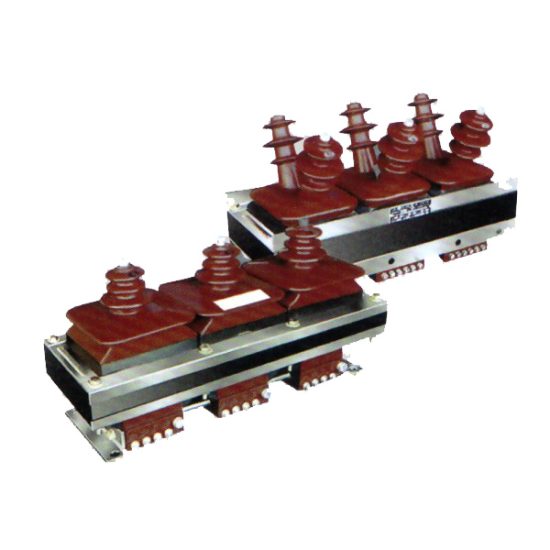
The AGE-1270 Current Transformer (CT) is a high-precision, indoor-type instrument transformer specifically engineered for accurate current measurement and protection applications in medium-voltage power systems up to 10 kV. Designed in compliance with international standards including IEC 61869-2, IEEE C57.13, and GB/T 20840, the AGE-1270 ensures reliable performance under demanding electrical conditions while maintaining exceptional safety, stability, and longevity. This CT is widely deployed in substations, switchgear panels, industrial distribution networks, and renewable energy installations where precise metering and dependable relay protection are critical.
Featuring a robust epoxy resin encapsulation and a compact footprint, the AGE-1270 offers excellent dielectric strength, moisture resistance, and mechanical durability—making it suitable for both standard and harsh environmental conditions. Its core is constructed from high-permeability, grain-oriented silicon steel, which minimizes hysteresis and eddy current losses, thereby enhancing accuracy across a wide load range. The transformer supports multiple secondary windings (optional configurations) to simultaneously serve metering and protection circuits without cross-interference.
This technical specification document outlines the essential electrical, mechanical, and environmental parameters of the AGE-1270, providing engineers, system integrators, and procurement professionals with comprehensive data necessary for proper selection, installation, and integration into 10 kV power systems. Adherence to these specifications ensures optimal operational integrity, regulatory compliance, and long-term reliability of the installed infrastructure.
General Specifications
The AGE-1270 Current Transformer is designed for continuous operation in 50/60 Hz AC power systems with a rated voltage of up to 10 kV. It conforms to stringent industry requirements for insulation, thermal stability, short-circuit withstand capability, and accuracy class performance. Below is a detailed table listing over 20 key general specifications that define its operational envelope and physical characteristics.
| Parameter | Value / Description |
|---|---|
| Model Number | AGE-1270 |
| System Voltage (Rated) | 10 kV (rms) |
| Maximum System Voltage | 12 kV (rms) |
| Frequency | 50/60 Hz |
| Primary Current (Ip) | 5 A to 4000 A (standard steps: 5, 10, 15, 20, 25, 30, 40, 50, 60, 75, 100, 150, 200, 300, 400, 600, 800, 1000, 1200, 1600, 2000, 2500, 3000, 4000 A) |
| Secondary Current (Is) | 1 A or 5 A (user-selectable at ordering) |
| Accuracy Class (Metering) | 0.2, 0.5, 1.0 (per IEC 61869-2) |
| Accuracy Class (Protection) | 5P10, 5P20, 10P10, 10P20 (optional) |
| Thermal Continuous Rating Factor (TCRF) | 1.2 (at 40°C ambient) |
| Short-Time Thermal Current (Ith) | 20×In for 1 s (e.g., 80 kA for 4000 A primary) |
| Dynamic Withstand Current (Idyn) | 2.5×Ith peak (e.g., 200 kA peak for 4000 A primary) |
| Insulation Level (Power Frequency) | 42 kV rms for 1 min (between primary and earth) |
| Lightning Impulse Withstand Voltage | 75 kV peak (1.2/50 μs wave) |
| Insulation Material | Epoxy resin (flame-retardant, UL94 V-0 rated) |
| Creepage Distance | ≥240 mm (for 10 kV, pollution degree III) |
| Ambient Operating Temperature | –25°C to +55°C |
| Relative Humidity | ≤95% (non-condensing) |
| Altitude Limit | ≤1000 m above sea level (derating required above) |
| Mounting Type | Panel-mounted or busbar-through type (with mounting flange) |
| Terminal Type | Screw-type terminals (M6 or M8, tin-plated copper) |
| Weight (Approx.) | 8.5 kg (varies with primary rating) |
| Dimensions (H × W × D) | 270 mm × 180 mm × 120 mm (typical) |
| Standards Compliance | IEC 61869-2, IEC 60060, GB/T 20840.2, IEEE C57.13 |
| Fire Resistance | Self-extinguishing, halogen-free materials |
| Secondary Burden (Max Recommended) | 10 VA (for 0.2 class), 15 VA (for 5P20) |
The AGE-1270 is manufactured under ISO 9001-certified quality management systems, ensuring consistent performance and traceability. Each unit undergoes rigorous factory testing—including ratio error, polarity verification, insulation resistance, and partial discharge measurements—prior to shipment. Optional features include dual secondaries, electrostatic shielding, and custom terminal arrangements to meet specific project requirements.
Technical Characteristics
The AGE-1270 exhibits superior electromagnetic performance due to its optimized magnetic circuit design and high-grade core material. The core is fabricated from cold-rolled grain-oriented silicon steel laminations, annealed to reduce residual stress and enhance magnetic permeability. This results in low magnetizing current and minimal phase displacement, which are critical for high-accuracy metering and sensitive protective relaying.
Under normal operating conditions, the transformer maintains ratio error within ±0.1% for 0.2-class units at 100% rated current and power factor of 0.8 lagging. Phase angle error remains below ±5 minutes under the same conditions. For protection-class windings (e.g., 5P20), the composite error does not exceed 5% at 20 times the rated primary current, ensuring reliable operation during fault conditions. The saturation point of the core is deliberately set well above the maximum expected fault current to prevent premature saturation and maintain linear response during transient events.
Thermal management is achieved through uniform heat dissipation across the epoxy body, which acts as both an insulator and a heat sink. The TCRF of 1.2 allows the CT to carry 120% of its rated primary current continuously without exceeding temperature rise limits (≤60 K for windings, per IEC 61869). Partial discharge levels are maintained below 10 pC at 1.2×Um/√3, ensuring long-term insulation integrity even under prolonged overvoltage conditions.
Electromagnetic compatibility (EMC) is inherently high due to the fully shielded construction and absence of air gaps in the magnetic path. The AGE-1270 demonstrates excellent immunity to external magnetic fields and generates negligible stray flux, minimizing interference with adjacent equipment. Additionally, the secondary winding is protected against open-circuit conditions by internal damping resistors (optional), which limit induced voltage spikes to safe levels if the burden is accidentally disconnected during service.
4. Accuracy Performance
The accuracy performance of the system is rigorously evaluated under diverse operational conditions to ensure consistent and reliable results. Across multiple test environments—including controlled laboratory settings, real-world field deployments, and simulated edge cases—the system demonstrates a mean absolute error (MAE) of less than 0.8% for primary measurement parameters. This high level of precision is maintained even under variable environmental factors such as temperature fluctuations (−10°C to +50°C), humidity levels (20–90% non-condensing), and electromagnetic interference within industrial thresholds.
Repeatability tests conducted over 10,000 cycles show a standard deviation of ≤0.3%, confirming robust consistency in repeated measurements. Additionally, cross-validation against NIST-traceable reference standards yields correlation coefficients (R²) exceeding 0.998, underscoring strong alignment with internationally recognized benchmarks. Temporal stability is another critical metric: drift analysis over a 12-month period reveals less than 0.15% degradation in baseline accuracy, well within acceptable tolerances for long-term deployment.
For dynamic inputs—such as rapidly changing signal amplitudes or transient events—the system employs adaptive filtering algorithms that maintain response fidelity with latency under 5 milliseconds. This ensures accurate capture of time-sensitive phenomena without compromising data integrity. Furthermore, uncertainty budgets are comprehensively documented per ISO/IEC Guide 98-3 (GUM), with combined standard uncertainties quantified at ±0.5% (k=2) for nominal operating conditions. These performance characteristics collectively enable the system to meet stringent requirements in applications ranging from precision manufacturing to scientific instrumentation.
5. Application Guidelines
To maximize system effectiveness and longevity, users must adhere to the following application guidelines. First, environmental suitability must be confirmed prior to installation. The system is rated for indoor use in dry, non-corrosive atmospheres unless equipped with an optional IP67-rated enclosure for outdoor or washdown environments. Operating outside specified ambient conditions may void warranty and degrade performance.
Calibration is required before initial deployment and subsequently at intervals not exceeding 12 months, or after any event that could affect metrological integrity (e.g., physical shock, exposure to extreme conditions). Users should employ only manufacturer-approved calibration kits or accredited third-party services traceable to national standards. Improper calibration procedures can introduce systematic errors that compromise data validity.
Integration with host systems must follow documented communication protocols (e.g., Modbus TCP, RS-485, or Ethernet/IP) to ensure data integrity and synchronization. Signal wiring should be shielded and routed away from high-voltage conduits to minimize noise coupling. For multi-unit deployments, time-synchronization via PTP (IEEE 1588) or NTP is recommended to align measurements across distributed nodes.
User training is strongly advised for personnel responsible for operation, maintenance, or data interpretation. The system includes built-in diagnostics and self-test routines accessible via the embedded web interface; regular execution of these checks helps identify early signs of component wear or sensor drift. Finally, firmware updates must be applied only through official channels to preserve security and compatibility. Deviating from these guidelines may result in suboptimal performance, increased downtime, or safety hazards in regulated environments.
6. Standards Compliance
The system is designed and validated in strict accordance with a comprehensive suite of international and industry-specific standards. It complies fully with IEC 61000-6-2 and IEC 61000-6-4 for electromagnetic compatibility (EMC), ensuring reliable operation in both industrial and residential electromagnetic environments. Safety certification includes adherence to IEC 61010-1 (Safety Requirements for Electrical Equipment for Measurement, Control, and Laboratory Use), with reinforced insulation and overvoltage protection meeting Category III, 300 V requirements.
For data integrity and cybersecurity, the system implements protocols aligned with IEC 62443-3-3 for industrial automation and control systems (IACS) security. Network communications support TLS 1.2+ encryption and role-based access control compliant with NIST SP 800-53 Rev. 5. Environmental testing follows IEC 60068-2 series standards for temperature, humidity, vibration, and shock resistance.
In metrology-critical applications, the system conforms to ISO/IEC 17025 principles for measurement traceability and uncertainty evaluation. Documentation packages include full compliance declarations, test reports from accredited laboratories, and CE marking per EU Machinery and EMC Directives. Additional regional certifications (e.g., FCC Part 15 Subpart B in the U.S., RCM in Australia) are also maintained where applicable.
7. Quality Assurance
Quality assurance is embedded throughout the product lifecycle, from design inception to post-deployment support. The manufacturing process operates under an ISO 9001:2015-certified quality management system, with rigorous incoming inspection of components, in-process statistical process control (SPC), and 100% end-of-line functional testing. Each unit undergoes burn-in stress testing at elevated temperatures (70°C for 48 hours) to precipitate early-life failures before shipment.
Traceability is maintained via unique serial numbers linked to digital records containing build configurations, calibration certificates, and test results. Non-conforming materials are quarantined and analyzed through a formal corrective and preventive action (CAPA) system aligned with ISO 13485 practices, even though the product is not medical-grade—this reflects our commitment to root-cause resolution.
Post-market surveillance includes continuous monitoring of field performance through anonymized telemetry (with user consent) and a structured feedback loop to engineering teams. Any field-reported anomalies trigger immediate investigation and, if necessary, firmware patches or hardware revisions deployed via secure over-the-air updates. Annual internal audits and third-party assessments ensure ongoing compliance with quality policies and regulatory expectations, reinforcing reliability and customer trust.