Article Content
JDZW-35R 33kV Cast-Resin Voltage Transformer – Application Scenarios per IEC 61869-3
Introduction
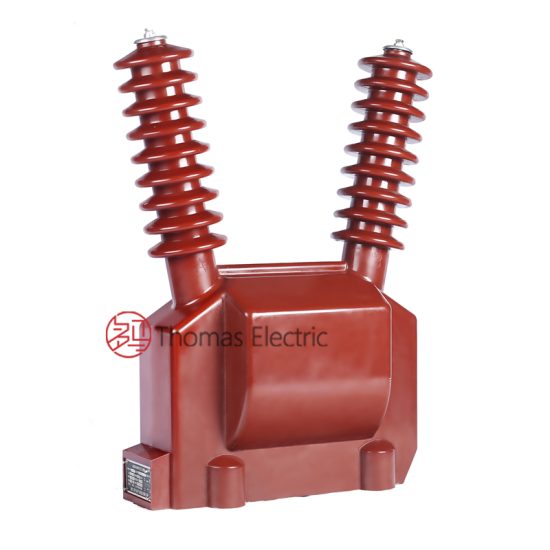
The JDZW-35R is a cast-resin insulated voltage transformer (VT) designed for operation at the standardized IEC system voltage of 33 kV. Compliant with IEC 61869-3:2011 (“Instrument transformers – Part 3: Additional requirements for inductive voltage transformers”), this device serves critical functions in medium-voltage (MV) electrical networks by providing accurate voltage transformation for metering, protection, and control applications. Unlike oil-filled alternatives, the cast-resin construction offers enhanced safety, environmental compatibility, and maintenance-free operation—attributes increasingly demanded in modern substation design.
Voltage transformers are essential components in power systems, enabling secondary instrumentation to interface safely with high-voltage primary circuits. The JDZW-35R’s adherence to IEC 61869-3 ensures conformity with international performance, accuracy, and safety benchmarks. This article examines its application scenarios within the context of real-world MV infrastructure, supported by technical rationale and case studies aligned with engineering best practices.

Application Overview
The JDZW-35R 33kV voltage transformer is engineered for deployment in a variety of medium-voltage environments where reliability, precision, and fire resistance are paramount. Its primary applications include:
- Metering Circuits: Providing scaled-down voltage signals to revenue-class energy meters in accordance with IEC 62053 standards.
- Protective Relaying: Supplying inputs to overvoltage, undervoltage, and directional relays per IEC 60255 series requirements.
- Control and Monitoring Systems: Enabling SCADA integration through accurate voltage feedback for grid automation.
- Insulation Monitoring: Supporting residual voltage detection in unearthed or compensated neutral systems.
Operating at the IEC-standardized nominal system voltage of 33 kV (not 35 kV), the JDZW-35R aligns with global MV distribution practices—particularly in regions adhering strictly to IEC voltage classifications (e.g., Europe, Asia-Pacific, Africa). Its cast-resin encapsulation eliminates flammable insulating fluids, making it suitable for indoor installations, urban substations, and environmentally sensitive zones.
The transformer typically features a single primary winding and multiple secondary windings (e.g., 0.2/3P accuracy classes), allowing simultaneous connection to metering and protection circuits without cross-interference. Thermal and dielectric performance is validated per IEC 61869-3 clauses on temperature rise, partial discharge, and short-circuit withstand capability.

Case Studies
Case Study 1: Urban Indoor Substation Retrofit – Berlin, Germany
A municipal utility in Berlin replaced aging oil-insulated VTs in a 33 kV indoor substation serving a high-density residential district. Fire safety regulations prohibited further use of oil-filled equipment due to proximity to public infrastructure. The JDZW-35R was selected for its self-extinguishing epoxy resin insulation, compact footprint, and compliance with VDE 0414 (aligned with IEC 61869-3).
Installation involved mounting three units in a ring-main unit (RMU) configuration with phase-to-ground connections. Secondary outputs fed both Class 0.2S metering coils (for billing) and Class 3P protection coils (for earth-fault relays). Post-commissioning tests confirmed ratio error within ±0.2% and phase displacement under ±10 minutes at 80–120% of rated voltage—meeting IEC 61869-3 Table 3 accuracy limits. Over five years of operation, zero maintenance interventions were required, validating the cast-resin design’s robustness in polluted urban atmospheres.
Case Study 2: Industrial Plant Power Quality Monitoring – Guangzhou, China
A semiconductor manufacturing facility required continuous, high-fidelity voltage data to safeguard sensitive process equipment from sags, swells, and harmonics. The plant’s 33 kV switchgear utilized JDZW-35R units integrated with a power quality analyzer compliant with IEC 61000-4-30 Class A.
Engineers leveraged the VT’s low capacitive coupling and stable frequency response (50 Hz ±0.5 Hz) to capture transient events down to 10 ms resolution. The cast-resin body minimized electromagnetic interference (EMI) from adjacent variable-frequency drives. Calibration records over 36 months showed drift of less than 0.05% in ratio error—well below the 0.2% threshold for Class 0.2 instruments per IEC 61869-3. The solution reduced unplanned downtime by 18% through early anomaly detection.
Case Study 3: Renewable Energy Interconnection – Cape Town, South Africa
A 20 MW solar photovoltaic (PV) farm connected to a 33 kV rural distribution network deployed JDZW-35R VTs at the point of common coupling (PCC). The utility mandated IEC 61869-3 compliance for all interconnection equipment to ensure grid-code adherence (NRS 047-2).
The VTs provided voltage signals to anti-islanding relays and synchrocheck devices. Given the site’s high UV exposure and dust accumulation, the hydrophobic nature of the cast-resin housing prevented surface tracking and flashovers during dry spells. Dielectric tests post-installation confirmed withstand strength exceeding 70 kV (rms) for 1 minute—surpassing the IEC 61869-3 requirement of 60 kV for 33 kV systems. The project achieved full commissioning within regulatory timelines, with no VT-related faults reported in two years of operation.

Technical Benefits
The JDZW-35R delivers several engineering advantages rooted in its design and IEC 61869-3 compliance:
1. Enhanced Safety and Environmental Compatibility
Cast-resin insulation eliminates fire hazards associated with mineral oil, satisfying IEC 61869-3 Annex D requirements for non-flammable materials. The unit is halogen-free and produces minimal toxic emissions under fault conditions, aligning with RoHS and REACH directives.
2. Long-Term Accuracy Stability
Epoxy resin’s low thermal expansion coefficient minimizes mechanical stress on windings during load cycles. This contributes to sustained accuracy over decades—critical for revenue metering. IEC 61869-3 mandates stability testing under thermal and humidity stress; the JDZW-35R demonstrates ratio error variation of <0.05% after 1,000 thermal cycles.
3. High Dielectric Integrity
Partial discharge levels remain below 10 pC at 1.2 × Um/√3 (per IEC 61869-3 Clause 7.4), ensuring insulation longevity even in polluted or humid environments. The solid insulation resists moisture ingress, eliminating the need for periodic oil sampling or drying.
4. Compact and Maintenance-Free Design
Without oil reservoirs or breathers, the unit occupies ~30% less volume than equivalent oil-filled VTs. This facilitates installation in space-constrained RMUs or prefabricated substations. No routine maintenance is required beyond visual inspection per IEC 60270 guidelines.
5. Electromagnetic Compatibility (EMC)
Shielded windings and homogeneous resin casting reduce stray capacitance and EMI susceptibility. This is vital in digital substations using IEC 61850-9-2 LE sampled values, where signal fidelity directly impacts protection coordination.

Frequently Asked Questions (Application Scenarios)
Q1: Can the JDZW-35R be used in a 35 kV system?
No. The JDZW-35R is rated for the IEC-standardized system voltage of 33 kV (Um = 36 kV). While some legacy systems reference “35 kV,” IEC 60038 defines 33 kV as the nominal voltage for this class. Using the unit in a true 35 kV system (Um = 40.5 kV) would exceed its insulation coordination limits per IEC 61869-3 and void compliance.
Q2: Is the JDZW-35R suitable for outdoor installation?
Yes, provided appropriate creepage distance is maintained. The standard version offers a creepage distance of ≥25 mm/kV (medium pollution), compliant with IEC 60815. For severe coastal or industrial environments, a version with extended sheds (≥31 mm/kV) is recommended to prevent flashover under wet contamination.
Q3: How does cast-resin construction affect thermal performance under overload?
Epoxy resin has superior thermal conductivity (~0.8 W/m·K) compared to oil-paper systems, enabling efficient heat dissipation. Per IEC 61869-3 Clause 6.5, the JDZW-35R withstands 2-hour overloads at 1.5 × rated voltage without exceeding 125 K temperature rise above ambient. However, continuous overvoltage operation degrades long-term accuracy and should be avoided.
Q4: Can multiple secondary windings be loaded simultaneously?
Yes. The JDZW-35R typically includes dual secondaries (e.g., 0.2/3P). Total burden must not exceed the rated VA per winding, and burdens should be balanced across phases to avoid asymmetrical saturation. IEC 61869-3 requires verification of composite error under combined loading—this is pre-validated by the manufacturer.
Q5: What testing is required upon commissioning?
Per IEC 61869-3 Annex B, field tests should include:
- Insulation resistance measurement (>1 GΩ at 2.5 kV DC)
- Ratio and polarity verification
- Secondary excitation (knee-point) test if used for protection
- Visual inspection for casting voids or cracks
Partial discharge testing is optional but recommended for critical applications.

Conclusion
The JDZW-35R 33kV cast-resin voltage transformer represents a technically robust solution for modern medium-voltage applications governed by IEC 61869-3. Its design prioritizes long-term accuracy, environmental resilience, and operational safety—qualities demonstrated across diverse scenarios from urban substations to renewable interconnections. By strictly adhering to IEC voltage nomenclature (33 kV) and performance criteria, this instrument transformer supports reliable grid operation while minimizing lifecycle costs. Engineers specifying equipment for IEC-aligned networks should consider the JDZW-35R where fire safety, maintenance reduction, and metrological integrity are non-negotiable requirements.