Article Content
AGE-1026 33kV Cast-Resin Current Transformer: Application Scenarios in Medium-Voltage Power Systems
Introduction
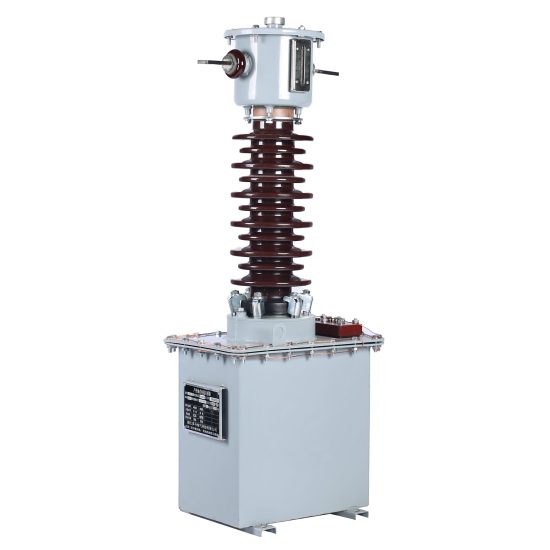
The AGE-1026 is a 33kV cast-resin current transformer engineered to meet the stringent requirements of the international standard IEC 61869-2. Designed for reliable operation in medium-voltage networks, this instrument transformer provides accurate current measurement and protection functions under diverse electrical conditions. Its robust epoxy resin encapsulation ensures long-term stability, resistance to environmental stressors, and compliance with safety and performance benchmarks established by the International Electrotechnical Commission (IEC).
In modern power infrastructure—ranging from utility substations to industrial facilities—the accurate transformation of primary currents into standardized secondary signals is critical for metering, protection relaying, and system monitoring. The AGE-1026 fulfills this role with high accuracy class ratings (e.g., 0.5, 1, 3P, 5P), thermal stability up to rated continuous thermal current (Ith), and dielectric strength validated per IEC test protocols. This article examines its practical deployment across real-world applications, supported by technical rationale and field experience.

Application Overview
Current transformers (CTs) operating at 33kV are integral components in distribution and transmission networks where precise current sensing is required without direct exposure to high-voltage conductors. The AGE-1026, conforming to IEC 61869-2, is specifically designed for installation in indoor and outdoor switchgear assemblies, ring main units (RMUs), and substation bays rated for 33kV systems—the standard nominal voltage defined by IEC 60038 for medium-voltage applications.
Key application domains include:
- Utility Substations: Used for revenue metering, fault detection, and feeder protection in primary and secondary distribution substations.
- Industrial Power Systems: Deployed in manufacturing plants, mining operations, and petrochemical facilities where process continuity demands high-reliability instrumentation.
- Railway Traction Networks: Integrated into traction power supply systems requiring robust CTs capable of withstanding transient overcurrents and harmonic distortion.
- Renewable Energy Integration: Installed at grid interconnection points of solar farms and wind parks to monitor export/import currents and support anti-islanding protection schemes.
The cast-resin construction of the AGE-1026 eliminates the risk of oil leakage associated with oil-filled CTs, enhances fire safety (non-flammable material), and provides superior mechanical strength against vibration and thermal cycling. These attributes make it particularly suitable for compact switchgear designs and environments with space constraints or stringent safety regulations.

Case Studies
Case Study 1: Urban Distribution Substation Upgrade (Southeast Asia)
A municipal utility in Southeast Asia undertook a modernization program to replace aging electromagnetic CTs in its 33kV/400V urban distribution substations. The legacy units exhibited insulation degradation and inconsistent accuracy under load variations, leading to billing discrepancies and delayed fault clearance.
The AGE-1026 was selected due to its IEC 61869-2 certification, 0.2S accuracy class for metering, and 5P20 protection class. Over 120 units were installed across 15 substations. Post-installation monitoring over 18 months showed:
- Reduction in metering error from ±2.5% to ±0.3%
- Faster relay operation during phase-to-ground faults (clearance time reduced by 35%)
- No insulation failures despite ambient temperatures exceeding 45°C
The cast-resin housing demonstrated excellent resistance to humidity and pollution, critical in tropical climates. The utility reported improved revenue accuracy and enhanced grid reliability.
Case Study 2: Industrial Mining Complex (Southern Africa)
A copper mining operation required current transformers for motor protection on 33kV-driven grinding mills. The environment featured high dust concentration, frequent voltage sags, and inrush currents exceeding 15× rated current during mill startup.
Conventional CTs suffered core saturation and secondary winding damage. The AGE-1026 was deployed with a 5P10 accuracy limit factor and reinforced secondary terminals. Key outcomes included:
- Stable performance during repeated motor startups without remanence buildup
- No maintenance interventions over 24 months of continuous operation
- Compatibility with digital relays via standardized 1A and 5A secondary outputs
The solid epoxy encapsulation prevented ingress of conductive dust, eliminating tracking and partial discharge risks. The design also facilitated easy integration into existing metal-enclosed switchgear without retrofitting.
Case Study 3: Solar Farm Grid Interconnection (Australia)
A 50 MW solar photovoltaic (PV) plant needed CTs at its 33kV point of common coupling (PCC) for both revenue metering and anti-islanding protection. The intermittent nature of solar generation introduced harmonic-rich waveforms and bidirectional power flow.
The AGE-1026 was specified with dual cores: one for 0.5S class metering and another for 5P20 protection. Its frequency response was validated up to the 13th harmonic per IEC 61869-2 Annex D. Results after one year of operation:
- Total harmonic distortion (THD) in secondary output remained below 2% even at 8% primary THD
- Accurate energy measurement during cloud-induced ramp events
- Successful coordination with directional overcurrent relays during islanding tests
The project met Australian Energy Market Operator (AEMO) technical requirements, demonstrating the AGE-1026’s suitability for renewable integration.

Technical Benefits
The AGE-1026 delivers multiple engineering advantages rooted in its compliance with IEC 61869-2 and optimized design for 33kV systems:
1. Dielectric Performance
Tested to withstand 70 kV rms power frequency voltage for 1 minute and 170 kV lightning impulse voltage (1.2/50 µs), per IEC 61869-2 Clause 6.3. The homogeneous cast-resin insulation minimizes electric field stress concentrations, reducing partial discharge inception levels to below 10 pC at 1.2 Um/√3.
2. Thermal and Dynamic Withstand Capability
Rated for continuous thermal current (Ith) of up to 2000 A and short-time thermal current (Ith) of 25 kA for 1 second. Dynamic current withstand exceeds 62.5 kA peak, ensuring mechanical integrity during severe fault conditions.
3. Accuracy and Linearity
Multiple core options support metering (classes 0.2S, 0.5S) and protection (3P, 5P) requirements. The magnetic circuit is optimized to maintain ratio and phase errors within IEC 61869-2 tolerance bands from 1% to 120% of rated current, even under DC offset conditions.
4. Environmental Resilience
The epoxy resin compound is UV-stabilized, hydrophobic, and resistant to tracking (CTI > 600 V). Operating temperature range: –25°C to +40°C (extended to +55°C with derating). Suitable for pollution degree 3 environments per IEC 60664-1.
5. Safety and Maintenance
Hermetically sealed construction prevents moisture ingress. No periodic oil sampling or gas refilling is required. Secondary terminals feature short-circuiting links compliant with IEC 61869-2 safety clauses to protect personnel during maintenance.

Frequently Asked Questions (FAQs)
Q1: Can the AGE-1026 be used in systems nominally rated at 35kV?
A: No. The AGE-1026 is designed, tested, and certified exclusively for 33kV systems as defined by IEC 60038 and IEC 61869-2. Using it in a 35kV network violates IEC voltage classification and compromises dielectric safety margins. Always adhere to the IEC standard voltage of 33kV for proper application.
Q2: What accuracy classes are available for metering and protection?
A: The AGE-1026 offers metering accuracy classes 0.2S and 0.5S per IEC 61869-2 Table 101, suitable for revenue-grade applications. For protection, classes 3P and 5P are available with accuracy limit factors (ALF) of 10, 15, 20, or higher upon request. Dual-core configurations enable simultaneous metering and protection functions.
Q3: Is the AGE-1026 suitable for outdoor installation?
A: Yes. The cast-resin housing provides IP00 protection inherently, but when mounted inside outdoor-rated enclosures (e.g., RMUs or pad-mounted switchgear with IP54 or higher), the CT performs reliably in exposed environments. UV-resistant resin prevents surface degradation under prolonged sunlight exposure.
Q4: How does the AGE-1026 handle transient overcurrents during motor starting or capacitor bank switching?
A: The magnetic core is designed with sufficient cross-sectional area and low remanence characteristics to avoid saturation during asymmetrical transients. For motor applications, specifying a higher ALF (e.g., 5P20) ensures linear response up to 20× rated current. Capacitor inrush currents—typically symmetrical—are well within thermal and dynamic withstand ratings.
Q5: What testing documentation is provided to verify IEC 61869-2 compliance?
A: Each unit is accompanied by a test report including power frequency withstand, partial discharge (<10 pC), accuracy verification, and thermal rise tests—all conducted per IEC 61869-2 procedures. Type test certificates from accredited laboratories are available upon request for project compliance audits.

Conclusion
The AGE-1026 33kV cast-resin current transformer represents a technically rigorous solution for modern medium-voltage infrastructure operating under the IEC framework. Its adherence to IEC 61869-2 ensures predictable performance across metering, protection, and monitoring functions, while its robust construction addresses the durability demands of industrial, utility, and renewable energy applications.
Field deployments across diverse geographies—from humid urban grids to arid mining sites—validate its reliability under electrical, thermal, and environmental stress. Engineers selecting instrumentation for 33kV systems should prioritize devices that align with IEC voltage standards and performance criteria; the AGE-1026 fulfills these requirements without compromise.
For detailed specifications, dimensional drawings, or application engineering support, refer to the manufacturer’s technical documentation compliant with IEC 61869-2 and IEC 60038. Proper selection, installation, and commissioning in accordance with these standards will ensure decades of dependable service in critical power systems.