Article Content
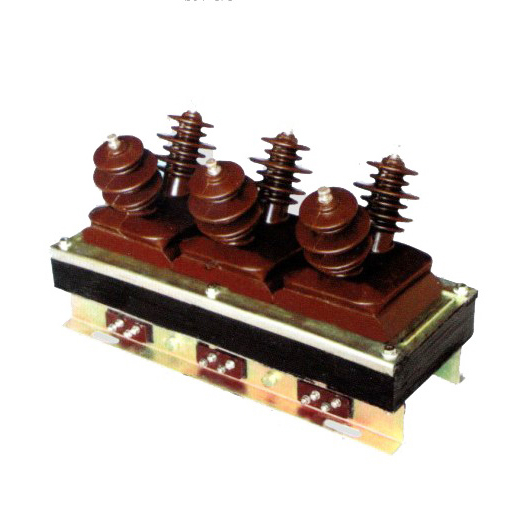
SZW-6 11kV Cast-Resin Voltage Transformer – Application Scenarios per IEC 61869-3
Introduction
The SZW-6 11kV cast-resin voltage transformer (VT) is engineered to meet the stringent requirements of the international standard IEC 61869-3, which governs the performance, safety, and accuracy of inductive voltage transformers used in alternating current (AC) power systems. Designed specifically for the standardized nominal system voltage of 11kV—as defined by IEC 60038—the SZW-6 provides reliable voltage transformation for metering, protection, and monitoring functions in medium-voltage (MV) networks.
Unlike non-standardized alternatives that may reference nominal voltages such as 10kV (common in certain regional practices), this unit adheres strictly to the IEC-specified 11kV system voltage. This ensures interoperability, compatibility with global grid architectures, and compliance with international procurement specifications. The use of epoxy resin encapsulation offers superior dielectric strength, environmental resilience, and fire resistance—critical attributes for indoor and outdoor installations in industrial, utility, and commercial settings.
This article examines the application scenarios of the SZW-6 11kV VT through the lens of real-world engineering deployments, technical advantages derived from its cast-resin construction, and adherence to IEC 61869-3 performance classes. The focus remains on functional utility rather than promotional claims, aligning with professional engineering discourse.

Application Overview
Voltage transformers are essential components in MV power systems, enabling accurate voltage measurement and providing isolation between high-voltage primary circuits and low-voltage secondary instrumentation. The SZW-6 11kV VT is primarily deployed in applications requiring precise voltage scaling for:
- Metering: Revenue-grade energy measurement in distribution substations and industrial facilities.
- Protection: Input signal for overvoltage, undervoltage, and directional protection relays.
- Monitoring and Control: Integration with SCADA systems, power quality analyzers, and automation platforms.
Per IEC 61869-3, the SZW-6 is typically rated with accuracy classes such as 0.2, 0.5, or 3P, depending on the intended function. For instance, class 0.2 is mandated for fiscal metering, whereas class 3P suffices for protective relaying where transient response and phase error tolerance are less stringent.
The 11kV nominal system voltage corresponds to a maximum system voltage of 12kV under IEC 60038, ensuring the transformer’s insulation coordination is validated for both continuous operation and short-duration overvoltages (e.g., switching surges or temporary earth faults). The cast-resin enclosure eliminates the need for oil or gas insulation, reducing maintenance overhead and eliminating environmental hazards associated with liquid-filled units.
Typical secondary outputs include 100 V or 110 V (line-to-line) and 100/√3 V or 110/√3 V (phase-to-earth), conforming to IEC secondary voltage conventions. These standardized outputs facilitate seamless integration with legacy and modern instrumentation without requiring custom scaling hardware.

Case Studies
Case Study 1: Urban Distribution Substation in Western Europe
A municipal utility in Germany upgraded its aging 11kV distribution network to comply with EU grid code mandates requiring enhanced metering accuracy and remote monitoring capabilities. The project involved retrofitting 42 secondary substations with new switchgear incorporating IEC 61869-3-compliant instrumentation.
The SZW-6 11kV VT was selected due to its class 0.2 accuracy for active energy metering and class 3P for backup protection functions. Its compact dimensions allowed direct mounting within SF6-insulated ring main units (RMUs) without redesigning the busbar layout. Over a 24-month operational period, field data confirmed a phase error of ≤ ±10 minutes and ratio error within ±0.15% at 80–120% of rated voltage—well within IEC 61869-3 tolerances.
Critical to the deployment was the transformer’s partial discharge level, measured at <5 pC at 1.2 × Um/√3 (where Um = 12kV), satisfying stringent European environmental and reliability criteria for urban infrastructure.
Case Study 2: Industrial Manufacturing Plant in Southeast Asia
An automotive assembly facility in Thailand operates a dedicated 11kV internal distribution network fed from a 115/11kV substation. Power quality disturbances—including voltage sags during robotic welding cycles—necessitated advanced monitoring to prevent production downtime.
Engineers installed six SZW-6 units across key feeder panels to supply signals to a Class A power quality analyzer compliant with IEC 61000-4-30. The cast-resin design proved advantageous in the high-humidity, chemically aggressive environment of the paint shop, where conventional oil-filled VTs had previously suffered insulation degradation.
The VTs’ thermal stability ensured consistent performance despite ambient temperatures exceeding 45°C. Secondary outputs were routed to both local HMI displays and a central energy management system, enabling real-time voltage waveform analysis and predictive maintenance triggers based on harmonic distortion trends.
Case Study 3: Renewable Energy Interconnection Point
A 15 MW solar photovoltaic (PV) farm in Spain required grid-compliant interconnection at the 11kV level. Regulatory authorities mandated IEC 61869-3-certified voltage transformers for both revenue metering and anti-islanding protection schemes.
The SZW-6 was integrated into the point-of-common-coupling (PCC) switchgear, providing dual secondary windings: one for a MID-certified electricity meter and another for a multifunction protection relay implementing ROCOF (Rate of Change of Frequency) and vector shift detection.
During commissioning, transient response tests demonstrated a peak factor error of <0.5° during single-phase earth faults—a critical parameter for directional earth-fault relays. The absence of flammable materials in the cast-resin housing also satisfied local fire codes for installations adjacent to dry vegetation zones.

Technical Benefits
The engineering advantages of the SZW-6 11kV cast-resin voltage transformer derive directly from its compliance with IEC 61869-3 and the inherent properties of epoxy resin encapsulation:
Dielectric Integrity and Environmental Resilience
Epoxy resin provides homogeneous insulation with high tracking resistance (CTI ≥ 600), making the unit suitable for polluted or coastal environments classified as pollution degree 3 or 4 per IEC 60664-1. Unlike oil-filled counterparts, there is no risk of leakage, outgassing, or moisture ingress, ensuring long-term stability of dielectric properties.
Precision Across Operating Range
IEC 61869-3 defines accuracy under specified burdens and voltage ranges. The SZW-6 maintains ratio and phase errors within class limits from 25% to 100% of rated burden, crucial for applications where load variability affects secondary loading (e.g., shared VTs for metering and protection).
Thermal and Mechanical Robustness
The solid-core construction resists mechanical vibration from nearby switchgear operations or seismic activity. Thermal endurance is rated for ambient temperatures from –25°C to +40°C (with optional extensions to +55°C), and the unit withstands short-circuit currents per IEC 61869-3 Annex B without deformation.
Maintenance-Free Operation
With no fluids to monitor or replace, lifecycle costs are reduced. Visual inspection suffices for routine maintenance, and the absence of breathing mechanisms eliminates desiccant replacement cycles common in oil-paper VTs.
Standardized Interfaces
Mounting dimensions, terminal configurations, and creepage distances align with IEC 61869-3 dimensional guidelines, facilitating drop-in replacements in existing switchgear designs without modification.

Frequently Asked Questions (Application Scenarios)
Q1: Can the SZW-6 11kV VT be used in systems labeled as “10kV”?
No. The SZW-6 is designed exclusively for IEC-standardized 11kV systems (Um = 12kV). While some regions colloquially refer to their networks as “10kV,” these typically operate at 11kV nominal per IEC 60038. Always verify the actual system voltage and maximum voltage (Um) before installation. Using the VT on a true 10kV system (Um = 11.5kV or lower) may result in underutilization and potential accuracy deviations outside IEC 61869-3 validation ranges.
Q2: What secondary burdens are compatible with the SZW-6?
The SZW-6 is rated for standard burdens per IEC 61869-3, commonly 10 VA, 15 VA, or 30 VA at power factor 0.8 lagging. The specific burden must not exceed the rated value for the declared accuracy class. For example, a class 0.2 winding rated at 10 VA will not maintain accuracy if connected to a 20 VA load. Always consult the type test report for burden vs. error curves.
Q3: Is the SZW-6 suitable for outdoor installation?
Yes, provided it is housed in an IP23 or higher enclosure. The cast-resin body itself is UV-stable and hydrophobic, but terminals and connections require protection from direct precipitation and dust ingress per IEC 60529. Many utilities mount the unit inside outdoor RMUs or metal-clad switchgear with appropriate environmental sealing.
Q4: How does the SZW-6 handle ferroresonance?
Ferroresonance is mitigated through core design and damping circuits integrated per IEC 61869-3 recommendations. However, system-level measures—such as avoiding open-delta VT configurations on unearthed systems or using resistive loading on residual windings—are still necessary. The SZW-6 includes provisions for external damping resistors if required by the network operator’s standards.
Q5: Can multiple secondary windings be ordered for mixed applications?
Yes. The SZW-6 can be configured with up to three independent secondary windings—for example, one class 0.2 for metering, one class 3P for protection, and one auxiliary winding for synchronizing checks. Each winding is individually insulated and tested per IEC 61869-3 clause 6.5.

Conclusion
The SZW-6 11kV cast-resin voltage transformer represents a technically rigorous solution for modern medium-voltage infrastructure operating under IEC standards. Its strict adherence to IEC 61869-3 ensures predictable performance across metering, protection, and monitoring functions, while the cast-resin construction delivers durability, safety, and minimal lifecycle costs.
Real-world deployments—from urban European grids to tropical industrial plants and renewable interconnections—demonstrate its adaptability to diverse environmental and operational challenges. Engineers selecting instrumentation for 11kV systems should prioritize IEC-compliant devices like the SZW-6 to guarantee long-term reliability, regulatory conformity, and interoperability within evolving smart grid architectures.
For detailed electrical characteristics, dimensional drawings, or type test reports, refer to the manufacturer’s documentation aligned with IEC 61869-3 edition 2.0 (2011) and its amendments.