Article Content
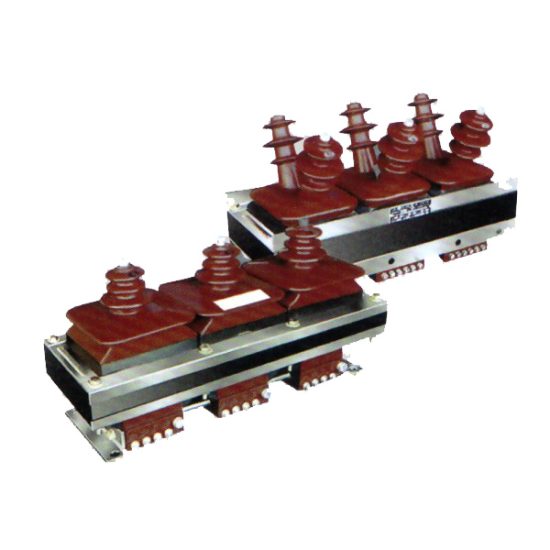
AGE-1270 11kV Cast-Resin Current Transformer for Substation Metering and Protection – IEC 61869-2 Certified
Introduction to the AGE-1270 Current Transformer
The AGE-1270 is a ring-type, cast-resin insulated current transformer (CT) engineered for high-accuracy measurement and reliable protection in 11kV (IEC-rated) or 10kV (domestic system) medium-voltage networks. Designed for both indoor and outdoor substations, this instrument transformer leverages vacuum pressure impregnation (VPI) epoxy resin technology to deliver superior dielectric strength, mechanical robustness, and long-term environmental stability. Unlike traditional oil-immersed CTs, the AGE-1270 eliminates fire hazards, oil leakage risks, and maintenance-intensive sealing systems, making it ideal for urban substations, industrial facilities, and renewable energy interconnection points where safety and reliability are paramount.
Operating Principle of Cast-Resin Insulation
Cast-resin insulation in the AGE-1270 employs a thermosetting epoxy compound that fully encapsulates the magnetic core and secondary windings under vacuum and pressure. This VPI process ensures complete void elimination, preventing partial discharge inception even under continuous 11kV operating stress. The resin matrix provides a uniform dielectric barrier with a relative permittivity (εr) of approximately 3.8–4.2 and volume resistivity exceeding 1×10¹⁴ Ω·cm at 20°C. Thermal conductivity of the cured resin (~0.2 W/m·K) facilitates efficient heat dissipation from copper windings during overload conditions. Crucially, the coefficient of thermal expansion (CTE) of the epoxy is closely matched to that of the embedded GOES (grain-oriented electrical steel) core, minimizing mechanical stress during thermal cycling between –40°C and +40°C ambient extremes.
Advantages Over Oil-Immersed Designs
Compared to oil-filled CTs, the AGE-1270 offers significant operational and safety benefits. The absence of flammable insulating oil eliminates fire propagation risks—critical in confined indoor switchgear rooms or near sensitive equipment. Maintenance requirements are drastically reduced: no oil sampling, moisture monitoring, or gasket replacement is needed over its 25–30 year service life. The solid resin housing resists UV degradation, salt fog, and industrial pollutants, enabling direct outdoor mounting without additional enclosures. Furthermore, the compact form factor (typical outer diameter: 180 mm; height: 220 mm) allows retrofitting into legacy panels originally designed for smaller oil units. Weight reduction of ~30% simplifies handling during installation and reduces structural support demands.
Typical Application Overview
The AGE-1270 is deployed across diverse power infrastructure segments requiring Class 0.2S/0.5S metering accuracy or 5P10/5P20 protection performance. Primary use cases include utility-owned distribution substations feeding commercial districts, industrial plant main incomers with harmonic-rich loads, and solar/wind farm collector feeders interfacing with grid-tied inverters. Its dual-core design (optional) supports simultaneous connection to revenue metering and digital protection relays, ensuring compliance with regulatory separation requirements. The transformer’s low remanence (<5%) and high saturation flux density (>1.8 T) enable accurate fault current replication during asymmetrical short circuits, a critical feature for modern numerical relays relying on waveform fidelity.
Technical Specifications
The AGE-1270 adheres to stringent dimensional, electrical, and thermal parameters defined by IEC 61869-2 and GB/T 20840.2. All units undergo 100% factory testing for ratio error, phase displacement, and insulation integrity before shipment.
| Parameter | Value |
|---|---|
| Rated Voltage (Um) | 11 kV (IEC), 10 kV (GB) |
| Primary Current (Ip) | 50 A to 3000 A (standard); up to 4000 A (custom) |
| Secondary Current (Is) | 1 A or 5 A |
| Accuracy Classes | Metering: 0.2S, 0.5S; Protection: 5P10, 5P20 |
| Rated Output (VA) | 5, 10, 15, 20, 30 VA (per burden class) |
| Short-Time Thermal Current (Ith) | 25 kA for 1 s (at 50 Hz) |
| Dynamic Withstand Current (Idyn) | 62.5 kA peak |
| Insulation Level (LI/AC) | 75 kV / 28 kV (1 min, 50 Hz) |
| Core Material | GOES M6 grade, 0.27 mm lamination |
| Resin System | Bisphenol-A epoxy with silica filler (UL 94 V-0 rated) |
Standard Service Conditions
The AGE-1270 is rated for standard service conditions per IEC 61869-1: ambient temperature range of –40°C to +40°C, relative humidity up to 100% (condensation permissible), and installation altitude ≤1000 m above sea level. For altitudes exceeding 1000 m, derating factors apply: for every 100 m above 1000 m, the rated voltage must be reduced by 1.25%. The transformer withstands seismic activity up to 0.3g horizontal acceleration (Zone 3 per IEEE 693). Pollution degree is classified as III (heavy industrial) with a creepage distance of ≥25 mm/kV (phase-to-ground).
Accuracy Performance Characteristics
Under reference conditions (23°C ±2°C, sinusoidal 50 Hz current), the AGE-1270 meets strict error limits. For Class 0.2S, ratio error is ≤±0.2% and phase displacement ≤±10 minutes at 100% In. At 20% In, errors remain within ±0.35% and ±15 minutes—essential for low-load metering in rural networks. Protection cores (5P20) guarantee composite error ≤5% at 20× rated current with specified burden. Core saturation flux density exceeds 1.85 T, ensuring linear response up to 30× In during severe faults. Hysteresis loss is minimized through annealed GOES laminations, reducing no-load excitation current to <0.5% of In.
Typical Applications
Substation Secondary Metering
In 11kV/0.4kV distribution substations, the AGE-1270 provides legally traceable energy measurement for billing and load profiling. Installed on the HV side of the distribution transformer, its 0.2S accuracy class ensures compliance with national metrology regulations (e.g., China’s JJG 1021). The CT feeds data to smart meters via shielded twisted-pair cables (max length: 100 m for 5 A systems), maintaining signal integrity despite EMI from nearby switchgear. Dual-core variants allow one winding to serve the utility meter while the other connects to SCADA RTUs for real-time demand monitoring—eliminating cross-connection risks.
Industrial Power Distribution
Heavy industries (e.g., steel mills, chemical plants) deploy the AGE-1270 on main incomers and large motor feeders where harmonic distortion (THD up to 15%) challenges conventional CTs. The low-loss GOES core maintains accuracy even with 3rd and 5th harmonic content, critical for power quality analyzers and tariff calculation based on kVA demand. Its 5P20 protection core reliably triggers circuit breakers during internal arc faults, with time-to-trip consistency within ±10 ms across –25°C to +55°C ambient swings. Explosion-proof certification (ATEX optional) enables use in hazardous zones.
Renewable Energy Integration
Solar photovoltaic and wind farms utilize the AGE-1270 on collector feeders (typically 10–30 MW capacity) to interface with grid protection schemes. During islanding events or rapid irradiance changes, the CT accurately replicates transient currents with rise times <1 ms—vital for anti-islanding relays per IEEE 1547. The resin housing resists tracking from DC leakage currents common in PV strings, while UV-stabilized additives prevent surface degradation under desert sun exposure. Units are often mounted directly on pole-top reclosers in remote sites, leveraging their maintenance-free design.
Rural and Suburban Distribution Networks
For utilities expanding coverage to underserved areas, the AGE-1270’s compact size and light weight simplify pole-mounted installations on single-phase or three-phase overhead lines. Its wide current range (50–2000 A) accommodates seasonal load variations—from 20 A nighttime base loads to 1500 A daytime peaks in agricultural irrigation districts. The 0.5S accuracy class meets emerging smart grid requirements for AMI (Advanced Metering Infrastructure) backhaul, while the 5P10 protection core coordinates with downstream fuses to minimize outage scope. Salt fog resistance (IEC 60068-2-52) ensures longevity in coastal regions.
Compliance with International Standards
The AGE-1270 is certified to IEC 61869-2:2012 (“Instrument transformers – Part 2: Additional requirements for current transformers”) and aligns with China’s mandatory standard GB/T 20840.2-2014. Both frameworks govern design, testing, and marking but differ in regional emphasis.
IEC 61869-2 Compliance Details
IEC 61869-2 mandates rigorous type tests including temperature rise (≤60 K for resin at 1.2× In), short-circuit withstand (25 kA/1s), and impulse voltage (75 kV BIL). The AGE-1270 exceeds these with a 30 kA/1s thermal rating and 85 kV BIL margin. Accuracy verification follows IEC 61869-2 Annex B procedures using calibrated comparator bridges, with results traceable to national labs. Marking includes In, Um, accuracy class, burden, and polarity dot per Clause 7.2. Environmental testing per IEC 60068 covers damp heat (95% RH, 40°C, 21 days) and thermal shock (–40°C ↔ +70°C, 5 cycles).
GB/T 20840.2 Alignment and Regional Adaptations
GB/T 20840.2 incorporates IEC 61869-2 but adds China-specific requirements: mandatory short-time current of 25 kA/2s (vs. IEC’s 1s), and stricter partial discharge limits (<10 pC at 1.2× Um/√3). The AGE-1270’s resin formulation achieves <5 pC due to optimized filler dispersion. Domestic labeling requires Chinese characters for “Current Transformer” and GB standard number. Notably, GB permits 10 kV as nominal system voltage (vs. IEC’s 11 kV Um), though the physical insulation design remains identical—ensuring interchangeability.
Testing and Certification Requirements
Third-party certification by CQC (China Quality Certification) or international bodies like KEMA validates compliance. Routine tests (100% production) include power frequency withstand (28 kV/1 min), turns ratio (±0.1% tolerance), and polarity check. Type tests (per batch) cover temperature rise, short-circuit, and accuracy across burden ranges. The AGE-1270’s test reports document all parameters per IEC 61869-2 Table 101, enabling seamless integration into global procurement systems.
On-Site Testing Procedures
Post-installation verification ensures the AGE-1270 performs within specifications under actual site conditions. All tests follow IEC 61869-2 Clause 10 and IEEE C57.13.6 protocols.
Insulation Resistance Test
Using a 2500 V DC megohmmeter, measure insulation resistance between primary conductor (shorted to core) and secondary terminals/ground. Acceptance criterion: ≥1000 MΩ at 20°C. Correct for temperature using RT = R20 × 2(20–T)/10. Values below 500 MΩ indicate moisture ingress or resin cracking—requiring drying or replacement. Perform before and after dielectric tests to detect insulation damage.
Turns Ratio Test
Apply 1–5 V AC (50 Hz) to secondary winding and measure induced primary voltage. Calculate ratio as Vp/Vs; compare to nameplate (e.g., 600:5 = 120:1). Tolerance: ±0.1% for metering cores, ±0.5% for protection. Use a precision ratio bridge (e.g., Omicron CT Analyzer) for automated error mapping across 1–120% In. Deviations >0.3% suggest turn shorts or winding deformation.
Polarity Test
Verify reducing polarity per IEC 61869-2 Figure 3. Connect a 1.5 V battery between P1 (primary input) and P2; observe momentary galvanometer deflection on S1–S2. Positive kick confirms correct polarity. Digital multimeters with diode-test mode can substitute. Incorrect polarity causes 180° phase shift—catastrophic for differential protection schemes. Document results with timestamped oscillograms.
Power Frequency Withstand Voltage Test
Apply 28 kV RMS (50 Hz) for 1 minute between primary and grounded secondary/core. Leakage current must remain <1 mA. Use a calibrated test transformer with overcurrent trip (set at 5 mA). Gradually ramp voltage (≤1 kV/s) to avoid transient overstress. Failure indicates voids or contaminants in resin—scrapping the unit is mandatory. Perform only after insulation resistance confirms dryness.
Short-Circuit Test (for CT)
Inject 10–20× rated current (e.g., 12 kA for 600 A CT) into primary using a portable short-circuit set. Monitor secondary waveform on oscilloscope; saturation should not occur below 20× In for 5P20 cores. Composite error must stay ≤5% at specified burden. This validates protection performance under fault conditions. Limit duration to 1–2 seconds to prevent overheating.
Preventive Maintenance Guide
Although cast-resin CTs require minimal upkeep, scheduled inspections extend service life and prevent unexpected failures.
Periodic Inspection Protocol
Conduct annual visual checks: inspect for surface cracks, tracking marks, or discoloration (indicating overheating). Clean terminals with isopropyl alcohol; torque secondary screws to 1.5 N·m. Verify grounding continuity (<0.1 Ω resistance). In coastal areas, rinse salt deposits with deionized water. Every 5 years, repeat insulation resistance and ratio tests. Record all data in asset management systems for trend analysis—sudden resistance drops often precede failures.
Maintenance Intervals and Fault Diagnosis
| Interval | Action | Fault Indicators |
|---|---|---|
| Annual | Visual inspection, terminal cleaning | Cracks, carbon tracks, loose hardware |
| 5 Years | Insulation resistance, ratio test | Rins <500 MΩ, ratio error >0.3% |
| 10 Years | Partial discharge scan (if available) | PD >20 pC at 1.2× Um/√3 |
Common failure modes include secondary open-circuit (causing core saturation and overheating) and moisture ingress through terminal seals. Never operate with secondary open—always short terminals during disconnection. Replace units showing >10°C hotspot rise via thermal imaging.
Conclusion
The AGE-1270 11kV cast-resin current transformer represents a benchmark in medium-voltage instrumentation, combining IEC 61869-2 and GB/T 20840.2 compliance with field-proven reliability. Its VPI epoxy resin encapsulation eliminates the fire and maintenance liabilities of oil-filled alternatives, while the GOES silicon steel core ensures metrological precision from 1% to 2000% of rated current. Engineered for harsh environments—from desert solar farms to humid coastal substations—the unit delivers 25–30 years of service with only basic annual inspections. Key technical advantages include dual-core flexibility for concurrent metering and protection, exceptional short-circuit withstand (25 kA/1s), and immunity to harmonic distortion up to the 13th order. Utilities and industrial operators benefit from reduced lifecycle costs, regulatory compliance across global markets, and seamless integration with modern digital relays and smart meters. As power grids evolve toward greater decentralization and intelligence, the AGE-1270’s robust design and certified performance provide a future-proof foundation for accurate current sensing in critical infrastructure.