Article Content
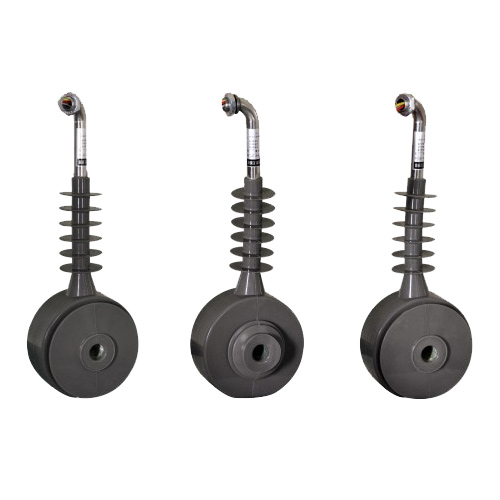
JDZ-10 11kV Cast-Resin Voltage Transformer – Application Scenarios under IEC 61869-3
Introduction
The JDZ-10 11kV cast-resin voltage transformer is a precision instrument designed for accurate voltage measurement and protection in medium-voltage (MV) electrical distribution networks operating at the standardized IEC system voltage of 11kV. Compliant with the international standard IEC 61869-3:2011 (“Instrument transformers – Part 3: Additional requirements for inductive voltage transformers”), this device ensures reliability, safety, and metrological accuracy in demanding industrial and utility environments.
Unlike oil-filled or dry-type air-insulated alternatives, the cast-resin construction provides superior mechanical strength, environmental resilience, and fire resistance—critical attributes for indoor switchgear installations, renewable energy substations, and urban power infrastructure where space constraints and safety regulations are paramount. This article details the technical application scenarios of the JDZ-10 11kV voltage transformer, supported by real-world implementations, performance advantages aligned with IEC 61869-3, and frequently asked engineering questions.

Application Overview
Voltage transformers (VTs), also known as potential transformers (PTs), serve two primary functions in MV systems: (1) providing scaled-down secondary voltages proportional to the primary system voltage for metering, monitoring, and control; and (2) enabling protective relaying schemes by delivering accurate voltage signals during normal and fault conditions. The JDZ-10 11kV VT is engineered specifically for 11kV networks—a standard nominal system voltage defined in IEC 60038 and widely adopted across Europe, Asia, Africa, and parts of South America.
Key application domains include:
- Utility Substations: Integration into 11kV ring main units (RMUs) and metal-enclosed switchgear for revenue metering and feeder protection.
- Industrial Plants: Monitoring of motor control centers (MCCs), process automation systems, and power quality analyzers.
- Renewable Energy Installations: Interface between solar PV inverters or wind turbine step-up transformers and grid-tie protection relays.
- Railway Traction Systems: Voltage sensing in auxiliary 11kV distribution networks supporting signaling and station infrastructure.
- Commercial Buildings: High-reliability power monitoring in data centers, hospitals, and high-rise complexes with dedicated 11kV supply.
The cast-resin encapsulation eliminates risks associated with oil leakage, reduces maintenance requirements, and enhances dielectric performance under polluted or humid conditions—making it suitable for both indoor and sheltered outdoor applications per IEC 61869-3 environmental classifications.

Case Studies
Case Study 1: Urban Distribution Substation Upgrade in Southeast Asia
A municipal utility in Vietnam undertook a modernization program to replace aging oil-filled VTs in its 11kV secondary substations. The project required compliance with IEC 61869-3 accuracy classes (0.5 for metering, 3P for protection) and compatibility with existing ABB Relion® 615 series protection relays.
The JDZ-10 11kV cast-resin VT was selected due to its compact dimensions (height: 420 mm, base footprint: 180 × 180 mm), enabling retrofit installation without modifying switchgear enclosures. Over a 24-month monitoring period, the VT demonstrated phase error below ±10 minutes and ratio error within ±0.3% at 80–120% of rated voltage—well within Class 0.5 tolerances. Its resin housing resisted tropical humidity (relative humidity >85%) and airborne salt contamination near coastal zones, eliminating the need for desiccant breathers or periodic oil testing.
Case Study 2: Solar Farm Grid Interconnection in Spain
A 20 MW photovoltaic plant in Andalusia required precise voltage measurement for anti-islanding protection and reactive power control under Spanish grid code RD 413/2014, which references IEC 61869 series standards. The interconnection point operated at 11kV, necessitating a VT with high transient response fidelity during cloud-induced irradiance fluctuations.
Engineers installed three single-phase JDZ-10 units in an open-delta configuration. The cast-resin design provided excellent partial discharge performance (<5 pC at 1.2 × Ur/√3), critical for detecting insulation degradation caused by frequent voltage sags and swells. Data from SCADA logs confirmed that the VT maintained linear output during rapid voltage transients (dv/dt > 1 kV/µs), ensuring correct operation of directional overvoltage relays. No failures were recorded over 18 months of continuous operation under desert-like thermal cycling (−5°C to +55°C ambient).
Case Study 3: Hospital Critical Power System in Nigeria
A tertiary care hospital in Lagos upgraded its backup power infrastructure to meet NFPA 99 and IEC 60364-7-710 requirements for healthcare facilities. The 11kV standby generator feed required accurate voltage sensing for automatic transfer switch (ATS) logic and diesel generator synchronization.
The JDZ-10 was deployed alongside SEL-351S protection relays. Its non-flammable epoxy resin satisfied local fire codes prohibiting oil-filled equipment in confined mechanical rooms. During load-bank testing, the VT exhibited thermal stability with temperature rise <55 K above ambient at 1.5 × rated burden—complying with IEC 61869-3 Clause 6.5. The unit’s robust terminal blocks accommodated 16 mm² stranded copper conductors, simplifying field wiring under tight spatial constraints.

Technical Benefits Aligned with IEC 61869-3
The engineering advantages of the JDZ-10 11kV cast-resin voltage transformer derive directly from its adherence to IEC 61869-3 specifications and material science principles:
1. Dielectric Integrity and Partial Discharge Performance
Per IEC 61869-3 Clause 7.3, the transformer undergoes power-frequency withstand tests at 28 kV (rms, 1 min) and lightning impulse tests at 75 kV (1.2/50 µs). The vacuum-cast epoxy resin matrix ensures uniform electric field distribution, suppressing partial discharges to levels below 5 pC at service voltage—extending insulation life and reducing risk of premature failure.
2. Accuracy Compliance Across Burden Ranges
The JDZ-10 is certified for dual accuracy classes: 0.5 (metering) and 3P (protection). As mandated by IEC 61869-3 Table 2, this guarantees ratio error ≤ ±0.5% and phase displacement ≤ ±20′ for metering at 25–100% of rated burden, and ratio error ≤ ±3% with composite error ≤ ±6% for protection at 5%–100% of rated voltage. This dual compliance eliminates the need for separate metering and protection VTs in many applications.
3. Thermal and Mechanical Robustness
Cast-resin construction provides high short-circuit withstand capability (thermal: 1 s; dynamic: peak current ≥ 12.5 kA) per IEC 61869-3 Clause 6.6. The monolithic structure resists vibration from nearby circuit breakers or transformers, maintaining calibration integrity over decades of service.
4. Environmental Resilience
Rated for pollution degree 3 (IEC 60664-1) and ambient temperatures from −25°C to +40°C, the JDZ-10 operates reliably in industrial atmospheres with conductive dust, moisture, or chemical exposure. UV-stabilized resin variants are available for semi-outdoor mounting.
5. Maintenance-Free Operation
Unlike oil-immersed VTs requiring periodic sampling, drying, and gasket replacement, the sealed resin body demands no scheduled maintenance—reducing lifecycle costs and improving system availability.

Frequently Asked Questions (Application Scenarios)
Q1: Can the JDZ-10 be used in a 10kV network?
A: No. The JDZ-10 is explicitly rated for 11kV systems per IEC 60038 standard voltages. While 10kV is sometimes referenced colloquially, IEC-compliant networks operate at 11kV (nominal system voltage). Using the JDZ-10 on a true 10kV system would result in incorrect scaling and potential relay misoperation. Always verify the actual system voltage against IEC 60038 before selection.
Q2: What burden values are compatible with the JDZ-10 for protection applications?
A: Per IEC 61869-3, the JDZ-10 is tested and certified for burdens up to 100 VA at power factor 0.8 lagging for protection class 3P. Typical burdens include 30 VA (for electromechanical relays) and 15 VA (for modern digital relays like Siemens SIPROTEC or GE Multilin). Exceeding the rated burden degrades accuracy and may violate thermal limits.
Q3: Is the JDZ-10 suitable for outdoor pole-mounted installations?
A: Standard JDZ-10 units are designed for indoor or sheltered environments (e.g., within RMUs or prefabricated kiosks). For fully exposed outdoor use, consult the manufacturer for UV-resistant resin formulations and IP54-rated terminal covers. Direct rain or prolonged UV exposure may degrade standard epoxy over time.
Q4: How does cast-resin construction affect transient response compared to oil-filled VTs?
A: Cast-resin VTs typically exhibit faster damping of ferroresonance and better high-frequency response due to lower winding capacitance and higher core permeability. This is advantageous in applications with capacitor-switching transients (e.g., solar farms) or fast-acting distance protection. However, detailed transient studies per IEC 61869-10 should be performed for critical systems.
Q5: Can multiple secondary windings be ordered for metering and protection on one JDZ-10 unit?
A: Yes. The JDZ-10 platform supports dual-secondary configurations (e.g., 0.5/3P) with isolated windings, allowing simultaneous connection to revenue meters and protection relays without cross-interference. Each secondary must be loaded within its respective burden rating as defined in the type test report.

Conclusion
The JDZ-10 11kV cast-resin voltage transformer represents a technically rigorous solution for modern medium-voltage infrastructure operating at the IEC-standardized 11kV level. Its compliance with IEC 61869-3 ensures metrological traceability, dielectric reliability, and interoperability with global protection and metering ecosystems. From dense urban substations to remote renewable sites, the transformer’s maintenance-free resin encapsulation, dual accuracy certification, and robust environmental tolerance address the evolving demands of power engineers seeking long-term operational integrity.
When specifying instrument transformers, adherence to IEC voltage nomenclature (11kV, not 10kV) and standard referencing (IEC 61869-3) remains essential for system compatibility, regulatory approval, and lifecycle performance. The JDZ-10 exemplifies how precision engineering aligned with international standards delivers measurable value across diverse application scenarios in today’s interconnected power grids.