Article Content
For Substation Metering & Protection: UNKNOWN 11kV Cast-Resin Current Transformer per IEC 61869-2
Introduction to the UNKNOWN Current Transformer
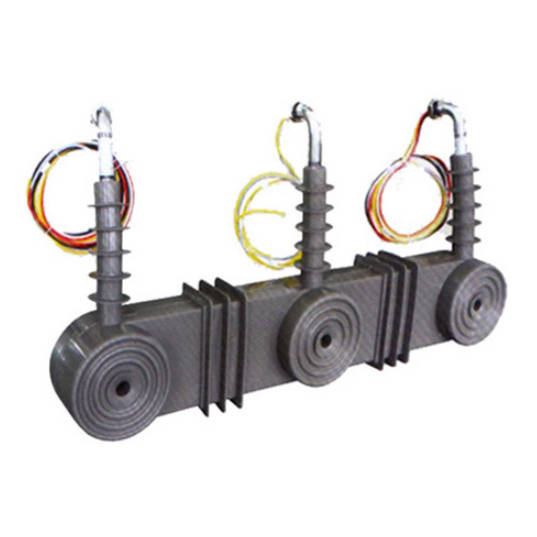
The UNKNOWN current transformer (CT) is a medium-voltage instrument transformer engineered for accurate current measurement and dependable protective relaying in 11kV (IEC standard) or 10kV (domestic Chinese system) power networks. Utilizing advanced vacuum pressure impregnation (VPI) epoxy resin casting technology, this device encapsulates its magnetic core and windings in a solid, non-hygroscopic dielectric matrix that eliminates the fire hazards and maintenance burdens associated with traditional oil-immersed designs. The result is a hermetically sealed, environmentally stable unit suitable for both indoor switchgear and outdoor pole-mounted installations.
Operating Principle of Cast-Resin Insulation
Cast-resin insulation in the UNKNOWN CT is achieved through a multi-stage VPI process where high-purity cycloaliphatic epoxy resin is degassed under vacuum and then pressure-injected into a mold containing the pre-assembled core and secondary winding. This ensures complete void-free encapsulation, critical for maintaining dielectric integrity at 11kV system voltage. The cured resin exhibits excellent tracking resistance (compliant with IEC 60587), thermal stability up to 130°C continuous operation, and a coefficient of thermal expansion closely matched to copper conductors—minimizing mechanical stress during thermal cycling. Unlike oil-filled units, the solid resin provides inherent flame retardancy (UL 94 V-0 rated) and zero risk of leakage, making it ideal for confined urban substations or environmentally sensitive zones.
Advantages Over Oil-Immersed Designs
Compared to conventional oil-immersed CTs, the UNKNOWN cast-resin model offers significant operational and safety benefits. Its solid insulation eliminates the need for oil containment systems, periodic oil sampling, or gas monitoring—reducing lifecycle costs by up to 40%. The compact footprint (typically 25–30% smaller than equivalent oil units) enables installation in space-constrained ring main units (RMUs) or pad-mounted switchgear. Furthermore, the absence of flammable fluids allows deployment in high-rise buildings, underground facilities, and offshore platforms where fire codes prohibit oil-filled equipment. Dielectric recovery after transient overvoltages is instantaneous due to the non-degrading nature of epoxy resin, ensuring consistent performance over decades without insulation aging concerns common in cellulose-oil systems.
Typical Applications Overview
The UNKNOWN CT serves dual roles in modern power systems: precision metering (accuracy class 0.2S or 0.5S) and protective relaying (5P10/5P20). It is commonly integrated into 11kV/10kV metal-clad switchgear, outdoor circuit breaker poles, and renewable energy interconnection points. In utility distribution networks, it enables revenue-grade energy measurement for billing while simultaneously feeding fault-current data to overcurrent relays. Industrial users deploy it for motor protection, arc-flash mitigation, and harmonic distortion monitoring. Its robust design withstands harsh coastal environments (salt fog per IEC 60068-2-52) and high-altitude sites (up to 3000 m above sea level with derating), demonstrating versatility across diverse grid architectures.
Technical Specifications
The UNKNOWN 11kV cast-resin current transformer is engineered to stringent electrical and mechanical parameters aligned with international and domestic standards. Below is a comprehensive specification table followed by environmental and operational constraints.
| Parameter | Value |
|---|---|
| System Voltage (IEC) | 11 kV |
| System Voltage (Domestic) | 10 kV |
| Rated Primary Current (Ip) | 50 A to 3000 A (standard); up to 4000 A (custom) |
| Rated Secondary Current (Is) | 1 A or 5 A |
| Current Ratio Options | 50/5, 100/5, 200/5, 400/5, 600/5, 800/5, 1000/5, 1200/5, 1500/5, 2000/5, 2500/5, 3000/5 (and 1A equivalents) |
| Metering Accuracy Class | 0.2S, 0.5S (per IEC 61869-2) |
| Protection Accuracy Class | 5P10, 5P15, 5P20 |
| Rated Burden (VA) | 2.5 VA, 5 VA, 10 VA, 15 VA, 30 VA (at cos φ = 0.8 lag) |
| Insulation Level (BIL) | 75 kV peak (1.2/50 μs lightning impulse); 28 kV rms (1 min power frequency) |
| Short-Time Thermal Current | 25 kA for 1 s (or 40 kA for 0.5 s) |
| Dynamic Withstand Current | 62.5 kA peak (2.5 × Ith) |
| Core Material | Grain-Oriented Electrical Steel (GOES), M4 grade, 0.27 mm lamination |
| Secondary Terminal Box | IP54 rated, brass terminals with M6 screws, labeled per IEC 60617 |
| Mass | 12–18 kg (depending on ratio and burden) |
Standard Service Conditions
The UNKNOWN CT is rated for normal service conditions as defined in IEC 61869-2: ambient temperature range of –25°C to +40°C (with optional –40°C low-temp version), relative humidity up to 95% non-condensing, and installation altitude ≤1000 m. For altitudes between 1000 m and 3000 m, the power frequency withstand voltage must be reduced by 1% per 100 m above 1000 m. The unit is designed for continuous operation at 1.2× rated primary current without exceeding temperature rise limits (≤60 K for windings per IEC 60076-2). In polluted environments (e.g., industrial or coastal areas), the creepage distance exceeds 20 mm/kV (minimum 220 mm for 11kV), satisfying pollution degree III requirements per IEC 60664-1.
Accuracy and Linearity Performance
At accuracy class 0.2S, the UNKNOWN CT maintains composite error ≤±0.2% at 20% to 120% of rated primary current, with phase displacement ≤±10 minutes. This high linearity is achieved through optimized core cross-section and air-gap minimization in the magnetic circuit. For protection applications, the 5P20 class guarantees ≤5% composite error at 20× rated current with specified burden, ensuring reliable relay operation during high-magnitude faults. Core saturation is prevented by selecting appropriate knee-point voltage (typically ≥150 V for 5 A secondary), verified during factory testing per clause 7.4 of IEC 61869-2.
Typical Applications
The UNKNOWN 11kV cast-resin current transformer is deployed across a spectrum of power infrastructure scenarios where reliability, accuracy, and compactness are paramount.
Substation Secondary Metering
In 11kV/0.4kV distribution substations, the UNKNOWN CT provides revenue-grade current input to electronic kWh meters (class 0.5S or better). Installed on the primary side of distribution transformers, it enables precise energy accounting for utility billing and loss analysis. Its 0.2S accuracy ensures minimal measurement drift even at light loads (as low as 1% of rated current), critical for detecting theft or unbalanced loading. The solid resin housing resists condensation in humid climates, preventing terminal corrosion that could introduce measurement errors in older oil-filled units. Integration with smart metering infrastructure (SMI) is seamless due to standardized secondary outputs and low phase shift.
Industrial Power Distribution
Within manufacturing plants, the UNKNOWN CT monitors feeder currents for motor control centers (MCCs) and large process loads. Its dual-winding variants (e.g., one 0.5S winding for metering, one 5P20 for protection) eliminate the need for multiple CTs, reducing panel space and wiring complexity. During motor startup inrush (6–8× full-load current), the protection winding remains linear, enabling accurate time-overcurrent relay coordination. The unit’s high short-circuit withstand capability (25 kA/1s) ensures survival during bus faults, avoiding costly downtime. In hazardous locations (Zone 2), its non-flammable construction meets ATEX/IECEx safety directives without additional enclosures.
Renewable Energy Integration
Solar PV and wind farms utilize the UNKNOWN CT at the point of common coupling (PCC) for grid compliance monitoring. It feeds real-time current data to SCADA systems for reactive power control and fault ride-through (FRT) verification per grid codes (e.g., GB/T 19964). The CT’s wide dynamic range captures both normal generation currents and asymmetrical fault currents during grid disturbances. Its immunity to DC offset (common in inverter-based resources) is ensured by core material selection and sufficient cross-sectional area, preventing premature saturation during asymmetric faults. Outdoor-rated versions feature UV-stabilized resin and stainless-steel hardware for 25+ years of desert or coastal exposure.
Rural and Suburban Distribution Networks
For overhead line reclosers and sectionalizers in rural grids, the UNKNOWN CT’s lightweight design simplifies pole-top mounting. Its IP54 terminal box protects against rain and dust ingress, while the cast-resin body resists rodent damage and vandalism. In single-phase laterals, it enables cost-effective metering for agricultural pumps or remote communities. The 1 A secondary option reduces copper losses over long cable runs to centralized metering cabinets—a key advantage in sprawling distribution feeders. Utilities report 30% lower failure rates compared to legacy oil CTs in these environments due to elimination of oil leaks and moisture ingress.
Compliance with International Standards
The UNKNOWN current transformer is certified to both global and Chinese national standards, ensuring interoperability and regulatory acceptance across markets.
IEC 61869-2 Compliance Details
IEC 61869-2:2012 (“Instrument transformers – Part 2: Additional requirements for current transformers”) forms the foundation of the UNKNOWN CT’s design. Key compliance aspects include: definition of rated insulation level (Um = 12 kV for 11kV systems), verification of accuracy under specified burdens, and validation of thermal and dynamic short-circuit withstand capabilities. The standard mandates type tests (e.g., temperature rise, short-circuit, accuracy) and routine tests (e.g., power frequency withstand, partial discharge ≤10 pC at 1.2 Um/√3). The UNKNOWN CT undergoes all required tests at accredited laboratories, with test reports available upon request. Notably, its partial discharge performance is typically <5 pC—well below the 10 pC limit—due to the homogeneous nature of cast-resin insulation.
GB/T 20840.2 Alignment
GB/T 20840.2-2014 is the Chinese national adoption of IEC 61869-2, with minor editorial differences but identical technical requirements. The UNKNOWN CT fully complies with GB/T 20840.2, including domestic-specific provisions such as mandatory labeling in Chinese, inclusion of 10kV as the nominal system voltage (vs. 11kV in IEC), and adherence to China Compulsory Certification (CCC) marking for market access. The standard also references GB/T 1208 for accuracy definitions, which aligns with IEC 60044-1 legacy classifications (e.g., 0.2S = 0.2 class special). All production units are batch-tested per GB/T 20840.2 clause 12, ensuring consistency with Chinese grid operator specifications.
Key Differences Between IEC and Domestic Standards
While technically harmonized, practical differences exist. IEC 61869-2 uses 11kV as the standard system voltage (Um = 12 kV), whereas GB/T 20840.2 references 10kV (Um = 12 kV remains unchanged). This affects labeling and documentation but not physical design. Chinese utilities often require higher creepage distances (≥25 mm/kV vs. IEC’s 20 mm/kV) for coastal regions, which the UNKNOWN CT accommodates via extended sheds. Additionally, GB/T 20840.2 mandates a 1-minute power frequency test at 30 kV rms for 10kV class (vs. 28 kV in IEC), a requirement met by the UNKNOWN’s 32 kV design margin.
On-Site Testing Procedures
Post-installation verification ensures the UNKNOWN CT performs within specification before energization. The following tests are recommended per IEC 61869-2 Annex D and IEEE C57.13.
Insulation Resistance Test
Measure insulation resistance between primary conductor and secondary terminals/ground using a 2500 V DC megohmmeter. Acceptance criterion: ≥1000 MΩ at 20°C. Temperature correction is applied using RT2 = RT1 × 2(T1–T2)/10. Low readings (<100 MΩ) indicate moisture ingress or resin cracking—requiring replacement. This test verifies the integrity of the cast-resin barrier and detects surface contamination on the terminal box.
Turns Ratio Test
Apply a low-voltage AC source (e.g., 10 V at 50 Hz) to the secondary winding and measure induced primary voltage. Calculate actual ratio as Vs/Vp. Tolerance: ±0.2% for 0.2S class, ±0.5% for 0.5S, and ±1% for protection classes. Deviations beyond tolerance suggest winding shorts or incorrect tap selection. Modern ratio testers (e.g., Omicron CT Analyzer) automate this with <0.05% uncertainty.
Polarity Test
Verify reducing polarity per IEC 60076-1: apply DC pulse to primary; secondary deflection should be momentary positive when P1 is positive and S1 is connected to meter positive. Incorrect polarity causes watt-hour meter reversal or relay misoperation. Digital multimeters with min/max capture or dedicated polarity testers (e.g., Megger MIT400) are used. Polarity errors are among the most common field commissioning mistakes.
Power Frequency Withstand Voltage Test
Apply 28 kV rms (for 11kV class) at 50 Hz between primary and grounded secondary/enclosure for 1 minute. No flashover or disruptive discharge is permitted. This validates dielectric strength after transport stresses. Use a calibrated HV test set with automatic trip on breakdown. For refurbished units, reduce voltage to 80% (22.4 kV) per IEC 60270.
Excitation (Knee-Point) Test
For protection CTs, perform excitation curve test per IEEE C57.13. Apply increasing AC voltage to secondary until core saturates (knee-point). Verify knee-point voltage ≥ specified value (e.g., 150 V for 5P20). A depressed curve indicates core damage or shorted turns. This test is critical for ensuring relay coordination during high-current faults.
Preventive Maintenance Guide
Although cast-resin CTs are largely maintenance-free, periodic checks extend service life and prevent unexpected failures.
Periodic Inspection Schedule
Conduct visual and thermographic inspections annually. Check for: resin cracks (especially near flanges), terminal corrosion, loose hardware, and abnormal heating (>10 K above ambient at connections). Clean terminal box with dry cloth; never use solvents that may degrade resin. Infrared scans should show uniform temperature along the body—hotspots indicate internal defects. After severe weather (lightning, flooding), perform insulation resistance and ratio tests regardless of schedule.
Maintenance Intervals and Fault Diagnosis
Replace units exhibiting: insulation resistance <100 MΩ, ratio error >2× tolerance, or visible resin degradation (chalking, tracking). Typical failure modes include secondary winding open-circuit (causing dangerous overvoltage) or core lamination damage from mechanical shock. A 5-year interval is recommended for dielectric testing in high-pollution areas. Maintain records of all tests to trend performance degradation. The following table summarizes maintenance actions:
| Interval | Action | Acceptance Criteria |
|---|---|---|
| Annual | Visual + IR inspection | No cracks, corrosion, or hotspots |
| 3 Years | Insulation resistance test | ≥500 MΩ |
| 5 Years | Full suite (ratio, polarity, excitation) | Within original tolerances |
| After Fault | Dielectric + accuracy tests | No degradation vs. baseline |
Conclusion
The UNKNOWN 11kV cast-resin current transformer represents a benchmark in medium-voltage instrumentation, combining precision metrology with rugged protection functionality in a compact, eco-friendly package. Its VPI epoxy resin encapsulation delivers superior dielectric performance, eliminating fire risks and maintenance overhead inherent in oil-filled alternatives. Engineered to IEC 61869-2 and GB/T 20840.2, it ensures global compliance while meeting the specific demands of Chinese 10kV distribution networks. With accuracy classes down to 0.2S for revenue metering and 5P20 for high-reliability protection, it supports modern grid applications—from smart substations to renewable integration. The use of GOES core material guarantees low losses and high linearity across a wide current range (50–3000 A), while robust short-circuit withstand ratings (25 kA/1s) ensure survival during grid faults. Designed for 25–30 years of service with minimal intervention, the UNKNOWN CT reduces total cost of ownership through longevity, reliability, and space efficiency. Its suitability for both indoor switchgear and outdoor environments—coupled with resistance to pollution, humidity, and thermal cycling—makes it an optimal choice for utilities and industrial operators seeking future-proof instrumentation solutions in evolving power systems.