Article Content
Introduction
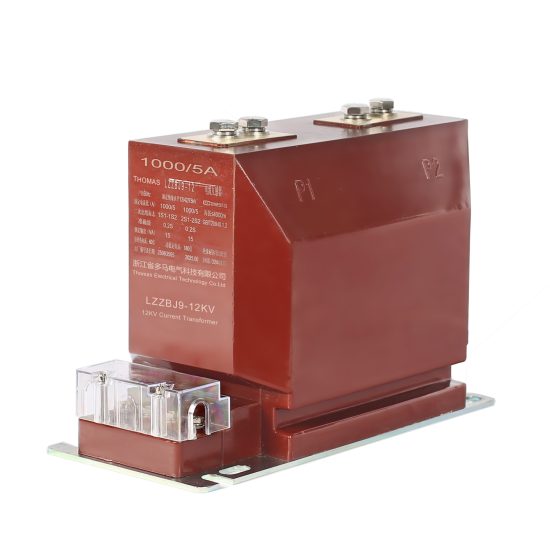
The LZZBJ9-10 current transformer (CT) is a high-precision, resin-cast indoor-type instrument transformer designed for 10kV power systems. With its robust construction, excellent insulation properties, and accurate current transformation ratio, it plays a critical role in metering, protection, and monitoring applications across diverse electrical infrastructures. This guide outlines practical application scenarios where the LZZBJ9-10 CT delivers reliable performance, ensuring safety, compliance, and operational efficiency. By understanding these contexts, engineers and system designers can optimize CT selection, installation, and integration within complex power networks.
Key Technical Specifications
Before exploring specific use cases, it is essential to review the core technical attributes of the LZZBJ9-10 CT:
- Rated Voltage: 10 kV
- Primary Current Range: 5–3000 A (standard options)
- Secondary Current: 1 A or 5 A
- Accuracy Classes: 0.2, 0.5, 1, 3, 5P10, 10P10 (for metering and protection)
- Insulation Level: 12/28/75 kV (1 min AC withstand / lightning impulse)
- Construction: Epoxy resin cast, flame-retardant, self-extinguishing
- Operating Temperature: –25°C to +40°C
- Standards Compliance: IEC 61869, GB/T 20840
These specifications enable the LZZBJ9-10 to operate reliably under demanding conditions while maintaining measurement integrity and system safety.
Utility Substations
In utility substations, the LZZBJ9-10 CT is commonly deployed on 10kV outgoing feeders for both metering and protective relaying. Its high accuracy classes (e.g., 0.2S for revenue metering) ensure precise energy billing, while protection-class windings (5P10/10P10) support overcurrent, earth fault, and differential protection schemes.
Typical installations include ring main units (RMUs), switchgear panels, and distribution transformers. The compact design allows seamless integration into space-constrained switchgear, and the resin-cast body provides excellent resistance to environmental contaminants such as dust and humidity—common in outdoor or semi-outdoor substation enclosures.
Industrial Applications
Heavy industries—including steel mills, chemical plants, and manufacturing facilities—rely on the LZZBJ9-10 CT for motor protection, load monitoring, and harmonic analysis. In motor control centers (MCCs), these CTs feed signals to protective relays that detect phase imbalances, overloads, and short circuits, preventing costly downtime and equipment damage.
Given the presence of non-linear loads (e.g., variable frequency drives), selecting CTs with adequate knee-point voltage and low phase angle error is crucial. The LZZBJ9-10’s linear response up to 20× rated current supports accurate fault detection even under distorted waveforms.
Commercial Buildings
Large commercial complexes such as shopping malls, hospitals, and office towers utilize the LZZBJ9-10 CT in their 10kV distribution networks for energy management and fire safety compliance. These CTs interface with building energy management systems (BEMS) to track real-time consumption, identify inefficiencies, and support demand-side management.
In critical facilities like hospitals, redundancy and reliability are paramount. Dual-winding LZZBJ9-10 models (e.g., one for metering, one for protection) ensure continuous operation even if one secondary circuit fails. Their Class 0.5 accuracy meets regulatory requirements for tenant submetering in multi-tenant buildings.
Renewable Energy Integration
Solar photovoltaic (PV) farms and small-scale wind installations often connect to the grid via 10kV medium-voltage systems. The LZZBJ9-10 CT is installed at the point of interconnection to monitor exported power, support anti-islanding protection, and comply with grid codes.
For example, in a 5 MW solar farm, multiple LZZBJ9-10 CTs may be used on each inverter output feeder. Their fast saturation characteristics prevent relay misoperation during transient events like cloud-induced irradiance fluctuations. Additionally, the CTs’ thermal stability ensures consistent performance under varying ambient temperatures common in outdoor renewable sites.
Mining Operations
Underground and surface mines operate in harsh environments with high levels of vibration, moisture, and explosive gases. The LZZBJ9-10’s sealed resin construction offers intrinsic safety by eliminating internal air gaps that could lead to partial discharge or ignition.
Applications include monitoring conveyor belt motors, ventilation fans, and dewatering pumps. Protection-class CTs trigger circuit breakers during ground faults—a frequent hazard in wet mining tunnels. Special versions with enhanced creepage distance are available for use in high-pollution mining zones.
Data Centers
Modern data centers demand uninterrupted power with stringent power quality requirements. The LZZBJ9-10 CT is integrated into 10kV switchgear feeding uninterruptible power supply (UPS) systems and backup generators.
Accurate current measurement enables precise load balancing across redundant power paths. In Tier III/IV facilities, dual CT sets provide input to separate protection and monitoring systems, enhancing fault tolerance. The CT’s low remanence ensures rapid reset after fault clearance, minimizing downtime during transfer to backup sources.
Railway Electrification Systems
While mainline railways often use higher voltages, auxiliary 10kV systems power signaling, lighting, and station infrastructure. The LZZBJ9-10 CT monitors these subsystems for overload and earth faults.
In traction substations serving DC or 25 kV AC lines, 10kV auxiliary supplies require robust protection. The LZZBJ9-10’s ability to withstand electromagnetic interference (EMI) from nearby traction currents makes it suitable for railway environments. Vibration resistance further ensures longevity on tracks subject to constant mechanical stress.
Marine and Offshore Platforms
Onboard ships and offshore oil rigs, 10kV distribution systems power propulsion, drilling, and HVAC equipment. The LZZBJ9-10 CT, with its corrosion-resistant epoxy housing, performs reliably in saline, humid marine atmospheres.
Marine classification societies (e.g., DNV, ABS) require CTs to meet specific shock and vibration standards. The LZZBJ9-10 complies with these through rigorous mechanical testing. Its compact size fits within confined switchboard spaces typical on vessels, while dual-ratio models allow flexible reconfiguration as vessel loads change.
Comparative Application Requirements
Different sectors impose unique demands on current transformers. The table below summarizes key requirements and how the LZZBJ9-10 meets them:
| Application Sector | Primary Accuracy Need | Environmental Challenge | LZZBJ9-10 Advantage |
|---|---|---|---|
| Utility Substations | 0.2S (metering), 5P10 (protection) | Dust, humidity | Sealed resin body, dual windings |
| Industrial | 10P10 (high fault current) | Harmonics, EMI | High knee-point voltage, linear response |
| Commercial | 0.5 (submetering) | Space constraints | Compact footprint, low phase error |
| Renewable Energy | 0.5 + 5P10 | Temperature swings | Thermal stability, fast saturation recovery |
| Mining | 10P10 (ground fault) | Moisture, explosive gases | Intrinsic safety, enhanced creepage |
Installation and Maintenance Best Practices
To maximize performance and lifespan, adhere to the following guidelines:
- Polarity Alignment: Ensure primary current enters the P1 terminal; reverse polarity compromises protection coordination.
- Secondary Burden Matching: Total burden (wiring + relay/meter impedance) must not exceed CT rating. Use 5 A outputs for short runs, 1 A for long cable distances to reduce burden.
- Grounding: Ground the CT case and one secondary terminal (typically S2) at a single point to prevent circulating currents.
- Never Open-Circuit Secondary: Always short-circuit secondary terminals before disconnecting meters/relays to avoid dangerous overvoltages.
- Periodic Testing: Conduct excitation tests every 3–5 years to verify knee-point voltage and detect insulation degradation.
Proper torque on busbar connections (typically 25–35 N·m) prevents overheating due to poor contact resistance.
Selection Guide by Application
Choosing the right LZZBJ9-10 variant depends on system parameters and functional needs. The following table aids selection:
| Use Case | Recommended Primary Current | Secondary Output | Accuracy Class | Special Features |
|---|---|---|---|---|
| Utility Feeder Metering | Based on max load (e.g., 600 A) | 5 A | 0.2S | Dual core (0.2S + 5P10) |
| Industrial Motor (500 kW) | 400 A | 1 A | 10P10 | High ALF (≥20) |
| Data Center UPS Input | 1200 A | 5 A | 0.5 + 5P10 | Low remanence core |
| Solar Farm Interconnect | 800 A | 1 A | 0.5 + 10P10 | Wide temp range (-30°C to +50°C) |
| Marine Auxiliary Panel | 300 A | 5 A | 1 + 10P10 | DNV-certified, salt-spray tested |
Performance Under Fault Conditions
The LZZBJ9-10 is engineered to maintain functionality during high-magnitude faults. Key performance metrics include:
| Fault Type | CT Response | Design Feature |
|---|---|---|
| 3-phase short circuit | Linear output up to 20× In | High-permeability core, optimized air gap |
| Single-line-to-ground fault | Accurate zero-sequence detection | Balanced winding symmetry |
| DC offset (asymmetric fault) | Minimal saturation due to gapped core | Controlled remanence (<10%) |
This resilience ensures protective relays receive undistorted signals, enabling correct tripping within milliseconds.
Integration with Modern Protection Relays
The LZZBJ9-10 seamlessly interfaces with digital relays (e.g., Siemens SIPROTEC, SEL-751, GE Multilin). Its standardized secondary output aligns with relay input requirements, while low phase displacement (<10 arcmin at 0.5 class) supports sensitive directional and differential schemes.
In smart grids, CT data feeds into SCADA and IoT platforms. For example, in a commercial building, LZZBJ9-10 outputs connected to a Modbus-enabled meter enable cloud-based energy analytics. The table below shows compatibility:
| Relay/System Type | Required CT Specs | LZZBJ9-10 Compatibility |
|---|---|---|
| Numerical Overcurrent Relay | 10P10, ALF ≥15 | Yes (standard) |
| Differential Relay (Transformer) | Class PX or 5P20, matched pairs | Available with matched ratio/phase |
| Power Quality Analyzer | 0.2S, THD <1% | Yes (with precision core) |
| Smart Meter (IEC 62053-22) | 0.5S or better | Yes (0.2S option) |
Conclusion
The LZZBJ9-10 current transformer is a versatile, high-performance solution for 10kV systems across utility, industrial, commercial, and specialized sectors. Its combination of accuracy, durability, and adaptability ensures reliable operation in environments ranging from urban data centers to remote mining sites. By aligning CT specifications with application-specific demands—as detailed in this guide—engineers can enhance system safety, regulatory compliance, and operational intelligence. As power networks evolve toward greater digitization and decentralization, the LZZBJ9-10 remains a foundational component for precise current sensing and protection.
| Sector | Metering Suitability | Protection Suitability | Environmental Rating | Recommended Variant |
|---|---|---|---|---|
| Utility Substations | Excellent (0.2S) | Excellent (5P10/10P10) | IP00 (indoor) | Dual-core, 0.2S/5P10 |
| Industrial | Good (0.5) | Excellent (10P10) | IP20 (panel-mounted) | High ALF, single protection core |
| Commercial | Excellent (0.5S) | Good (5P10) | IP00 | Dual-core, compact size |
| Renewable Energy | Good (0.5) | Very Good (10P10) | Extended temp range | Wide-temp, dual-core |
| Mining | Fair | Excellent (10P10) | Enhanced creepage | Special pollution version |
| Data Centers | Excellent (0.2S) | Excellent (5P10) | Low smoke, halogen-free | Dual-core, low remanence |
| Railway | Good | Very Good | Vibration-resistant | Shock-tested variant |
| Marine | Good | Excellent | Salt-spray resistant | Marine-certified model |