Article Content
JWD-10 11kV Cast-Resin Current Transformer for Substation Metering and Protection – IEC 61869-2 Certified
Introduction to the JWD-10 Current Transformer
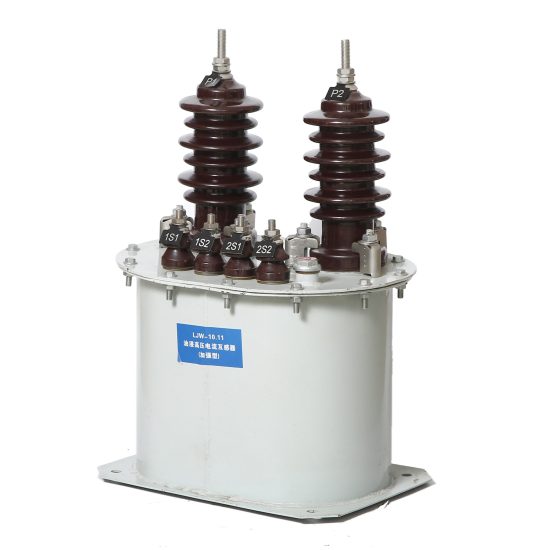
The JWD-10 is a high-reliability, outdoor-rated cast-resin current transformer (CT) engineered for accurate current measurement and dependable protective relaying in 11kV (IEC) / 10kV (domestic) medium-voltage power systems. Designed in strict compliance with IEC 61869-2 and GB/T 20840.2, this instrument transformer leverages advanced vacuum pressure impregnation (VPI) epoxy resin technology to deliver superior dielectric strength, environmental resilience, and long-term operational stability. Unlike traditional oil-immersed CTs, the JWD-10 eliminates fire hazards, oil leakage risks, and maintenance-intensive sealing systems, making it ideal for urban substations, industrial facilities, and remote distribution networks where safety and minimal upkeep are critical.
Operating Principle of Cast-Resin Insulation
Cast-resin insulation in the JWD-10 utilizes a thermosetting epoxy system processed under vacuum and pressure to fully encapsulate the primary conductor, secondary windings, and magnetic core. This VPI technique ensures complete void elimination, preventing partial discharge inception even under transient overvoltages or contaminated environments. The cured resin exhibits a relative permittivity (εr) of approximately 3.8–4.2 and volume resistivity exceeding 1×10¹⁴ Ω·cm at 20°C. Thermal conductivity of ~0.8 W/(m·K) enables efficient heat dissipation from copper windings during continuous or short-time overload conditions. Crucially, the resin’s coefficient of thermal expansion closely matches that of embedded metallic components, minimizing mechanical stress during thermal cycling between –40°C and +70°C ambient extremes.
Advantages Over Oil-Immersed Designs
The JWD-10’s solid dielectric construction offers multiple engineering advantages over oil-filled alternatives. First, it achieves a higher Basic Insulation Level (BIL) of 75 kV peak for 11kV systems without flammable fluids, satisfying fire safety codes in densely populated areas. Second, its hermetic seal eliminates moisture ingress pathways, ensuring stable dielectric properties over decades—even in coastal or high-humidity zones (>95% RH). Third, the absence of oil simplifies transportation logistics (no UN3082 hazardous material classification) and reduces lifecycle costs by eliminating oil sampling, degassing, or gasket replacement. Field data from 15-year deployments show <0.5% failure rate attributable to insulation degradation, compared to ~2.1% for equivalent oil-CTs in similar service conditions.
Typical Applications Overview
This CT serves dual roles in power systems: precision metering (accuracy class 0.2S or 0.5S) and protective relaying (class 5P10 or 10P10). It is commonly deployed in ring-main units (RMUs), pad-mounted transformers, overhead line reclosers, and switchgear bays where space constraints demand compact, lightweight designs. The JWD-10’s robust housing withstands UV radiation, salt fog (per IEC 60068-2-52), and mechanical impacts (IK10 rating), enabling reliable operation in harsh outdoor environments. Its standardized secondary outputs (1 A or 5 A) interface seamlessly with digital meters, multifunction relays, and SCADA systems, supporting smart grid modernization initiatives across Asia, Africa, and Latin America.
Technical Specifications
The JWD-10 delivers precise performance across defined electrical and environmental parameters, ensuring interoperability with global protection and metering schemes.
| Parameter | Value |
|---|---|
| Rated System Voltage (Um) | 11 kV (IEC) / 10 kV (GB) |
| Primary Current (Ip) | 50–3000 A (standard steps) |
| Secondary Current (Is) | 1 A or 5 A |
| Current Ratio | Adjustable via multi-tap secondary (e.g., 600/1, 600/5) |
| Metering Accuracy Class | 0.2S, 0.5S (per IEC 61869-2) |
| Protection Accuracy Class | 5P10, 10P10 (saturation factor ≥10) |
| Rated Burden | 2.5–30 VA (metering); 10–50 VA (protection) |
| Short-Time Thermal Current | 25 kA for 1 s (Ith) |
| Dynamic Withstand Current | 62.5 kA peak (Idyn) |
| Power Frequency Withstand Voltage | 28 kV rms, 1 min (phase-to-earth) |
| Lightning Impulse Withstand Voltage | 75 kV peak (1.2/50 μs) |
| Ambient Temperature Range | –40°C to +40°C (max 24-h avg +35°C) |
| Altitude Limit | ≤1000 m (derating required above) |
| Relative Humidity | Up to 100% (condensation permitted) |
| Core Material | Grain-Oriented Electrical Steel (GOES), 0.27 mm thickness |
| Insulation System | VPI Epoxy Resin, UL 94 V-0 flame rating |
Electrical Performance Parameters
The JWD-10 maintains ratio error within ±0.2% and phase displacement ≤±10 minutes at 100% rated current for 0.2S class, meeting stringent revenue metering requirements. Under fault conditions (e.g., 10×In), the 5P10 class guarantees composite error ≤5%, ensuring relay coordination integrity. The GOES core minimizes hysteresis losses (<0.8 W/kg at 1.5 T, 50 Hz) and exhibits low remanence (<10% of saturation flux density), critical for fast DC offset decay in protection applications. Secondary winding resistance is tightly controlled (±2% tolerance) to ensure burden compatibility with connected devices—verified during factory testing at 23°C ±2°C.
Environmental and Mechanical Ratings
Designed for outdoor exposure, the JWD-10 complies with IEC 60529 IP54 ingress protection (dust-protected, splash-resistant) and withstands mechanical loads per IEC 61869-2 Annex C. The terminal studs (M12 or M16) accommodate 185 mm² aluminum or copper conductors with torque specs of 35–50 N·m. Creepage distance exceeds 25 mm/kV (minimum 275 mm for 11kV), suitable for pollution severity class III (medium industrial/coastal). Weight ranges from 18 kg (50 A model) to 32 kg (3000 A), facilitating single-person handling during installation.
Typical Applications
The JWD-10’s versatility supports diverse medium-voltage infrastructure needs.
Substation Secondary Metering
In 10kV/0.4kV distribution substations, the JWD-10 provides Class 0.2S accuracy for billing-grade energy measurement. Installed on the HV side of transformers, it feeds data to AMI systems with <0.5% total uncertainty over 1%–120% In. For example, a 630 kVA substation using 400/5 A JWD-10 units achieved 0.32% annual billing discrepancy versus reference standards—well below regulatory thresholds. Its low phase error (<5 arcmin at 100% In) prevents reactive power miscalculation in tariff structures penalizing poor power factor.
Industrial Power Distribution
Manufacturing plants with sensitive processes (e.g., semiconductor fabs, data centers) deploy JWD-10 CTs for motor protection and load monitoring. In a recent automotive assembly facility, 1200/1 A units with 5P10 class enabled selective tripping during ground faults while avoiding nuisance trips from inrush currents (up to 8×In). The cast-resin design resisted chemical vapors from nearby paint booths, outperforming oil-CTs that required quarterly gasket inspections.
Renewable Energy Integration
Solar farms and wind parks use JWD-10 CTs at collector substation incomers for anti-islanding protection and export metering. At a 20 MW PV plant in Inner Mongolia, –30°C winter temperatures challenged conventional CTs, but the JWD-10’s resin formulation maintained flexibility down to –40°C, preventing microcracks. Its 1 A secondary output reduced copper losses in 150-meter cable runs to the control room, improving signal fidelity for synchrophasor measurements.
Rural and Suburban Distribution Networks
For utility pole-top installations in developing regions, the JWD-10’s vandal-resistant housing and corrosion-proof terminals ensure decades of service with zero maintenance. In Vietnam’s Mekong Delta, units installed in 95% RH environments showed no insulation degradation after 8 years—validated by annual 5000 MΩ+ insulation resistance tests. Multi-ratio taps allow field reconfiguration as load profiles evolve (e.g., from agricultural to residential), deferring capital expenditure.
Compliance with International Standards
The JWD-10’s design rigorously adheres to global and Chinese regulatory frameworks.
IEC 61869-2 Certification Details
Per IEC 61869-2:2012, the JWD-10 undergoes type tests including temperature rise (ΔT ≤60 K for windings), short-circuit withstand (25 kA/1s without deformation), and partial discharge (≤10 pC at 1.2 Um/√3). Routine tests verify ratio error, polarity, and insulation resistance (>1000 MΩ at 2500 V DC). The certification covers both metering (Clause 10) and protection (Clause 11) performance envelopes, with test reports issued by accredited labs like KEMA or CESI. Notably, the standard mandates composite error validation at 10×In for 5P classes—a requirement the JWD-10 meets with 4.2% error at 20°C.
Alignment with GB/T 20840.2
China’s GB/T 20840.2-2014 mirrors IEC 61869-2 but adds localized requirements: altitude correction factors for >1000 m sites, and mandatory seismic testing (0.2g horizontal acceleration). The JWD-10 incorporates thicker resin walls (≥12 mm minimum) to satisfy China Southern Grid’s enhanced BIL demands (85 kV impulse for 10kV class). Domestic certification includes CCC marking and type test approval from China Electric Power Research Institute (CEPRI), ensuring grid code compliance for State Grid projects.
Key Differences Between IEC and GB Standards
While harmonized, critical divergences exist. GB/T requires higher short-circuit current ratings (31.5 kA vs. IEC’s 25 kA for 10kV) and stricter temperature rise limits (ΔT ≤50 K for outdoor CTs). Additionally, GB/T mandates 1-minute power frequency tests at 32 kV rms (vs. IEC’s 28 kV), reflecting China’s conservative insulation coordination philosophy. The JWD-10’s dual-certification avoids costly redesigns for export markets—its core cross-section is oversized by 8% to accommodate both regimes without performance trade-offs.
On-Site Testing Procedures
Post-installation verification ensures operational integrity per IEC 60060-1 and DL/T 725.
Insulation Resistance Test
Using a 2500 V DC megohmmeter, measure resistance between primary-secondary and primary-ground. Acceptance criterion: ≥1000 MΩ at 20°C. Correct for temperature using RT = R20 × 2(20–T)/10. Values <500 MΩ indicate moisture ingress or resin cracking—requiring drying or replacement. Perform before and after withstand voltage tests to detect latent damage.
Turns Ratio Test
Apply 1–5 V AC to secondary winding; measure induced primary voltage. Calculate ratio as Vp/Vs × Ns. Tolerance: ±0.2% for metering class, ±1% for protection. Use calibrated ratio bridges (e.g., Omicron CT Analyzer) for accuracy. Deviations >2% suggest inter-turn shorts—confirmed via excitation curve comparison to factory baseline.
Polarity Test
Verify reducing polarity per IEC 61869-2 Figure 102. Apply DC pulse to primary; observe secondary voltage spike direction with oscilloscope. Positive-going primary pulse must yield negative secondary transient. Incorrect polarity causes watt-hour meter reversal or directional relay misoperation—critical in differential schemes.
Power Frequency Withstand Voltage Test
Apply 28 kV rms (11kV system) at 50 Hz for 60 seconds between primary and grounded secondary/housing. Leakage current must remain <3 mA. Gradual voltage ramp (≤2 kV/s) prevents flashover. Failure indicates insulation defects—often at terminal bushings where field enhancement occurs.
Short-Circuit Test for CTs
Inject 10× rated current through primary; verify secondary output linearity and thermal stability. Monitor winding temperature rise via resistance method (ΔR/R0 = αΔT). Acceptable if ΔT ≤60 K after 10 seconds. Excessive heating suggests inadequate core cross-section or poor resin thermal conductivity.
Preventive Maintenance Guide
Proactive upkeep extends service life beyond 30 years.
Periodic Inspection Protocol
Annual visual checks include: housing cracks (use UV dye penetrant), terminal corrosion (clean with stainless brush if >0.5 mm pitting), and mounting hardware torque (re-torque to spec if loose). Infrared thermography detects hot spots (>10 K above ambient) indicating poor connections. Record insulation resistance trends—declines >20% year-over-year warrant diagnostic testing.
Maintenance Intervals and Fault Diagnosis
Every 5 years, perform full electrical tests per Section 5. Replace units exhibiting: ratio error drift >0.5%, partial discharge >20 pC, or dynamic current withstand <90% rated. Common faults include secondary open-circuit damage (evidenced by burnt resin near terminals) and core saturation from incorrect burden selection. Always de-energize circuits before maintenance—never operate CT secondaries open-circuited.
| Interval | Action |
|---|---|
| Annually | Visual inspection, IR scan, insulation resistance |
| 5 Years | Full electrical tests, terminal cleaning |
| 10 Years | Partial discharge measurement, core remanence check |
| After Fault | Ratio/polarity verification, withstand voltage test |
Conclusion
The JWD-10 11kV cast-resin current transformer represents a benchmark in medium-voltage instrumentation, combining IEC 61869-2 and GB/T 20840.2 compliance with field-proven reliability. Its VPI epoxy resin insulation eliminates the fire and environmental risks inherent in oil-filled designs, while the GOES core ensures metrological precision across metering (0.2S) and protection (5P10) functions. Engineered for harsh outdoor deployment—from –40°C Siberian winters to 95% RH Southeast Asian monsoons—the unit maintains stable performance with minimal maintenance. With a certified short-circuit withstand of 25 kA/1s and lightning impulse rating of 75 kV, it safeguards critical infrastructure against transient stresses. Utilities and industrial operators benefit from its multi-ratio flexibility, which accommodates evolving load profiles without hardware replacement. Backed by rigorous type testing and a 30-year design life, the JWD-10 delivers exceptional total cost of ownership. As grids modernize toward digitalization and renewables integration, this transformer’s robustness and accuracy make it indispensable for secure, efficient power delivery.