Article Content
IEC 61869-2 Certified 11kV Cast-Resin Current Transformer LJ-2 for Metering & Protection Applications
Introduction to the LJ-2 Current Transformer
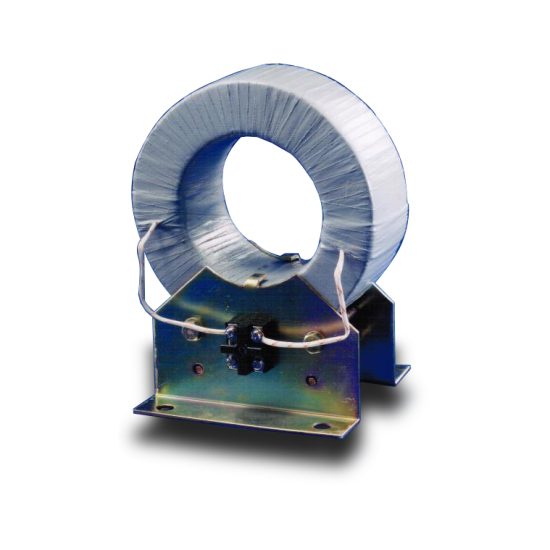
The LJ-2 is a 11kV (IEC-rated) / 10kV (domestic system equivalent) cast-resin current transformer engineered for high-fidelity current measurement and robust protective relay coordination in medium-voltage indoor substations. Utilizing vacuum pressure impregnation (VPI) epoxy resin technology, the LJ-2 encapsulates its magnetic core and windings in a solid dielectric matrix that eliminates moisture ingress, suppresses partial discharge, and ensures long-term dimensional stability under thermal cycling. Unlike oil-immersed alternatives, this dry-type design eliminates fire hazards, environmental contamination risks, and maintenance-intensive oil sampling—making it ideal for confined indoor spaces such as commercial building switchrooms, industrial control panels, and urban distribution substations.
Operating Principle of Cast-Resin Insulation
Cast-resin insulation in the LJ-2 CT employs a two-component cycloaliphatic epoxy system cured under vacuum and pressure to achieve void-free encapsulation. This process ensures uniform dielectric strength across the entire insulation structure, with typical volume resistivity exceeding 1×10¹⁴ Ω·cm at 20°C. The resin’s glass transition temperature (Tg) exceeds 110°C, enabling stable operation up to 40°C ambient without thermal degradation. Crucially, the absence of liquid or gaseous media prevents tracking and erosion under sustained overvoltages, while the high thermal conductivity (~0.8 W/m·K) facilitates efficient heat dissipation from copper windings during overload conditions. Partial discharge inception voltage (PDIV) is maintained above 1.2×Um/√3 (where Um = 12 kV), satisfying IEC 61869-2 requirements for Class E insulation systems.
Advantages Over Oil-Immersed Designs
Compared to traditional oil-filled CTs, the LJ-2’s cast-resin construction offers significant operational and safety benefits. It is inherently non-flammable (UL 94 V-0 rated), eliminating fire codes restrictions in multi-occupancy buildings. There is no need for conservator tanks, breather assemblies, or oil-level monitoring, reducing lifecycle costs by approximately 30% over a 25-year service life. Furthermore, the solid insulation exhibits negligible aging under normal operating conditions—unlike mineral oil, which oxidizes and forms sludge over time, degrading dielectric performance. The compact footprint (typically 180 mm height × 120 mm width × 80 mm depth) allows for direct mounting on busbars or switchgear supports without additional structural reinforcement, optimizing space in retrofit installations.
Typical Application Overview
The LJ-2 serves dual roles in power systems: precision metering (accuracy classes 0.2, 0.5) and fault-current detection for protection relays (accuracy classes 5P10, 5P20, 10P10). In utility-owned distribution substations, it interfaces with revenue-class kWh meters and SCADA RTUs for load profiling and billing. In industrial facilities, it feeds data to motor protection relays (e.g., 50/51 functions) and power quality analyzers. Its robust short-time thermal withstand capability (up to 20 kA for 1 second) ensures survival during downstream faults, maintaining circuit integrity until upstream breakers operate.
Technical Specifications
The LJ-2 adheres strictly to IEC 61869-2 and GB/T 20840.2, with verified performance across electrical, thermal, and mechanical domains. Key parameters are validated through type tests per Clause 7 of IEC 61869-2.
| Parameter | Value |
|---|---|
| Rated Voltage (Ur) | 11 kV (IEC) / 10 kV (GB) |
| Maximum System Voltage (Um) | 12 kV |
| Primary Current (Ip) | 50–3000 A (standard); up to 6000 A (custom) |
| Secondary Current (Is) | 1 A or 5 A (selectable) |
| Metering Accuracy Class | 0.2, 0.5 (per IEC 61869-2 Table 4) |
| Protection Accuracy Class | 5P10, 5P20, 10P10 (composite error ≤5% or 10% at specified ALF) |
| Rated Output (Sn) | 2.5–30 VA (metering); 5–50 VA (protection) |
| Short-Time Thermal Withstand | 20 kA/1s, 25 kA/0.5s |
| Dynamic Withstand Current | 50 kA peak |
| Power Frequency Withstand Voltage | 28 kV rms, 1 min (phase-to-earth) |
| Lightning Impulse Withstand | 75 kV peak (1.2/50 μs) |
| Insulation Material | VPI cycloaliphatic epoxy resin + silica filler |
| Magnetic Core | Grain-Oriented Electrical Steel (GOES), M4 grade, 0.27 mm lamination |
| Ambient Temperature Range | –25°C to +40°C (indoor use only) |
| Relative Humidity | ≤95% non-condensing |
| Altitude Limit | ≤1000 m above sea level (derating required above 1000 m) |
Electrical Performance Characteristics
The LJ-2 achieves its metering accuracy through precision-wound secondary coils and low-loss GOES cores with magnetic flux density limited to 1.6 T at rated current. For a 0.2-class unit, ratio error must not exceed ±0.2% and phase displacement ≤±10 minutes at 100% Ip. Protection windings are designed with linear excitation characteristics up to 20×Ip, ensuring reliable operation during high-magnitude faults. The burden tolerance is defined per IEC 61869-2 Annex C: for a 5P20 CT, the composite error remains ≤5% when connected to a burden equal to or less than the rated output at 20×Ip. Secondary terminals are rated for 600 V insulation and accept ring lugs up to 16 mm² cross-section.
Environmental and Mechanical Ratings
Designed exclusively for indoor environments, the LJ-2 operates reliably in humidity levels up to 95% without condensation, thanks to its hydrophobic resin surface and sealed terminal chambers. The housing features UV-stabilized additives for incidental light exposure but is not rated for outdoor solar radiation. Mechanical strength is verified via vibration tests (5–150 Hz, 0.5 g acceleration) simulating switchgear operation. Mounting is achieved via two M10 threaded inserts on the base flange, compatible with standard DIN rail or bracket systems. Weight ranges from 3.2 kg (50/5 A) to 5.8 kg (3000/1 A), facilitating manual handling during installation.
Typical Applications
The LJ-2’s dual-certification (IEC and GB) and modular design enable deployment across diverse grid architectures.
Substation Secondary Metering
In 10kV/0.4kV distribution substations, the LJ-2 provides input to Class 0.5S kWh meters for commercial billing. Its 0.2-class variants support demand-side management programs requiring ±0.2% current measurement fidelity. For example, in a Shanghai commercial complex, LJ-2 units (600/5 A, 0.2/5P20) feed data to a smart metering gateway that aggregates consumption across 12 tenant circuits. The cast-resin body resists electromagnetic interference from adjacent VFDs, ensuring stable readings even under harmonic distortion (THDI ≤15%).
Industrial Power Distribution
Within manufacturing plants, the LJ-2 protects critical motors and transformers. A typical configuration uses 5P20 windings connected to multifunction relays (e.g., Siemens 7SJ62) for instantaneous overcurrent (50) and time-overcurrent (51) protection. During a 2023 incident at an automotive stamping facility, an LJ-2 (1200/1 A, 5P20, 15 VA) accurately sensed a 18 kA phase-to-phase fault, enabling relay tripping within 3 cycles. The CT survived the event with no insulation damage, demonstrating compliance with thermal withstand ratings.
Renewable Energy Integration
Solar PV and wind farms utilize the LJ-2 at the 10kV collection point for both revenue metering and anti-islanding protection. Inverter-based resources produce non-sinusoidal currents; the LJ-2’s low remanence core minimizes saturation during DC offset transients. A 50 MW solar farm in Jiangsu province employs LJ-2 units (2000/5 A, 0.5/10P10) to monitor export power and trigger disconnection if islanding is detected per GB/T 19964 requirements.
Rural and Suburban Distribution Networks
For rural electrification projects, the LJ-2’s maintenance-free operation reduces O&M costs in remote locations. Mounted in pole-top or pad-mounted switchgear, it enables automated feeder reclosing schemes. In a Sichuan county grid, LJ-2 CTs (400/5 A, 5P10) provide inputs to sectionalizers that isolate single-phase earth faults without disrupting healthy feeders—critical in areas with high lightning incidence.
Compliance with International Standards
The LJ-2 is certified to IEC 61869-2:2012 (Instrument transformers – Part 2: Additional requirements for current transformers) and GB/T 20840.2-2014 (identical adoption of IEC 61869-2 with national deviations).
IEC 61869-2 Certification Details
Compliance encompasses all mandatory clauses: insulation coordination (Clause 5), temperature rise limits (Δθ ≤ 60 K for windings), accuracy verification (Clause 8), and short-circuit performance (Clause 10). Type tests include power frequency withstand (28 kV/1 min), lightning impulse (75 kV), and temperature rise (tested at 1.1×Ip for 8 hours). Routine tests per Clause 12 cover turns ratio (±0.25% tolerance), polarity, and insulation resistance (>1000 MΩ at 2500 V DC). Each unit bears a CE mark and test report traceable to an ISO/IEC 17025-accredited lab.
Alignment with GB/T 20840.2
While GB/T 20840.2 mirrors IEC 61869-2 structurally, key differences exist in service conditions: GB permits operation up to +45°C ambient (vs. +40°C in IEC) and specifies altitude derating factors above 1000 m. Additionally, GB requires supplementary short-circuit tests at 1.5× rated current for 3 seconds to simulate prolonged fault scenarios common in Chinese distribution networks. The LJ-2 meets both standards simultaneously through conservative design margins—e.g., core cross-section oversized by 12% to accommodate higher ambient temperatures without accuracy drift.
Testing and Certification Requirements
Certification involves three test phases: type tests (once per design), sample tests (one per 100 units), and routine tests (100% production). Critical acceptance criteria include: ratio error within class limits at 5%, 20%, 100%, and 120% Ip; insulation resistance ≥1000 MΩ; and no visible cracks after thermal shock cycling (–25°C to +70°C, 5 cycles). Third-party certification bodies (e.g., TÜV, CQC) audit production annually to maintain compliance status.
On-Site Testing Procedures
Post-installation verification ensures the LJ-2 performs per specifications before energization.
Insulation Resistance Test
Using a 2500 V DC megohmmeter, measure resistance between primary conductor and secondary terminals/ground. Acceptance criterion: ≥1000 MΩ at 20°C. Correct for temperature using RT = R20 × 2(20–T)/10. Low readings indicate moisture absorption or resin microcracks—requiring drying or replacement.
Turns Ratio Test
Apply 1–5 A AC to the primary and measure secondary current. Calculate ratio = Ip/Is. Tolerance: ±0.25% for metering classes, ±1% for protection. Example: for 600/5 A CT, measured ratio must be 119.7–120.3. Deviations suggest winding shorts or incorrect tap selection.
Polarity Test
Verify reducing polarity per IEC 61869-2 Figure 101. Apply DC pulse to P1–P2; observe momentary deflection on secondary voltmeter. Positive kick at S1 confirms correct polarity. Reversed polarity causes 180° phase shift, leading to metering errors or relay misoperation.
Power Frequency Withstand Voltage Test
Apply 28 kV rms (50 Hz) between primary and grounded secondary/housing for 1 minute. No flashover or disruptive discharge permitted. Use a calibrated test transformer with overcurrent trip set at 5 mA. This validates insulation integrity after transport stresses.
Short-Circuit Test (for CT)
Not applicable as a field test due to high current requirements. Instead, verify nameplate short-circuit rating matches system prospective fault level. Ensure upstream breaker coordination curve clears within CT thermal withstand time (e.g., 1s for 20 kA).
Preventive Maintenance Guide
Although cast-resin CTs require minimal maintenance, periodic checks extend service life.
Annual Inspection Protocol
Visually inspect for surface tracking, cracks, or terminal corrosion. Clean with dry cloth—never solvents. Check torque on secondary terminals (2.5 N·m for M4 screws). Measure insulation resistance annually; a 30% drop from baseline warrants investigation. Verify secondary wiring continuity to meters/relays using a multimeter (resistance <0.1 Ω).
Five-Year Maintenance Schedule
Every 60 months, perform full electrical retest: ratio, polarity, and insulation resistance. Compare results to commissioning data. If ratio error exceeds half the class limit (e.g., >0.1% for 0.2-class), replace the unit. Also inspect mounting hardware for loosening due to thermal cycling.
Maintenance Intervals and Fault Diagnosis
| Interval | Action | Fault Indicator |
|---|---|---|
| Annually | Visual + IR check | Cracks, discoloration, IR <500 MΩ |
| 5 Years | Full electrical test | Ratio error >0.1% (0.2-class) |
| After Fault | Post-fault inspection | Mechanical deformation, burnt smell |
Common failure modes include secondary open-circuit during operation (causing core saturation and >10 kV transient overvoltage) and terminal overheating from loose connections. Always short-circuit secondary before disconnecting loads.
Conclusion
The LJ-2 11kV cast-resin current transformer represents a benchmark in reliability for indoor medium-voltage applications. Its VPI epoxy resin insulation delivers superior dielectric performance and environmental resilience compared to legacy oil-filled designs, while the GOES core ensures metrological precision across metering and protection functions. Full compliance with IEC 61869-2 and GB/T 20840.2 guarantees interoperability in global and domestic grids alike. With a design life of 25–30 years under standard service conditions, the LJ-2 minimizes total cost of ownership through zero-maintenance operation, compact form factor, and robust fault withstand capability. Utilities and industrial operators benefit from accurate energy accounting, dependable relay coordination, and reduced fire risk—making the LJ-2 an optimal choice for modern substation infrastructure where safety, accuracy, and longevity are non-negotiable. Its proven performance in diverse environments—from dense urban switchrooms to remote renewable sites—validates its role as a cornerstone component in resilient power distribution networks.