Article Content
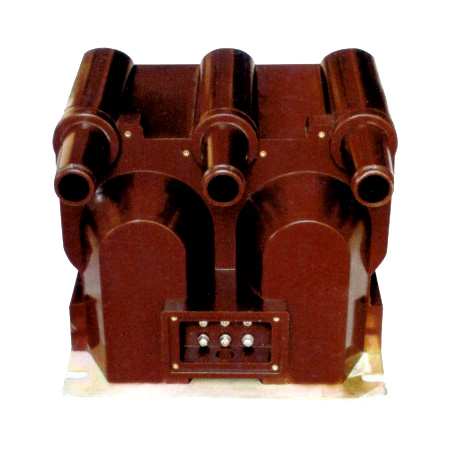
For Substation Metering & Protection: MER-1 11kV Cast-Resin Voltage Transformer per IEC 61869-3
Introduction to the MER-1 Voltage Transformer
The MER-1 is a precision-engineered, cast-resin insulated voltage transformer (VT) designed for reliable operation in 11kV (IEC standard) or 10kV (domestic system equivalent) medium-voltage networks. As a critical interface between primary power circuits and secondary instrumentation, the MER-1 provides accurate voltage scaling—typically to standardized secondary voltages of 100 V or 110 V—and ensures galvanic isolation essential for personnel safety and equipment protection. Its robust construction leverages modern epoxy resin vacuum pressure impregnation (VPI) technology, offering superior dielectric strength, environmental resilience, and long-term stability compared to traditional oil-filled alternatives.
Operating Principle of Cast-Resin Insulation
Cast-resin insulation in the MER-1 VT employs a thermosetting epoxy resin system that fully encapsulates the primary and secondary windings along with the magnetic core. During manufacturing, the assembly undergoes vacuum degassing followed by pressure impregnation to eliminate air voids and moisture, ensuring homogeneous dielectric properties. This process yields a monolithic structure with excellent partial discharge resistance (<5 pC at 1.2 × Ur), high tracking index (>600 V), and mechanical rigidity. The resin’s thermal conductivity (~0.8 W/m·K) facilitates efficient heat dissipation under continuous load, while its hydrophobic nature prevents surface leakage currents in humid or polluted environments. Unlike oil-immersed units, cast-resin VTs require no maintenance related to fluid levels or degradation, making them ideal for unattended substations.
Advantages Over Oil-Immersed Designs
Compared to oil-filled voltage transformers, the MER-1 offers significant operational and safety benefits. First, it eliminates fire hazards associated with flammable insulating oil, complying with stringent fire-safety codes in urban and indoor installations. Second, its sealed, solid-dielectric construction prevents moisture ingress and contamination, ensuring stable performance over decades without drying or reconditioning. Third, the compact footprint reduces space requirements in switchgear cubicles or pole-mounted configurations. Additionally, cast-resin VTs exhibit lower losses due to optimized GOES (grain-oriented electrical steel) cores and tighter winding tolerances, contributing to higher efficiency and reduced thermal aging. Environmental compliance is also enhanced, as there is no risk of oil leakage into soil or groundwater—a critical consideration for renewable energy sites and ecologically sensitive zones.
Typical Applications Overview
The MER-1 is engineered for dual-purpose use in both metering and protection circuits across diverse infrastructure. In utility substations, it feeds revenue-grade meters (accuracy class 0.2) and protective relays (class 3P). Industrial facilities deploy it for power quality monitoring, harmonic analysis, and motor control center synchronization. Renewable integration points—such as solar farms or wind turbine step-up stations—rely on its stable ratio and phase-angle characteristics under variable loading. Rural distribution networks benefit from its maintenance-free operation and resistance to dust, salt fog, and temperature extremes. With an expected service life exceeding 25 years under IEC 60060-defined service conditions, the MER-1 delivers lifecycle cost advantages through reliability and minimal downtime.
Technical Specifications
The MER-1 voltage transformer adheres to precise electrical and mechanical parameters defined by IEC 61869-3 and GB/T 20840.3. Below is a comprehensive specification table reflecting standard configurations; custom ratios and outputs are available upon request.
| Parameter | Value |
|---|---|
| System Voltage (Ur) | 11 kV (IEC) / 10 kV (Domestic) |
| Primary Voltage (Up) | 11,000 / √3 V (phase-to-ground) |
| Secondary Voltage (Us) | 100 / √3 V or 110 / √3 V (standard); 100 V or 110 V (line-to-line optional) |
| Voltage Ratio | 11,000/√3 : 100/√3 (i.e., 110:1) |
| Accuracy Class | Metering: 0.2 / 0.5; Protection: 3P |
| Rated Output (per secondary) | 30 VA (0.2), 50 VA (0.5), 100 VA (3P) |
| Insulation Level (LI/AC) | 75 kV / 28 kV (1 min, 50 Hz) |
| Short-Time Thermal Withstand | 1 s at 25 × In (secondary short-circuit current) |
| Core Material | GOES (Grain-Oriented Electrical Steel), CRGO grade |
| Insulation System | Epoxy resin VPI, UL 94 V-0 flame rating |
| Ambient Temperature Range | –25°C to +40°C (standard); –40°C to +55°C (extended) |
| Altitude Limit | ≤ 1,000 m (derating required above 1,000 m) |
| Relative Humidity | ≤ 95% non-condensing |
| Partial Discharge | < 5 pC at 1.2 × Ur |
Standard Service Conditions
The MER-1 is rated for normal service conditions per IEC 60060-1: ambient temperature between –25°C and +40°C, relative humidity up to 95% (non-condensing), and installation altitude not exceeding 1,000 meters above sea level. For installations above 1,000 m, the insulation withstand voltage must be derated by 1% per 100 m increment. The transformer is suitable for both indoor switchgear and outdoor pole/tower mounting, provided it is shielded from direct solar radiation exceeding 1,000 W/m². In coastal or industrial atmospheres with high salt or chemical pollution, creepage distance is enhanced to ≥25 mm/kV (medium pollution class III per IEC 60815).
Electrical Performance Characteristics
Under rated load and frequency (50 Hz or 60 Hz), the MER-1 maintains voltage error within ±0.2% and phase displacement ≤10 minutes for class 0.2, ensuring compliance with revenue metering standards. For protection class 3P, composite error remains below 3% at 5% to 100% of rated voltage and up to 100% of rated burden. The magnetizing current is kept below 0.5% of rated primary current due to high-permeability GOES cores, minimizing core saturation during transient overvoltages. Frequency response is flat from 45 Hz to 65 Hz, supporting harmonic-rich environments such as those with variable-frequency drives or inverters. Secondary terminals are labeled per IEC 61869-3 (e.g., a-n for single secondary), with polarity marked “•” indicating instantaneous positive direction.
Typical Applications
The MER-1 voltage transformer serves as a foundational component in modern power systems where accuracy, safety, and longevity are paramount. Its dual-certification for metering and protection enables versatile deployment across utility, industrial, and distributed generation sectors.
Substation Secondary Metering
In 11kV/10kV distribution substations, the MER-1 supplies voltage signals to kWh meters, demand recorders, and SCADA RTUs. With accuracy class 0.2, it meets the stringent requirements of utility revenue metering per IEC 62053-22. The low phase-angle error (<5 arcmin at 0.2 class) ensures precise power factor and reactive energy measurement. Installation typically involves mounting on bus supports or within metal-enclosed switchgear, with secondary wiring routed through shielded cables to minimize electromagnetic interference. For ring-main units (RMUs), the compact design allows integration without compromising arc-flash safety distances.
Industrial Power Distribution
Large manufacturing plants utilize the MER-1 for power monitoring at main incomers and critical feeders. It interfaces with power quality analyzers to detect voltage sags, swells, and harmonics—essential for protecting sensitive CNC machinery and robotics. The 3P protection class supports overvoltage and undervoltage relaying for motor protection schemes. In arc-furnace or welding-intensive facilities, the robust resin insulation resists thermal cycling and electromagnetic stress. Ground-fault detection systems also rely on the VT’s stable neutral reference during unbalanced loading.
Renewable Energy Integration
Solar photovoltaic (PV) and wind farms employ the MER-1 at the point of interconnection (POI) to grid operators. Its ability to maintain ratio accuracy under light-load conditions (down to 1% of rated voltage) is crucial during low-generation periods. The VT supports synchrocheck relays during islanding detection and provides voltage feedback for inverter reactive power control (Q(V) curves). Outdoor-rated versions withstand UV exposure and thermal shock from desert diurnal cycles. Compliance with IEEE 1547 and IEC 61727 ensures seamless grid code adherence.
Rural and Suburban Distribution Networks
In remote or lightly loaded rural feeders, the MER-1 enables accurate billing and outage detection without requiring frequent site visits. Its maintenance-free design reduces operational expenditure for utilities managing thousands of distribution transformers. Pole-top installations benefit from the unit’s lightweight (≈45 kg) and corrosion-resistant flanges. For underground residential networks, indoor variants fit within pad-mounted switchgear, providing voltage signals for smart meter backhaul and fault location systems.
Compliance with International Standards
The MER-1 voltage transformer is fully compliant with IEC 61869-3:2011 (“Instrument transformers – Part 3: Additional requirements for inductive voltage transformers”) and harmonized with China’s national standard GB/T 20840.3-2013. These standards govern design, testing, marking, and performance criteria to ensure interoperability and safety across global markets.
IEC 61869-3 Compliance Details
IEC 61869-3 specifies mandatory tests including power-frequency withstand, partial discharge, temperature rise, and accuracy verification under defined burdens. The MER-1 undergoes type testing at accredited laboratories, demonstrating compliance with all clauses. Key requirements include: voltage error limits per accuracy class (Table 2 of IEC 61869-3), thermal stability under 1.2 × Ur for 8 hours, and immunity to ferroresonance through core design and damping resistors. Marking includes rated voltage factor (1.2 for continuous, 1.5 for 30 s), accuracy class, and vector group (single-phase, phase-to-ground). All test reports are traceable to ISO/IEC 17025-accredited facilities.
Alignment with GB/T 20840.3
GB/T 20840.3 mirrors IEC 61869-3 but includes supplementary requirements for Chinese grid conditions, such as enhanced seismic resistance (0.3g horizontal acceleration) and stricter partial discharge limits (<3 pC at 1.2 × Ur for class 0.2). The MER-1 meets these via reinforced core clamping and optimized resin curing cycles. Domestic certification (CQC mark) requires additional short-circuit tests simulating 10 kV system fault levels. Despite minor differences, the dual-standard alignment allows seamless deployment in both export and domestic projects without redesign.
Testing and Certification Requirements
Certification involves routine tests (100% production), type tests (prototype validation), and special tests (customer-requested). Routine tests include turns ratio verification (±0.25% tolerance), polarity check, and insulation resistance (>1,000 MΩ at 2,500 V DC). Type tests encompass temperature rise (Δθ ≤ 60 K for resin), lightning impulse (75 kV BIL), and accuracy mapping across burden ranges. Special tests may include chopped wave, seismic simulation, or EMC immunity per IEC 61000-4. Certificates issued by TÜV, SGS, or CQC confirm compliance, enabling procurement under World Bank or Asian Development Bank-funded projects.
On-Site Testing Procedures
Post-installation verification ensures the MER-1 performs within specifications before energization. The following tests are recommended per IEC 61869-3 Annex D and IEEE C57.13.
Insulation Resistance Test
Using a 2,500 V DC megohmmeter, measure insulation resistance between primary winding and ground, secondary winding and ground, and primary-to-secondary. Acceptance criterion: ≥1,000 MΩ at 20°C. Correct for temperature using RT2 = RT1 × 2(T1–T2)/10. Low readings indicate moisture ingress or resin cracking—requiring drying or replacement. Perform before and after high-potential tests to detect insulation degradation.
Turns Ratio Test
Apply a low-voltage AC signal (50–100 V) to the primary and measure secondary voltage with a calibrated voltmeter or dedicated ratio tester. Calculate actual ratio and compare to nameplate. Tolerance: ±0.25% for accuracy class 0.2, ±0.5% for 0.5/3P. Deviations beyond tolerance suggest winding faults or incorrect tap selection. Use three-phase test sets for multi-unit banks to verify phase consistency.
Polarity Test
Verify reducing polarity (standard for IEC VTs) by applying a momentary DC pulse to the primary and observing secondary voltage direction with an analog meter or oscilloscope. The secondary terminal marked “a” should go positive when primary “A” is connected to positive DC. Incorrect polarity causes metering errors and relay misoperation. This test is critical when connecting to differential or directional protection schemes.
Power Frequency Withstand Voltage Test
Apply 28 kV RMS (50 Hz) between primary and grounded tank/secondary for 1 minute. Monitor for flashover, excessive leakage current (>1 mA), or audible discharge. Secondary windings are short-circuited and grounded during this test. Failure indicates compromised insulation integrity—often due to shipping damage or improper handling. Always perform after insulation resistance testing.
Open-Circuit Characteristic Test
With secondary open, gradually increase primary voltage from 0 to 1.5 × Ur while recording excitation current. Plot Iexc vs. Vp. A sharp current rise below 1.2 × Ur suggests core saturation or shorted turns. Compare to factory baseline; deviations >10% warrant investigation. This test validates core health and detects inter-turn faults invisible to ratio tests.
Preventive Maintenance Guide
Although cast-resin VTs like the MER-1 are largely maintenance-free, periodic inspection ensures decades of reliable service. The following schedule aligns with CIGRE TB 602 recommendations.
Annual Visual and Electrical Inspection
Inspect for surface cracks, tracking marks, or discoloration on the resin housing. Check terminal tightness (torque: 15 N·m for M8 bolts) and grounding continuity (<0.1 Ω). Measure insulation resistance and compare to baseline. Clean surfaces with dry cloth or mild detergent—never solvents. Verify secondary circuit integrity (no open CTs, secure fusing). Document findings for trend analysis. In coastal areas, inspect for salt deposits and rinse with deionized water if needed.
Five-Year Comprehensive Assessment
Every 60 months, perform partial discharge measurement using IEC 60270-compliant equipment. Acceptable level: <10 pC at 1.2 × Ur. Reconduct open-circuit and ratio tests to detect aging-related drift. Thermographic scan under load can reveal hot spots from loose connections. Review historical data for cumulative degradation—e.g., rising excitation current may precede failure. Replace units showing PD >20 pC or ratio shift >0.5%.
Maintenance Intervals and Fault Diagnosis
| Interval | Action | Fault Indicators |
|---|---|---|
| Annually | Visual, IR, grounding check | Cracks, carbon tracks, loose lugs |
| 5 Years | PD test, ratio verification | Ratio error >0.5%, PD >10 pC |
| 10+ Years | Full requalification (optional) | Excitation current ↑20%, temp rise ↑10K |
Common faults include secondary fuse blow (indicating burden overload), core saturation (from ferroresonance), and terminal corrosion. Never operate with open secondary—it risks dangerous overvoltages.
Conclusion
The MER-1 11kV cast-resin voltage transformer represents a benchmark in medium-voltage instrumentation, combining precision engineering with rugged reliability. By leveraging GOES silicon steel cores and advanced VPI epoxy resin technology, it delivers exceptional accuracy (class 0.2 for metering, 3P for protection) while eliminating the fire, environmental, and maintenance liabilities of oil-filled alternatives. Full compliance with IEC 61869-3 and GB/T 20840.3 ensures global acceptance and interoperability across utility, industrial, and renewable applications. Its robust insulation system withstands harsh outdoor conditions, pollution, and thermal cycling, supporting uninterrupted operation in critical infrastructure. With a design life exceeding 25–30 years under standard service conditions, the MER-1 minimizes total cost of ownership through decades of maintenance-free performance. When integrated with modern digital relays and smart meters, it forms the backbone of accurate, safe, and resilient power systems—making it an indispensable asset for engineers designing next-generation distribution networks. Strict adherence to on-site testing and preventive maintenance protocols further guarantees long-term fidelity to its certified specifications, reinforcing confidence in every voltage measurement it provides.