Article Content
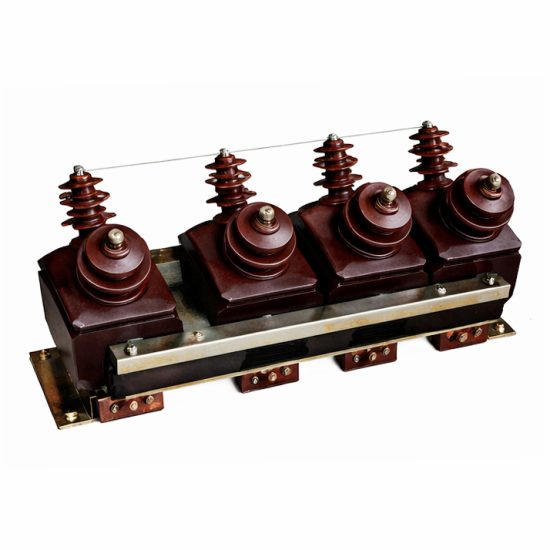
SZF-3 11kV Cast-Resin Voltage Transformer – Application Scenarios per IEC 61869-3
Introduction
The SZF-3 11kV cast-resin voltage transformer is engineered to meet the stringent requirements of the International Electrotechnical Commission (IEC) standard IEC 61869-3 for instrument transformers—specifically, inductive voltage transformers used in alternating current (AC) systems. Designed for operation at the standardized IEC system voltage of 11kV, this device serves a critical role in accurate voltage measurement, protection relay coordination, and energy metering within medium-voltage (MV) electrical networks.
Unlike non-standardized or region-specific variants (e.g., 10kV), the SZF-3 adheres strictly to IEC-defined nominal voltages, ensuring global interoperability and compliance with international grid codes. Its epoxy resin encapsulation provides superior dielectric strength, environmental resilience, and fire resistance—key attributes for indoor and outdoor installations in industrial, utility, and commercial infrastructure.
This article examines the technical application scenarios of the SZF-3 11kV voltage transformer under IEC 61869-3, supported by real-world case studies, performance characteristics, and frequently asked engineering questions.

Application Overview
Voltage transformers (VTs), also known as potential transformers (PTs), are essential components in MV power systems operating at 11kV (phase-to-phase) as defined by IEC 60038 and referenced in IEC 61869-3. The SZF-3 model is specifically designed for applications requiring high accuracy, long-term stability, and minimal maintenance.
Primary application domains include:
- Protective Relaying: Provides scaled-down secondary voltages (typically 100 V or 110 V) to protective relays for overvoltage, undervoltage, and directional fault detection.
- Energy Metering: Delivers precise voltage signals to revenue-class meters in accordance with IEC 62053, ensuring billing accuracy and regulatory compliance.
- Power Quality Monitoring: Supplies input to harmonic analyzers and power quality recorders for assessing voltage distortion, flicker, and unbalance.
- Control and Automation Systems: Interfaces with SCADA and substation automation systems (SAS) for real-time voltage supervision and load management.
The cast-resin insulation system eliminates the need for oil or gas fillings, making the SZF-3 suitable for environmentally sensitive locations such as urban substations, underground switchgear rooms, and facilities with strict fire safety codes (e.g., hospitals, data centers). Its solid-core construction ensures immunity to partial discharge under continuous 11kV operation and transient overvoltages up to 75 kV (1.2/50 µs impulse), as specified in IEC 61869-3 Table 4.

Case Studies
Case Study 1: Urban Distribution Substation in Germany
A municipal utility in Frankfurt upgraded its aging 10kV infrastructure to comply with European grid harmonization under EN 50160, which aligns with IEC 60038’s 11kV nominal system voltage. The project involved replacing oil-filled VTs with SZF-3 cast-resin units across 12 secondary substations.
Key requirements included:
- Accuracy class 0.5 for metering and 3P for protection (per IEC 61869-3)
- Indoor installation with IP2X enclosure compatibility
- Zero maintenance over a 25-year service life
Post-installation monitoring over 18 months confirmed stable ratio error (< ±0.3%) and phase displacement (< ±10′) under varying load conditions (10%–100% of rated burden). The absence of oil leakage eliminated environmental liability concerns, and the compact footprint allowed retrofitting into existing switchgear without structural modifications.
Case Study 2: Industrial Manufacturing Plant in Malaysia
An automotive parts manufacturer operating a private 11kV distribution network required reliable voltage sensing for both process-critical motor protection and ISO 50001-compliant energy monitoring. The plant’s tropical climate (high humidity, >80% RH) and presence of corrosive airborne particulates necessitated robust insulation.
The SZF-3 units were installed on outgoing feeders supplying induction furnaces and robotic assembly lines. Each VT was configured with dual secondary windings: one rated at 0.2 accuracy class for fiscal metering, and another at 3P for earth-fault and overvoltage protection relays.
After three years of continuous operation, no degradation in insulation resistance (>10 GΩ at 5 kV DC) or thermal performance (ΔT < 15 K above ambient) was observed. The cast-resin housing resisted surface tracking despite frequent condensation events, validating its suitability for harsh industrial environments per IEC 61869-3 Clause 6.5 (Environmental Tests).
Case Study 3: Renewable Energy Integration in Australia
A 15 MW solar farm in Queensland connected to a rural 11kV distribution feeder required voltage transformers capable of handling intermittent generation profiles and rapid voltage fluctuations. Traditional electromagnetic VTs exhibited saturation during cloud-induced ramp events, leading to false tripping of anti-islanding protection.
The SZF-3’s linear magnetic core design (grain-oriented silicon steel) maintained accuracy even during steep dV/dt transients. Its frequency response (45–55 Hz) met the Australian Energy Market Operator (AEMO) requirements derived from IEC 61869-3 Annex B.
Integration with a digital bay controller enabled synchronized phasor measurement (PMU functionality), supporting grid stability studies. Over 12 months, the system recorded zero unplanned outages attributable to VT failure, demonstrating reliability in renewable-heavy grids.

Technical Benefits
The SZF-3 11kV cast-resin voltage transformer delivers distinct engineering advantages rooted in IEC 61869-3 compliance and material science:
1. Dielectric Integrity and Safety
Epoxy resin encapsulation provides a homogeneous insulation system with high tracking resistance (CTI > 600 V). Unlike oil-filled alternatives, it poses no fire hazard (compliant with IEC 60695 flammability tests) and requires no pressure relief devices. This makes it ideal for confined spaces where fire propagation must be minimized.
2. Accuracy and Linearity
Per IEC 61869-3, the SZF-3 achieves:
- Ratio error ≤ ±0.2% at 80–120% of rated voltage for 0.2 class
- Phase displacement ≤ ±10 minutes of arc under same conditions
- Linear response up to 1.5 × Un (16.5 kV), critical for ferroresonance mitigation
3. Environmental Resilience
The unit withstands:
- Temperature range: –25°C to +40°C (extended to +55°C with derating)
- Humidity: 95% RH non-condensing
- Pollution degree 3 per IEC 60664-1
Surface hydrophobicity prevents moisture film formation, reducing leakage current during wet conditions.
4. Mechanical Robustness
Vacuum-cast resin minimizes voids and microcracks, ensuring long-term mechanical stability under seismic loads (tested to 0.5g horizontal acceleration). Terminal blocks are rated for 600 N tensile force, preventing conductor pull-out during short-circuit events.
5. System Compatibility
Standardized secondary outputs (100 V, 100/√3 V, or 110 V) interface seamlessly with IEC 61850-compliant relays, meters, and RTUs. Burden ratings (e.g., 30 VA, 50 VA) align with common IEC 60044-1 legacy specifications, facilitating drop-in replacements.

Frequently Asked Questions (Application Scenarios)
Q1: Can the SZF-3 11kV VT be used in a 10kV system?
No. The SZF-3 is explicitly rated for 11kV systems as defined in IEC 60038 and tested per IEC 61869-3. Operating it on a 10kV network (a non-IEC nominal voltage) may result in incorrect scaling, reduced accuracy, and invalidation of type-test certificates. Always match the VT’s rated voltage (Up) to the system’s IEC-standard nominal voltage.
Q2: What accuracy classes are available for metering and protection?
Per IEC 61869-3, the SZF-3 is available in:
- Metering: 0.1, 0.2, 0.5
- Protection: 3P, 6P
Dual-secondary configurations allow simultaneous connection to both metering and protection circuits without cross-interference, provided total burden does not exceed rated VA.
Q3: Is the SZF-3 suitable for outdoor pole-mounted applications?
Yes, when housed in an appropriate IP54+ enclosure. The cast-resin body is UV-stabilized and resistant to thermal cycling (–40°C to +70°C surface temperature). However, terminal boxes must be sealed against moisture ingress, and creepage distance should comply with local pollution severity (typically ≥25 mm/kV for 11kV).
Q4: How does the SZF-3 handle ferroresonance in isolated neutral systems?
The SZF-3 incorporates core design features (e.g., air gaps, controlled saturation curves) that raise the ferroresonance threshold beyond typical overvoltage levels in 11kV unearthed or compensated-neutral networks. For critical applications, damping resistors per IEC 61869-3 Annex D are recommended on open-delta secondaries.
Q5: What testing documentation is provided for IEC 61869-3 compliance?
Each batch includes:
- Type test report (dielectric, accuracy, temperature rise)
- Routine test certificate (ratio error, polarity, insulation resistance)
- Partial discharge measurement (<5 pC at 1.2 Um/√3)
Full traceability to IEC 61869-3 Clauses 7 and 8 is maintained.

Conclusion
The SZF-3 11kV cast-resin voltage transformer represents a technically rigorous solution for modern medium-voltage infrastructure operating at the IEC-standardized 11kV level. Its compliance with IEC 61869-3 ensures predictable performance across diverse application scenarios—from urban substations and heavy industry to renewable integration sites.
Engineers selecting instrumentation for 11kV systems must prioritize adherence to IEC nominal voltages and standards to guarantee interoperability, safety, and lifecycle reliability. The SZF-3’s combination of cast-resin insulation, precision metrology, and environmental hardening addresses these requirements without compromise.
As global grids continue to evolve toward smarter, more resilient architectures, voltage transformers like the SZF-3 will remain foundational to accurate sensing, protection, and control—provided they are applied within their certified IEC framework. Always verify system voltage alignment (11kV, not 10kV) and burden compatibility during specification to avoid operational deviations.