Article Content
SZV-10R 11kV Cast-Resin Voltage Transformer – Application Scenarios per IEC 61869-3
Introduction
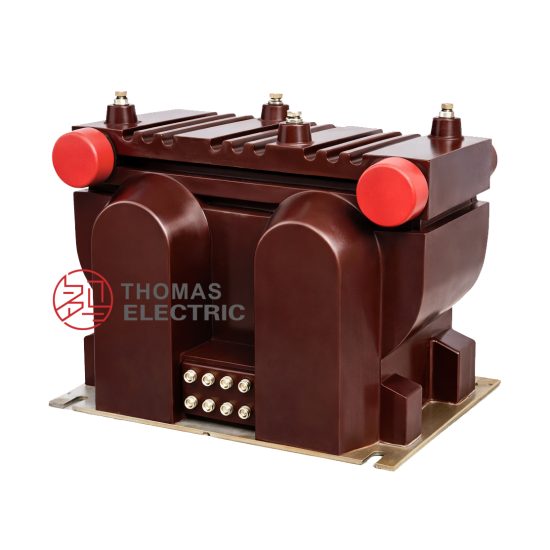
The SZV-10R is a cast-resin insulated voltage transformer specifically engineered for operation at the standardized IEC system voltage of 11kV. Designed and manufactured in strict accordance with IEC 61869-3:2011 (“Instrument transformers – Part 3: Additional requirements for inductive voltage transformers”), this device serves as a critical component in medium-voltage (MV) power systems where accurate voltage measurement, protection, and metering are essential.
Voltage transformers (VTs), also known as potential transformers (PTs), function by proportionally reducing high system voltages to standardized secondary values—typically 100 V or 110 V—suitable for interfacing with protective relays, revenue meters, and monitoring instrumentation. The SZV-10R’s cast-resin construction provides superior dielectric strength, mechanical robustness, and environmental resilience compared to oil-filled alternatives, making it particularly suitable for indoor switchgear installations and space-constrained substations.
This article details the primary application scenarios of the SZV-10R 11kV voltage transformer, supported by real-world case studies, technical advantages derived from its compliance with IEC 61869-3, and frequently asked questions relevant to engineering practice.

Application Overview
The SZV-10R 11kV voltage transformer is deployed across a range of medium-voltage infrastructure where reliability, accuracy class compliance, and long-term stability are non-negotiable. Per IEC 61869-3, the transformer is classified for use in systems with a highest voltage for equipment (Um) of 12 kV, aligning precisely with the 11kV nominal system voltage defined in IEC 60038.
Key application domains include:
- Indoor MV Switchgear Assemblies: Integrated into metal-enclosed switchgear (e.g., ring main units or RMUs) for voltage sensing in feeder protection and busbar monitoring.
- Distribution Substations: Used in primary distribution networks (typically 11kV/0.4kV or 11kV/11kV configurations) to supply voltage signals to multifunction relays and SCADA systems.
- Industrial Power Systems: Installed in manufacturing plants, data centers, and mining operations where continuous process integrity depends on precise voltage measurement for undervoltage, overvoltage, and phase-loss detection.
- Railway Traction Networks: Employed in auxiliary 11kV distribution systems that power signaling, lighting, and station infrastructure along electrified rail corridors.
- Renewable Energy Integration: Facilitates grid synchronization and fault detection in solar PV or wind farm collector substations operating at 11kV.
All applications leverage the transformer’s compliance with IEC 61869-3 accuracy classes (e.g., 0.2, 0.5, 3P, or 6P), ensuring traceable metrological performance under both steady-state and transient conditions. The cast-resin encapsulation eliminates fire hazards and leakage risks, satisfying stringent safety codes in commercial and public infrastructure.

Case Studies
Case Study 1: Urban Distribution Substation Modernization – Berlin, Germany
A municipal utility in Berlin undertook a comprehensive upgrade of aging 10kV infrastructure to align with pan-European harmonized IEC voltage standards, transitioning to an 11kV nominal system. The project required replacement of legacy oil-filled VTs with maintenance-free, environmentally safe alternatives compatible with digital substation architectures.
The SZV-10R was selected for 24 bays across three primary distribution substations due to its:
- IEC 61869-3 Class 0.5 accuracy for revenue metering,
- Compact footprint enabling retrofit into existing ABB UniGear ZS1 switchgear,
- Thermal endurance up to 150°C, critical for densely packed urban substations with limited ventilation.
Post-installation monitoring over 18 months confirmed stable ratio error (< ±0.3%) and phase displacement (< ±10 minutes) under load variations from 10% to 100% of rated burden. The absence of oil eliminated regulatory reporting obligations under EU Directive 2012/18/EU (Seveso III), streamlining operational compliance.
Case Study 2: Industrial Plant Power Quality Monitoring – Pune, India
An automotive manufacturing facility in Pune experienced recurring nuisance tripping of motor protection relays attributed to undetected voltage sags on its 11kV internal distribution network. Root-cause analysis revealed inadequate VT response during transient events due to saturation in older ferroresonant designs.
Engineers replaced all VTs with SZV-10R units rated Class 3P per IEC 61869-3, optimized for protection applications with guaranteed performance up to 5× rated voltage during fault conditions. The new VTs were integrated with IEC 61850-compliant digital relays via analog inputs.
Within six months, the plant recorded a 92% reduction in unexplained trips. Transient waveform capture confirmed accurate reproduction of voltage dips down to 30% nominal magnitude with recovery times under 20 ms—well within the relay’s dropout threshold. The resin insulation also withstood monsoon humidity levels exceeding 85% RH without degradation in insulation resistance (>10 GΩ measured annually).
Case Study 3: Solar Farm Grid Interconnection – New South Wales, Australia
A 25 MW solar photovoltaic (PV) farm in regional NSW required reliable voltage sensing at the 11kV collector level to meet Australian Energy Market Operator (AEMO) grid connection standards, which reference IEC 61869 for instrument transformer performance.
The SZV-10R was deployed in outdoor-rated enclosures adjacent to inverters, chosen for its UV-stabilized epoxy resin housing and IP54 ingress protection. Each unit supplied signals to both a revenue meter (Class 0.2) and a distance protection relay (Class 3P) via dual secondary windings.
During commissioning, the VT demonstrated compliance with IEC 61869-3 thermal withstand tests (3 seconds at 120% Um) and exhibited negligible temperature coefficient drift across diurnal ambient swings from 5°C to 45°C. Over two years of operation, no recalibration has been necessary, validating the long-term stability of the cast-resin design in harsh, high-insolation environments.

Technical Benefits
The engineering advantages of the SZV-10R stem directly from its adherence to IEC 61869-3 and the inherent properties of cast-resin insulation:
1. Precision and Accuracy Compliance
Per IEC 61869-3, the SZV-10R is tested and certified for defined accuracy classes under specified burdens and frequency ranges (typically 50/60 Hz). Ratio error and phase displacement remain within limits even under harmonic distortion (up to 5% THD), ensuring fidelity in modern grids with non-linear loads.
2. Enhanced Dielectric Performance
Cast-resin insulation provides a homogeneous dielectric barrier with high partial discharge inception voltage (>20 kV peak). This eliminates internal voids common in oil-paper systems, significantly reducing long-term aging and failure risk. The design withstands lightning impulse (75 kV peak) and power frequency (28 kV rms for 1 min) tests as mandated by IEC 61869-3 Clause 6.
3. Environmental and Safety Advantages
Unlike oil-filled VTs, the SZV-10R contains no flammable or toxic materials. It complies with RoHS and REACH directives and poses no risk of soil or groundwater contamination. Its self-extinguishing resin meets IEC 60695 flammability standards, making it suitable for installations near public spaces or critical infrastructure.
4. Mechanical and Thermal Stability
The epoxy resin matrix offers high mechanical strength (tensile strength >30 MPa) and low coefficient of thermal expansion, minimizing stress at conductor-resin interfaces during thermal cycling. Continuous thermal current rating aligns with IEC 61869-3 Table 103, supporting burdens up to 100 VA without derating.
5. Maintenance-Free Operation
With no liquid fill to degrade or leak, the SZV-10R requires only periodic visual inspection and insulation resistance testing per IEC 60270. Expected service life exceeds 30 years under normal operating conditions, reducing lifecycle costs in remote or unmanned substations.

Frequently Asked Questions (Application Scenarios)
Q1: Can the SZV-10R be used in a system labeled “10kV”?
A: No. The SZV-10R is explicitly rated for the IEC-standardized 11kV system voltage (with Um = 12 kV). While some legacy systems may colloquially refer to “10kV,” modern international practice per IEC 60038 defines the nominal voltage as 11kV. Using the SZV-10R in a true 10kV system (Um = 11.5 kV or lower) may result in non-compliance with IEC 61869-3 test protocols and void certification. Always verify the system’s highest voltage for equipment (Um) before selection.
Q2: What accuracy class should be selected for protection versus metering?
A: For revenue metering or tariff applications, IEC 61869-3 recommends accuracy classes 0.2 or 0.5. For protection functions (e.g., overvoltage, undervoltage, or distance relaying), classes 3P or 6P are appropriate, as they guarantee performance under fault-level overvoltages (typically up to 2× or 5× rated voltage). The SZV-10R can be ordered with dual secondaries—one for metering (Class 0.5) and one for protection (Class 3P)—to serve both functions simultaneously.
Q3: Is the SZV-10R suitable for outdoor installation?
A: Yes, provided it is housed in an appropriate enclosure meeting at least IP54 protection. The cast-resin body is inherently resistant to UV radiation and moisture ingress, but terminal chambers must be sealed against dust and water. Direct exposure to rain or condensation without enclosure protection may compromise terminal integrity over time.
Q4: How does the SZV-10R handle ferroresonance?
A: Ferroresonance—a nonlinear resonance between VT magnetizing reactance and system capacitance—is mitigated through core design and damping resistors per IEC 61869-3 Annex D. The SZV-10R incorporates optimized magnetic circuit geometry and optional secondary damping circuits to suppress sustained oscillations, particularly in isolated-neutral or Petersen-coil compensated networks.
Q5: What is the maximum altitude rating for the SZV-10R?
A: Standard units are rated for operation up to 1,000 meters above sea level. For installations above this altitude, dielectric strength decreases due to reduced air density; derating factors per IEC 60071-2 must be applied. Custom versions with enhanced clearances can be supplied for altitudes up to 3,000 meters upon request.

Conclusion
The SZV-10R 11kV cast-resin voltage transformer represents a technically rigorous solution for modern medium-voltage applications demanding compliance with IEC 61869-3. Its deployment across diverse sectors—from urban utilities to industrial plants and renewable energy sites—demonstrates versatility grounded in standardized engineering principles rather than marketing claims.
By adhering strictly to IEC voltage definitions (11kV nominal, Um = 12 kV), leveraging the dielectric and thermal benefits of cast-resin technology, and fulfilling accuracy class requirements for both metering and protection, the SZV-10R ensures long-term reliability, regulatory compliance, and operational safety. Engineers specifying instrument transformers for new or upgraded 11kV systems should consider the SZV-10R as a benchmark for performance aligned with international best practices.
For detailed test reports, dimensional drawings, or application engineering support, consult the manufacturer’s documentation referencing IEC 61869-3:2011 and IEC 60038:2009.