Article Content
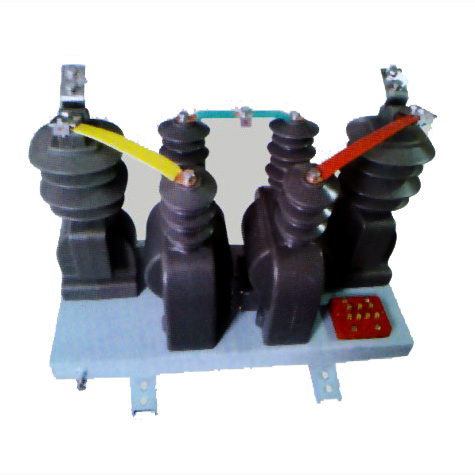
High-Performance 11kV Cast-Resin Voltage Transformer AGE-1232 for Metering & Protection per IEC 61869-3
Introduction to the AGE-1232 Voltage Transformer
The AGE-1232 is a precision-engineered, cast-resin insulated voltage transformer (VT) designed for reliable operation in 11kV (IEC-rated) or 10kV (domestic system equivalent) medium-voltage networks. As a critical component in substation instrumentation, it provides accurate voltage scaling for metering, protection relaying, and system monitoring functions. Unlike traditional oil-immersed designs, the AGE-1232 leverages vacuum pressure impregnation (VPI) epoxy resin technology to encapsulate its magnetic core and windings, delivering superior dielectric strength, environmental resilience, and maintenance-free operation over decades of service.
Operating Principle of Cast-Resin Insulation
Cast-resin insulation in the AGE-1232 is achieved through a two-stage VPI process where high-purity epoxy resin is degassed under vacuum and then pressure-injected into pre-assembled core-winding assemblies. This eliminates air voids and moisture ingress pathways, resulting in a homogeneous solid dielectric with a relative permittivity (εr) of approximately 4.2 and volume resistivity exceeding 1×10¹⁴ Ω·cm at 20°C. The resin matrix bonds chemically with the GOES (grain-oriented electrical steel) core laminations and copper windings, providing mechanical rigidity that suppresses vibration-induced noise and micro-discharges. Thermal conductivity of the cured resin (~0.8 W/m·K) ensures efficient heat dissipation from internal losses, maintaining stable temperature rise under continuous load. This monolithic structure also prevents tracking and surface flashover even under severe pollution conditions (Class III per IEC 60815), making it suitable for both indoor and outdoor installations without additional protective housings.
Advantages Over Oil-Immersed Designs
Compared to oil-filled VTs, the AGE-1232 eliminates fire hazards (non-flammable per IEC 60695), reduces environmental liability (no PCB or mineral oil containment requirements), and removes the need for periodic oil sampling or breather maintenance. Its solid insulation withstands seismic accelerations up to 0.5g without degradation—critical for earthquake-prone regions—and exhibits negligible aging under thermal cycling between –40°C and +55°C ambient conditions. Additionally, the compact footprint (typically 30–40% smaller than equivalent oil units) facilitates integration into space-constrained switchgear panels. Dielectric recovery after transient overvoltages is instantaneous due to the absence of ionized byproducts, ensuring consistent performance during fault-clearing sequences. These attributes collectively reduce lifecycle costs while enhancing operational safety and reliability in modern distribution networks.
Typical Applications Overview
The AGE-1232 is deployed across utility substations, industrial plants, renewable energy interconnection points, and commercial complexes requiring precise voltage measurement. In ring-main units (RMUs) and metal-clad switchgear, it supplies scaled-down secondary voltages (e.g., 100/√3 V or 110/√3 V) to revenue meters, power quality analyzers, and digital protective relays. Its dual-winding configuration supports simultaneous metering (accuracy class 0.2 or 0.5) and protection (accuracy class 3P or 6P) outputs without cross-interference. For example, in a 10kV urban distribution substation, one secondary winding feeds an AMI (Advanced Metering Infrastructure) system while the other triggers overvoltage or undervoltage relays during grid disturbances. The transformer’s low burden requirement (<30 VA at rated output) minimizes loading errors in long secondary cable runs, ensuring compliance with IEC 61869-3 error limits even under marginal excitation conditions.
Technical Specifications
The AGE-1232 adheres to stringent electrical and mechanical parameters defined by IEC 61869-3 and GB/T 20840.3, ensuring interoperability and performance consistency across global markets. Below is a comprehensive specification table followed by detailed environmental and operational constraints.
| Parameter | Value |
|---|---|
| Primary Voltage (Up) | 11 kV (IEC) / 10 kV (Domestic) |
| Secondary Voltage (Us) | 100/√3 V, 110/√3 V, or 100 V (configurable) |
| Voltage Ratio | 11000/√3 : 100/√3 V (standard); custom ratios available |
| Accuracy Class (Metering) | 0.2 or 0.5 per IEC 61869-3 |
| Accuracy Class (Protection) | 3P or 6P per IEC 61869-3 |
| Rated Output (per winding) | 30 VA (metering), 50 VA (protection) at cos φ = 0.8 lag |
| Insulation Level (LI/AC) | 75 kV lightning impulse / 28 kV power frequency (1 min) |
| Short-Time Withstand Current | Not applicable (VTs are not subjected to short-circuit current) |
| Thermal Stability Limit | Continuous operation at 1.2 × Up for 8 hours |
| Phase Displacement | ≤ ±10 minutes (class 0.2), ≤ ±30 minutes (class 0.5) |
| Frequency Range | 48–52 Hz (nominal 50 Hz) |
| Core Material | GOES M4 grade, 0.27 mm thickness, loss ≤ 1.0 W/kg @ 1.7 T, 50 Hz |
| Weight | Approx. 28 kg (including mounting hardware) |
| Dimensions (H×W×D) | 420 mm × 220 mm × 220 mm |
Standard Service Conditions
The AGE-1232 is rated for standard service conditions as defined in IEC 61869-1: ambient temperature range of –25°C to +40°C (with derating above +40°C), relative humidity up to 95% non-condensing, and installation altitude ≤ 1000 m above sea level. For altitudes between 1000 m and 3000 m, the power frequency withstand voltage must be reduced by 1% per 100 m increment above 1000 m. The transformer is designed for continuous operation under nominal system frequency (50 Hz or 60 Hz) with harmonic distortion not exceeding 5% THD. It is suitable for both indoor (IP2X protected terminal box) and outdoor (IP54 with optional weather shield) environments. Condensation resistance is ensured by hydrophobic resin formulation and sealed secondary terminals meeting IP65 ingress protection when properly installed.
Electrical Performance Tolerances
Under reference conditions (23°C ±2°C, sinusoidal voltage, rated burden), the AGE-1232 maintains voltage error within ±0.2% for class 0.2 and ±0.5% for class 0.5. For protection class 3P, composite error remains ≤3% at 5% to 100% of rated voltage and ≤6% for class 6P under the same range. Phase displacement tolerance is strictly controlled via precision winding alignment and core annealing processes. Temperature coefficient of ratio error is ≤±0.02%/°C between –10°C and +50°C, ensuring minimal seasonal drift. Burden variation from 25% to 100% of rated VA causes ratio error shift of less than 0.05% in class 0.2 units, validated through IEC 61869-3 Annex B testing protocols.
Typical Applications
The AGE-1232 voltage transformer serves diverse roles in modern power systems where accuracy, reliability, and compactness are paramount. Its dual-winding architecture enables concurrent metering and protection functions without signal interference.
Substation Secondary Metering
In 10kV/11kV distribution substations, the AGE-1232 provides the fundamental voltage input for revenue-grade energy metering. Connected to the busbar via a withdrawable truck or fixed mounting, its class 0.2 secondary winding drives static kWh meters compliant with IEC 62053-22. The low phase displacement (<10 arcminutes) ensures accurate reactive energy measurement, critical for power factor billing. For instance, in a European utility substation operating at 11kV/50Hz, the transformer scales phase-to-ground voltage (6.35 kV) to 100/√3 V (57.7 V), enabling precise calculation of three-phase apparent power. The cast-resin construction eliminates oil leakage risks near sensitive electronic meters, while its compact size allows retrofitting into legacy switchgear without panel modifications. .
Industrial Power Distribution
Large manufacturing facilities often deploy AGE-1232 units at main incomer and motor control center (MCC) feeders to monitor voltage stability and support protective relaying. In a petrochemical plant, for example, the protection-class (3P) winding interfaces with a multifunction relay (e.g., SEL-751) to detect undervoltage events that could stall critical compressors. The transformer’s ability to withstand 1.9 × Up for 30 seconds (per IEC 61869-3 transient test) ensures survival during switching surges common in capacitor bank operations. Its non-flammable design meets ATEX Zone 2 requirements, eliminating explosion hazards in hazardous areas. Secondary wiring is routed through shielded conduits to mitigate EMI from variable-frequency drives, with burden kept below 20 VA to maintain accuracy during motor startup transients.
Renewable Energy Integration
Solar PV and wind farms utilize AGE-1232 VTs at the point of interconnection (POI) to comply with grid codes requiring real-time voltage monitoring. In a 10 MW solar farm connected to a 11kV rural feeder, the transformer supplies voltage data to a SCADA RTU for remote telemetry and to a synchrophasor (PMU) for grid stability analysis. The class 0.5 winding meets IEEE 1547-2018 voltage measurement accuracy requirements during rapid irradiance changes. Cast-resin insulation resists UV degradation and thermal cycling between desert daytime highs (+55°C) and nighttime lows (–10°C), outperforming polymer-housed alternatives. During islanding detection tests, the VT’s fast response time (<20 ms to 90% step response) enables timely anti-islanding relay operation.
Rural and Suburban Distribution Networks
Utility-owned pole-mounted or pad-mounted transformers in suburban neighborhoods often integrate AGE-1232 units for automated meter reading (AMR) and outage detection. Mounted inside ring-main units (RMUs), the VT provides voltage signals to distribution automation terminals (DATs) that report sags, swells, and interruptions to the DMS (Distribution Management System). In rural India, where 11kV feeders experience frequent voltage fluctuations due to agricultural pump loads, the AGE-1232’s thermal stability ensures consistent accuracy despite daily load swings from 20% to 120% of nominal. Its maintenance-free design reduces truck rolls in remote areas, while the IP54-rated enclosure withstands monsoon humidity and dust ingress. .
Compliance with International Standards
The AGE-1232 is engineered to satisfy the rigorous requirements of IEC 61869-3:2011 (“Instrument transformers – Part 3: Additional requirements for inductive voltage transformers”) and its Chinese counterpart, GB/T 20840.3-2013. Compliance ensures global market acceptance and interoperability with protection and metering equipment.
IEC 61869-3 Compliance Details
IEC 61869-3 defines performance criteria for accuracy, insulation, temperature rise, and short-circuit behavior specific to inductive VTs. The AGE-1232 undergoes type tests including power frequency withstand (28 kV rms for 1 min), lightning impulse (75 kV peak, 1.2/50 μs wave), partial discharge (<10 pC at 1.2 × Um/√3), and temperature rise (≤60 K for resin, measured by resistance method). Accuracy verification follows Clause 6.3, with tests conducted at 80%, 100%, and 120% of rated voltage across 25% to 100% burden range. Transient response is validated per Annex C using a double-exponential current injection to simulate ferroresonance conditions; the AGE-1232 limits peak overvoltage to <2.0 × Us within 100 ms. Marking includes IEC-standard symbols for polarity (•), accuracy class, and rated output, permanently molded into the resin housing.
GB/T 20840.3 Alignment
While GB/T 20840.3 closely mirrors IEC 61869-3, key differences exist in insulation coordination and labeling. Chinese standards mandate a slightly higher power frequency test voltage (30 kV vs. 28 kV) for 10kV systems and require secondary terminal markings in Mandarin alongside international symbols. The AGE-1232 meets both by incorporating dual-language labels and designing insulation margins to exceed the stricter requirement. Additionally, GB/T specifies a maximum sound level of 55 dB(A) at 1 m distance—achieved through core clamping optimization and resin damping. All units destined for China undergo CCC (China Compulsory Certification) testing at CNAS-accredited labs, including salt fog resistance (96 hours, 5% NaCl) for coastal installations.
Testing and Certification Requirements
Certification involves routine tests (100% production), type tests (prototype validation), and special tests (customer-requested). Routine tests include turns ratio verification (±0.2% tolerance), polarity check, and insulation resistance (>1000 MΩ at 2500 V DC). Type tests, performed every five years or after design changes, encompass all IEC 61869-3 clauses plus seismic qualification (IEEE 693). Certificates from notified bodies (e.g., TÜV, SGS) confirm compliance, with test reports traceable to national metrology institutes (e.g., PTB, NIM). For North American projects, the AGE-1232 can be supplied with ANSI C57.13 supplemental testing (e.g., 60 Hz calibration, 10-second thermal withstand), though its primary certification remains IEC-based.
On-Site Testing Procedures
Post-installation verification ensures the AGE-1232 performs within specifications before energization. The following tests are mandatory per IEC 60270 and IEEE C57.13.6.
Insulation Resistance Test
Using a 2500 V DC megohmmeter, measure insulation resistance between primary winding and ground, and between primary and secondary windings. Acceptance criterion: ≥1000 MΩ at 20°C. Correct for temperature using RT2 = RT1 × 2(T1–T2)/10. Low readings indicate moisture ingress or resin cracking; retest after 24-hour drying if RH > 80%. Ensure secondary terminals are shorted and grounded during primary-to-ground measurement to avoid false low readings from capacitive coupling.
Turns Ratio Test
Apply a low-voltage AC source (50–100 V) to the primary and measure secondary voltage with a calibrated voltmeter (accuracy class 0.1). Calculate actual ratio and compare to nameplate. Tolerance: ±0.2% for metering class, ±0.5% for protection class. Use a dedicated turns ratio tester (e.g., Omicron CT Analyzer) for automated comparison. Deviations beyond tolerance suggest winding shorts or incorrect tap selection; verify terminal connections before condemning the unit.
Polarity Test
Confirm reducing polarity (IEC standard) by applying a 6–12 V DC pulse to the primary and observing secondary voltage direction with an analog voltmeter. Momentary positive deflection on secondary when primary is energized indicates correct polarity. Incorrect polarity causes 180° phase reversal, leading to metering errors or relay misoperation. Digital multimeters may not capture transient response; use a center-zero analog meter or oscilloscope for definitive results.
Power Frequency Withstand Voltage Test
Apply 28 kV rms (for 11kV system) at 50 Hz between primary and grounded secondary/core for 1 minute. Use a calibrated HV test set with automatic trip at 10 mA leakage current. No flashover or sustained discharge constitutes pass. Reduce test voltage by 10% for field tests if equipment history is unknown. Always discharge primary capacitance through a grounding stick post-test to prevent residual charge hazards.
Open-Circuit Characteristic Test
With secondary open, gradually increase primary voltage from 20% to 120% of Up while measuring excitation current. Plot V-I curve; knee point should occur above 150% Up. Excessive magnetizing current below 100% Up indicates core saturation due to manufacturing defect or prior overvoltage damage. This test verifies immunity to ferroresonance—a critical failure mode in VTs connected to isolated neutral systems.
Preventive Maintenance Guide
Although cast-resin VTs like the AGE-1232 are largely maintenance-free, periodic inspections extend service life and preempt failures.
Periodic Inspection Protocol
Conduct annual visual and electrical checks: inspect for surface cracks, tracking marks, or discoloration on resin housing; verify terminal tightness (torque: 2.5 N·m for M6 studs); clean dust/debris with dry compressed air (<3 bar). Perform insulation resistance and turns ratio tests annually. After severe weather (lightning strike, flood), add partial discharge measurement (<50 pC at 1.2 × Um/√3 indicates healthy insulation). Document all readings in a CMMS for trend analysis—gradual IR decline may signal internal moisture accumulation.
Maintenance Intervals and Fault Diagnosis
| Interval | Action | Fault Indicator |
|---|---|---|
| Annually | IR test, visual inspection, terminal torque check | IR <500 MΩ; loose terminals causing arcing |
| Every 5 Years | Full IEC 61869-3 routine tests + PD measurement | PD >20 pC; ratio error drift >0.3% |
| After Fault | Open-circuit test, withstand voltage test | Knee point shift; flashover during HV test |
Common faults include secondary winding open-circuit (causing dangerous overvoltage) and core lamination delamination (increasing no-load losses). If ratio error exceeds tolerance but IR is normal, suspect secondary burden mismatch—verify connected device VA ratings. Never operate with secondary open; always short-circuit before disconnecting meters.
Conclusion
The AGE-1232 11kV cast-resin voltage transformer represents a benchmark in medium-voltage instrumentation, combining IEC 61869-3-certified accuracy with the robustness of epoxy-encapsulated construction. Its dual-winding design efficiently supports both revenue metering (class 0.2/0.5) and protection (class 3P/6P) without compromise, while GOES core material and VPI resin technology ensure minimal losses and exceptional thermal stability. By eliminating flammable fluids and reducing maintenance overhead, it enhances safety in confined substation environments and lowers total cost of ownership over a projected service life of 25–30 years. Rigorous compliance with international standards guarantees interoperability across global grids, from urban distribution networks to remote renewable sites. Field-proven reliability under extreme temperatures, pollution, and transient stresses makes the AGE-1232 an optimal choice for engineers prioritizing precision, durability, and long-term operational integrity in 10kV/11kV applications.