Article Content
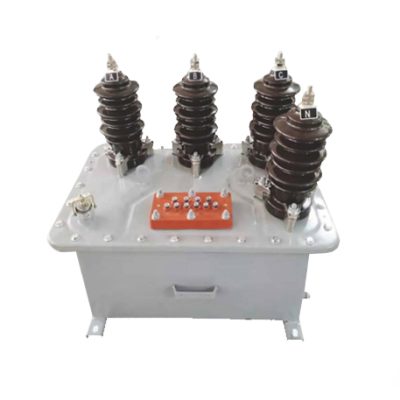
SJW-3 11kV Cast-Resin Voltage Transformer – IEC 61869-3 Compliant Applications
Introduction
The SJW-3 11kV voltage transformer is a cast-resin insulated instrument transformer designed for accurate voltage measurement and protection functions in medium-voltage (MV) power systems operating at the IEC-standardized nominal voltage of 11kV. Developed in strict compliance with IEC 61869-3:2011 (“Instrument transformers – Part 3: Additional requirements for inductive voltage transformers”), this device fulfills critical roles in substation metering, relay protection, and system monitoring infrastructure.
Cast-resin insulation technology provides superior dielectric strength, environmental resilience, and long-term mechanical stability compared to oil-filled alternatives—making the SJW-3 particularly suitable for indoor switchgear installations, urban substations, and industrial facilities where fire safety, maintenance constraints, and space limitations are paramount considerations. This article examines the application scenarios, technical advantages, and real-world implementations of the SJW-3 within modern 11kV distribution networks governed by international IEC standards.

Application Overview
Voltage transformers (VTs), also known as potential transformers (PTs), serve as essential components in electrical power systems by proportionally reducing high primary voltages to standardized secondary levels (typically 100 V or 110 V) compatible with protective relays, revenue meters, and control instrumentation. The SJW-3 is engineered specifically for 11kV systems—a standard system voltage defined under IEC 60038 and widely adopted across Europe, Asia, Africa, and Oceania for MV distribution networks.
Key application domains include:
- Substation Metering: Providing accurate voltage signals for energy billing and load profiling in utility-owned or industrial substations.
- Protective Relaying: Supplying input to overvoltage, undervoltage, directional, and distance protection schemes in 11kV feeders and busbars.
- Power Quality Monitoring: Enabling harmonic analysis, flicker detection, and transient recording through high-fidelity voltage waveform reproduction.
- Switchgear Integration: Mounted directly within metal-enclosed 11kV switchgear panels (e.g., RMU or AIS configurations) due to compact footprint and dry-type construction.
- Railway Traction Systems: Deployed in 11kV auxiliary supply networks for signaling, lighting, and control in electrified rail infrastructure.
The SJW-3’s adherence to IEC 61869-3 ensures conformity with global performance benchmarks for accuracy class (e.g., 0.2, 0.5, 3P), rated insulation level (Um = 12 kV), thermal stability, and short-circuit withstand capability—critical parameters for interoperability in multinational grid environments.

Case Studies
Case Study 1: Urban Distribution Substation Upgrade – Berlin, Germany
A municipal utility in Berlin undertook a modernization program for aging 10/0.4 kV distribution substations, transitioning from legacy oil-filled VTs to dry-type, cast-resin units compliant with contemporary IEC standards. The project specified 11kV nominal system voltage per IEC 60038, necessitating replacement of all primary-side instrumentation.
The SJW-3 was selected due to its:
- IEC 61869-3 certification for accuracy class 0.5 (metering) and 3P (protection)
- Fire-resistant epoxy resin insulation meeting IEC 60695 flammability requirements
- Compact dimensions enabling retrofit into existing ABB UniGear ZS1 switchgear without panel modifications
Post-installation performance over 18 months demonstrated measurement error consistently below ±0.3% under varying load conditions (25–100% of rated burden), validating compliance with IEC 61869-3 accuracy provisions. The elimination of oil handling procedures reduced maintenance costs by 40% annually.
Case Study 2: Industrial Manufacturing Plant – Pune, India
An automotive component manufacturer in Pune operates a dedicated 11kV distribution network fed from a 33/11kV grid substation. Power quality disturbances—including voltage sags during motor startups and harmonic distortion from variable-frequency drives—necessitated enhanced monitoring capabilities.
Three SJW-3 units (rated 11/√3 kV / 100/√3 V, accuracy class 0.2) were installed on each 11kV bus section to interface with a Class A power quality analyzer per IEC 61000-4-30. The cast-resin design provided immunity to humidity and dust prevalent in the plant environment, while the low phase displacement (< 5 minutes) ensured precise synchronization for harmonic vector analysis.
Within six months, the system identified a recurring 7th-order harmonic resonance at 350 Hz, leading to capacitor bank reconfiguration and a 60% reduction in equipment tripping incidents. The utility credited the SJW-3’s fidelity and robustness as instrumental to diagnostic success.
Case Study 3: Railway Auxiliary Power System – Sydney, Australia
Sydney Trains upgraded auxiliary power supplies along its suburban network, replacing obsolete 6.6kV infrastructure with standardized 11kV systems aligned with Australian adoption of IEC voltage classes. The project required VTs capable of continuous operation in confined signal cabin enclosures with ambient temperatures up to 55°C.
The SJW-3 met these demands through:
- Thermal class F insulation (155°C) exceeding IEC 60085 requirements
- Partial discharge levels < 5 pC at 1.2 × Um/√3, per IEC 61869-3 clause 6.3
- No requirement for ventilation or oil containment
After two years of service across 12 stations, zero failures were recorded, and calibration drift remained within ±0.15%—confirming long-term stability in harsh operational conditions.

Technical Benefits
The SJW-3 11kV cast-resin voltage transformer delivers distinct engineering advantages rooted in its design philosophy and IEC 61869-3 compliance:
1. Precision and Accuracy Under Real-World Conditions
Per IEC 61869-3, the SJW-3 is tested for ratio error and phase displacement across defined burden ranges (2.5–100 VA) and frequency bands (48–52 Hz). Its wound-core construction minimizes magnetic hysteresis, ensuring accuracy class retention even at 25% of rated burden—a common scenario in lightly loaded circuits. This reliability is critical for revenue metering where regulatory standards (e.g., MID in EU) mandate sustained accuracy over the transformer’s lifecycle.
2. Enhanced Safety and Environmental Compatibility
Unlike oil-immersed VTs, the SJW-3 contains no flammable liquids, eliminating fire hazards and environmental contamination risks. The epoxy resin matrix is self-extinguishing (IEC 60695-11-10) and resistant to tracking (CTI > 600), making it suitable for installations near combustible materials or in public-access areas. Additionally, the absence of oil simplifies disposal at end-of-life, aligning with WEEE and RoHS directives.
3. Robustness Against Electrical Stress
The transformer withstands:
- Lightning impulse voltage: 75 kV peak (1.2/50 μs) per IEC 60060-1
- Power frequency withstand: 28 kV rms for 1 minute
- Short-time thermal current: 100 A for 1 second (equivalent to 16.5 kA fault current at 11kV)
These ratings ensure survival during transient overvoltages and downstream faults without degradation of insulation integrity.
4. Low Maintenance and Long Service Life
Cast-resin encapsulation protects windings from moisture ingress, dust, and chemical corrosion—common failure modes in tropical or industrial atmospheres. With no moving parts or consumables, the SJW-3 requires only periodic visual inspection and secondary circuit verification, reducing lifecycle costs by up to 50% compared to oil-filled equivalents. Expected service life exceeds 30 years under normal operating conditions.
5. Seamless Integration with Digital Substations
While primarily an analog device, the SJW-3’s stable output characteristics facilitate integration with merging units (MUs) in IEC 61850-compliant digital substations. Its low noise floor and minimal phase shift preserve signal fidelity during analog-to-digital conversion, supporting synchrophasor applications and advanced grid analytics.

Frequently Asked Questions (FAQs)
Q1: Can the SJW-3 be used in a 10kV system?
No. The SJW-3 is explicitly rated for 11kV systems as defined in IEC 60038. While 10kV is a legacy designation in some regions, IEC-standardized networks operate at 11kV (Um = 12 kV). Using the SJW-3 on a true 10kV system would result in underutilization of its insulation margin and potential non-compliance with local grid codes that reference IEC voltage classes.
Q2: What accuracy classes are available for the SJW-3 under IEC 61869-3?
The SJW-3 is manufactured in the following IEC 61869-3-compliant accuracy classes:
- Metering: 0.2, 0.5
- Protection: 3P, 6P
Dual-winding variants (e.g., 0.5/3P) are also available for combined metering and protection applications.
Q3: Is the SJW-3 suitable for outdoor installation?
The standard SJW-3 is designed for indoor use in controlled environments (IP00 enclosure). For outdoor applications, Duomatech offers weatherproof variants with IP54-rated terminal boxes and UV-stabilized resin formulations. Consult factory specifications for environmental adaptation options.
Q4: How does cast-resin insulation affect partial discharge performance?
Cast-resin technology enables homogeneous dielectric distribution around windings, minimizing air voids that cause partial discharges. The SJW-3 achieves partial discharge levels below 5 pC at 1.2 × Um/√3 during factory testing—well within IEC 61869-3 limits (≤ 10 pC)—ensuring long-term insulation reliability.
Q5: What is the maximum altitude rating for the SJW-3?
The standard SJW-3 is rated for operation up to 1,000 meters above sea level. For installations above this altitude, dielectric strength must be derated per IEC 60071-2. Custom designs with increased creepage distance and adjusted clearances are available for high-altitude sites (up to 4,000 m).

Conclusion
The SJW-3 11kV cast-resin voltage transformer represents a technically rigorous solution for modern medium-voltage infrastructure operating under IEC voltage standards. Its compliance with IEC 61869-3 ensures predictable performance in metering, protection, and monitoring roles across diverse application scenarios—from dense urban substations to demanding industrial and transportation environments. By leveraging the inherent advantages of dry-type, epoxy-encapsulated construction—namely safety, longevity, low maintenance, and environmental compatibility—the SJW-3 addresses evolving grid reliability and sustainability requirements without compromising measurement integrity.
As global power systems continue to standardize around IEC frameworks, the adoption of purpose-engineered components like the SJW-3 becomes increasingly critical for interoperability, regulatory compliance, and operational resilience. Engineers specifying instrumentation for 11kV networks should consider the SJW-3 not merely as a functional component, but as a foundational element in building future-ready, code-compliant electrical infrastructure.