Article Content
For Substation Metering & Protection: SZW-6 11kV Cast-Resin Voltage Transformer per IEC 61869-3
Introduction to the SZW-6 Voltage Transformer
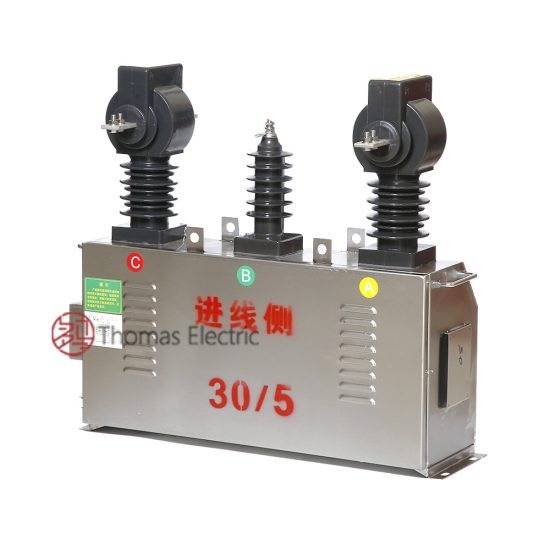
The SZW-6 is a precision-engineered, indoor-type cast-resin voltage transformer (VT) designed for reliable operation in 11kV (IEC-rated) or 10kV (domestic system) medium-voltage networks. It converts high primary voltages to standardized secondary outputs—typically 100 V or 110 V—for use in revenue metering, protective relaying, and power quality monitoring systems. Unlike traditional oil-immersed designs, the SZW-6 employs vacuum pressure impregnation (VPI) epoxy resin insulation technology, offering superior dielectric strength, fire resistance, and environmental safety.
Operating Principle of Cast-Resin Insulation
Cast-resin insulation in the SZW-6 is achieved through a two-stage VPI process where the wound core-coil assembly is first evacuated to remove moisture and air, then impregnated under pressure with cycloaliphatic epoxy resin. This creates a monolithic, void-free structure that eliminates partial discharge risks below 10 pC at rated voltage. The resin matrix provides mechanical rigidity, thermal conductivity (0.8–1.2 W/m·K), and long-term stability across -40°C to +40°C ambient conditions. Unlike oil-filled units, there is no risk of leakage, flammability, or maintenance-intensive oil testing. The solid insulation also enables compact dimensions suitable for metal-enclosed switchgear installations where space constraints are critical.
Advantages Over Oil-Immersed Designs
Compared to oil-immersed VTs, the SZW-6 offers significant operational and safety benefits. Its dry-type construction eliminates fire hazards (compliant with IEC 60695 glow-wire tests), making it ideal for indoor substations near public infrastructure. Maintenance requirements are drastically reduced—no oil sampling, degassing, or tank inspections are needed. The unit’s weight is approximately 30% lower than equivalent oil-filled models, simplifying handling and mounting. Additionally, the absence of liquid insulation prevents environmental contamination during fault conditions or end-of-life disposal. Thermal performance is enhanced by the resin’s ability to dissipate heat uniformly, supporting continuous operation at 1.2× rated voltage for up to 8 hours without degradation.
Typical Applications Overview
The SZW-6 is deployed across utility substations, industrial plants, and renewable energy facilities requiring accurate voltage transformation with minimal lifecycle costs. In 10kV distribution networks, it interfaces with digital meters (e.g., IEC 61850-compliant IEDs) and overvoltage/undervoltage relays. Its robust design withstands transient overvoltages from switching surges or lightning, ensuring secondary equipment protection. Common configurations include single-phase units connected phase-to-ground or phase-to-phase, often installed directly on busbars within RMU (Ring Main Unit) or AIS (Air-Insulated Switchgear) enclosures. With a service life exceeding 25 years under standard conditions, the SZW-6 delivers consistent accuracy even in harsh environments with humidity up to 95% RH.
Technical Specifications
The SZW-6 voltage transformer is engineered to meet stringent electrical and environmental performance criteria as defined by IEC 61869-3 and GB/T 20840.3. Below is a comprehensive specification table followed by detailed subsections covering operational parameters and service conditions.
| Parameter | Value |
|---|---|
| Primary Voltage (IEC) | 11 kV |
| Primary Voltage (Domestic) | 10 kV |
| Secondary Voltage | 100 V or 110 V (standard); 100/√3 V for phase-to-ground |
| Voltage Ratio | 11000/100 V, 11000/110 V, 10000/100 V, etc. |
| Accuracy Class (Metering) | 0.2, 0.5 (per IEC 61869-3) |
| Accuracy Class (Protection) | 3P, 6P |
| Rated Output (VA) | 10–100 VA per burden class |
| Insulation Level (Um/Up1/Up2) | 12 kV / 75 kV (1 min) / 85 kV (lightning impulse) |
| Core Material | Grain-Oriented Electrical Steel (GOES), 0.23–0.27 mm thickness |
| Frequency | 50 Hz or 60 Hz |
| Temperature Rise | ≤ 55 K at rated load (resistance method) |
| Ambient Temperature Range | -40°C to +40°C |
| Altitude Limit | ≤ 1000 m (derating required above) |
| Partial Discharge | < 10 pC at 1.2 × Um/√3 |
Electrical Performance Parameters
The SZW-6 achieves metering accuracy classes of 0.2 and 0.5, meaning voltage error remains within ±0.2% and ±0.5%, respectively, at 80–120% of rated voltage and 25–100% of rated burden. Phase displacement is limited to ±10 minutes (0.2 class) and ±30 minutes (0.5 class). For protection applications, 3P and 6P classes ensure errors stay within ±3% and ±6% up to 5× rated voltage during fault transients. The transformer supports multiple secondary windings (e.g., one for metering, one for protection) with galvanic isolation between them. Rated thermal burden is 100 VA continuous, with short-time thermal withstand capability of 10× rated current for 1 second. Core losses are minimized through high-permeability GOES laminations, reducing no-load current to less than 0.5% of rated primary current.
Standard Service Conditions
The SZW-6 is rated for indoor installation under normal service conditions per IEC 60060-1: ambient temperature from -40°C to +40°C, relative humidity up to 95% non-condensing, and altitude not exceeding 1000 meters above sea level. At altitudes between 1000–2000 m, the dielectric test voltage must be reduced by 1% per 100 m increment. The unit is not suitable for explosive atmospheres unless housed in certified enclosures. Mechanical vibration limits follow IEC 60068-2-6 (5–500 Hz, 0.7 g acceleration). Installation must ensure adequate clearance: minimum 125 mm phase-to-phase and 100 mm phase-to-ground at 11kV. Terminal blocks accommodate copper or aluminum conductors up to 150 mm² cross-section, torqued to 25 N·m.
Typical Applications
The SZW-6 voltage transformer serves critical roles across diverse power infrastructure sectors, providing precise voltage scaling for measurement and protection functions.
Substation Secondary Metering Systems
In 10kV/11kV utility substations, the SZW-6 interfaces directly with revenue-class kWh meters and SCADA RTUs. Its 0.2-class accuracy ensures compliance with regulatory billing requirements (e.g., EN 50163, DL/T 448). Installed on the secondary side of ring main units, it supplies 100 V signals to multi-function meters that calculate real/reactive energy, power factor, and demand. The low phase displacement (<10 arcmin) prevents vector errors in three-phase metering. In smart grid deployments, the SZW-6’s stable output enables accurate time-synchronized phasor measurement when paired with PMUs. Its compact footprint allows retrofitting into legacy switchgear without busbar modifications.
Industrial Power Distribution Networks
Within manufacturing plants and data centers, the SZW-6 monitors feeders supplying motors, transformers, and UPS systems. It connects to protection relays (e.g., overvoltage ANSI 59, undervoltage ANSI 27) that trip circuit breakers during abnormal conditions. The 3P/6P protection accuracy ensures reliable operation during voltage sags or swells caused by large motor starts or capacitor bank switching. In arc flash mitigation schemes, the VT provides input to differential or directional earth-fault relays. The resin insulation resists chemical vapors common in industrial settings, unlike oil-filled alternatives that degrade under solvent exposure.
Renewable Energy Integration
Solar PV and wind farms utilize the SZW-6 at the point of interconnection (POI) to grid-tie inverters or step-up transformers. It enables anti-islanding protection by detecting voltage deviations outside ±5% of nominal. During grid faults, the VT’s linear response up to 1.9× rated voltage supports ride-through compliance per IEEE 1547 or GB/T 19964. In microgrids, it feeds voltage regulators that maintain bus stability during islanded operation. The unit’s low thermal time constant (≈15 minutes) allows rapid recovery after transient overloads, critical in intermittent generation environments.
Rural and Suburban Distribution Networks
In remote areas with limited maintenance access, the SZW-6’s maintenance-free design reduces operational costs. Mounted on pole-top reclosers or pad-mounted transformers, it supplies signals to automated meter reading (AMR) systems. Its immunity to moisture ingress prevents accuracy drift in humid climates—a common failure mode in open-core VTs. The transformer supports single-phase or split-phase configurations for residential feeders, with secondary outputs routed to local concentrators. Compliance with GB/T 20840.3 ensures interoperability with Chinese-made distribution automation terminals widely used in Asia-Pacific rural electrification projects.
Compliance with International Standards
The SZW-6 is fully compliant with IEC 61869-3:2011 (“Instrument transformers – Part 3: Additional requirements for inductive voltage transformers”) and its Chinese counterpart, GB/T 20840.3-2013. These standards govern design, testing, marking, and performance verification.
IEC 61869-3 Compliance Details
Under IEC 61869-3, the SZW-6 undergoes type, routine, and special tests. Type tests include temperature rise (Clause 7.3), short-circuit withstand (Clause 7.4), and impulse voltage (Clause 7.6). The transformer must demonstrate ≤55 K temperature rise at rated load and survive 1-second short-circuit currents up to 20 kA. Partial discharge is measured per IEC 60270 at 1.2 × Um/√3 (7.62 kV for 11kV system), with acceptance criterion <10 pC. Accuracy verification follows Clause 8, requiring error measurements at 20%, 50%, 80%, 100%, and 120% of rated voltage across specified burdens. Marking includes rated insulation level (e.g., “12/75/85”), accuracy class, and vector group (e.g., “II” for single-phase).
GB/T 20840.3 Alignment and Regional Adaptations
GB/T 20840.3 mirrors IEC 61869-3 but includes China-specific requirements. Notably, it mandates additional seismic testing (horizontal acceleration 0.25g) for units destined for earthquake-prone regions like Sichuan. The standard also specifies domestic voltage ratings (10kV instead of 11kV) and permits secondary voltages of 100 V or 100/√3 V only—110 V variants require customer approval. Burden designation uses “VA” instead of “S” (e.g., “30 VA” vs. “30 S”). While IEC allows mixed metering/protection windings, GB/T requires separate terminal blocks with physical barriers. Factory test reports must be bilingual (Chinese/English) and stamped by CNAS-accredited labs.
Testing and Certification Requirements
Certification involves third-party validation by bodies such as TÜV, KEMA, or CEPREI. Routine tests performed on every unit include: winding resistance (±2% tolerance vs. prototype), turns ratio (±0.25% error), polarity (reducing polarity confirmed), and power frequency withstand (75 kV for 1 min at 50 Hz). Type test reports remain valid for five years unless design changes occur. For export to EU markets, the SZW-6 carries CE marking under LVD 2014/35/EU, referencing harmonized standard EN 61869-3. In China, it requires CQC certification demonstrating compliance with GB/T 20840.3 and GB 1207 (safety).
On-Site Testing Procedures
Post-installation verification ensures the SZW-6 performs within specifications before energization. All tests follow IEC 60060-1 and IEC 61869-3 protocols.
Insulation Resistance Test
Using a 2500 V DC megohmmeter, measure insulation resistance between primary winding and ground, secondary windings and ground, and inter-winding. Acceptance criteria: ≥1000 MΩ at 20°C. Correct for temperature using RT2 = RT1 × 2(T1−T2)/10. Values below 500 MΩ indicate moisture ingress or resin cracking. Perform before and after dielectric tests to detect insulation damage.
Turns Ratio Test
Apply 100–200 V AC to the primary and measure secondary voltage with a calibrated voltmeter (accuracy class 0.1). Calculate actual ratio: Vp/Vs. Compare to nameplate ratio; tolerance is ±0.25% for metering classes, ±1% for protection. Use a dedicated ratio tester (e.g., Omicron CT Analyzer) for automated comparison. Deviations >0.5% suggest turn-to-turn shorts or incorrect tap selection.
Polarity Test
Verify reducing polarity per IEC 61869-3 Figure 3. Connect a 6–12 V battery momentarily between primary terminals (H1+, H2−). Observe secondary voltage spike on an oscilloscope or analog voltmeter connected to X1, X2. A positive deflection confirms correct polarity. Incorrect polarity causes 180° phase reversal, leading to metering errors or relay misoperation in directional schemes.
Power Frequency Withstand Voltage Test
Apply 75 kV RMS at 50 Hz between primary and grounded secondary/core for 60 seconds. Ramp up at ≤2 kV/s. No flashover or disruptive discharge is permitted. Secondary windings are short-circuited and grounded during this test. For field testing, use a portable HV test set with current limit ≤10 mA. If failed, inspect for surface contamination or internal voids via partial discharge mapping.
Open-Circuit Characteristic Test
With secondary open, gradually increase primary voltage from 0 to 1.5 × rated (16.5 kV). Record excitation current at 20%, 50%, 80%, 100%, 120%, and 150% levels. Plot Iexc vs. Vp. A sharp current rise above 120% indicates core saturation. Compare to factory curve; deviation >10% suggests core lamination damage or shorted turns. This test validates magnetic circuit integrity without loading the secondary.
Preventive Maintenance Guide
Although cast-resin VTs require minimal maintenance, periodic checks extend service life and prevent unexpected failures.
Annual Visual and Functional Inspection
Inspect for surface cracks, tracking marks, or dust accumulation on the resin housing. Clean with dry cloth or low-pressure air (≤2 bar); avoid solvents. Check terminal tightness (25 N·m torque) and corrosion on lugs. Verify secondary wiring integrity—no frayed insulation or loose connections. Perform insulation resistance and ratio tests annually in critical applications (e.g., revenue metering). Record results in a logbook for trend analysis; a 20% drop in insulation resistance warrants further investigation.
Five-Year Comprehensive Maintenance Schedule
Every five years, conduct partial discharge measurement using IEC 60270 methods. Acceptable level remains <10 pC at 1.2 × Um/√3. Re-calibrate accuracy if used for billing—send to accredited lab for full IEC 61869-3 error curve verification. Inspect mounting hardware for stress fractures, especially in seismically active zones. Replace silica gel breathers if present (though rare in sealed cast-resin units). Update asset management records with test data and environmental exposure history.
Maintenance Intervals and Fault Diagnosis
| Interval | Action | Fault Indicators |
|---|---|---|
| Annually | Visual inspection, IR test, ratio check | Cracks, discoloration, IR <500 MΩ |
| Every 5 Years | PD test, accuracy recalibration | PD >15 pC, ratio error >0.5% |
| After Fault | Full dielectric and ratio suite | Flashover marks, blown fuses |
Common faults include secondary winding opens (causing infinite ratio error) or core saturation due to ferroresonance—mitigated by installing damping resistors per IEC TR 61869-100. Never operate with secondary open under primary voltage; this induces dangerous overvoltages.
Conclusion
The SZW-6 11kV cast-resin voltage transformer represents a benchmark in reliability, accuracy, and compliance for modern medium-voltage systems. Engineered with VPI epoxy resin insulation and GOES silicon steel cores, it delivers exceptional dielectric performance, thermal stability, and mechanical robustness. Its dual compliance with IEC 61869-3 and GB/T 20840.3 ensures global applicability—from European utility substations to Chinese industrial parks—while supporting both metering (0.2/0.5 class) and protection (3P/6P) functions with precision. The absence of flammable materials and minimal maintenance requirements make it ideal for indoor, space-constrained, or environmentally sensitive installations. Rigorous factory and field testing protocols guarantee performance consistency over a projected service life of 25–30 years under standard operating conditions. As power networks evolve toward digitalization and distributed generation, the SZW-6’s stable, low-distortion output provides a trusted foundation for advanced monitoring, control, and protection schemes.