Article Content
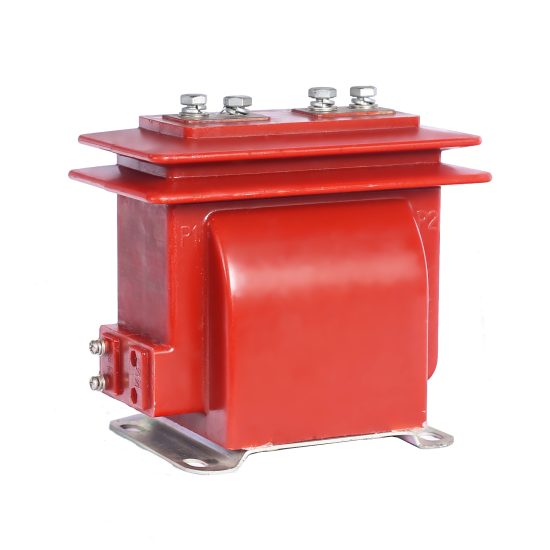
ZJC-10Q 11kV Cast-Resin Current Transformer for Substation Metering and Protection – IEC 61869-2 Certified
Introduction to the ZJC-10Q Current Transformer
The ZJC-10Q is a medium-voltage cast-resin current transformer (CT) engineered for high-accuracy metering and dependable protection functions in 11kV (IEC standard) or 10kV (domestic Chinese system) power networks. Designed in strict accordance with IEC 61869-2 and GB/T 20840.2, this instrument transformer leverages vacuum pressure impregnation (VPI) epoxy resin technology to fully encapsulate its magnetic core and secondary windings within a solid, non-flammable, and hydrophobic dielectric matrix. This construction eliminates the risk of oil leakage, fire hazards, and environmental contamination associated with traditional oil-immersed CTs, making it ideal for indoor substations, urban switchgear, and environmentally sensitive installations.
Operating Principle of Cast-Resin Insulation
Cast-resin insulation in the ZJC-10Q relies on a two-stage VPI process where dry-wound coils and grain-oriented electrical steel (GOES) cores are placed in a mold, evacuated to remove air pockets, and then impregnated under pressure with a thermosetting epoxy resin system. The assembly is subsequently cured at elevated temperatures (typically 80–120°C) to form a monolithic, void-free structure. This process ensures uniform dielectric strength, excellent partial discharge resistance (<5 pC at 1.2 × Um/√3), and superior mechanical stability. The resin’s coefficient of thermal expansion closely matches that of copper and steel, minimizing internal stresses during thermal cycling from –40°C to +40°C ambient conditions. Unlike oil-paper systems, cast-resin does not degrade over time due to oxidation or moisture ingress, contributing to a service life exceeding 25 years with minimal maintenance.
Advantages Over Oil-Immersed Designs
Compared to oil-filled CTs, the ZJC-10Q offers significant operational and safety benefits. Its solid insulation eliminates flammability risks (meeting IEC 60695 glow-wire ignition test requirements), removes the need for conservator tanks or breather systems, and prevents dielectric fluid leakage—critical in confined indoor switchgear rooms or near water sources. The compact footprint reduces spatial requirements by up to 30%, while the absence of oil simplifies transportation, handling, and disposal logistics. Additionally, cast-resin CTs exhibit lower susceptibility to partial discharge under polluted or humid conditions, enhancing reliability in coastal or industrial environments. Maintenance costs are reduced as there is no requirement for periodic oil sampling, DGA analysis, or tank inspections.
Typical Application Overview
The ZJC-10Q is deployed across utility substations, industrial plants, renewable energy farms, and commercial complexes requiring precise current measurement and fast fault detection. It supports both metering-class outputs (e.g., 0.2S, 0.5) for revenue-grade billing and protection-class windings (e.g., 5P10, 5P20) for overcurrent, differential, and earth-fault relaying. Its robust design accommodates continuous operation at 120% of rated primary current and short-time thermal withstand of 20 kA for 1 second, ensuring resilience during transient faults. Common mounting configurations include busbar-through, cable-through, or support-bracket installations in metal-enclosed switchgear rated up to 12 kV.
Technical Specifications
The ZJC-10Q adheres to stringent electrical and mechanical parameters defined by international and national standards. Below is a comprehensive specification table followed by environmental and operational constraints.
| Parameter | Value |
|---|---|
| Model | ZJC-10Q |
| System Voltage (IEC) | 11 kV |
| System Voltage (Domestic) | 10 kV |
| Rated Primary Current (Ip) | 50 A to 3000 A (standard steps) |
| Rated Secondary Current (Is) | 1 A or 5 A |
| Accuracy Classes | Metering: 0.2S, 0.5; Protection: 5P10, 5P20 |
| Rated Output (Burden) | 2.5 VA to 30 VA per class |
| Insulation Level (Um / Ud) | 12 kV / 28 kV (1 min AC), 75 kV (LI) |
| Short-Time Thermal Current | 20 kA for 1 s (Ith) |
| Dynamic Withstand Current | 50 kA peak (Idyn) |
| Core Material | Grain-Oriented Electrical Steel (GOES), CRGO grade |
| Insulation System | VPI Epoxy Resin, Class F (155°C) |
| Partial Discharge | <5 pC at 1.2 × (12/√3) kV |
| Operating Temperature | –40°C to +40°C |
| Altitude Limit | ≤1000 m (derating required above) |
Standard Service Conditions
The ZJC-10Q is rated for normal service conditions per IEC 61869-2: ambient temperature range of –40°C to +40°C, relative humidity up to 100% (condensation permitted), and installation altitude not exceeding 1000 meters above sea level. At altitudes between 1000 m and 2000 m, the power frequency withstand voltage must be reduced by 1% per 100 m increment. The transformer is designed for continuous operation under pollution degree 3 (IEC 60664-1), suitable for industrial atmospheres with conductive dust or moderate chemical exposure. Indoor installations require minimum IP2X enclosure protection, while outdoor variants feature UV-stabilized resin and IP54-rated terminal boxes.
Electrical Performance Tolerances
Current error and phase displacement comply strictly with IEC 61869-2 Table 3 and Table 4. For a 0.2S class winding at 100% Ip, current error must not exceed ±0.2%, and phase displacement ≤±10 minutes. At 20% Ip, error tolerance widens to ±0.35%. Protection-class 5P20 windings guarantee composite error ≤5% at 20× Ip with rated burden connected. Ratio tolerance is maintained within ±0.1% of nominal value across the entire operating temperature range. Burden accuracy is verified at power factor cos φ = 0.8 (lagging) unless otherwise specified.
Typical Applications
The ZJC-10Q serves diverse roles in modern power systems where reliability, accuracy, and safety are paramount.
Substation Secondary Metering
In 11kV/0.4kV distribution substations, the ZJC-10Q provides revenue-grade current signals to kWh meters, demand recorders, and SCADA RTUs. Its 0.2S accuracy class ensures compliance with regulatory billing requirements (e.g., EN 50470-3). Installed on outgoing feeders or incomer circuits, it enables precise load profiling, loss allocation, and tariff validation. For example, in a municipal utility substation feeding a commercial district, dual-secondary ZJC-10Q units supply one winding to a smart meter and another to a power quality analyzer, facilitating real-time energy management without cross-interference.
Industrial Power Distribution
Heavy industries such as steel mills, cement plants, and data centers deploy the ZJC-10Q on motor control centers (MCCs) and main distribution panels. Here, protection-class windings (5P20) interface with numerical relays (e.g., Siemens 7SJ62) to detect phase-to-phase or ground faults within 20 ms. The CT’s high saturation point (>20× Ip) prevents maloperation during motor inrush currents. In a 10kV arc furnace installation, ZJC-10Q units withstand harmonic distortion up to THD 15% while maintaining ratio accuracy, critical for harmonic filtering coordination.
Renewable Energy Integration
Solar PV and wind farms utilize the ZJC-10Q at the 11kV collection bus for both generation metering and anti-islanding protection. During grid faults, the CT must accurately reproduce asymmetrical fault currents containing DC offset. The GOES core’s low remanence ensures rapid demagnetization post-fault, avoiding relay miscoordination. In a 20 MW solar plant, ZJC-10Q CTs feed signals to IEC 61850-9-2 LE sampled-value networks, enabling digital substation architectures with sub-cycle response times.
Rural and Suburban Distribution Networks
For rural electrification projects, the ZJC-10Q’s maintenance-free design reduces lifecycle costs in remote locations. Mounted on pole-top switchgear or pad-mounted transformers, it supports AMI (Advanced Metering Infrastructure) rollouts with 0.5-class outputs. Its resistance to salt fog and dust makes it suitable for coastal villages or agricultural zones. A typical 10kV overhead line section uses ZJC-10Q CTs for sectionalizing switch automation, enabling self-healing grid functionality through coordinated recloser operation.
Compliance with International Standards
The ZJC-10Q is engineered to meet the rigorous requirements of global and regional standards governing instrument transformers.
IEC 61869-2 Compliance Details
IEC 61869-2 specifies performance, testing, and marking criteria for inductive current transformers. The ZJC-10Q fulfills all mandatory clauses, including insulation coordination (Section 6), accuracy verification (Section 7), and short-circuit withstand (Section 8). Type tests include temperature rise (≤60 K for windings), impulse withstand (75 kV BIL), and partial discharge measurement. Routine tests performed on every unit include power frequency withstand (28 kV for 1 min), turns ratio verification (±0.1%), and polarity check. Markings include Ip/Is, accuracy class, burden, and standard reference (IEC 61869-2).
Alignment with GB/T 20840.2
GB/T 20840.2 is the Chinese national adoption of IEC 61869-2 with minor deviations. Key differences include acceptance of 10kV as nominal system voltage (vs. 11kV in IEC) and slightly relaxed partial discharge limits (<10 pC). However, the ZJC-10Q exceeds both standards by achieving <5 pC PD levels. Domestic certification requires CCC (China Compulsory Certification) mark, which the ZJC-10Q holds after passing tests at authorized labs like CEPRI. Harmonization ensures seamless interchangeability in Sino-foreign joint ventures or export-oriented projects.
Testing and Certification Requirements
Certification involves type testing (once per design), routine testing (100% production), and sample testing (per batch). Type tests validate thermal stability, dynamic stress, and accuracy under extreme conditions. Routine tests confirm basic integrity before shipment. Third-party certification bodies (e.g., KEMA, CESI, or China National Institute of Standardization) issue test reports valid for five years. All ZJC-10Q units ship with individual test certificates traceable to ISO/IEC 17025-accredited laboratories.
On-Site Testing Procedures
Post-installation verification ensures the ZJC-10Q performs within specifications under actual operating conditions.
Insulation Resistance Test
Using a 2500 V DC megohmmeter, measure insulation resistance between primary conductor and secondary terminals/ground. Acceptance criterion: ≥1000 MΩ at 20°C. Correct for temperature using RT = R20 × 2(20–T)/10. Low readings indicate moisture ingress or resin cracking. Perform before and after power frequency withstand test to detect insulation degradation.
Turns Ratio Test
Apply low-voltage AC (e.g., 10 V) to secondary winding and measure induced primary voltage (open-circuit). Calculate ratio as Vs/Vp. Alternatively, use a dedicated CT analyzer injecting 1–10 A into primary. Tolerance: ±0.1% of nominal ratio. Deviations >0.5% suggest inter-turn shorts or incorrect tap selection. Verify all available ratios if multi-tap secondary is present.
Polarity Test
Confirm reducing polarity (IEC standard) using DC kick method: momentarily connect 1.5–9 V battery to primary (P1 to +, P2 to –). Observe galvanometer deflection on secondary (S1 to + terminal). Positive kick indicates correct polarity. Incorrect polarity causes 180° phase shift, leading to relay misoperation or meter reversal. Digital CT testers automate this with <1° phase resolution.
Power Frequency Withstand Voltage Test
Apply 28 kV RMS at 50 Hz between primary and grounded secondary/enclosure for 60 seconds. Use a calibrated HV test set with overcurrent trip (≤100 mA). No flashover or disruptive discharge permitted. Ramp voltage at 2 kV/s to avoid transient overstress. This test validates insulation integrity after transport-induced microcracks.
Short-Circuit Test (for CT)
Unlike VTs, CTs undergo short-circuit validation indirectly via thermal and dynamic ratings. However, on-site verification includes checking secondary circuit continuity and burden impedance. Measure loop resistance with milliohm meter; compare to design value (±5%). Ensure secondary is never left open-circuited during operation—use shorting links during maintenance. Simulated fault injection (e.g., 20× Ip) validates relay pickup but requires specialized equipment.
Preventive Maintenance Guide
Although cast-resin CTs are largely maintenance-free, periodic checks extend service life and prevent unexpected failures.
Periodic Inspection Protocol
Conduct annual visual and thermographic inspections. Check for surface tracking, UV degradation (outdoor units), terminal corrosion, or loose hardware. Use infrared camera to detect hotspots (>10 K above ambient) indicating poor connections or internal faults. Clean housing with non-abrasive detergent; avoid solvents that attack epoxy. Verify grounding continuity (<0.1 Ω) between CT flange and switchgear frame. Document findings in asset management system.
Maintenance Intervals and Fault Diagnosis
Replace only if insulation resistance drops below 100 MΩ persistently or ratio error exceeds 1%. Common failure modes include secondary winding open-circuit (causing dangerous overvoltage), core saturation due to excessive burden, or mechanical damage from vibration. A 5-year schedule includes retesting insulation resistance, ratio, and polarity. After severe fault events (e.g., 15 kA interruption), perform full diagnostic suite even if no visible damage exists. Below is a recommended maintenance timeline:
| Interval | Activities |
|---|---|
| Annual | Visual inspection, IR thermography, grounding check |
| 5 Years | Insulation resistance, ratio test, polarity verification |
| Post-Fault | Full diagnostic test suite regardless of interval |
| End-of-Life (25+ yrs) | Dielectric spectroscopy, core loss measurement |
Conclusion
The ZJC-10Q 11kV cast-resin current transformer represents a benchmark in medium-voltage instrumentation, combining IEC 61869-2-certified accuracy with the inherent safety and longevity of solid epoxy insulation. Its GOES core ensures minimal losses and high linearity across metering and protection ranges, while VPI resin technology guarantees immunity to environmental stressors such as humidity, pollution, and thermal cycling. By eliminating flammable fluids and reducing spatial footprint, the ZJC-10Q lowers total cost of ownership in both urban substations and remote distribution networks. Rigorous compliance with international and domestic standards—validated through comprehensive type and routine testing—ensures interoperability with modern digital relays and metering systems. With a design life of 25–30 years and minimal maintenance requirements, this transformer delivers sustained performance in critical infrastructure applications. Engineers specifying the ZJC-10Q gain a reliable, future-proof solution that meets today’s accuracy demands while supporting grid modernization initiatives such as smart metering, distributed generation integration, and automated fault management. Its proven track record across industrial, utility, and renewable sectors underscores its role as a cornerstone component in resilient and efficient 11kV power systems worldwide.