Article Content
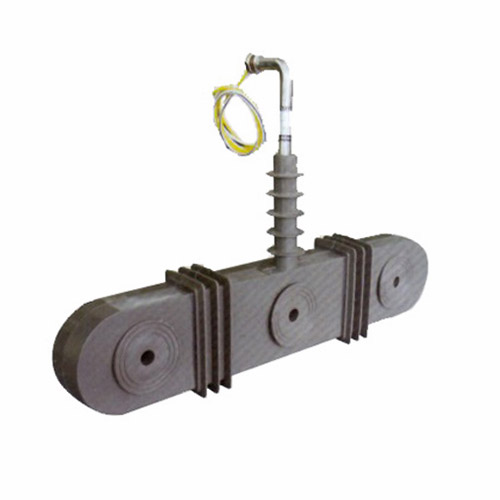
ZW-10 11kV Cast-Resin Current Transformer: Application Scenarios Under IEC 61869-2
Introduction
The ZW-10 11kV cast-resin current transformer (CT) is engineered to meet the stringent requirements of IEC 61869-2, the international standard governing instrument transformers for alternating current. Designed specifically for use in 11kV medium-voltage networks—a nominal system voltage standardized under IEC 60038—the ZW-10 provides accurate current transformation for metering, protection, and monitoring functions in utility and industrial power systems.
Unlike oil-filled or dry-type alternatives, the cast-resin construction of the ZW-10 offers superior mechanical strength, environmental resistance, and long-term dielectric stability. This design eliminates the risk of leakage, reduces maintenance overhead, and ensures reliable performance in both indoor switchgear and outdoor substations. The unit’s compliance with IEC 61869-2 guarantees traceable accuracy classes (e.g., 0.2S for metering, 5P20 for protection), standardized insulation coordination, and verified short-time thermal and dynamic withstand capabilities.
This article examines the practical deployment contexts of the ZW-10 11kV CT, supported by real-world case studies, technical advantages aligned with IEC standards, and frequently asked questions specific to application engineering.

Application Overview
The ZW-10 11kV current transformer serves as a critical interface between high-current primary circuits and low-energy secondary instrumentation. Its applications span three primary domains:
- Metering: Provides scaled-down current signals to revenue-grade energy meters. Accuracy class 0.2S or 0.5 per IEC 61869-2 ensures compliance with billing regulations in distribution utilities.
- Protective Relaying: Supplies input to overcurrent, earth-fault, and differential relays. Standardized burden ratings and saturation characteristics (e.g., 5P20) enable predictable relay operation during fault conditions.
- Monitoring and Control: Interfaces with SCADA systems, power quality analyzers, and load management devices to support grid visibility and operational intelligence.
Typical installation environments include:
- Indoor metal-enclosed switchgear (e.g., RMU, AIS, GIS configurations rated for 11kV)
- Outdoor pole-mounted or pad-mounted substations
- Industrial plant distribution boards serving motors, transformers, or rectifier loads
The 11kV rating—explicitly defined in IEC 60038 as a standard utilization voltage—is essential for interoperability across European, Asian, and African power networks. Using non-standard voltages (e.g., 10kV) risks miscoordination with system insulation levels and protective device settings.

Case Studies
Case Study 1: Urban Distribution Substation Upgrade (Germany)
A municipal utility in Berlin replaced aging oil-insulated CTs in its 11kV ring-main units with ZW-10 cast-resin units to comply with updated IEC 61869-2 accuracy mandates and reduce fire hazards in confined urban vaults.
Challenges:
- Legacy CTs exhibited drift beyond ±1% error at 5% rated current, violating new billing accuracy rules.
- Oil leakage posed environmental and safety risks in underground installations.
Solution:
- Deployed ZW-10 units with dual cores: 0.2S for metering and 5P20 for overcurrent protection.
- Leveraged cast-resin’s self-extinguishing properties and IP54-rated housing for indoor/outdoor flexibility.
Outcome: Post-installation verification per IEC 61869-2 Annex C confirmed ratio error within ±0.15% at 1–120% In. Maintenance costs dropped by 60% due to elimination of oil testing and top-ups.
Case Study 2: Industrial Motor Feeder Protection (India)
A cement plant in Tamil Nadu experienced repeated nuisance tripping on 11kV motor feeders due to CT saturation during motor start-up inrush currents.
Challenges:
- Existing CTs lacked sufficient knee-point voltage, causing core saturation and false relay operation.
- Humid, dusty environment degraded paper-oil insulation over time.
Solution:
- Replaced with ZW-10 CTs featuring 5P20 protection cores validated per IEC 61869-2 Clause 7.4.3.
- Selected models with extended creepage distance (≥25 mm/kV) for polluted environments.
Outcome: Zero nuisance trips over 18 months. Thermal withstand rating of 20 kA/3s met plant short-circuit duty without derating.
Case Study 3: Renewable Integration Substation (South Africa)
A solar farm required precise 11kV metering for feed-in tariff compliance and fault detection on inverter output circuits.
Challenges:
- Non-sinusoidal currents from inverters distorted secondary signals in conventional CTs.
- Remote location demanded minimal maintenance and high reliability.
Solution:
- Installed ZW-10 CTs with 0.2S class cores optimized for harmonic-rich waveforms per IEC 61869-2 harmonic distortion tests.
- Utilized UV-stabilized resin housing for prolonged outdoor exposure.
Outcome: Metering accuracy maintained within ±0.2% despite 15% THD. No degradation observed after 24 months of continuous operation.

Technical Benefits Aligned with IEC 61869-2
The ZW-10’s engineering advantages derive directly from its adherence to IEC 61869-2. Key technical benefits include:
1. Standardized Accuracy and Performance
IEC 61869-2 defines strict limits for ratio error, phase displacement, and composite error under specified burdens and current ranges. The ZW-10 is tested and certified to these limits, ensuring interchangeability and predictable behavior in multi-vendor systems. For example:
- Metering cores: ≤ ±0.2% ratio error at 100% In (Class 0.2S)
- Protection cores: Composite error ≤ 5% at 20× In (Class 5P20)
2. Enhanced Insulation Coordination
The cast-resin body provides uniform electric field distribution and eliminates partial discharge risks common in air-insulated designs. Per IEC 61869-2 Table 3, the ZW-10 meets:
- Power frequency withstand: 28 kV rms/1 min
- Lightning impulse withstand: 75 kV peak
These values align with 11kV system BIL (Basic Insulation Level) requirements per IEC 60071.
3. Robust Environmental Performance
Cast-resin encapsulation resists moisture ingress, chemical corrosion, and tracking. The housing complies with IEC 60529 IP54 for dust and water protection, enabling deployment in harsh industrial or coastal zones without derating.
4. Thermal and Dynamic Withstand Capability
Validated per IEC 61869-2 Clause 6.5, the ZW-10 withstands:
- Short-time thermal current: 20 kA for 3 s
- Dynamic peak current: 50 kA
This ensures mechanical integrity during through-faults without deformation or insulation failure.
5. Long-Term Stability and Low Life-Cycle Cost
Absence of liquid insulation eliminates maintenance tasks such as oil sampling, drying, or leak repairs. Accelerated aging tests per IEC 61869-2 Annex E confirm >30-year service life under continuous 11kV operation.

Frequently Asked Questions (Application Scenarios)
Q1: Can the ZW-10 be used in a 10kV system?
No. The ZW-10 is explicitly rated for 11kV systems as defined in IEC 60038. While 10kV is sometimes referenced colloquially, IEC-compliant networks operate at 11kV nominal voltage. Using the ZW-10 on a true 10kV system may result in suboptimal insulation coordination and void compliance with IEC 61869-2 test protocols.
Q2: How does the ZW-10 handle harmonic distortion from non-linear loads?
Per IEC 61869-2 Clause 8.6, the ZW-10’s magnetic core is designed to minimize remanence and hysteresis losses under distorted waveforms. For metering applications with significant harmonics (e.g., VFDs, UPS systems), Class 0.2S cores are recommended as they include harmonic performance validation up to the 13th order.
Q3: Is the ZW-10 suitable for outdoor installations?
Yes. The UV-resistant epoxy resin housing meets IEC 60068-2 environmental test standards for outdoor exposure. It is rated for ambient temperatures from -40°C to +55°C and includes hydrophobic surface properties to prevent moisture film formation.
Q4: What secondary burdens are compatible with the ZW-10?
Burden compatibility depends on the selected accuracy class. For 0.2S metering cores, maximum burden is typically 10 VA; for 5P20 protection cores, it is 15–30 VA. Always verify total loop impedance (wiring + device) against the CT’s rated burden per IEC 61869-2 Table 5 to avoid accuracy degradation.
Q5: Can multiple ZW-10 units be installed in compact switchgear?
Yes. The ZW-10’s compact footprint (see dimensional diagram) and low stray field design allow close grouping without mutual interference. Maintain minimum phase-to-phase clearance of 125 mm as per IEC 61439 for 11kV assemblies.

Conclusion
The ZW-10 11kV cast-resin current transformer represents a technically rigorous solution for modern medium-voltage infrastructure operating under IEC standards. Its design, validated against IEC 61869-2, delivers consistent accuracy, robust insulation, and long-term reliability across diverse application scenarios—from urban substations to industrial plants and renewable integration points.
Engineers selecting instrumentation for 11kV systems must prioritize compliance with IEC voltage definitions and transformer standards to ensure system safety, regulatory conformity, and interoperability. The ZW-10 fulfills these requirements while eliminating the operational drawbacks of legacy technologies. When deployed according to IEC 61869-2 guidelines—including proper burden matching, short-circuit duty verification, and environmental derating—it provides a dependable foundation for measurement, protection, and grid intelligence in 11kV networks worldwide.