Article Content
IEC 61869-3 Certified 33kV Cast-Resin Voltage Transformer UNKNOWN for Metering & Protection Applications
Introduction to the UNKNOWN Voltage Transformer
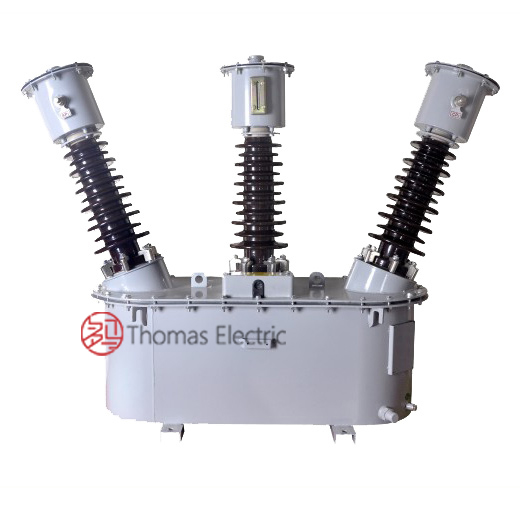
The UNKNOWN voltage transformer (VT) is a precision instrument designed for accurate voltage transformation in medium-voltage networks operating at a nominal system voltage of 33 kV (IEC standard), corresponding to the domestic 35 kV system classification commonly used in China and select regional grids. As a cast-resin insulated device, it leverages vacuum pressure impregnation (VPI) epoxy resin technology to encapsulate its magnetic core and windings, providing superior dielectric strength, mechanical robustness, and environmental resilience compared to traditional oil-immersed alternatives.
Operating Principle of Cast-Resin Insulation
Cast-resin insulation in the UNKNOWN VT involves embedding the primary and secondary windings—wound around grain-oriented electrical steel (GOES) cores—within a solid epoxy matrix under vacuum and pressure. This process eliminates air voids and moisture ingress pathways, ensuring uniform electric field distribution and preventing partial discharge inception below 10 pC at rated voltage. The VPI technique yields a monolithic structure with high tracking resistance (CTI > 600 V), excellent thermal conductivity (~0.8 W/m·K), and flame retardancy (UL 94 V-0). Unlike oil-filled units, cast-resin VTs require no maintenance of insulating fluid, eliminate fire hazards, and are suitable for indoor or outdoor deployment without containment basins.
Advantages Over Oil-Immersed Designs
The UNKNOWN VT offers distinct operational advantages over oil-immersed counterparts. Its solid insulation eliminates risks of oil leakage, environmental contamination, and flammability—critical for urban substations, underground installations, and facilities with stringent fire codes. The compact footprint (typically 30–40% smaller than equivalent oil units) reduces spatial requirements, while the absence of conservators or breathers simplifies mounting and reduces lifecycle costs. Furthermore, cast-resin construction provides superior short-circuit withstand capability due to rigid winding fixation, minimizing deformation under dynamic electromagnetic forces during system faults. Thermal performance is enhanced by the resin’s ability to dissipate heat evenly, supporting continuous operation at ambient temperatures up to +40°C without derating.
Typical Application Overview
This VT is engineered for dual-purpose use in both revenue metering and protective relaying circuits. In 33/35 kV transmission and distribution substations, it supplies scaled-down secondary voltages (typically 100 V or 100/√3 V) to energy meters, power quality analyzers, and digital relays. Its accuracy classes—0.2 for precision metering, 0.5 for general metering, and 3P for protection—ensure compliance with IEC 61869-3 error limits under defined burdens. The device is particularly suited for applications demanding long-term stability, minimal phase angle error (<10 minutes for 0.2 class), and immunity to humidity, dust, and salt fog, making it ideal for coastal, industrial, and high-altitude environments up to 1,000 meters above sea level.
Technical Specifications
The UNKNOWN VT adheres to rigorous electrical and mechanical parameters defined by IEC 61869-3 and GB/T 20840.3, ensuring interoperability and reliability across global and domestic grids.
| Parameter | Value |
|---|---|
| System Voltage (IEC) | 33 kV |
| System Voltage (Domestic) | 35 kV |
| Rated Primary Voltage | 33,000 / √3 V (for grounded systems) |
| Rated Secondary Voltage | 100 / √3 V (metering), 100 V (protection) |
| Voltage Ratio | 33,000/√3 : 100/√3 V or 33,000/√3 : 100 V |
| Accuracy Class | 0.2 (metering), 0.5 (metering), 3P (protection) |
| Rated Output (per secondary) | 30 VA (0.2), 50 VA (0.5), 100 VA (3P) |
| Insulation Level (LI/AC) | 170 kV / 70 kV (per IEC 60071-1) |
| Short-Time Withstand Current | Not applicable (VTs are not subjected to fault currents) |
| Core Material | Grain-Oriented Electrical Steel (GOES), 0.27 mm thickness |
| Insulation System | VPI Epoxy Resin, Class F (155°C) |
| Ambient Temperature Range | –25°C to +40°C |
| Relative Humidity | Up to 95% non-condensing |
| Altitude Limit | ≤ 1,000 m (derating required above) |
Standard Service Conditions
The UNKNOWN VT is rated for continuous operation under standard service conditions per IEC 61869-3: ambient temperature from –25°C to +40°C, daily average relative humidity ≤95%, and installation altitude not exceeding 1,000 meters. At higher altitudes (up to 2,000 m), voltage withstand levels must be adjusted per IEC 60071-2 using altitude correction factors (e.g., 1.13 at 2,000 m). The device is designed for outdoor use with IP54-rated terminal boxes, featuring UV-stabilized resin to prevent surface cracking and hydrophobic properties to shed rainwater. Condensation is mitigated through hermetic sealing of secondary terminals and optional anti-condensation heaters in humid climates.
Electrical Performance Tolerances
Per IEC 61869-3, the UNKNOWN VT maintains strict error limits across its operating range. For 0.2-class units, voltage error must not exceed ±0.2% and phase displacement ≤±10 minutes at 80–120% of rated voltage and 25–100% of rated burden. The 3P protection class allows ±3% voltage error and phase displacement ≤±120 minutes under similar conditions but extends validity down to 5% of rated voltage to support fault detection during low-voltage transients. Burden tolerance is ±10% of declared VA rating. Frequency response is flat within ±0.1% from 48 Hz to 52 Hz, critical for synchrophasor and harmonic monitoring applications.
Typical Applications
The UNKNOWN 33kV cast-resin VT serves diverse roles in modern power infrastructure, combining metrological precision with rugged reliability.
Substation Secondary Metering
In 35kV primary substations, the UNKNOWN VT provides isolated, scaled voltage signals to revenue-class energy meters (e.g., IEC 62053-22 Class 0.2S). Its low phase angle error ensures accurate calculation of real and reactive power, minimizing billing discrepancies. The device is typically installed on busbars or feeders, with secondary outputs routed to metering panels via shielded twisted-pair cables. To prevent ferroresonance—a risk in lightly loaded VTs with capacitive coupling—damping resistors or interphase reactors are often integrated into the secondary circuit design. This application demands long-term ratio stability (<0.05% drift over 10 years), which the cast-resin encapsulation reliably delivers by immobilizing windings against vibration and thermal cycling.
Industrial Power Distribution
Large manufacturing plants, data centers, and mining operations utilize the UNKNOWN VT for internal energy management and power quality monitoring. Here, the 0.5-class output feeds multifunction meters that track demand, harmonics (up to 50th order), and voltage sags/swells. The VT’s immunity to electromagnetic interference (EMI) from variable-frequency drives (VFDs) and arc furnaces is enhanced by the conductive resin layer acting as a Faraday shield. Installation near switchgear requires compliance with clearance distances (≥300 mm phase-to-phase) and grounding of the resin housing to dissipate static charges. In hazardous areas (e.g., petrochemical zones), the non-flammable design meets ATEX/IECEx requirements without additional enclosures.
Renewable Energy Integration
Solar farms and wind parks connected to 35kV collector systems rely on the UNKNOWN VT for grid synchronization and anti-islanding protection. During cloud-induced irradiance drops or wind lulls, rapid voltage fluctuations challenge VT accuracy; the 3P-class version ensures relays detect under-voltage conditions within 20 ms. The device’s wide frequency tolerance supports operation in weak grids with ±2 Hz deviations. Additionally, its low no-load losses (<15 W) reduce parasitic consumption in remote sites where auxiliary power is limited. For offshore wind substations, the resin formulation includes additives for salt-spray resistance (tested per IEC 60068-2-52), preventing surface tracking on coastal installations.
Rural and Suburban Distribution Networks
In rural electrification projects, the UNKNOWN VT enables cost-effective voltage monitoring on 35kV overhead lines feeding distribution transformers. Its maintenance-free nature is crucial in areas with limited technical personnel. Mounted on poles or pad-mounted switchgear, it supplies signals to SCADA RTUs for remote voltage regulation. The 3P-class variant triggers reclosers during single-line-to-ground faults, leveraging its extended low-voltage accuracy. Given frequent lightning exposure in these regions, the VT’s BIL of 170 kV provides robust surge protection, often eliminating the need for separate arresters when installed within 10 meters of line terminations.
Compliance with International Standards
The UNKNOWN VT is fully compliant with IEC 61869-3:2011 (“Instrument transformers – Part 3: Additional requirements for inductive voltage transformers”) and harmonized with China’s national standard GB/T 20840.3-2013.
IEC 61869-3 Compliance Details
IEC 61869-3 defines performance, testing, and marking requirements for inductive VTs. The UNKNOWN VT meets all clauses, including: (1) accuracy verification under sinusoidal conditions at 50/60 Hz; (2) temperature rise limits (≤55 K for windings, measured by resistance method); (3) partial discharge levels <10 pC at 1.2 × Um/√3; and (4) power frequency withstand voltage of 70 kV for 1 minute between windings and ground. The standard mandates type tests (e.g., impulse voltage, temperature rise) and routine tests (ratio, polarity, insulation resistance) for every unit. Markings include rated voltage factor (1.2 for continuous, 1.5 for 30 s), accuracy class, and vector group (typically YNyn for three-phase systems).
Alignment with GB/T 20840.3
GB/T 20840.3 mirrors IEC 61869-3 but incorporates China-specific adaptations. Key differences include: (1) acceptance of 35 kV as the nominal system voltage (vs. IEC’s 33 kV), though test voltages remain aligned (Um = 36 kV); (2) requirement for seismic qualification in Zone II+ regions (tested per GB/T 13540); and (3) mandatory use of Chinese-language labels alongside IEC symbols. The UNKNOWN VT undergoes dual certification, with test reports issued by both international (e.g., KEMA) and Chinese (e.g., CEPREI) laboratories. Notably, GB/T 20840.3 specifies tighter humidity conditioning (95% RH at 40°C for 48 h) prior to insulation tests, which the cast-resin design easily satisfies due to negligible moisture absorption (<0.1% by weight).
Testing and Certification Requirements
Certification requires successful completion of type, routine, and special tests. Type tests—conducted on prototype samples—include lightning impulse (170 kV peak, 1.2/50 μs waveform), temperature rise (at 1.1 × rated burden), and short-circuit withstand (simulated via external fault current injection). Routine tests on every unit encompass: insulation resistance (>10,000 MΩ at 2,500 V DC), turns ratio (±0.2% tolerance), polarity (reducing polarity confirmed), and power frequency withstand (70 kV AC for 1 min). Special tests, such as partial discharge mapping or seismic simulation, are performed upon customer request. Certificates reference both IEC 61869-3 and GB/T 20840.3, enabling global deployment.
On-Site Testing Procedures
Post-installation verification ensures the UNKNOWN VT performs within specifications before energization.
Insulation Resistance Test
Using a 2,500 V megohmmeter, measure insulation resistance between primary-to-secondary, primary-to-ground, and secondary-to-ground. Acceptance criterion: ≥10,000 MΩ at 20°C. Correct for temperature using RT2 = RT1 × 2(T1–T2)/10. Low readings indicate moisture ingress or resin cracking—rare in cast-resin units but possible after mechanical impact during transport. Repeat after 1-minute polarization index (PI) measurement; PI ≥2.0 confirms dry, healthy insulation.
Turns Ratio Test
Apply 100–200 V AC to the primary and measure secondary voltage with a calibrated voltmeter (accuracy class 0.1). Calculate ratio as Vpri/Vsec. Tolerance: ±0.2% of nameplate value. For multi-ratio VTs, test all taps. Deviations >0.5% suggest winding shorts or incorrect tap selection. Use a dedicated ratio tester (e.g., Omicron CT Analyzer) for automated comparison against factory data stored in QR code on nameplate.
Polarity Test
Verify reducing polarity using the DC kick method: connect a 6–12 V battery across primary terminals (H1+, H2–) and observe secondary voltage spike on an analog voltmeter connected to X1, X2. A momentary positive deflection confirms correct polarity. Incorrect polarity causes 180° phase reversal, leading to relay misoperation or negative energy registration. Digital multimeters may not capture transient spikes; analog meters are preferred.
Power Frequency Withstand Voltage Test
Apply 70 kV RMS at 50 Hz between primary and grounded secondary/housing for 1 minute. Use a calibrated test transformer with overcurrent trip (≤100 mA). No flashover or disruptive discharge is permitted. This test validates insulation integrity after transportation stresses. For field constraints, a 10-second test at 80% voltage (56 kV) may be accepted per IEC 60270 Annex C, though full duration is recommended.
Open-Circuit Characteristic Test
With secondary open, gradually increase primary voltage from 10% to 120% of rated value while measuring excitation current. Plot V vs. I curve; knee point should align with factory data. Excessive excitation current (>5% of rated primary current at 100% voltage) indicates core saturation due to mechanical damage or material defects. This test also verifies absence of inter-turn shorts, which would shift the curve leftward.
Preventive Maintenance Guide
Although cast-resin VTs are largely maintenance-free, periodic checks extend service life beyond 25 years.
Annual Visual and Electrical Inspection
Inspect annually for: (1) surface cracks, UV degradation, or tracking marks on resin housing; (2) corrosion on terminals or mounting hardware; (3) loose connections (torque to 15 N·m for M10 bolts); and (4) damaged cable glands. Electrically, repeat insulation resistance and ratio tests. Record trends; a 20% drop in insulation resistance warrants investigation. Clean housing with mild detergent—never solvents—to remove salt or industrial deposits that could create conductive paths.
Five-Year Comprehensive Maintenance
Every five years, perform partial discharge (PD) measurement using IEC 60270-compliant equipment. Acceptable PD magnitude: <10 pC at 1.2 × Um/√3. Also, verify burden compatibility: total connected load (wattmeter + relay coils + cable resistance) must not exceed rated VA. Recalculate cable-induced errors using Zcable = ρL/A (ρ = 0.0178 Ω·mm²/m for copper). Replace terminal box gaskets if hardened, and confirm grounding continuity (<0.1 Ω resistance).
Maintenance Intervals and Fault Diagnosis
| Interval | Task | Fault Indicator |
|---|---|---|
| Annually | Visual inspection, IR test | Cracks, IR <5,000 MΩ |
| 5 Years | PD test, burden check | PD >15 pC, ratio error >0.3% |
| 10 Years | Full recalibration | Phase error drift >15 min |
| As Needed | Terminal torque check | Overheating at connections |
Common faults include secondary short circuits (causing overheating) and ferroresonance (inducing abnormal noise/vibration). Install fuses rated at 3–5 A on secondary leads to protect against shorts. Ferroresonance is mitigated by ensuring minimum secondary burden ≥25% of rated VA.
Conclusion
The UNKNOWN 33kV cast-resin voltage transformer represents a benchmark in reliability, accuracy, and compliance for medium-voltage instrumentation. By integrating GOES core technology with advanced VPI epoxy resin encapsulation, it delivers exceptional dielectric performance, environmental resilience, and long-term metrological stability—critical for both revenue metering and protective relaying in 35kV-class systems. Its adherence to IEC 61869-3 and GB/T 20840.3 ensures seamless integration into global and domestic grids, while the maintenance-free design significantly reduces total cost of ownership. Field-proven in harsh conditions—from desert heat to coastal humidity—the UNKNOWN VT exhibits negligible aging effects, supporting an expected service life of 25–30 years with minimal intervention. For engineers designing or upgrading 33/35 kV substations, this transformer offers a future-proof solution that balances precision, safety, and operational simplicity. Its robust construction and rigorous certification make it an optimal choice for applications demanding unwavering performance under electrical, thermal, and environmental stress.