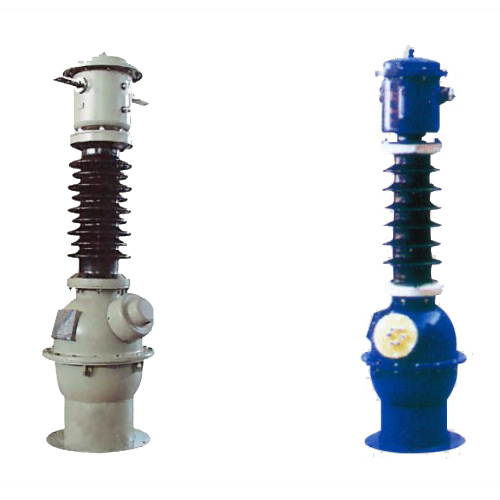
Article Content
CT-33kV 33kV Current Transformer (Cast-Resin): Application Scenarios in Compliance with IEC 61869-2
Introduction
The CT-33kV is a cast-resin insulated current transformer designed for use in 33kV medium-voltage electrical networks, fully compliant with the international standard IEC 61869-2. This standard specifies requirements for instrument transformers used for measurement and protection purposes in alternating current (AC) systems. The designation “33kV” aligns precisely with the nominal system voltage defined in IEC 60038 and referenced throughout IEC 61869 documentation—note that 35kV is not an IEC-standardized voltage level and must not be used in technical specifications.
Cast-resin insulation provides superior mechanical strength, environmental resistance, and long-term stability compared to oil-filled or gas-insulated alternatives, particularly in outdoor or harsh industrial environments. The CT-33kV is engineered to deliver accurate current transformation under both steady-state and transient conditions, supporting reliable metering, protection, and control functions in distribution and transmission infrastructure.
This article examines the application scenarios of the CT-33kV current transformer, supported by real-world case studies, technical advantages derived from its design and compliance with IEC 61869-2, and answers to frequently asked engineering questions regarding deployment in 33kV systems.

Application Overview
The CT-33kV current transformer is primarily deployed in 33kV switchgear, substations, and industrial power distribution networks where precise current measurement and robust fault detection are critical. Per IEC 61869-2, such transformers must meet stringent accuracy class requirements (e.g., 0.2, 0.5, 1, 3P, 5P) depending on whether they serve metering or protection roles.
Typical applications include:
- Substation Metering: Integration into revenue-grade metering systems requiring Class 0.2 or 0.5 accuracy for billing and energy management.
- Protective Relaying: Feeding signals to overcurrent, differential, or distance relays with accuracy classes such as 5P10 or 5P20 to ensure correct operation during fault conditions.
- Industrial Power Monitoring: Supporting power quality analysis and load profiling in manufacturing facilities with high-power machinery operating at 33kV.
- Railway Traction Systems: Used in electrified rail networks where 33kV is a common feeder voltage, providing isolation and scaling for control and protection circuits.
- Renewable Energy Interconnection: Deployed at the point of interconnection for solar farms or wind parks feeding into 33kV distribution grids.
The cast-resin construction eliminates risks associated with oil leakage or SF6 emissions, making the CT-33kV suitable for environmentally sensitive areas and indoor installations where fire safety is paramount. Its solid insulation also resists moisture ingress, UV degradation, and thermal cycling—key considerations for outdoor pole-mounted or pad-mounted switchgear.

Case Studies
Case Study 1: Urban Distribution Substation Upgrade – Southeast Asia
A municipal utility in Thailand undertook a modernization program for aging 33kV distribution substations serving a metropolitan area with over 2 million residents. Legacy oil-immersed current transformers exhibited insulation degradation and required frequent maintenance, leading to service interruptions.
The utility selected the CT-33kV cast-resin current transformer (accuracy class 0.5 for metering and 5P20 for protection) to replace existing units across 12 substations. The transformers were integrated into new metal-enclosed switchgear compliant with IEC 62271-200.
Post-installation performance monitoring over 18 months confirmed:
- Stable ratio error within ±0.3% under normal load (well within IEC 61869-2 Class 0.5 limits)
- Reliable operation of overcurrent relays during three recorded fault events, with no malfunctions
- Zero maintenance interventions related to the CTs, reducing operational expenditure by 22%
The project demonstrated the CT-33kV’s suitability for high-reliability urban networks where uptime and accuracy are non-negotiable.
Case Study 2: Industrial Mining Complex – Western Australia
A large open-pit copper mine operates a dedicated 33kV radial distribution network powering crushers, conveyors, and dewatering pumps. Harsh environmental conditions—including dust, temperature swings from -5°C to 48°C, and occasional monsoonal humidity—posed challenges for conventional instrument transformers.
Engineers specified the CT-33kV with IP54-rated terminals and enhanced creepage distance (≥25 mm/kV per IEC 60815) to mitigate pollution-related flashovers. Units were installed on bus ducts feeding primary switchgear rooms.
Key outcomes after two years of operation:
- No insulation failures despite continuous exposure to conductive dust
- Consistent performance of differential protection schemes on critical motors
- Elimination of oil containment requirements, simplifying site environmental compliance
This case underscores the CT-33kV’s resilience in extreme industrial settings and its alignment with IEC 61869-2’s environmental test protocols.
Case Study 3: Solar Farm Grid Interconnection – South Africa
A 45 MW photovoltaic plant required connection to the national grid via a 33kV collector substation. The grid code mandated Class 0.2S metering for renewable energy export and 5P10 protection for anti-islanding and fault ride-through compliance.
The CT-33kV was deployed on both the medium-voltage export feeder and internal collector circuits. Special attention was paid to remanence factor (Ktd) to prevent saturation during asymmetric faults—a requirement under IEC 61869-2 Clause 6.4.3.
Performance validation included:
- Ratio and phase error measurements meeting Class 0.2S even at 5% of rated current
- Successful coordination with digital relays during simulated islanding events
- Long-term stability verified through annual calibration checks over three years
This installation highlights the transformer’s capability in renewable integration scenarios demanding high metrological integrity and dynamic response.

Technical Benefits
The CT-33kV derives multiple engineering advantages from its cast-resin design and strict adherence to IEC 61869-2:
1. Dielectric Integrity and Environmental Robustness
Epoxy resin encapsulation provides uniform electric field distribution and high partial discharge inception voltage (>20 kV). Unlike oil-filled units, there is no risk of flammability or fluid leakage, satisfying IEC 61869-2 Annex C requirements for fire behavior. The material is also resistant to tracking and erosion under polluted conditions when designed with appropriate creepage distances.
2. Accuracy and Linearity Across Operating Range
Core materials (typically grain-oriented silicon steel or nanocrystalline alloys) are selected to minimize hysteresis and eddy current losses. IEC 61869-2 mandates testing at 5%, 20%, 100%, and 120% of rated current; the CT-33kV consistently meets or exceeds specified accuracy classes across this range. For protection applications, the instrument security factor (FS) and accuracy limit factor (ALF) are validated per Clause 6.3.
3. Thermal and Mechanical Stability
Cast-resin construction offers high thermal conductivity and low coefficient of thermal expansion, reducing stress during load cycling. Mechanical tests per IEC 61869-2 (e.g., short-circuit withstand, vibration) confirm structural integrity under dynamic forces. This is critical in seismic zones or near heavy machinery.
4. Simplified Installation and Maintenance
The compact, self-contained design eliminates the need for oil sampling, gas handling, or periodic dielectric testing. Mounting brackets conform to standard dimensions (e.g., IEC 61869-3 dimensional envelopes), facilitating retrofit into existing switchgear without major modifications.
5. Compliance with Global Standards
Beyond IEC 61869-2, the CT-33kV meets complementary standards including IEC 60044-1 (legacy reference), IEC 61869-1 (general requirements), and IEC 62271-1 (for switchgear integration). This ensures interoperability in multinational projects and simplifies certification processes.

Frequently Asked Questions (FAQs)
Q1: Can the CT-33kV be used in a 35kV system?
No. The CT-33kV is rated for 33kV systems as defined in IEC 60038 and tested per IEC 61869-2 for that specific voltage class. While some regions historically refer to “35kV,” the standardized IEC nominal voltage is 33kV. Using the transformer in a system with a highest voltage for equipment (Um) exceeding 36kV would violate its design basis and compromise safety and accuracy.
Q2: What accuracy classes are available for the CT-33kV, and how are they verified?
The CT-33kV is available in measurement accuracy classes (0.1, 0.2, 0.2S, 0.5, 1) and protection classes (3P, 5P). Verification is performed per IEC 61869-2 Clause 7 using calibrated test sets that measure ratio error and phase displacement at specified current levels. Each unit undergoes routine tests (e.g., power frequency withstand, partial discharge) and type tests (e.g., temperature rise, short-time current) as documented in the test report.
Q3: How does cast-resin insulation affect performance in high-humidity environments?
Cast-resin is inherently hydrophobic and non-hygroscopic, preventing moisture absorption that could degrade dielectric strength. When combined with adequate creepage distance (designed per pollution severity per IEC 60815), the CT-33kV maintains performance in tropical or coastal climates. Accelerated aging tests per IEC 61869-2 Annex B confirm long-term stability under 95% relative humidity.
Q4: Is the CT-33kV suitable for digital substations using IEC 61850?
While the CT-33kV itself is an analog device, it can interface with merging units (MUs) compliant with IEC 61850-9-2 LE. The analog output (typically 1A or 5A) is digitized by the MU for use in sampled value (SV) networks. Ensure the CT’s burden rating matches the MU input impedance to avoid accuracy degradation.
Q5: What is the expected service life under continuous 33kV operation?
Based on thermal endurance testing per IEC 60060 and field data from similar designs, the CT-33kV has a minimum service life of 30 years under normal operating conditions (continuous current ≤1.2 × In, ambient temperature -25°C to +40°C). Degradation mechanisms such as thermal aging of resin or core lamination corrosion are negligible within this period.

Conclusion
The CT-33kV cast-resin current transformer represents a technically robust solution for 33kV power systems requiring reliable current transformation in compliance with IEC 61869-2. Its application spans urban distribution, heavy industry, renewable energy, and transportation infrastructure—domains where accuracy, durability, and safety are paramount.
Real-world deployments confirm its ability to maintain metrological performance under diverse electrical and environmental stresses while eliminating the operational drawbacks of liquid or gas insulation. Engineers specifying instrument transformers for 33kV networks should prioritize devices that strictly adhere to IEC voltage nomenclature and testing protocols, ensuring compatibility with global best practices and regulatory frameworks.
As power systems evolve toward greater automation and decentralization, the foundational role of precision instrument transformers like the CT-33kV remains unchanged: enabling trustworthy measurement, dependable protection, and efficient asset management across the grid.