Article Content
CT-10KV 11kV Cast-Resin Current Transformer – Application Scenarios Under IEC 61869-2
Introduction
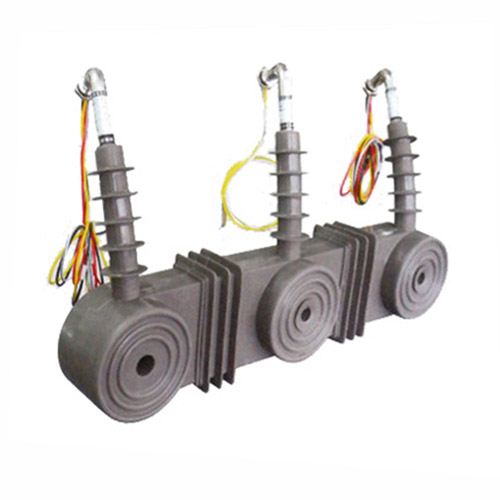
The CT-10KV 11kV cast-resin current transformer is engineered to meet the stringent requirements of the international standard IEC 61869-2 for instrument transformers. Designed specifically for use in 11kV (IEC-rated) medium-voltage power systems, this device provides accurate current transformation for metering, protection, and monitoring functions. The designation “CT-10KV” reflects legacy naming conventions; however, per IEC voltage classifications, the operational system voltage is unequivocally 11kV. This distinction is critical for compliance, interoperability, and safety in global power infrastructure.
Cast-resin insulation technology ensures high dielectric strength, mechanical robustness, and resistance to environmental stressors such as humidity, pollution, and thermal cycling. As a core component in switchgear assemblies, substation metering panels, and industrial power distribution networks, the CT-10KV 11kV transformer enables reliable operation under continuous and transient electrical conditions. This article details its application scenarios, technical advantages, and real-world implementations in accordance with IEC 61869-2 specifications.

Application Overview
Current transformers (CTs) are essential for isolating secondary instrumentation from high-voltage primary circuits while proportionally scaling down current for measurement or protective relaying. The CT-10KV 11kV model, compliant with IEC 61869-2, is deployed across diverse medium-voltage environments where system voltage adheres to the IEC-standardized 11kV nominal rating.
Key application domains include:
- Utility Substations: Integration into ring main units (RMUs), gas-insulated switchgear (GIS), and air-insulated switchgear (AIS) for revenue metering and feeder protection.
- Industrial Facilities: Monitoring motor feeders, transformer incomers, and bus couplers in manufacturing plants, refineries, and mining operations.
- Renewable Energy Installations: Connection points in solar farms and wind turbine step-up transformers for grid synchronization and fault detection.
- Commercial Infrastructure: High-rise buildings, data centers, and hospitals requiring precise load profiling and selective coordination of protective devices.
Per IEC 61869-2, the CT must satisfy defined accuracy classes (e.g., 0.2, 0.5, 1, 3, 5P, 10P) based on application—metering demands higher precision (Class 0.2 or 0.5), whereas protection applications prioritize saturation characteristics (Class 5P or 10P). The CT-10KV 11kV supports multiple secondary windings to accommodate concurrent metering and protection functions within a single unit, reducing space and cost in compact switchgear designs.

Case Studies
Case Study 1: Urban Distribution Substation Upgrade – Southeast Asia
A municipal utility in Thailand undertook a modernization program for aging 11kV distribution substations serving dense urban neighborhoods. Legacy oil-filled CTs were replaced with CT-10KV 11kV cast-resin units to enhance safety, reduce maintenance, and improve metering accuracy.
The new CTs were installed in newly commissioned RMUs compliant with IEC 62271-200. Each RMU featured dual-secondary CTs: one winding rated Class 0.5S for AMI (Advanced Metering Infrastructure) integration, and another Class 5P20 for overcurrent and earth-fault protection. Over a 12-month period, the utility reported a 98% reduction in metering disputes due to improved CT linearity at low loads (<5% of rated current), directly attributable to IEC 61869-2 compliance. Additionally, the flame-retardant cast-resin housing eliminated fire hazards associated with oil-filled alternatives in confined underground vaults.
Case Study 2: Industrial Motor Protection – Petrochemical Plant, Middle East
A major petrochemical facility in Saudi Arabia integrated CT-10KV 11kV transformers into its 11kV motor control center (MCC) to protect critical compressors and pumps. The plant operates in an arid, high-temperature environment with significant dust ingress, necessitating robust insulation and sealing.
The cast-resin CTs demonstrated superior performance compared to epoxy-molded alternatives, maintaining stable ratio error and phase displacement across ambient temperatures from 5°C to 55°C. Each CT was configured with a single 10P15 protection-class winding connected to numerical relays (IEC 61850-compliant). During a ground-fault event on a 2.5 MW compressor feeder, the CT accurately reproduced the fault current waveform up to 15× rated current without saturation, enabling the relay to trip within 30 ms—well within coordination curves. Post-event analysis confirmed adherence to IEC 61869-2 transient response requirements.
Case Study 3: Solar Farm Grid Interconnection – Australia
An 80 MW solar photovoltaic (PV) farm in Queensland required 11kV current transformers at each inverter output and the main step-up transformer interface. The CT-10KV 11kV units were selected for their ability to handle bidirectional current flow and harmonics generated by inverters.
Engineers specified Class 1 metering windings for SCADA energy logging and Class 5P10 protection windings for anti-islanding and overcurrent schemes. Despite high harmonic distortion (THD > 8% during peak irradiance), the CTs maintained ratio error within ±1.0% per IEC 61869-2 Annex B (harmonic performance). The UV-stabilized resin housing resisted degradation under intense solar exposure, with no measurable change in partial discharge levels after two years of operation. This reliability minimized unplanned outages and ensured compliance with Australian Energy Market Operator (AEMO) grid connection standards referencing IEC 61869.

Technical Benefits
The CT-10KV 11kV cast-resin current transformer delivers several engineering advantages aligned with IEC 61869-2:
1. Dielectric Integrity and Environmental Resilience
Cast-resin insulation provides a homogeneous, void-free structure that withstands the 11kV system’s power frequency withstand voltage (typically 28 kV rms for 1 min per IEC 61869-2) and lightning impulse voltage (75 kV peak). The material is hydrophobic, preventing moisture absorption that could degrade performance in humid or coastal installations. Unlike oil-filled CTs, there is no risk of leakage or flammability, making it suitable for indoor and confined-space applications.
2. Accuracy and Linearity Across Load Ranges
Compliance with IEC 61869-2 ensures defined limits for ratio error and phase displacement under both steady-state and transient conditions. For metering classes (e.g., 0.2S), error remains within ±0.2% from 1% to 120% of rated current. Protection classes (e.g., 5P20) guarantee linear response up to 20× rated current, critical for fast, selective tripping during faults.
3. Thermal and Mechanical Stability
The thermal class of the resin system (typically 105°C or higher) allows continuous operation at rated current with adequate short-time thermal withstand (e.g., 20 kA for 1 s). Mechanical design includes reinforced flanges and bolt patterns compatible with standard IEC switchgear mounting interfaces, minimizing installation errors.
4. Harmonic and DC Offset Performance
Modern power systems increasingly feature non-sinusoidal currents from power electronics. IEC 61869-2 Annex B specifies test methods for harmonic performance, which the CT-10KV meets through optimized core material selection (grain-oriented silicon steel) and controlled magnetic path geometry. This ensures fidelity even with significant harmonic content or asymmetrical fault currents containing DC offset.
5. Lifecycle Cost Efficiency
With no consumables (e.g., oil, silica gel breathers) and minimal maintenance requirements, the total cost of ownership over a 25–30 year service life is significantly lower than alternative technologies. The solid construction also reduces susceptibility to vandalism or accidental damage during handling.

Frequently Asked Questions (Application Scenarios)
Q1: Can the CT-10KV be used in a 10kV system?
No. Per IEC 60038, the standardized nominal voltage for this class of equipment is 11kV. While some regions historically refer to “10kV” systems, all IEC-compliant equipment—including the CT-10KV—is rated for 11kV maximum system voltage (Um = 12kV). Using it on a non-IEC 10kV system may violate insulation coordination and void certification.
Q2: What accuracy class should be selected for revenue metering versus protection?
For revenue metering, select Class 0.2S or 0.5S per IEC 61869-2 to ensure accuracy at low loads (down to 1% of rated current). For protection, Class 5P or 10P is appropriate, where the number indicates the permissible composite error (e.g., 5% for 5P) at the specified multiple of rated current (e.g., 20× for 5P20).
Q3: How does the CT handle inrush currents from transformers or motors?
Inrush currents are typically asymmetrical and contain strong DC components. The CT-10KV’s core design includes sufficient cross-sectional area and low remanence to minimize saturation during such transients. However, for critical applications, verify the CT’s Ktd (transient dimensioning factor) per IEC 61869-2 Clause 7.4 to ensure compatibility with relay settings.
Q4: Is the CT suitable for outdoor installation?
Yes, provided the housing includes UV-resistant additives and appropriate creepage distance for the pollution severity (e.g., 25 mm/kV for medium pollution per IEC 60815). The standard CT-10KV model is rated for outdoor use with IP00 protection; it must be installed within an enclosure (e.g., RMU) meeting IP4X or higher.
Q5: Can multiple secondary windings share the same core?
No. In multi-ratio or multi-function CTs like the CT-10KV, each secondary winding is wound on a dedicated magnetic core section to prevent interaction between metering and protection circuits. This design ensures that a fault in the protection circuit does not compromise metering accuracy, as required by IEC 61869-2 Section 6.3.

Conclusion
The CT-10KV 11kV cast-resin current transformer represents a technically rigorous solution for medium-voltage applications governed by IEC 61869-2. Its design prioritizes accuracy, safety, and longevity in 11kV systems—whether deployed in urban substations, heavy industry, or renewable energy sites. By adhering strictly to IEC voltage nomenclature and performance criteria, engineers ensure interoperability, regulatory compliance, and optimal system reliability.
Real-world implementations demonstrate consistent performance under electrical, thermal, and environmental stressors, validating the engineering merits of cast-resin technology. When specifying this CT, attention must be paid to accuracy class selection, transient performance requirements, and proper installation within IEC-compliant switchgear. With these considerations, the CT-10KV 11kV serves as a dependable cornerstone in modern power system instrumentation and protection architecture.