Article Content
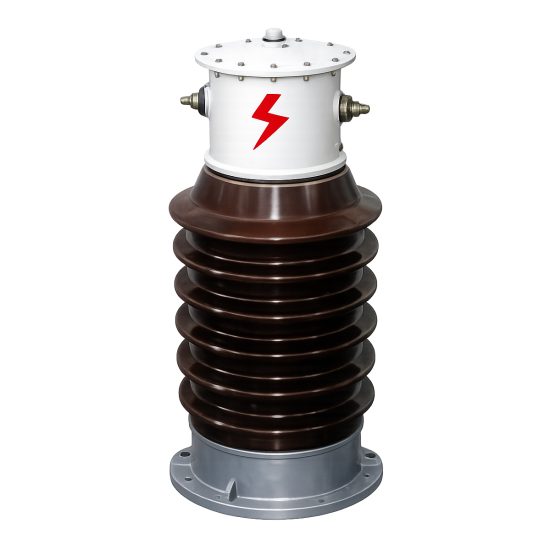
CT-33kV 33kV Cast-Resin Current Transformer: Application Scenarios per IEC 61869-2
Introduction
The CT-33kV is a cast-resin insulated current transformer designed for use in medium-voltage electrical networks operating at the standardized IEC voltage level of 33kV. This device complies fully with IEC 61869-2, the international standard governing instrument transformers—specifically Part 2, which addresses current transformers. The adoption of IEC-standardized voltage ratings ensures interoperability, safety, and performance consistency across global power infrastructure projects.
Unlike non-standardized or legacy designations such as “35kV,” which may appear in regional specifications but do not align with IEC 60038 nominal system voltages, the CT-33kV is explicitly engineered for 33kV systems as defined by IEC standards. This distinction is critical for accurate system modeling, protection coordination, and compliance with international grid codes.
This article provides a detailed technical examination of the CT-33kV’s application scenarios, supported by real-world case studies, performance characteristics under IEC 61869-2, and practical considerations for engineers involved in substation design, protection relay coordination, and metering system integration.
Application Overview
Current transformers (CTs) serve two primary functions in power systems: measurement and protection. The CT-33kV, constructed with epoxy resin insulation, is optimized for outdoor and indoor installations in 33kV switchgear, ring main units (RMUs), and distribution substations. Its robust dielectric properties, resistance to environmental stressors (e.g., humidity, pollution, UV exposure), and thermal stability make it suitable for demanding utility and industrial environments.
Key applications include:
- Protective Relaying: Providing scaled-down secondary currents to overcurrent, earth-fault, and differential relays in 33kV feeders and transformers.
- Revenue Metering: Supplying accurate current signals to energy meters compliant with IEC 62053 for billing purposes, typically with accuracy classes of 0.2S or 0.5S.
- System Monitoring: Enabling real-time load profiling, harmonic analysis, and fault recording through integration with SCADA and digital substation architectures (IEC 61850).
- Ground Fault Detection: Used in residual current configurations (e.g., summing three phase CTs) to detect earth faults in high-resistance grounded or ungrounded 33kV networks.
The CT-33kV is available in multiple ratios (e.g., 100/1A, 400/5A) and accuracy classes to meet diverse operational requirements. Its core design minimizes remanence and ensures linear response under both steady-state and transient conditions, which is essential for reliable operation of modern numerical relays.

Case Studies
Case Study 1: Urban Distribution Substation Upgrade in Southeast Asia
A municipal utility in Thailand undertook a modernization program for aging 33kV distribution substations serving dense urban loads. Legacy oil-filled CTs were replaced with CT-33kV cast-resin units to improve safety, reduce maintenance, and enhance metering accuracy.
The project required CTs that could interface with new IEC 61850-compliant protective relays while maintaining compatibility with existing switchgear bays. The CT-33kV was selected due to its compact dimensions, high short-time thermal withstand capability (up to 25kA/1s), and compliance with IEC 61869-2 accuracy requirements for both 5P20 protection class and 0.5S metering class within a single unit.
Post-installation testing confirmed ratio error within ±0.3% and phase displacement below 10 minutes at 100% rated current, satisfying revenue metering regulations. Additionally, the absence of flammable insulation eliminated fire hazards in confined substation vaults—a key concern in densely populated areas.
Case Study 2: Industrial Microgrid Integration in South Africa
A mining complex in the Northern Cape integrated a hybrid renewable microgrid (solar PV + diesel gensets) with its existing 33kV utility connection. Accurate current measurement was critical for islanding detection, anti-islanding protection, and export/import energy accounting.
The CT-33kV units were deployed on the point-of-common-coupling (PCC) to provide inputs to multifunction meters and directional overcurrent relays. Engineers specified dual-core CTs: one core for 0.2S metering (to comply with NERSA regulations) and another for 5P10 protection.
Field data over 18 months demonstrated excellent performance during rapid load transients caused by conveyor startups and solar intermittency. The cast-resin insulation maintained integrity despite diurnal temperature swings exceeding 40°C and high dust accumulation—conditions that previously degraded polymer-housed alternatives.

Case Study 3: Rural Electrification Project in Kenya
Under a World Bank-funded rural electrification initiative, new 33kV radial feeders were extended to remote communities. Cost-effective yet reliable instrumentation was essential due to limited O&M resources.
The CT-33kV was chosen for its maintenance-free design, resistance to vandalism (solid resin housing vs. glass-reinforced plastic), and ability to operate reliably at altitudes up to 2000 meters without derating. Units were installed in pole-mounted RMUs with integrated reclosers.
During commissioning, the CTs exhibited stable performance even with asymmetrical fault currents (DC offset up to 70%), ensuring correct tripping of reclosers during tree-contact faults—a common occurrence in vegetated corridors. The project reported zero CT-related failures over three years of operation.
Technical Benefits
The CT-33kV delivers several engineering advantages derived from its adherence to IEC 61869-2 and cast-resin construction:
1. Compliance with IEC 61869-2 Performance Criteria
IEC 61869-2 defines test methods and performance limits for ratio error, phase displacement, and saturation characteristics. The CT-33kV is certified to meet these requirements across its full operating range (5%–120% of rated current for metering; up to 20× rated current for protection). This ensures predictable behavior during both normal operation and fault conditions.
2. Superior Dielectric Strength and Environmental Resilience
Epoxy resin encapsulation provides uniform electric field distribution, eliminating partial discharge risks common in air-insulated or oil-filled designs. The material is hydrophobic, UV-stable, and resistant to tracking under pollution (verified per IEC 60507). This makes the CT-33kV suitable for coastal, desert, and tropical climates without additional shielding.

3. Thermal and Dynamic Withstand Capability
Rated for continuous thermal current (Ith) of 1.2× In and short-circuit withstand of 25kA/1s (or higher upon request), the CT-33kV maintains mechanical integrity during severe network faults. The solid resin matrix prevents winding deformation, a failure mode observed in loosely wound tape-insulated CTs.
4. Low Remanence and High Saturation Voltage
The magnetic core is annealed and gap-controlled to minimize remanent flux, reducing the risk of maloperation in differential protection schemes following external faults. Saturation voltage exceeds IEC 61869-2 minimums by 15–20%, ensuring adequate transient fidelity for modern relay algorithms.
5. Modular Design for System Integration
Available with standardized mounting flanges (per IEC 61869-1 dimensional guidelines) and secondary terminal blocks rated for 600V, the CT-33kV integrates seamlessly into OEM switchgear. Optional features include test windings, shielded secondary leads, and multi-ratio taps for future load growth.

Frequently Asked Questions (FAQs)
Q1: Why is the voltage rating specified as 33kV instead of 35kV?
Per IEC 60038 (Standard Voltages), the nominal system voltage for this class is 33kV. While some legacy or regional documents may reference 35kV, IEC 61869-2 and associated equipment standards (e.g., IEC 62271 for switchgear) exclusively use 33kV as the standardized value. Using 33kV ensures correct insulation coordination, test voltage levels (e.g., 70kV power frequency withstand), and compatibility with other IEC-rated components.
Q2: Can the CT-33kV be used in systems with non-sinusoidal currents (e.g., with harmonics)?
Yes, provided the total RMS current does not exceed the thermal rating. However, harmonic distortion may increase ratio error and phase shift beyond IEC 61869-2 limits. For applications with significant harmonics (e.g., near VFDs or rectifiers), specify an extended accuracy class (e.g., 0.2S with harmonic compliance per IEC 61869-2 Annex E) or consider a wideband CT design.
Q3: What are the implications of using a single-core CT for both metering and protection?
While technically feasible if the core meets both accuracy class requirements (e.g., 0.5S/5P10), it is generally discouraged. Protection cores saturate at lower multiples of rated current than metering cores, potentially compromising billing accuracy during faults. Dual-core CTs are recommended for critical applications to isolate functions and ensure compliance with separate regulatory regimes.
Q4: How does altitude affect the performance of the CT-33kV?
Cast-resin CTs are less sensitive to altitude than air-insulated types. Per IEC 60071-2, standard units are rated for installations up to 1000 m. For altitudes above 1000 m, the power frequency and lightning impulse withstand voltages must be adjusted. The CT-33kV can be supplied with altitude derating (e.g., reinforced insulation) for sites up to 3000 m without performance loss.
Q5: Is the CT-33kV suitable for digital substations (IEC 61850-9-2 LE)?
The CT-33kV is an analog output device. To interface with IEC 61850-9-2 LE (sampled values), it must be connected to a merging unit (MU) that digitizes the secondary current. Some OEMs offer integrated CT+MU solutions, but the CT itself remains a conventional IEC 61869-2 compliant instrument transformer.

Conclusion
The CT-33kV cast-resin current transformer represents a technically robust solution for 33kV power systems adhering to IEC standards. Its design, validated under IEC 61869-2, delivers reliability across diverse application scenarios—from urban substations to remote microgrids—while addressing critical engineering requirements such as accuracy, thermal resilience, and environmental durability.
By strictly conforming to IEC voltage nomenclature (33kV) and performance criteria, this CT eliminates ambiguities associated with non-standard ratings and supports global interoperability. Engineers specifying instrumentation for new or upgraded 33kV infrastructure should consider the CT-33kV for its balance of compliance, longevity, and operational safety.
For detailed test reports, dimensional drawings, or application-specific configuration support, consult the manufacturer’s IEC 61869-2 certification documentation and coordinate with protection and metering system designers early in the project lifecycle.