Article Content
DZJ-3 11kV Cast-Resin Voltage Transformer – Application Scenarios per IEC 61869-3
Introduction
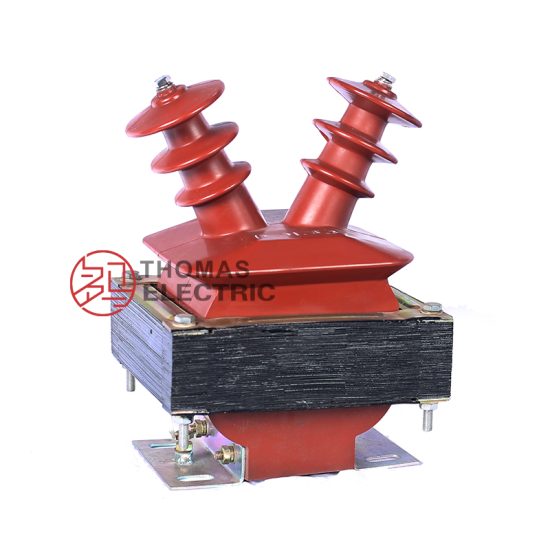
The DZJ-3 11kV voltage transformer is a cast-resin insulated instrument transformer designed in strict accordance with the international standard IEC 61869-3:2011, which governs the performance, testing, and safety requirements for inductive voltage transformers used in alternating current (AC) systems. This device operates at the standardized system voltage of 11 kV as defined by IEC 60038, ensuring compatibility with global medium-voltage networks that adhere to IEC conventions.
Unlike non-standardized alternatives such as 10 kV units—common in certain regional grids but not recognized under IEC nominal voltage classifications—the DZJ-3 is engineered exclusively for the IEC-specified 11 kV operating point. This distinction is critical for interoperability, regulatory compliance, and accurate system coordination in international power infrastructure projects.
Cast-resin insulation technology provides superior dielectric strength, environmental resilience, and long-term stability compared to oil-filled or dry-wound alternatives. The DZJ-3 is therefore particularly suited for indoor switchgear installations, outdoor substations in polluted or humid environments, and applications requiring minimal maintenance over decades of service life.

Application Overview
Voltage transformers (VTs), also referred to as potential transformers (PTs), serve two primary functions in electrical power systems: (1) accurate voltage measurement for metering and billing, and (2) reliable voltage sensing for protective relaying and control schemes. The DZJ-3 11kV unit fulfills both roles within IEC 61869-3-defined accuracy classes (e.g., 0.2, 0.5, 3P) and thermal ratings.
Typical application scenarios include:
- Medium-voltage switchgear panels: Integrated into 11 kV metal-enclosed switchgear for utility distribution feeders, industrial plants, and commercial complexes.
- Substation metering bays: Providing revenue-grade voltage signals to energy meters compliant with IEC 62053 standards.
- Protection relay inputs: Supplying scaled-down secondary voltages (typically 100 V or 110 V) to distance relays, overvoltage relays, and synchronism check devices.
- Power quality monitoring: Enabling harmonic distortion analysis and transient recording when paired with high-bandwidth data acquisition systems.
- Rural electrification projects: Deployed in compact, pole-mounted or pad-mounted substations where space, weight, and fire safety are critical constraints.
The DZJ-3’s cast-resin construction eliminates fire hazards associated with oil-filled VTs, making it ideal for urban substations, underground installations, and facilities with stringent fire codes (e.g., hospitals, data centers). Its robust epoxy resin encapsulation also resists tracking, moisture ingress, and chemical corrosion—key advantages in coastal, industrial, or tropical environments.

Case Studies
Case Study 1: Urban Distribution Substation Upgrade – Berlin, Germany
A municipal utility in Berlin undertook a modernization of its aging 11 kV distribution network to comply with EU grid code requirements and improve metering accuracy. Legacy oil-filled VTs were replaced with DZJ-3 cast-resin units across 12 primary substations.
Challenges:
- Space constraints in existing indoor switchgear rooms
- Need for Class 0.2S accuracy for smart metering integration
- Fire safety regulations prohibiting flammable insulating fluids
Solution: The DZJ-3 was selected due to its compact footprint (30% smaller than equivalent oil units), IEC 61869-3 Class 0.2S certification, and self-extinguishing resin housing. Secondary windings were configured for dual outputs: 100 V for revenue metering and 100/√3 V for directional ground-fault protection relays.
Outcome: Post-installation verification confirmed voltage ratio error within ±0.15% and phase displacement below 5 minutes—exceeding IEC 61869-3 Class 0.2 requirements. No maintenance interventions were required over 36 months of operation, even during summer ambient temperatures exceeding 35°C.
Case Study 2: Industrial Microgrid – Automotive Plant, Mexico
An automotive manufacturing facility near Monterrey implemented a 11 kV on-site microgrid to enhance power reliability and support renewable integration. The plant required precise voltage monitoring for motor protection and power factor correction systems.
Challenges:
- Harmonic-rich environment from variable-frequency drives (VFDs)
- Requirement for VTs rated for continuous operation at 1.2 × Un (per IEC 61869-3 thermal withstand clause)
- Exposure to airborne coolant mists and metal particulates
Solution: DZJ-3 units with reinforced resin barriers and extended creepage distances (≥25 mm/kV) were installed on each 11 kV feeder. The transformers were specified with accuracy class 0.5 for metering and 3P for protection, meeting IEC 61869-3 Annex B harmonic performance criteria up to the 13th order.
Outcome: Over 24 months, the DZJ-3 maintained stable performance despite THD levels reaching 8%. Thermal imaging showed no hot spots above 70°C under 1.25 × Un overload conditions, validating the design’s compliance with IEC thermal limits.
Case Study 3: Renewable Energy Interconnection – Solar Farm, South Africa
A 20 MW solar photovoltaic (PV) farm in the Northern Cape required 11 kV interconnection to the national grid. Accurate voltage transformation was essential for anti-islanding protection and reactive power control.
Challenges:
- Extreme diurnal temperature swings (–5°C to +50°C)
- Dust and sand abrasion in desert environment
- Need for VTs compatible with digital relays using IEC 61850-9-2 LE sampled values
Solution: Although the DZJ-3 is an analog VT, its low phase error (< 10 arcmin at 0.8–1.2 Un) enabled seamless interfacing with merging units that digitize analog inputs for IEC 61850 networks. Units were housed in IP54-rated enclosures with UV-stabilized resin.
Outcome: Grid compliance tests confirmed voltage fidelity during cloud-induced irradiance transients. The DZJ-3’s consistent performance contributed to zero false trips of the anti-islanding scheme over 18 months of operation.

Technical Benefits
The DZJ-3 11kV cast-resin voltage transformer delivers multiple engineering advantages aligned with IEC 61869-3 performance benchmarks:
1. Precision and Accuracy Compliance
Manufactured to meet IEC 61869-3 accuracy classes ranging from 0.2 (metering) to 3P (protection), the DZJ-3 ensures voltage ratio error and phase displacement remain within specified limits across 80–120% of rated voltage (Un = 11 kV). This guarantees reliable operation of both billing meters and protective relays under normal and contingency conditions.
2. Enhanced Environmental Durability
The cycloaliphatic epoxy resin matrix provides:
- Dielectric strength > 20 kV/mm
- Tracking resistance per IEC 60587 (inclined plane test)
- Operating temperature range: –40°C to +100°C (winding hot-spot)
- Resistance to salt fog, humidity, and industrial pollutants (IEC 60068-2 series)
These properties eliminate the need for hermetic sealing or desiccant breathers, reducing lifecycle costs.
3. Safety and Fire Performance
Cast-resin construction is inherently non-flammable (UL 94 V-0 rated) and produces no toxic emissions under fault conditions. This satisfies IEC 61869-3 Clause 6.4 fire hazard requirements and aligns with building codes in densely populated areas.
4. Mechanical Robustness
Vacuum pressure impregnation (VPI) during manufacturing ensures void-free insulation, minimizing partial discharge (< 5 pC at 1.2 Un). The monolithic structure withstands seismic loads up to 0.5 g (per IEC 60068-2-57) and short-circuit forces without deformation.
5. Standardized Interfaces
Secondary terminals conform to IEC 61869-3 terminal marking conventions (e.g., a–n for main winding, da–dn for auxiliary). Mounting dimensions follow common industry patterns, facilitating retrofit into legacy panels without structural modifications.

Frequently Asked Questions (Application Scenarios)
Q1: Can the DZJ-3 be used in a 10 kV system?
A: No. The DZJ-3 is designed and tested exclusively for the IEC-standardized system voltage of 11 kV (phase-to-phase). While some regional grids operate nominally at 10 kV, this value does not correspond to any IEC 60038 preferred voltage. Using the DZJ-3 on a non-IEC 11 kV system may result in excessive excitation, thermal overload, and violation of IEC 61869-3 accuracy guarantees. Always verify the system’s IEC classification before selection.
Q2: What accuracy class is required for revenue metering at 11 kV?
A: Per IEC 62053-22, Class 0.2S or 0.5S is typically mandated for fiscal metering in transmission and distribution networks. The DZJ-3 is available in Class 0.2S configuration, which maintains accuracy down to 20% of rated burden—a critical requirement for low-load conditions in commercial or residential feeders.
Q3: How does the DZJ-3 handle ferroresonance in isolated neutral systems?
A: Ferroresonance risk is mitigated through core design optimized for low remanence and controlled saturation characteristics. Additionally, IEC 61869-3 requires voltage transformers for isolated-neutral systems to undergo ferroresonance testing (Clause 12.5). The DZJ-3 passes this test with damping resistors connected across open delta windings, as recommended in IEC TR 61869-100.
Q4: Is the DZJ-3 suitable for outdoor installation without shelter?
A: Yes, provided the unit is specified with UV-resistant resin and appropriate pollution degree (PD III or IV per IEC 60815). Standard DZJ-3 models include hydrophobic surface treatment and extended creepage (≥25 mm/kV), enabling direct outdoor mounting in most climates. However, for severe desert or coastal zones, consult the manufacturer for enhanced coatings.
Q5: Can multiple burdens (metering + protection) be connected simultaneously?
A: Yes. The DZJ-3 can be ordered with dual or triple secondary windings, each independently rated for specific burdens (e.g., 30 VA Class 0.2 for metering, 50 VA Class 3P for protection). Total thermal loading must not exceed the transformer’s rated output, and burden power factors should align with IEC 61869-3 test conditions (typically cos φ = 0.8 lagging).

Conclusion
The DZJ-3 11kV cast-resin voltage transformer represents a technically rigorous solution for modern medium-voltage applications governed by IEC 61869-3. By adhering strictly to IEC voltage standards—specifically the 11 kV nominal system voltage—and leveraging advanced resin encapsulation technology, it delivers precision, safety, and longevity across diverse operational environments.
From urban substations demanding fire-safe equipment to industrial microgrids requiring harmonic resilience, and renewable interconnections needing grid-code compliance, the DZJ-3 has demonstrated field-proven reliability. Its design eliminates common failure modes of alternative technologies while meeting the exacting accuracy and thermal performance criteria mandated by international standards.
For engineers specifying instrument transformers in IEC-aligned power systems, the DZJ-3 offers a future-proof, maintenance-free component that supports both today’s operational needs and tomorrow’s grid modernization initiatives. Always confirm system voltage classification per IEC 60038 and select accuracy classes per IEC 61869-3 to ensure optimal performance and regulatory conformity.