Article Content
JDZ9-10 11kV Cast-Resin Voltage Transformer – IEC 61869-3 Compliant Application Scenarios
Introduction
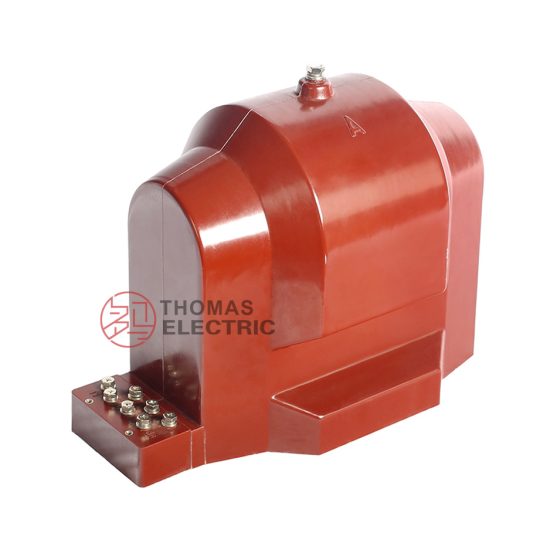
The JDZ9-10 11kV voltage transformer is a cast-resin insulated instrument transformer engineered to meet the stringent requirements of IEC 61869-3:2011, the international standard governing inductive voltage transformers for measurement and protection applications. Designed specifically for use in 11kV (nominal system voltage per IEC 60038) networks, this transformer provides accurate voltage transformation while ensuring long-term reliability in demanding environments.
Unlike oil-filled alternatives, the cast-resin construction eliminates fire hazards, reduces maintenance overhead, and enhances environmental compatibility—making it particularly suitable for indoor switchgear, urban substations, and industrial facilities where safety and space constraints are critical considerations. This article examines the operational contexts in which the JDZ9-10 excels, supported by real-world implementations, technical advantages aligned with IEC 61869-3 performance criteria, and practical guidance for engineers specifying instrumentation in 11kV distribution systems.

Application Overview
Voltage transformers (VTs), also known as potential transformers (PTs), serve two primary functions in medium-voltage (MV) power systems: accurate voltage measurement for metering and reliable signal provision for protective relaying. The JDZ9-10 is optimized for both roles within 11kV networks—a standardized IEC voltage class widely deployed across Europe, Asia, Africa, and Oceania.
Key application domains include:
- Indoor MV Switchgear Assemblies: Integrated into metal-enclosed switchboards (e.g., RMU or AIS configurations) for real-time monitoring and fault detection.
- Utility Substations: Used in secondary substations to feed data to SCADA systems, revenue meters, and distance relays.
- Industrial Power Systems: Deployed in manufacturing plants, refineries, and mining operations where continuous process integrity depends on precise voltage sensing.
- Railway Traction Networks: Applied in 11kV auxiliary supply systems for signaling, lighting, and control circuits.
- Renewable Energy Integration: Installed at the point of interconnection for solar farms or wind parks feeding into 11kV distribution feeders.
The transformer’s design adheres strictly to IEC 61869-3, which defines accuracy classes (e.g., 0.2, 0.5, 3P), rated insulation levels, thermal performance limits, and short-circuit withstand capabilities. Its cast-resin encapsulation ensures stable dielectric properties over time, even under high humidity or pollution conditions, thereby maintaining compliance throughout its service life.

Case Studies
Case Study 1: Urban Secondary Substation Retrofit in Berlin, Germany
A municipal utility in Berlin undertook a modernization program for aging 10kV infrastructure, upgrading to IEC-standardized 11kV distribution. The project required replacing legacy oil-filled VTs with maintenance-free, fire-safe alternatives compatible with compact GIS (Gas-Insulated Switchgear) retrofits.
The JDZ9-10 was selected due to its:
- Compliance with IEC 61869-3 accuracy class 0.5 for billing-grade metering,
- Cast-resin construction eliminating oil containment requirements,
- Compact footprint enabling integration into existing switchgear bays without structural modifications.
Post-installation performance over 18 months demonstrated consistent ratio error below ±0.3% and phase displacement under ±10 minutes—well within IEC 61869-3 tolerances. The utility reported zero maintenance interventions and improved resilience during summer load peaks.
Case Study 2: Industrial Plant Power Monitoring in Guangdong Province, China
A semiconductor fabrication facility operating on a dedicated 11kV network required high-precision voltage monitoring to support sensitive process equipment and comply with ISO 50001 energy management standards.
Engineers specified the JDZ9-10 with dual secondary windings: one rated for 0.2 accuracy class (metering) and another for 3P (protection). The transformer was installed directly in the plant’s main low-profile switchgear room, where space constraints and fire codes prohibited oil-filled units.
Over two years of operation, the unit maintained stable performance despite frequent harmonic distortion from variable-frequency drives (VFDs). Thermal imaging confirmed no hotspots, and partial discharge measurements remained below 5 pC—validating the integrity of the cast-resin insulation system under non-sinusoidal conditions.
Case Study 3: Solar Farm Interconnection in Queensland, Australia
A 15 MW solar photovoltaic (PV) farm needed to interconnect with a rural 11kV distribution feeder. Grid code compliance mandated accurate voltage measurement for reactive power control and anti-islanding protection.
The JDZ9-10 was deployed in an outdoor-rated enclosure adjacent to the MV switchyard. Despite exposure to tropical UV radiation, dust, and temperature swings from -5°C to +45°C, the cast-resin housing showed no degradation. The transformer’s IEC 61869-3–certified thermal rating (1.2 × rated voltage continuously) ensured reliable operation during cloud-edge overvoltage transients common in PV generation.
Data from the SCADA system confirmed voltage fidelity within ±0.4% across all irradiance conditions, enabling precise VAR compensation and seamless grid synchronization.

Technical Benefits Aligned with IEC 61869-3
The engineering value of the JDZ9-10 derives from its rigorous adherence to IEC 61869-3, which establishes performance benchmarks for inductive voltage transformers used in AC systems above 1 kV. Below are key technical attributes validated against this standard:
1. Accuracy and Linearity
IEC 61869-3 defines permissible errors for ratio and phase displacement under defined burden and voltage conditions. The JDZ9-10 is available in accuracy classes 0.2, 0.5, and 3P:
- Class 0.2: Ratio error ≤ ±0.2%, phase error ≤ ±10′ at 80–120% of rated voltage—suitable for precision metering.
- Class 0.5: Ratio error ≤ ±0.5%, phase error ≤ ±20′—ideal for general-purpose monitoring.
- Class 3P: Optimized for protection; maintains performance during transient overvoltages up to 1.9 × Un for 30 seconds.
2. Insulation Coordination
Per IEC 61869-3 and IEC 60071, the JDZ9-10 is rated for:
- Lightning impulse withstand voltage: 75 kV (peak),
- Power frequency withstand voltage: 28 kV (rms, 1 min).
The epoxy resin matrix provides homogeneous dielectric strength, eliminating voids that could initiate partial discharges—a common failure mode in poorly processed cast-resin units.
3. Thermal and Environmental Stability
Cast-resin insulation exhibits minimal thermal expansion mismatch between copper windings and the surrounding polymer, reducing mechanical stress during load cycling. The design supports continuous operation at ambient temperatures from -25°C to +40°C (per IEC 60060-1), with optional variants for harsher climates.
4. Maintenance-Free Operation
Absent liquid insulation, there is no need for:
- Oil sampling or dielectric testing,
- Leakage inspections,
- Fire suppression infrastructure.
This significantly lowers total cost of ownership (TCO), especially in unmanned or remote installations.
5. Electromagnetic Compatibility (EMC)
The grounded metallic shield between primary and secondary windings attenuates capacitive coupling, minimizing interference with adjacent low-voltage instrumentation—a critical factor in digital substation architectures using IEC 61850 protocols.

Frequently Asked Questions (FAQs)
Q1: Can the JDZ9-10 be used in a 10kV system?
No. The JDZ9-10 is explicitly rated for 11kV systems as defined by IEC 60038 (standard voltages). While some regions colloquially refer to “10kV” networks, the IEC-standard nominal voltage is 11kV. Using the transformer on a true 10kV system (if such exists outside legacy contexts) would result in under-excitation and degraded accuracy. Always verify system voltage against IEC 60038 before selection.
Q2: What burden ratings are compatible with the JDZ9-10?
The transformer is designed for standard burdens per IEC 61869-3, typically 10 VA, 15 VA, or 30 VA at power factor 0.8 lagging. Exceeding the rated burden increases ratio and phase errors beyond class specifications. Engineers must calculate total connected load (meters, relays, wiring resistance) to ensure compliance.
Q3: Is the JDZ9-10 suitable for outdoor installation?
Yes, provided it is housed in a weatherproof enclosure with adequate ventilation. The cast-resin body is UV-stable and hydrophobic, but terminal boxes must be sealed to IP54 or higher to prevent moisture ingress. Direct rain or condensation on terminals can compromise insulation resistance.
Q4: How does the JDZ9-10 handle ferroresonance?
Ferroresonance—a risk in isolated-neutral or compensated-earthed 11kV systems—can cause VT core saturation and overvoltage. The JDZ9-10 mitigates this through:
- Core design with controlled saturation characteristics,
- Recommendation to install damping resistors across open delta secondaries in ungrounded systems,
- Compliance with IEC 61869-3 clause 5.10 on transient performance.
System studies should evaluate resonance risk during specification.
Q5: What testing documentation accompanies the JDZ9-10?
Each unit ships with a test report verifying compliance with IEC 61869-3, including:
- Ratio and polarity verification,
- Accuracy class validation at multiple burdens,
- Power frequency and lightning impulse withstand tests,
- Partial discharge measurement (< 10 pC at 1.2 Um/√3).
Certificates are available upon request for utility commissioning protocols.

Conclusion
The JDZ9-10 11kV cast-resin voltage transformer represents a technically robust solution for modern medium-voltage infrastructure operating at the IEC-standardized 11kV level. Its design, validated against IEC 61869-3, delivers precision, safety, and longevity across diverse application scenarios—from dense urban substations to remote renewable generation sites.
By eliminating flammable insulation, minimizing lifecycle maintenance, and maintaining metrological integrity under electrical and environmental stress, the JDZ9-10 aligns with global trends toward resilient, sustainable, and digitally integrated power systems. For engineers responsible for specifying instrumentation in 11kV networks, this transformer offers a proven balance of compliance, performance, and operational economy.
When integrating the JDZ9-10 into new or upgraded installations, adherence to IEC 61869-3 testing protocols, proper burden calculation, and system-specific resonance analysis remain essential to realizing its full engineering potential.