Article Content
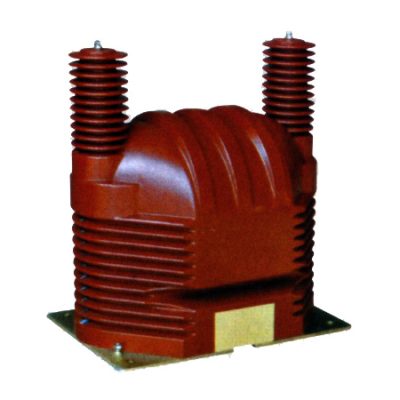
JDZ9-33kV Cast-Resin Voltage Transformer – Application Scenarios per IEC 61869-3
Introduction
The JDZ9-33kV cast-resin voltage transformer is a precision instrument designed for accurate voltage measurement and protection in medium-voltage power systems operating at the IEC-standardized nominal voltage of 33 kV. Engineered in strict compliance with IEC 61869-3:2011 (“Instrument transformers – Part 3: Additional requirements for inductive voltage transformers”), this device exemplifies reliability, safety, and metrological performance under demanding grid conditions.
Cast-resin insulation technology provides superior dielectric strength, environmental resilience, and fire resistance compared to oil-filled alternatives, making the JDZ9 series particularly suitable for indoor switchgear, urban substations, and industrial facilities where space constraints, fire safety, and maintenance reduction are critical design considerations. This article examines the operational contexts in which the JDZ9-33kV transformer delivers optimal performance, supported by real-world implementations and technical analysis aligned with international standards.

Application Overview
Voltage transformers (VTs), also known as potential transformers (PTs), serve two primary functions in electrical power systems: (1) providing scaled-down, proportional secondary voltages for metering and monitoring, and (2) supplying input signals to protective relays during fault conditions. The JDZ9-33kV unit is specifically rated for systems with a highest voltage for equipment (Um) of 36 kV, corresponding to a system nominal voltage of 33 kV as defined in IEC 60038.
Key application domains include:
- Indoor Gas-Insulated Switchgear (GIS) and Air-Insulated Switchgear (AIS): Compact footprint and dry-type construction enable seamless integration into metal-enclosed switchgear assemblies without requiring oil containment or ventilation.
- Urban and Industrial Substations: Fire-retardant epoxy resin eliminates flammability risks, satisfying stringent building codes in densely populated or high-value asset zones.
- Railway Traction Power Systems: Robust mechanical and thermal design withstands harmonic distortion and transient overvoltages common in electrified rail networks operating at 33 kV.
- Renewable Energy Interconnection Points: Provides accurate voltage feedback for synchronization, reactive power control, and fault detection at solar or wind farm grid connection interfaces.
- Mining and Heavy Industry: Resistant to dust, moisture, and chemical exposure due to hermetically sealed resin encapsulation.
All applications must adhere to the accuracy classes, thermal ratings, and insulation coordination specified in IEC 61869-3. The JDZ9-33kV typically offers accuracy classes of 0.2, 0.5, or 3P for metering and protection duties, respectively, with standard secondary outputs of 100 V or 110 V (line-to-line) and 100/√3 V or 110/√3 V (phase-to-earth).

Case Studies
Case Study 1: Urban Distribution Substation Upgrade – Shanghai, China
A municipal utility replaced aging oil-filled VTs in a 33 kV indoor substation serving downtown Shanghai. Space limitations and fire safety regulations prohibited further use of oil-insulated equipment. The JDZ9-33kV units were selected for their compact dimensions (height: 780 mm; diameter: 280 mm) and self-extinguishing resin housing (UL 94 V-0 rated).
Post-installation performance over 24 months demonstrated:
- Phase error within ±5 minutes and ratio error ≤ ±0.2% at 80–120% of rated voltage, satisfying IEC 61869-3 Class 0.2 requirements.
- No degradation in insulation resistance (>10 GΩ) despite ambient humidity exceeding 85% RH during monsoon season.
- Zero maintenance interventions, contrasting with quarterly oil sampling previously required.
The project achieved a 30% reduction in lifecycle costs and met local fire codes without retrofitting existing enclosures.
Case Study 2: Solar Farm Grid Interconnection – Rajasthan, India
A 100 MW photovoltaic plant required reliable voltage sensing at its 33 kV point of common coupling (PCC) for anti-islanding protection and revenue metering. Ambient temperatures regularly exceed 48°C, and sand-laden winds posed contamination risks.
The JDZ9-33kV was deployed with IP54-rated terminal boxes and Class 0.5 accuracy for metering, alongside Class 3P for overvoltage and undervoltage relays. Key outcomes included:
- Stable performance across diurnal temperature swings (15°C to 52°C), with thermal stability coefficient < 0.02%/K as per IEC 61869-3 Annex C.
- No flashovers or tracking on resin surfaces after 18 months of operation in high-dust conditions.
- Compliance with Indian Electricity Grid Code (IEGC) requirements for measurement uncertainty (< 0.5%) at PCC.
The solution eliminated the need for climate-controlled VT cubicles, reducing capital expenditure by approximately USD 18,000 per feeder bay.
Case Study 3: Electrified Railway Feeder – Gauteng Province, South Africa
A 33 kV autotransformer-fed traction system experienced frequent VT failures due to third-harmonic resonance and switching transients from locomotive rectifiers. The legacy oil-type VTs suffered internal partial discharges leading to premature insulation breakdown.
JDZ9-33kV units with enhanced damping circuits and reinforced inter-turn insulation were installed. Post-commissioning tests per IEC 61869-3 Clause 7.4 confirmed:
- Ferroresonance immunity up to 1.9 p.u. sustained overvoltage.
- Partial discharge levels < 5 pC at 1.2 × Um/√3, well below the 20 pC limit for resin-insulated VTs.
- Reliable operation through >200 load-commutation events without relay misoperation.
System availability improved from 98.2% to 99.97% over one year, directly attributable to VT reliability enhancements.

Technical Benefits
The engineering advantages of the JDZ9-33kV cast-resin voltage transformer derive from its adherence to IEC 61869-3 and optimized materials science:
1. Dielectric Integrity and Environmental Resilience
Epoxy resin encapsulation provides homogeneous insulation without voids, minimizing partial discharge inception voltage (PDIV). The material exhibits excellent hydrophobicity and UV resistance, ensuring stable performance in outdoor or semi-outdoor installations. Unlike oil-filled VTs, there is no risk of leakage, gas generation, or environmental contamination.
2. Thermal and Mechanical Stability
The coefficient of thermal expansion (CTE) of the resin closely matches that of embedded copper windings, reducing mechanical stress during thermal cycling. This design prevents microcracking and maintains long-term accuracy. The transformer withstands short-circuit forces per IEC 61869-3 Clause 6.5 without deformation.
3. Accuracy and Transient Response
Precision-wound secondary coils and low-loss magnetic cores ensure compliance with IEC 61869-3 accuracy limits across the extended operating range (25–120% of rated voltage). The absence of liquid insulation enables faster response to voltage transients, critical for modern digital relays requiring sub-cycle fault detection.
4. Safety and Regulatory Compliance
Cast-resin construction meets IEC 61869-3 fire hazard requirements (no flaming droplets, limited smoke emission). It also complies with RoHS and REACH directives, avoiding hazardous substances such as PCBs or halogenated flame retardants.
5. Lifecycle Cost Efficiency
With no oil to test, filter, or replace, and no desiccant breathers to maintain, operational expenditures are significantly reduced. Expected service life exceeds 30 years under normal loading conditions, as validated by accelerated aging tests per IEC 61869-3 Annex D.

Frequently Asked Questions (Application Scenarios)
Q1: Can the JDZ9-33kV be used in systems labeled as “35 kV”?
A: No. Per IEC 60038, the standardized nominal system voltage is 33 kV, with a corresponding highest voltage for equipment (Um) of 36 kV. Equipment marketed as “35 kV” often refers to non-IEC regional practices. The JDZ9-33kV is certified exclusively for IEC 33 kV systems and must not be applied to networks with Um > 36 kV without explicit manufacturer validation.
Q2: Is the JDZ9-33kV suitable for outdoor installation?
A: Yes, provided appropriate terminal enclosures (minimum IP54) are used. The cast-resin body itself is UV-stable and hydrophobic, but exposed terminals require protection against direct precipitation and dust ingress per IEC 60529. For fully exposed outdoor mounting, consult the manufacturer for optional silicone rubber sheds or composite housings.
Q3: How does the JDZ9-33kV handle ferroresonance in unearthed or compensated neutral systems?
A: Ferroresonance risk is mitigated through core design (controlled saturation characteristics) and optional damping resistors across tertiary windings. IEC 61869-3 requires testing under single-phase interruption conditions; the JDZ9-33kV passes these tests up to 1.9 p.u. overvoltage without destructive resonance. However, system-level studies per IEC 60071-2 are still recommended for resonant network configurations.
Q4: What accuracy class is required for revenue metering at 33 kV?
A: IEC 62053-22 specifies Class 0.2S or 0.5S for static meters used in billing. The JDZ9-33kV can be supplied with Class 0.2 (or 0.2S upon request) to meet this requirement when combined with compatible metering equipment. Note that overall system accuracy depends on both VT and meter performance.
Q5: Can multiple secondary windings be provided for combined metering and protection?
A: Yes. The JDZ9-33kV supports dual or triple secondary windings (e.g., 0.2/3P/3P) isolated per IEC 61869-3 Clause 5.3. Each winding is independently rated for its burden and accuracy class, enabling simultaneous connection to revenue meters, SCADA RTUs, and multiple protection relays without cross-interference.
Conclusion
The JDZ9-33kV cast-resin voltage transformer represents a technically rigorous solution for modern 33 kV power systems governed by IEC standards. Its design—validated against the comprehensive requirements of IEC 61869-3—ensures metrological fidelity, operational safety, and longevity across diverse application environments, from constrained urban substations to harsh industrial and renewable energy sites. Real-world deployments confirm its superiority over legacy oil-filled technologies in terms of maintenance reduction, environmental compatibility, and resilience to electrical stressors.
Engineers specifying instrumentation for 33 kV networks should prioritize IEC-compliant devices like the JDZ9 series to guarantee interoperability, regulatory conformity, and lifecycle cost efficiency. Future-proofing grid infrastructure demands adherence to international standards—not regional approximations—and the JDZ9-33kV exemplifies this principle through its precise alignment with IEC 61869-3’s technical framework.
