Article Content
JDZW-10R 11kV Cast-Resin Voltage Transformer: Application Scenarios per IEC 61869-3
Introduction
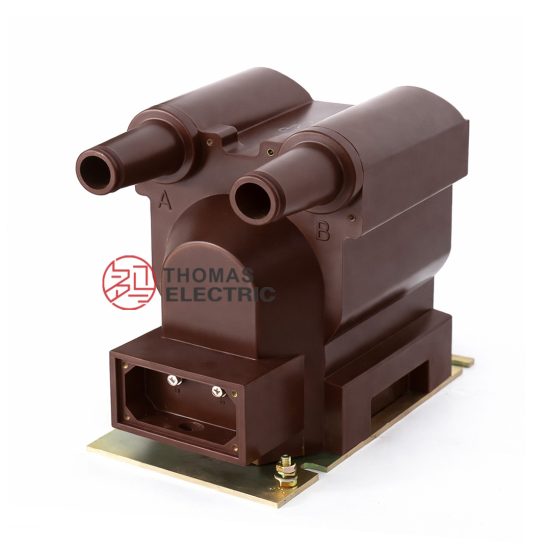
The JDZW-10R is a single-phase, outdoor-type, cast-resin insulated voltage transformer designed for accurate voltage measurement and protection in 11kV medium-voltage (MV) power systems. It complies fully with the international standard IEC 61869-3:2011, which specifies requirements for inductive voltage transformers used in alternating current (AC) systems operating at frequencies of 50 Hz or 60 Hz. This document provides a comprehensive technical overview of the JDZW-10R’s application scenarios, emphasizing its role in utility substations, industrial facilities, and renewable energy integration.
It is critical to note that the rated system voltage for this device is strictly 11kV, as defined by the IEC 60038 standard series for nominal voltages. The use of “10kV” is a common regional misnomer; however, under IEC conventions, the standardized nominal voltage for this class of equipment is 11kV. All specifications, test protocols, and operational parameters referenced herein adhere to this internationally recognized voltage level.

Application Overview
Voltage transformers (VTs), also known as potential transformers (PTs), serve two primary functions in electrical power systems: metering and protection. The JDZW-10R, with its robust cast-resin insulation and compliance with IEC 61869-3, is engineered for reliable performance in demanding environments where safety, accuracy, and long-term stability are paramount.
Key application domains include:
- Utility Substations: Used for revenue metering, fault detection, and synchronization in 11kV distribution networks.
- Industrial Power Systems: Integrated into switchgear panels for motor control centers (MCCs), process automation, and protective relaying.
- Renewable Energy Installations: Deployed in solar PV and wind farm collector substations to interface with SCADA systems and grid-tie inverters.
- Railway Traction Networks: Applied in auxiliary power systems where precise voltage monitoring ensures safe train operations.
The JDZW-10R features a single secondary winding (typically rated at 100 V or 100/√3 V) and may be configured with optional residual voltage windings for ground-fault detection. Its design incorporates corona-free resin casting, which eliminates partial discharge under normal operating conditions and enhances dielectric strength—critical for outdoor installations exposed to pollution, humidity, and temperature cycling.

Case Studies
Case Study 1: Urban Distribution Substation Upgrade – Central Europe
A municipal utility in Germany replaced aging oil-insulated VTs with JDZW-10R units across 12 urban 11kV distribution substations. The primary drivers were fire safety regulations (eliminating flammable oil) and the need for maintenance-free operation over a 30-year lifecycle.
Per IEC 61869-3, each JDZW-10R was tested for:
- Accuracy class 0.5 for metering (per IEC 61869-3 Table 5)
- Thermal stability under continuous 1.2 × Un overvoltage
- Impulse withstand voltage of 75 kV (1.2/50 μs waveform)
Post-installation monitoring over 18 months confirmed stable ratio error (< ±0.3%) and phase displacement (< ±10′), well within Class 0.5 tolerances. The absence of oil leakage and reduced footprint enabled retrofitting without structural modifications to existing switchgear bays.
Case Study 2: Industrial Petrochemical Complex – Southeast Asia
An integrated petrochemical facility in Malaysia deployed 28 JDZW-10R units across its 11kV motor control centers to support differential protection schemes for critical compressors and pumps. The environment featured high ambient temperatures (up to 45°C) and corrosive airborne contaminants from nearby processing units.
The cast-resin housing provided superior resistance to chemical degradation compared to conventional porcelain-housed VTs. Additionally, the sealed design prevented moisture ingress during monsoon seasons, eliminating condensation-related insulation failures observed with older models.
All units were commissioned with burden tests simulating actual relay and meter loads (15 VA at 0.8 power factor). Frequency response analysis confirmed flat magnitude response from 45 Hz to 55 Hz, ensuring compatibility with variable-frequency drives (VFDs) present in the plant.

Case Study 3: Solar Farm Interconnection – Australia
A 50 MW solar photovoltaic (PV) farm in Queensland utilized JDZW-10R transformers at its 11kV collector substation to provide voltage signals for anti-islanding protection and revenue-grade metering. The site experienced significant diurnal temperature swings (10°C to 48°C) and high UV exposure.
The UV-stabilized epoxy resin formulation prevented surface cracking and tracking, maintaining creepage distance integrity per IEC 60815. Each VT was mounted on a galvanized steel support structure with adequate clearance to meet IEC 61936-1 clearances for 11kV systems.
Grid compliance testing verified that harmonic distortion introduced by the VTs remained below 0.5% up to the 13th harmonic, satisfying Australian Energy Market Operator (AEMO) requirements for grid-connected inverters.
Technical Benefits
The JDZW-10R offers several engineering advantages derived from its adherence to IEC 61869-3 and modern cast-resin manufacturing techniques:
1. Enhanced Dielectric Performance
Cast-resin insulation provides uniform electric field distribution, minimizing partial discharge activity. The solid insulation system achieves a Basic Insulation Level (BIL) of 75 kV, consistent with IEC 60071-1 for 11kV systems. Unlike oil-filled alternatives, there is no risk of internal gas formation or pressure build-up under thermal stress.
2. Environmental Resilience
The housing is rated for pollution degree IV (heavy industrial/coastal environments) per IEC 60664-1. Hydrophobic properties of the resin surface reduce wetting under rain or fog, preserving insulation resistance even in high-humidity conditions.
3. Accuracy and Stability
Core materials utilize grain-oriented silicon steel with low hysteresis loss, ensuring minimal ratio and phase errors across the operating range (0.8–1.2 × Un). Temperature coefficients are optimized to maintain Class 0.2 or 0.5 accuracy from –25°C to +40°C ambient.
4. Maintenance-Free Operation
With no liquid fillers or moving parts, the JDZW-10R requires no scheduled maintenance beyond visual inspection. This reduces lifecycle costs and improves system availability—particularly valuable in remote or unmanned substations.
5. Compliance with Global Standards
Beyond IEC 61869-3, the design aligns with:
- IEC 60044-2 (superseded but referenced in legacy systems)
- IEC 61869-1 (general requirements)
- IEC 60529 (IP54 ingress protection for terminals)

Frequently Asked Questions (FAQs)
Q1: Can the JDZW-10R be used in a 10kV system?
No. The JDZW-10R is rated exclusively for 11kV systems as defined by IEC 60038. While some regions colloquially refer to 11kV networks as “10kV,” the nominal system voltage per international standards is 11kV. Using the transformer on a system with a true fundamental frequency voltage significantly below 11kV may compromise accuracy and protection coordination.
Q2: What accuracy classes are available for metering and protection applications?
Per IEC 61869-3, the JDZW-10R is typically supplied in accuracy classes 0.2, 0.5, or 1.0 for metering, and 3P or 6P for protection. The specific class must be specified at ordering based on the connected burden (e.g., kWh meters vs. overvoltage relays).
Q3: Is the JDZW-10R suitable for indoor installation?
Although designed primarily for outdoor use, the JDZW-10R may be installed indoors provided ambient conditions comply with IEC 60068-2 (temperature, humidity, and pollution levels). However, its dimensions and mounting hardware are optimized for outdoor pole or platform mounting.
Q4: How does cast-resin construction affect short-circuit withstand capability?
Voltage transformers are not subjected to load current; thus, short-circuit withstand is not applicable in the same manner as current transformers. However, the JDZW-10R is tested for dynamic and thermal effects during system faults per IEC 61869-3 Clause 6.6, ensuring mechanical integrity when exposed to transient overvoltages.
Q5: Can multiple secondary windings be ordered for combined metering and protection?
Yes. The JDZW-10R can be manufactured with dual secondary windings—one dedicated to metering (e.g., Class 0.5, 10 VA) and another to protection (e.g., Class 3P, 30 VA)—to prevent interaction between sensitive metering circuits and high-burden relay loads.

Conclusion
The JDZW-10R 11kV cast-resin voltage transformer represents a technically robust solution for modern medium-voltage infrastructure requiring compliance with IEC 61869-3. Its application spans utility, industrial, and renewable sectors where reliability, accuracy, and environmental durability are non-negotiable. By leveraging solid insulation technology and adhering strictly to IEC nominal voltage standards (11kV), this device mitigates risks associated with legacy oil-filled or porcelain designs while supporting the evolving demands of smart grids and distributed generation.
Engineers specifying the JDZW-10R should verify system parameters—including burden, accuracy class, and environmental conditions—against the latest edition of IEC 61869-3 to ensure optimal performance and regulatory conformity. When properly applied, the JDZW-10R delivers decades of maintenance-free service with minimal metrological drift, making it a cornerstone component in resilient 11kV power systems worldwide.