Article Content
Introduction
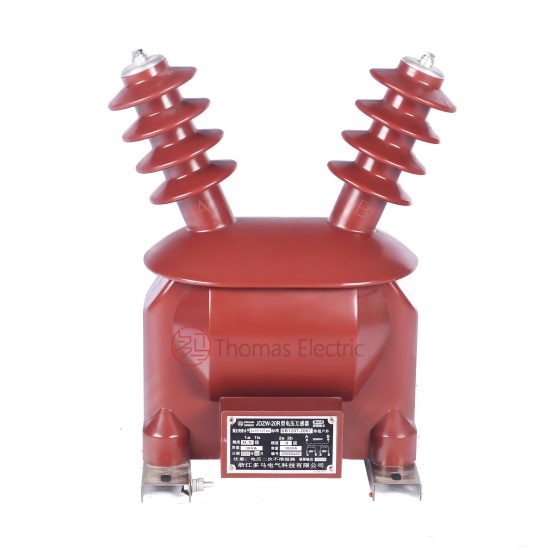
The JDZW-20 21kV voltage transformer is a cast-resin insulated instrument transformer designed for accurate voltage measurement and reliable protection functions in medium-voltage power systems. Compliant with international standard IEC 61869-3 and domestic Chinese standard GB/T 20840, this device serves as a critical interface between high-voltage primary circuits and secondary instrumentation or protective relays. The nominal system voltage is specified as 21 kV in accordance with IEC 61869-3, which corresponds to the 20 kV system voltage designation used under GB/T 20840. This dual-standard alignment ensures interoperability across global and domestic infrastructure projects.
Engineered for both indoor and outdoor installation, the JDZW-20 features robust epoxy resin encapsulation that provides excellent dielectric strength, mechanical durability, and resistance to environmental stressors such as moisture, dust, and UV radiation. Its design prioritizes long-term operational stability, minimal phase displacement, and consistent ratio accuracy under varying load and temperature conditions. As a single-phase, non-interchangeable voltage transformer, it is typically deployed in three-unit configurations for three-phase systems. The unit supports both metering and protection applications through dedicated secondary windings with defined accuracy classes and burden ratings, ensuring compliance with regulatory and operational requirements for power quality monitoring and fault detection.
Technical Specifications
The JDZW-20 21kV voltage transformer adheres strictly to the performance and dimensional criteria outlined in IEC 61869-3 and GB/T 20840. Below are its core technical parameters:
- Primary Voltage (Up): 21 kV (IEC standard); equivalent to 20 kV under GB/T 20840 for domestic applications.
- Secondary Voltages (Us): Typically 100 V or 100/√3 V for metering; may include an auxiliary winding at 100/3 V for residual voltage detection in protection schemes.
- Frequency: 50 Hz (standard), with optional 60 Hz variants available upon request.
- Insulation Level: Rated insulation level per IEC 61869-3: Um = 24 kV, BIL = 125 kV (lightning impulse withstand voltage).
- Accuracy Classes:
- Metering winding: Class 0.2 or 0.5 per IEC 61869-3 and GB/T 20840, suitable for revenue-grade energy metering.
- Protection winding: Class 3P or 6P, designed for reliable operation during fault conditions within specified error limits.
- Burden Ratings:
- Metering: Standard burdens of 10 VA, 15 VA, or 30 VA at rated secondary voltage and power factor cos φ = 0.8 (lagging).
- Protection: Burdens typically rated at 30 VA or 50 VA, depending on relay input impedance and cable length.
- Thermal Rating: Continuous thermal current rating based on IEC 61869-3; short-time thermal withstand capability of 1 s at 100 times rated primary current (for fault scenarios involving capacitive coupling or ferroresonance mitigation).
- Construction: Cast-resin (epoxy) encapsulation with embedded primary and secondary windings; aluminum or copper conductors; terminal studs conforming to IEC 61869-1 dimensional standards.
- Polarity: Subtractive polarity as per IEC convention; marked with “*” symbol on primary and secondary terminals.
- Creepage Distance: Minimum 25 mm/kV for outdoor use (pollution degree III per IEC 60815), ensuring reliable performance in contaminated environments.
All specifications are subject to verification through type tests, routine tests, and special tests as mandated by IEC 61869-3. The transformer’s performance envelope is validated across ambient temperatures ranging from –25°C to +40°C, with derating considerations applied beyond these limits.
Key Features
The JDZW-20 21kV voltage transformer incorporates several engineering features that enhance reliability, safety, and longevity in demanding electrical environments:
- Cast-Resin Insulation System: The entire active part is vacuum-cast in cycloaliphatic epoxy resin, providing homogeneous dielectric properties, high partial discharge inception voltage (>15 kV), and resistance to tracking and erosion. This eliminates the need for oil or gas insulation, reducing fire risk and environmental impact.
- Dual-Standard Compliance: Designed to meet both IEC 61869-3 and GB/T 20840, enabling seamless integration into international and Chinese grid infrastructures without performance compromise. The 21 kV (IEC) / 20 kV (GB) duality reflects standardized system voltage definitions while maintaining identical physical and electrical characteristics.
- Optimized Magnetic Core: Grain-oriented silicon steel laminations minimize core losses and hysteresis, ensuring low no-load current and stable ratio error over extended operating cycles. Core design mitigates ferroresonance risks through controlled saturation characteristics.
- Robust Terminal Design: Primary and secondary terminals feature corrosion-resistant plating (typically tin or silver) and are sized to accommodate standard lugs per IEC 61238. Secondary terminals are housed in an IP54-rated terminal box for indoor/outdoor compatibility.
- Integrated Overvoltage Protection (Optional): Some variants include built-in surge arresters or damping resistors connected to the open delta winding to suppress transient overvoltages caused by switching or lightning events.
- Low Temperature Sensitivity: Performance remains within accuracy class limits across the full operational temperature range due to thermal compensation in winding design and resin formulation.
These features collectively ensure that the JDZW-20 maintains metrological integrity for billing purposes while delivering dependable signal fidelity for protective relaying under both steady-state and transient conditions.
Applications
The JDZW-20 21kV voltage transformer is engineered for two primary functional domains: precision metering and system protection. Its deployment is common in distribution substations, industrial plants, renewable energy interconnection points, and utility-scale transmission feeders operating at nominal system voltages of 21 kV (IEC) or 20 kV (GB).
In metering applications, the transformer supplies scaled-down voltage signals to revenue meters, data acquisition systems, and power quality analyzers. The Class 0.2 or 0.5 accuracy winding ensures compliance with regulatory requirements for energy billing, where ratio error must remain within ±0.2% or ±0.5%, respectively, at 80–120% of rated voltage and specified burden. Phase displacement is limited to ≤10 minutes (Class 0.2) or ≤20 minutes (Class 0.5), critical for accurate real and reactive power computation in three-phase systems.
For protection applications, the Class 3P or 6P winding delivers signals to overvoltage relays, undervoltage relays, directional earth-fault detectors, and distance protection schemes. These windings maintain composite error within ±3% (3P) or ±6% (6P) up to 5× rated voltage during fault transients, ensuring correct relay operation even under severe system disturbances. The inclusion of a residual (open-delta) winding—when specified—enables detection of zero-sequence voltages for ground-fault protection in unearthed or compensated neutral systems.
The transformer is suitable for both isolated and grounded-neutral systems. In solidly grounded networks, it is typically connected phase-to-ground; in resistance- or reactance-grounded systems, phase-to-phase connections may be employed depending on protection philosophy. Its cast-resin construction makes it ideal for installations where fire safety, maintenance minimization, and space constraints are critical considerations.
Installation Requirements
Proper installation of the JDZW-20 21kV voltage transformer is essential to ensure operational safety, accuracy, and compliance with IEC 61869-3 and GB/T 20840. The following guidelines must be observed:
- Mechanical Mounting: The unit is designed for vertical or horizontal mounting on a support structure capable of withstanding mechanical loads during short-circuit events. Mounting brackets must align with manufacturer-specified bolt patterns. Vibration isolation is recommended in high-seismic zones (per IEC 60068-2).
- Clearances and Creepage: Maintain minimum air clearance of 200 mm between live parts and grounded surfaces at 21 kV. For outdoor installations in pollution class III environments, ensure creepage distance ≥630 mm (25 mm/kV × 21 kV). Avoid sharp edges near bushings that could distort electric field distribution.
- Wiring Practices:
- Secondary wiring must use shielded, twisted-pair cables with cross-sections sufficient to limit voltage drop to <0.25% of rated secondary voltage under maximum burden.
- All secondary circuits must be grounded at a single point—typically at the transformer terminal box or relay panel—to prevent circulating currents and ensure personnel safety.
- Unused secondary windings must be short-circuited and grounded to avoid dangerous induced voltages.
- Polarity Verification: Confirm subtractive polarity during commissioning using a low-voltage test method (e.g., momentary DC injection) to ensure correct phasing in three-phase banks.
- Environmental Considerations: Although rated for outdoor use, prolonged exposure to direct rainfall on terminal boxes should be mitigated via drip shields. Indoor installations require adequate ventilation to prevent localized heating.
- Interconnection with Other Equipment: Coordinate with circuit breaker and disconnector interlocks to ensure the transformer is de-energized before access to secondary terminals. Verify compatibility with connected relays and meters regarding burden and frequency response.
Non-compliance with these requirements may result in measurement inaccuracies, insulation failure, or compromised protection coordination.
Testing & Maintenance
Routine testing and periodic maintenance are critical to sustaining the JDZW-20’s performance over its service life. Testing protocols follow IEC 61869-3 type and routine test schedules, supplemented by site-specific commissioning procedures.
Factory Tests (per IEC 61869-3):
- Power frequency withstand voltage test (primary to ground and secondary): 50 kV rms for 1 minute.
- Partial discharge measurement: ≤10 pC at 1.2 × Um/√3.
- Accuracy verification at 20%, 50%, 80%, 100%, and 120% of rated voltage under specified burdens.
- Winding resistance measurement (temperature-corrected to 75°C).
Site Commissioning Tests:
- Insulation resistance test (megger test): >1000 MΩ at 2500 V DC between windings and ground.
- Ratio and polarity check using a portable turns ratio tester.
- Burden verification: Measure actual load impedance at secondary terminals and confirm it does not exceed rated VA.
- Phase displacement validation (if required for high-accuracy metering).
Maintenance Recommendations:
- Visual inspection annually for cracks, discoloration, or surface tracking on the resin housing.
- Clean outdoor units with deionized water to remove salt, dust, or industrial deposits; avoid abrasive cleaners.
- Re-torque terminal connections every 3–5 years to compensate for thermal cycling effects.
- Re-test accuracy and insulation resistance after any system fault involving sustained overvoltage or ferroresonance.
- No internal maintenance is required due to the sealed, solid-insulation design; the unit is not serviceable and must be replaced if internal faults are suspected.
Record all test results in the asset management system to establish baseline performance trends and support predictive maintenance strategies.
FAQ
1. Why is the primary voltage listed as 21 kV instead of 20 kV?
The 21 kV rating aligns with IEC 61869-3, which defines the highest system voltage for equipment (Um) as 24 kV for a 20 kV nominal system. The 21 kV value represents the maximum continuous operating voltage under IEC conventions. GB/T 20840 uses 20 kV as the nominal system voltage, but the physical transformer is identical; the distinction is purely nomenclatural based on regional standards.
2. Can the JDZW-20 be used in a 60 Hz system?
Yes, provided the core is designed for 60 Hz operation. Standard units are optimized for 50 Hz; 60 Hz variants require adjusted core cross-section and winding turns to maintain flux density within limits. Consult the manufacturer for frequency-specific models.
3. What happens if the secondary burden exceeds the rated VA?
Excessive burden increases ratio error and phase displacement beyond accuracy class limits, compromising metering integrity and potentially causing protection relays to misoperate. Always verify total connected burden (including cable impedance) against the transformer’s rated output.
4. Is grounding of the secondary winding mandatory?
Yes. Per IEC 61869-3 and safety codes, one point of the secondary circuit must be grounded to prevent hazardous floating potentials and ensure correct operation of ground-referenced relays.
5. How is ferroresonance prevented in this transformer?
Design features include core material selection to control saturation, optional damping resistors across tertiary windings, and recommendations against use with long cable capacitances without supervision relays. System studies should evaluate resonance risk during switching operations.
6. Can the JDZW-20 be installed horizontally?
Yes, the cast-resin construction permits horizontal mounting. However, drainage holes (if present) must be oriented downward, and terminal box seals must remain effective to maintain IP rating.
7. What is the expected service life?
Under normal operating conditions (≤40°C ambient, no sustained overvoltage), the design life exceeds 25 years. Degradation is primarily driven by thermal aging of the resin and cumulative partial discharge activity.