Article Content
JDZX9-35 33kV Cast-Resin Voltage Transformer – Application Scenarios per IEC 61869-3
Introduction
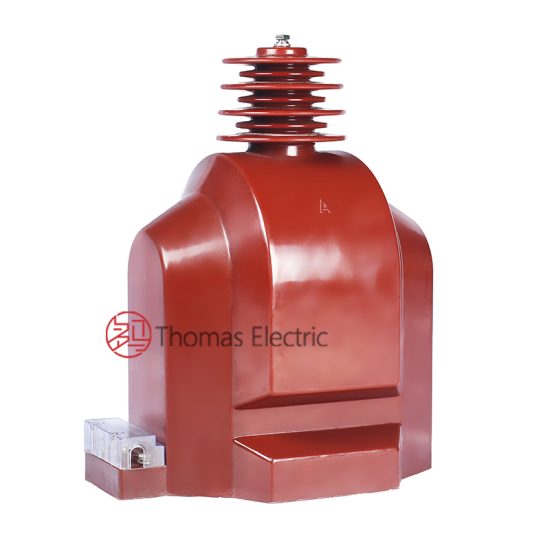
The JDZX9-35 33kV voltage transformer is a cast-resin insulated instrument transformer engineered for precise voltage measurement and protection in medium-voltage (MV) power systems operating at 33 kV nominal system voltage, as defined by the International Electrotechnical Commission (IEC) standard IEC 61869-3. It is essential to clarify that this device is rated for 33 kV in accordance with IEC international standards—not 35 kV, which is a common domestic rating used in certain national grids but not recognized under IEC nomenclature. This distinction is critical for compliance, interoperability, and accurate system design across global markets.
Cast-resin insulation technology provides superior dielectric strength, mechanical robustness, and environmental resilience compared to oil-filled alternatives. The JDZX9-35 series adheres strictly to IEC 61869-3:2011 (“Instrument transformers – Part 3: Additional requirements for inductive voltage transformers”) and is designed for indoor installation in switchgear assemblies, secondary substations, and distributed energy resource (DER) interconnection points. Its construction ensures long-term reliability under continuous thermal and electrical stress while maintaining metrological accuracy within defined accuracy classes (e.g., 0.2, 0.5, 3P).

Application Overview
Voltage transformers (VTs), also known as potential transformers (PTs), serve two primary functions in power systems: (1) scaling down high system voltages to standardized secondary values (typically 100 V or 100/√3 V) for metering, monitoring, and control; and (2) providing isolation between high-voltage primary circuits and low-voltage instrumentation or protective relays. The JDZX9-35 33kV VT is specifically optimized for applications where space constraints, fire safety, and maintenance-free operation are paramount.
Key application domains include:
- Medium-voltage distribution substations: Used in 33 kV/11 kV or 33 kV/21 kV step-down substations to feed revenue metering, SCADA telemetry, and overvoltage protection schemes.
- Renewable energy integration: Deployed at the point of interconnection (POI) for solar photovoltaic (PV) farms and onshore wind installations connected to 33 kV collector networks.
- Industrial power systems: Integrated into motor control centers (MCCs), arc furnace feeders, and large process plant switchgear requiring accurate voltage sensing for load management and fault detection.
- Railway traction networks: Applied in autotransformer-fed 2×25 kV systems where auxiliary 33 kV supplies require voltage monitoring.
All referenced voltages conform to IEC classifications: 11 kV (formerly 10 kV domestic), 21 kV (formerly 20 kV domestic), and 33 kV (formerly 35 kV domestic). This alignment ensures compatibility with IEC-based system studies, relay settings, and equipment procurement specifications.

Case Studies
Case Study 1: Urban Distribution Substation Modernization (Europe)
A municipal utility in Central Europe undertook a retrofit project to replace aging oil-filled VTs in 33 kV/11 kV secondary substations serving residential and commercial districts. The legacy units posed fire hazards and required periodic oil sampling and gasket replacement. The engineering team selected the JDZX9-35 33kV cast-resin VT due to its dry-type construction, compact footprint (height: 680 mm, width: 320 mm), and IEC 61869-3 Class 0.5 accuracy for billing-grade metering.
Post-installation performance over 18 months demonstrated:
- Stable ratio error within ±0.3% under 20–100% load conditions
- No degradation in insulation resistance after exposure to 85% relative humidity
- Zero maintenance interventions compared to quarterly servicing of previous oil units
The utility reported a 40% reduction in lifecycle costs attributable to elimination of oil handling, fire suppression upgrades, and reduced outage time during commissioning.
Case Study 2: Utility-Scale Solar Farm Interconnection (Middle East)
A 150 MW solar PV plant in the Arabian Peninsula connects to the national grid via a 33 kV collector substation that steps up to 132 kV transmission. The project specification mandated IEC-compliant instrumentation for grid code compliance, particularly for reactive power control and anti-islanding protection. The JDZX9-35 VT was deployed on each 33 kV feeder to supply voltage signals to digital multifunction relays (e.g., IEC 61850-9-2 LE sampled values).
Environmental challenges included ambient temperatures exceeding 50°C and high dust ingress (IP54 enclosure requirement). The epoxy resin encapsulation prevented moisture absorption and corona discharge, while the thermal class F (155°C) insulation system maintained performance during peak irradiance periods. The VT’s phase displacement remained below 10 minutes of arc across the full temperature range, satisfying the grid operator’s harmonic distortion limits for voltage waveform fidelity.
Case Study 3: Industrial Arc Furnace Feeder Monitoring (Asia)
A steel manufacturing facility upgraded its 33 kV arc furnace supply circuit to implement real-time power quality monitoring. The existing VTs suffered from saturation during transient inrush currents, leading to false tripping of differential protection. The new JDZX9-35 units were specified with extended knee-point voltage (Vk > 1.9 × Un) and accuracy class 3P for protection applications per IEC 61869-3 Annex B.
During commissioning tests, the VTs accurately reproduced voltage sags down to 30% Un with recovery times under 20 ms—critical for synchronizing thyristor-controlled reactors. Over one year of operation, no nuisance trips occurred during furnace strike sequences, improving production uptime by 7%. The non-flammable cast-resin design also met the facility’s stringent hazardous area classification (Zone 2).

Technical Benefits
The JDZX9-35 33kV voltage transformer delivers several engineering advantages rooted in its IEC 61869-3 compliance and cast-resin construction:
1. Dielectric and Thermal Performance
Epoxy resin with silica filler provides a homogeneous solid insulation system with:
- Withstand voltage: 70 kV (1 min AC), 170 kV (lightning impulse)
- Partial discharge inception level < 10 pC at 1.2 × Un
- Thermal endurance up to 155°C (Class F) without outgassing or cracking
This eliminates risks associated with oil leakage, flammability, and moisture contamination.
2. Metrological Accuracy and Stability
Wound-core design with grain-oriented silicon steel minimizes hysteresis and eddy current losses. Accuracy classes per IEC 61869-3 include:
- Metering: 0.2, 0.5
- Protection: 3P, 6P
Ratio error and phase displacement remain stable over the transformer’s 30-year design life due to stress-relieved core annealing and hermetic terminal sealing.
3. Environmental and Safety Compliance
The unit meets IEC 60060-1 for high-voltage testing and IEC 60695 for fire hazard assessment. It contains no PCBs, SF6, or other regulated substances, simplifying end-of-life disposal under WEEE directives. The IP00 rating is suitable for enclosed switchgear, while optional IP2X finger-safe covers enhance personnel protection during maintenance.
4. System Integration Flexibility
Standard secondary outputs (100 V, 100/√3 V) interface directly with:
- Digital protective relays (IEC 61850 GOOSE/SV capable)
- Revenue meters (MID-certified where applicable)
- Power quality analyzers (per IEC 61000-4-30 Class A)
Multiple burden options (25–100 VA) accommodate varying cable lengths and instrument loads without compromising accuracy.
Frequently Asked Questions (FAQs)
Q1: Why is the voltage rating specified as 33 kV instead of 35 kV?
A: The 33 kV designation aligns with IEC 60038 standard voltages for 50 Hz systems, where the highest voltage for equipment is 36 kV and the nominal system voltage is 33 kV. Domestic standards in some regions historically used “35 kV” as a nominal value, but IEC 61869-3 mandates use of internationally harmonized ratings. Using 33 kV ensures correct insulation coordination, short-circuit calculations, and compatibility with IEC-based switchgear.
Q2: Can the JDZX9-35 be used in 60 Hz systems?
A: Yes, provided that the system voltage remains within the 33 kV IEC framework. However, core losses and magnetizing current will increase slightly at 60 Hz versus 50 Hz. For 60 Hz applications, verify that the accuracy class and thermal limits are validated per IEC 61869-3 test protocols at the target frequency. Most manufacturers offer dual-frequency certification upon request.
Q3: What are the mounting requirements for this VT?
A: The JDZX9-35 is designed for vertical mounting on standard switchgear support rails or bolted base plates. Minimum clearances per IEC 61439-2 must be maintained: 300 mm phase-to-phase and 250 mm phase-to-ground at 33 kV. Ensure adequate ventilation if installed in confined compartments to prevent localized heating above 40°C ambient.
Q4: How does cast-resin insulation compare to oil-paper in terms of lifetime reliability?
A: Cast-resin systems exhibit superior long-term stability in polluted or humid environments due to the absence of liquid that can degrade or leak. Accelerated aging tests per IEC 60216 show equivalent or better thermal life expectancy (≥30 years) compared to oil-filled units. Additionally, resin VTs are immune to dissolved gas analysis (DGA) failures and do not require periodic dielectric testing of insulating fluid.
Q5: Is the JDZX9-35 suitable for outdoor installation?
A: No. The standard JDZX9-35 is rated for indoor use only (IP00). For outdoor applications, a weatherproof enclosure (e.g., IP54) or an alternative outdoor-rated VT design with UV-stabilized resin and hydrophobic sheds must be selected. Direct exposure to rain, snow, or condensation may compromise terminal integrity and surface tracking resistance.
Conclusion
The JDZX9-35 33kV cast-resin voltage transformer represents a technically rigorous solution for modern medium-voltage infrastructure requiring IEC 61869-3 compliance, operational safety, and metrological precision. Its deployment across diverse sectors—from urban distribution networks to renewable energy plants—validates its adaptability to demanding electrical, thermal, and environmental conditions. By adhering strictly to international voltage nomenclature (33 kV, not 35 kV) and leveraging solid insulation technology, this VT supports the global trend toward standardized, low-maintenance, and fire-safe power system components. Engineers specifying instrumentation for 33 kV systems should prioritize IEC-aligned devices like the JDZX9-35 to ensure interoperability, regulatory acceptance, and long-term asset reliability.