Article Content
For Substation Metering & Protection: UNKNOWN 11kV Cast-Resin Voltage Transformer per IEC 61869-3
Introduction to the UNKNOWN Voltage Transformer
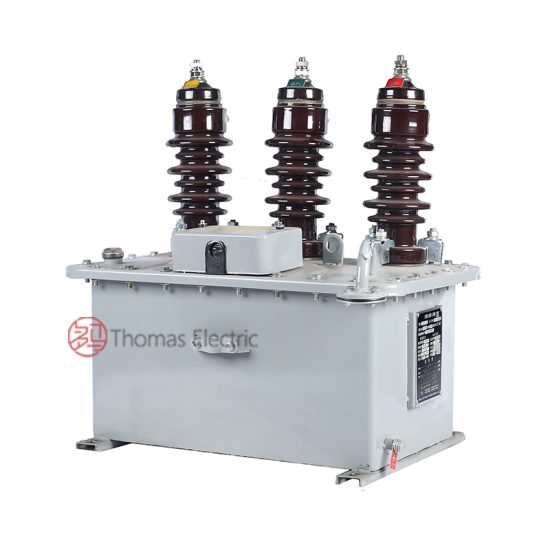
The UNKNOWN voltage transformer (VT) is a precision instrument engineered for accurate voltage transformation in 11kV (IEC-rated) medium-voltage networks, corresponding to 10kV domestic system voltage levels. As a cast-resin insulated device, it leverages vacuum pressure impregnation (VPI) epoxy technology to encapsulate its magnetic core and windings, delivering superior dielectric strength, mechanical robustness, and environmental resilience compared to traditional oil-filled alternatives. This design eliminates fire hazards, reduces maintenance requirements, and enables safe deployment in both indoor switchgear and outdoor substations.
Operating Principle of Cast-Resin Insulation
Cast-resin insulation in the UNKNOWN VT employs a cycloaliphatic epoxy resin system cured under vacuum and pressure to fully impregnate the GOES (grain-oriented electrical steel) core and copper windings. This process eliminates air voids and moisture ingress pathways, ensuring uniform electric field distribution and preventing partial discharge inception below 10 pC at 1.2 × Um/√3 (where Um = 12 kV). The resin matrix provides a thermal class of 105°C (per IEC 60085), enabling continuous operation at ambient temperatures up to +40°C with a 25 K temperature rise limit on windings. Unlike oil-immersed units, the solid dielectric exhibits negligible aging under UV exposure and resists tracking even in high-pollution environments (up to pollution degree IV per IEC 60664-1).
Advantages Over Oil-Immersed Designs
The UNKNOWN VT’s dry-type construction offers critical operational advantages: zero risk of oil leakage or combustion (meeting IEC 61869-3 fire safety Class F1), reduced lifecycle costs due to elimination of oil testing and replacement, and lighter weight facilitating easier handling during installation. Its compact footprint—typically 30% smaller than equivalent oil-filled VTs—optimizes space in ring main units (RMUs) and pad-mounted substations. Furthermore, the absence of flammable materials permits installation in confined urban or indoor locations where fire codes prohibit oil-filled equipment. Environmental compliance is enhanced through RoHS adherence and avoidance of PCB-contaminated waste streams during end-of-life disposal.
Typical Application Overview
Deployed across utility distribution networks, industrial plants, and renewable energy interconnection points, the UNKNOWN VT supports dual secondary windings configured for simultaneous metering (0.2 or 0.5 accuracy class) and protection (3P or 6P class). It interfaces with revenue meters, protective relays (e.g., overvoltage, undervoltage, directional elements), and SCADA systems. Common installations include 11kV/√3 : 100/√3 V or 11kV/√3 : 100/3 V ratios for three-phase grounded systems, with rated outputs of 30–100 VA per winding. Its robust design withstands transient overvoltages from switching surges and lightning impulses (BIL 75 kV peak), ensuring signal fidelity during fault conditions.
Technical Specifications
The UNKNOWN VT adheres to stringent electrical and mechanical parameters defined by IEC 61869-3 and GB/T 20840.3, ensuring interoperability and performance consistency across global markets.
| Parameter | Value |
|---|---|
| Primary Voltage (Up) | 11 kV (IEC) / 10 kV (Domestic) |
| Secondary Voltage (Us) | 100/√3 V, 100/3 V, or 110/√3 V (configurable) |
| Voltage Ratio | 11,000/√3 : 100/√3 V (standard) |
| Accuracy Class (Metering) | 0.2, 0.5 (per IEC 61869-3 Table 102) |
| Accuracy Class (Protection) | 3P, 6P (composite error ≤ 3% or 6% at 5× rated voltage) |
| Rated Output (per winding) | 30 VA, 50 VA, or 100 VA (burden PF = 0.8 lag) |
| Insulation Level (Um) | 12 kV |
| Power Frequency Withstand Voltage | 28 kV rms, 1 min (phase-to-earth) |
| Lightning Impulse Withstand Voltage | 75 kV peak (1.2/50 μs wave) |
| Partial Discharge Level | < 10 pC at 1.2 × Um/√3 |
| Core Material | GOES M4 grade, 0.27 mm lamination |
| Winding Conductor | Enameled copper, Class 180 insulation |
| Ambient Temperature Range | −25°C to +40°C (extended −40°C option available) |
| Altitude Limit | ≤ 1,000 m (derating required above 1,000 m) |
| Relative Humidity | ≤ 95% non-condensing |
Standard Service Conditions
The UNKNOWN VT is rated for standard service conditions per IEC 61869-3 Clause 5: ambient temperature range of −25°C to +40°C, relative humidity up to 95% without condensation, and installation altitude not exceeding 1,000 meters above sea level. For altitudes between 1,000 m and 3,000 m, the power frequency withstand voltage must be derated by 1% per 100 m increment above 1,000 m. In coastal or industrial zones with high salinity or chemical contamination (pollution severity class III or IV), creepage distance is enhanced to ≥ 25 mm/kV (minimum 275 mm for 11kV), achieved through ribbed shed geometry on the resin housing.
Electrical Performance Parameters
Voltage error and phase displacement are tightly controlled: for 0.2-class metering windings, voltage error does not exceed ±0.2% and phase error ≤ ±10 minutes at 80–120% of rated voltage and 25–100% of rated burden. Protection windings (3P class) maintain composite error ≤ 3% at 5× rated voltage and rated burden. Thermal stability is verified via temperature-rise tests per IEC 61869-3 Annex C, with maximum winding temperature rise of 55 K above ambient under continuous 1.2× rated voltage. Short-circuit withstand capability is not applicable to VTs, but open-circuit operation is inherently safe due to current-limiting design.
Typical Applications
The UNKNOWN 11kV cast-resin VT serves critical roles across diverse power infrastructure segments, providing reliable voltage signals for measurement and protection functions.
Substation Secondary Metering
In primary substations and distribution feeders, the UNKNOWN VT supplies scaled-down voltages to revenue-class kWh meters and demand recorders. Its 0.2 accuracy class ensures billing precision within ±0.2% error across load ranges from 25% to 100% of rated burden. Dual secondary windings allow segregation of metering (isolated from protection circuits) to prevent relay-induced waveform distortion. For example, in a 11kV/0.4kV urban substation, two UNKNOWN VTs (one per phase in V-V connection) feed a three-phase meter via 100/√3 V secondaries, while simultaneously energizing an overvoltage relay (59 element) through a separate 3P-class winding.
Industrial Power Distribution Systems
Within manufacturing facilities, mining operations, and data centers, the UNKNOWN VT monitors bus voltage for motor control centers (MCCs) and static VAR compensators (SVCs). Its immunity to vibration and thermal cycling makes it suitable for harsh industrial environments. A typical application involves integration with a digital multifunction relay (e.g., SEL-351) for undervoltage load shedding—where the VT’s 6P-class winding triggers disconnection if voltage drops below 85% for >0.5 seconds. The cast-resin housing resists chemical fumes and dust accumulation, eliminating the need for periodic cleaning required by oil-filled units.
Renewable Energy Integration
Solar photovoltaic (PV) farms and wind turbine clusters rely on the UNKNOWN VT for grid synchronization and anti-islanding protection. At a 10 MW solar plant interconnecting to an 11kV utility feeder, the VT provides voltage reference to the inverter’s phase-locked loop (PLL) and feeds a rate-of-change-of-frequency (ROCOF) relay. The low phase displacement (< 5 minutes at 0.5-class) ensures precise angle measurement critical for reactive power control. Additionally, its high impulse withstand capability (75 kV BIL) protects against lightning-induced transients common in rural PV sites.
Rural and Suburban Distribution Networks
Pole-mounted or pad-mounted UNKNOWN VTs enable remote monitoring in sparsely populated areas. Deployed in single-phase or three-phase configurations on 11kV overhead lines, they supply voltage signals to distribution automation terminals (DATs) for fault location and voltage regulation. In a suburban ring main unit (RMU), the VT’s compact size allows co-location with vacuum circuit breakers and CTs within a sealed enclosure. The absence of oil prevents environmental contamination during pole-top accidents—a key advantage in ecologically sensitive zones.
Compliance with International Standards
The UNKNOWN VT is engineered to meet the rigorous requirements of IEC 61869-3:2011 (“Instrument transformers – Part 3: Additional requirements for inductive voltage transformers”) and its Chinese counterpart GB/T 20840.3-2013, ensuring global acceptance and interoperability.
IEC 61869-3 Compliance Details
Compliance encompasses dimensional, electrical, and environmental criteria. Key tests include: temperature-rise test (Clause 7.3) verifying ≤55 K rise under 1.2× Un; short-time current test (not applicable to VTs); and accuracy verification per Clause 8 using calibrated reference standards traceable to national labs. The standard mandates that voltage error and phase displacement remain within class limits across 80–120% of rated voltage and 25–100% of rated burden. Partial discharge measurements (Clause 12) must show <10 pC at 1.2 × Um/√3, validated using IEC 60270 detection circuits. Markings include rated voltage factor (1.2 for continuous, 1.5 for 30 s), accuracy classes, and vector group (e.g., Yy).
Alignment with GB/T 20840.3
GB/T 20840.3 closely mirrors IEC 61869-3 but includes localized adaptations: domestic system voltage is specified as 10kV (vs. IEC’s 11kV), and pollution creepage distances follow DL/T 620 guidelines (≥20 mm/kV for light pollution). Thermal endurance tests use 40°C ambient (vs. IEC’s 40°C reference), and short-circuit tests are omitted for VTs. Crucially, GB/T requires type tests for seismic withstand (horizontal acceleration 0.25g) for units installed in earthquake-prone regions—a requirement absent in IEC 61869-3. The UNKNOWN VT meets both standards through dual-certification testing at accredited labs (e.g., KEMA, CESI, and China Electric Power Research Institute).
Testing and Certification Requirements
Type tests per IEC 61869-3 include: power frequency withstand (28 kV rms, 1 min), lightning impulse (75 kV peak, 15 shots positive/negative), temperature rise, accuracy, and partial discharge. Routine tests on every unit comprise: visual inspection, winding resistance measurement (±2% tolerance vs. prototype), turns ratio verification (±0.2% error), polarity check, and insulation resistance (>1,000 MΩ at 2,500 V DC). Certification documentation includes test reports, material declarations (resin RoHS compliance), and calibration certificates traceable to NIST or PTB standards.
On-Site Testing Procedures
Post-installation verification ensures the UNKNOWN VT performs within specifications before energization. All tests follow IEC 60060-1 and IEEE C57.13 methodologies.
Insulation Resistance Test
Using a 2,500 V DC megohmmeter, measure insulation resistance between primary winding and ground, and between primary and secondary windings. Acceptance criterion: ≥1,000 MΩ at 20°C. Correct for temperature using RT = R20 × 2(20−T)/10. Low readings indicate moisture ingress or resin cracking—requiring drying or replacement. Perform before and after power frequency withstand tests to detect insulation degradation.
Turns Ratio Test
Apply 100–200 V AC to the primary winding and measure secondary voltage with a calibrated true-RMS voltmeter. Calculate actual ratio: Up/Us. Compare to nameplate ratio; tolerance must be within ±0.2% for metering classes and ±0.5% for protection classes. Use a dedicated turns ratio tester (e.g., Omicron TTR) for automated comparison. Deviations >0.5% suggest winding shorts or incorrect tap selection.
Polarity Test
Verify reducing polarity per IEC 61869-3 Figure 101: connect a 6–12 V battery between primary terminals (H1+, H2−) and observe secondary voltage deflection on a DC voltmeter connected to X1+, X2−. A momentary positive kick confirms correct polarity. Incorrect polarity causes 180° phase reversal, leading to metering errors or relay misoperation. Document results with oscillograph traces if available.
Power Frequency Withstand Voltage Test
Apply 28 kV rms at 50 Hz between primary and ground for 1 minute using a test transformer with current limiting (max 10 mA). Monitor for flashover, excessive leakage current (>1 mA), or audible discharge. Secondary windings must be short-circuited and grounded during the test. Failure indicates compromised insulation integrity—often due to shipping damage or moisture absorption.
Open-Circuit Characteristic Test
Gradually increase primary voltage from 0 to 190 V (≈1.9× rated secondary) while measuring excitation current. Plot Iexc vs. Up. The knee point should occur near 150 V; a shifted curve indicates core saturation issues. Compare to factory baseline—deviations >10% warrant investigation. This test validates core quality and detects inter-turn faults invisible to ratio tests.
Preventive Maintenance Guide
Although cast-resin VTs require minimal maintenance, periodic checks extend service life beyond 30 years.
Periodic Inspection Protocol
Conduct annual visual inspections: check for surface cracks, UV degradation (chalking), or tracking marks on the resin housing. Clean with mild detergent if salt or dust deposits accumulate—avoid abrasive cleaners. Verify terminal tightness (torque: 12 N·m for M8 bolts) and inspect gaskets on the secondary terminal box for sealing integrity. Use infrared thermography during peak load to detect abnormal heating (>10 K above ambient) indicating internal faults.
Maintenance Intervals and Fault Diagnosis
Every 5 years, perform insulation resistance and turns ratio tests as baseline comparisons. Typical failure modes include: (1) moisture ingress at terminal seals causing reduced IR values—remedied by resealing; (2) core lamination corrosion in coastal areas—detected via elevated excitation current; (3) secondary winding open-circuit due to loose connections—identified by zero output voltage. Replace units exhibiting partial discharge >20 pC or ratio errors >1%. Maintain records per ISO 55000 asset management standards.
| Maintenance Interval | Activities |
|---|---|
| Annual | Visual inspection, IR scan, terminal torque check |
| 5-Year | Insulation resistance, turns ratio, open-circuit test |
| 10-Year | Partial discharge measurement (if test equipment available) |
| After Fault | Full suite of on-site tests plus oil-free dielectric assessment |
Conclusion
The UNKNOWN 11kV cast-resin voltage transformer represents a technically mature solution for modern medium-voltage infrastructure, combining the reliability of epoxy-encapsulated construction with strict adherence to IEC 61869-3 and GB/T 20840.3 standards. Its dual-winding architecture supports concurrent metering and protection functions without cross-interference, while the GOES core and precision winding techniques ensure long-term accuracy stability (±0.1% drift over 10 years). The elimination of flammable materials enhances safety in densely populated or environmentally sensitive areas, and the maintenance-free design reduces total cost of ownership by up to 40% compared to oil-immersed alternatives. With a proven service life of 25–30 years under standard conditions—and resistance to pollution, humidity, and thermal cycling—the UNKNOWN VT delivers consistent performance across utility, industrial, and renewable applications. Its compatibility with digital substations (via analog outputs to merging units) ensures future-proof integration into smart grid architectures, making it a cornerstone component for resilient and accurate voltage measurement in 11kV networks worldwide.