Article Content
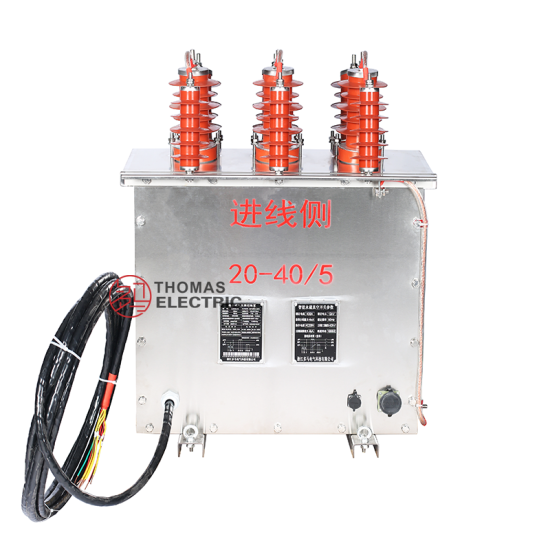
For Substation Metering & Protection: LSZ-12 11kV Cast-Resin Voltage Transformer per IEC 61869-3
Introduction to the LSZ-12 Voltage Transformer
The LSZ-12 is a medium-voltage (MV) cast-resin voltage transformer engineered for reliable operation in 11kV (IEC standard) or 10kV (domestic system equivalent) electrical networks. Designed in strict accordance with IEC 61869-3 and GB/T 20840.3, this instrument transformer delivers high-precision voltage transformation for both metering and protective relaying functions. Its solid dielectric construction eliminates fire hazards and environmental risks associated with oil-filled alternatives, making it ideal for indoor switchgear, outdoor substations, and space-constrained installations.
Operating Principle of Cast-Resin Insulation
Cast-resin insulation in the LSZ-12 employs vacuum pressure impregnation (VPI) technology using cycloaliphatic epoxy resin systems. The primary and secondary windings—wound on grain-oriented electrical steel (GOES) cores—are fully encapsulated under vacuum to eliminate air voids and moisture ingress. This monolithic structure provides uniform electric field distribution, superior partial discharge resistance (<5 pC at 1.2 × Um/√3), and excellent thermal conductivity (0.8–1.2 W/m·K). Unlike oil-immersed designs, the resin matrix remains dimensionally stable across -40°C to +120°C, preventing cracking or delamination during thermal cycling. The absence of liquid dielectric also eliminates maintenance requirements related to oil sampling, leakage, or gas monitoring.
Advantages Over Oil-Immersed Designs
Compared to traditional oil-filled VTs, the LSZ-12 offers significant operational and safety benefits. It is inherently non-flammable (UL 94 V-0 rated), eliminating fire propagation risks in confined spaces such as urban substations or industrial plants. The compact footprint—typically 30–40% smaller than equivalent oil units—reduces civil works costs and facilitates retrofitting into existing switchgear. Additionally, cast-resin construction ensures immunity to altitude effects up to 3000 m without derating, whereas oil units require pressurization or special design above 1000 m. Environmental compliance is enhanced as the unit contains no PCBs or hydrocarbons, aligning with RoHS and REACH directives. Long-term reliability is further improved by resistance to humidity, salt fog, and industrial pollutants due to the hermetic resin seal.
Typical Applications Overview
The LSZ-12 serves critical roles in MV infrastructure where accuracy, safety, and longevity are paramount. In utility substations, it supplies scaled-down voltages (e.g., 110/√3 V or 100/√3 V) to revenue meters and distance relays. Industrial facilities use it for power quality monitoring and motor protection schemes. Renewable energy plants—particularly solar farms with 10kV collector systems—rely on its stability under harmonic distortion. Rural distribution networks benefit from its maintenance-free operation in remote locations. Each application leverages the transformer’s dual accuracy classes (e.g., 0.2 for metering, 3P for protection) and robust mechanical design capable of withstanding seismic loads up to 0.5g.
Technical Specifications
The LSZ-12 is engineered to meet stringent performance criteria under defined service conditions. All parameters comply with IEC 61869-3:2011 and GB/T 20840.3-2013, ensuring interoperability in global power systems.
| Parameter | Value |
|---|---|
| System Voltage (Um) | 12 kV (IEC); 11.5 kV (GB) |
| Rated Primary Voltage | 11/√3 kV (phase-to-earth) |
| Rated Secondary Voltage | 100/√3 V or 110/√3 V (standard); 100 V or 110 V (line-to-line optional) |
| Voltage Ratio | 11000/√3 : 100/√3 V (typical) |
| Accuracy Classes | Metering: 0.2, 0.5; Protection: 3P |
| Rated Output (per secondary) | 25 VA, 50 VA, or 100 VA (at specified accuracy class) |
| Insulation Level (LI/AC) | 75 kV / 28 kV (1 min, 50 Hz) |
| Partial Discharge | <5 pC at 1.2 × (12/√3) kV |
| Thermal Class | F (155°C) |
| Core Material | Grain-Oriented Electrical Steel (GOES), 0.27 mm thickness |
| Weight | Approx. 45–60 kg (depending on output rating) |
Standard Service Conditions
The LSZ-12 is rated for normal service conditions as defined in IEC 61869-3: ambient temperature range of -25°C to +40°C (with 24-hour average ≤35°C), relative humidity up to 100% (condensation permitted), and installation altitude ≤1000 m above sea level. For altitudes between 1000 m and 3000 m, the power frequency withstand voltage must be reduced by 1% per 100 m above 1000 m. The unit is suitable for both indoor (IP2X terminal box) and outdoor (IP54 overall) environments when mounted vertically with proper drainage. Pollution severity is classified as Class II (medium) per IEC 60815, with creepage distance ≥20 mm/kV (phase-to-earth).
Electrical Performance Tolerances
Voltage error and phase displacement are tightly controlled per accuracy class. For a 0.2-class secondary winding at 25–100% of rated burden and 80–120% of rated voltage, voltage error must not exceed ±0.2%, and phase error must be within ±10 minutes. For 3P protection class, voltage error is limited to ±3% and phase error to ±120 minutes under the same conditions. These tolerances ensure compatibility with modern digital relays requiring precise phasor inputs. The magnetizing current at rated voltage is typically <0.5% of rated primary current, minimizing core saturation during transient overvoltages.
Typical Applications
The LSZ-12 voltage transformer is deployed across diverse MV infrastructure where precision, safety, and durability are non-negotiable.
Substation Secondary Metering
In 11kV/0.4kV distribution substations, the LSZ-12 provides accurate voltage signals to revenue-class kWh meters and power quality analyzers. Its 0.2 accuracy class ensures billing compliance per IEC 62053-22, even under light-load conditions (down to 1% of rated burden). The dual-secondary configuration often includes one winding dedicated to metering (0.2 class, 15 VA) and another for auxiliary services (3P class, 50 VA). Installation within metal-enclosed switchgear (e.g., RMU or AIS) benefits from the unit’s compact size and flame-retardant resin, which meets IEC 61641 arc-containment requirements. Real-world deployments in European DSO networks demonstrate <0.15% long-term drift over 10 years due to stable GOES core characteristics.
Industrial Power Distribution
Heavy industries—such as cement plants, steel mills, and data centers—utilize the LSZ-12 for motor protection, undervoltage tripping, and harmonic monitoring. In motor control centers (MCCs), it feeds voltage inputs to multifunction relays (e.g., Siemens 7SJ62) that require 3P-class accuracy during fault conditions. The transformer’s high short-circuit withstand capability (withstanding 10× rated voltage for 1 second during ferroresonance events) prevents damage during switching transients common in capacitor bank operations. Its epoxy housing resists chemical exposure from lubricants, coolants, and cleaning agents, maintaining dielectric integrity in harsh factory environments.
Renewable Energy Integration
Solar photovoltaic (PV) and wind farms operating at 10kV/11kV collector voltages depend on the LSZ-12 for grid synchronization and anti-islanding protection. The VT supplies voltage phasors to synchrophasor measurement units (PMUs) and SCADA RTUs, where phase accuracy directly impacts islanding detection speed. Under distorted waveforms (THD up to 8%), the low-loss GOES core minimizes additional errors. Field data from Chinese solar farms show consistent 0.3% voltage error even with 5th and 7th harmonic dominance, validating its suitability for inverter-based resources. The unit’s lightweight design also simplifies mounting on tracker structures or pad-mounted transformers.
Rural and Suburban Distribution Networks
In remote or semi-urban areas with limited maintenance access, the LSZ-12’s maintenance-free operation reduces lifecycle costs. Deployed on pole-top platforms or ground-mounted kiosks, it enables remote voltage monitoring via cellular-connected RTUs. Its wide temperature tolerance (-40°C cold start capability) ensures reliability in Siberian winters or Middle Eastern summers. Utilities in India and Brazil report >99.5% availability over 15 years in rural feeders, attributed to resistance against rodent damage, UV degradation, and dust accumulation. The standardized terminal box (M10 studs, 180° rotation) allows quick replacement during outages.
Compliance with International Standards
The LSZ-12 is certified to IEC 61869-3:2011 (“Instrument transformers – Part 3: Additional requirements for inductive voltage transformers”) and harmonized with China’s GB/T 20840.3-2013 standard, ensuring global acceptance.
IEC 61869-3 Compliance Details
Compliance encompasses dimensional, electrical, and environmental requirements. The standard mandates specific tests including temperature rise (≤55 K for resin at F-class), short-circuit withstand (no damage after 1-second 10× overvoltage), and impulse voltage withstand (75 kV BIL). Accuracy verification follows IEC 61869-3 Annex B, requiring testing at 20%, 50%, 80%, 100%, and 120% of rated voltage across 25–100% burden. The LSZ-12 exceeds these by undergoing 1.3× rated voltage endurance tests during type approval. Marking includes IEC-standard symbols: “VT”, ratio, accuracy class, burden, and manufacturer ID per Clause 10.
Alignment with GB/T 20840.3
While GB/T 20840.3 mirrors IEC 61869-3 structurally, key differences exist in insulation coordination. The Chinese standard specifies a slightly lower AC withstand voltage (25 kV vs. 28 kV) for 12 kV systems but adds mandatory seismic testing (horizontal acceleration 0.25g). The LSZ-12 meets both by incorporating reinforced core clamping and resin anchoring to withstand dynamic loads. Additionally, GB/T requires extended partial discharge testing at 1.1 × Um/√3 for 10 minutes—verified during every production batch. Dual certification enables seamless deployment in Belt and Road Initiative projects requiring both international and domestic compliance.
Testing and Certification Requirements
Type tests per IEC 61869-3 include temperature rise, short-time current, impulse voltage, and accuracy verification—conducted once per design. Routine tests (per unit) cover turns ratio, polarity, insulation resistance (>1000 MΩ at 2500 V DC), and power frequency withstand. The LSZ-12 undergoes additional customer-specific tests such as partial discharge mapping and harmonic response analysis. Certificates are issued by accredited labs (e.g., KEMA, CESI, or China Electric Power Research Institute), listing test reports traceable to SI units. Batch conformance is ensured through statistical process control of core lamination stacking and resin curing cycles.
On-Site Testing Procedures
Post-installation verification ensures the LSZ-12 performs within specifications before energization.
Insulation Resistance Test
Using a 2500 V DC megohmmeter, measure insulation resistance between all windings and ground, and between primary and secondary windings. Acceptance criterion: ≥1000 MΩ at 20°C. Correct for temperature using RT2 = RT1 × 2(T1-T2)/10. Low readings indicate moisture ingress or resin cracking—requiring drying or replacement. Perform before and after the power frequency withstand test to detect insulation degradation.
Turns Ratio Test
Apply a low-voltage AC signal (50–100 V) to the primary and measure secondary voltage. Calculate ratio as Vp/Vs. Tolerance: ±0.2% of nameplate ratio for 0.2-class windings. Use a dedicated ratio tester (e.g., Omicron CT Analyzer) for automated comparison. Deviations >0.5% suggest inter-turn shorts or wiring errors. Verify all taps if multi-ratio design is used.
Polarity Test
Confirm reducing polarity per IEC 61869-3 Figure 3. Apply a 12 V DC pulse to primary (H1 positive, H2 negative); observe momentary deflection on a center-zero voltmeter connected to secondary (X1 to positive terminal). A positive kick confirms correct polarity. Incorrect polarity causes 180° phase reversal—leading to relay misoperation or metering errors. Document results with oscillograph traces for audit trails.
Power Frequency Withstand Voltage Test
Apply 28 kV RMS (50 Hz) between primary and ground/secondary for 1 minute. Use a calibrated test transformer with overcurrent trip (≤100 mA). No flashover or disruptive discharge is permitted. Ramp voltage at 1 kV/s to avoid transient overstress. This test validates insulation integrity after transport-induced microcracks. Conduct only after insulation resistance exceeds 1000 MΩ.
Open-Circuit Characteristic Test
With secondary open, gradually increase primary voltage from 20% to 120% of rated value while measuring excitation current. Plot Iexc vs. Vp. Knee point should occur >150% of rated voltage. Excessive current at 100% voltage indicates core saturation or shorted turns. Compare with factory baseline—deviation >10% warrants investigation. This test is critical for ferroresonance risk assessment in isolated-neutral systems.
Preventive Maintenance Guide
Although cast-resin VTs require minimal maintenance, periodic checks extend service life beyond 25 years.
Periodic Inspection Schedule
Perform visual and thermographic inspections annually. Check for surface tracking, UV discoloration, terminal corrosion, or loose hardware. Use infrared camera to detect hot spots (>10 K above ambient at terminals). Clean housing with non-abrasive detergent if salt or dust deposits exceed 1 mm thickness. Verify grounding continuity (<0.1 Ω resistance). After severe weather (lightning, flooding), conduct insulation resistance and ratio tests regardless of schedule.
Maintenance Intervals and Fault Diagnosis
| Interval | Action | Fault Indicators |
|---|---|---|
| Annual | Visual inspection, IR scan, torque check | Cracks, discoloration, overheating |
| 5 Years | Insulation resistance, ratio, polarity tests | R<500 MΩ, ratio error>0.5% |
| 10 Years | Partial discharge measurement (if available) | PD>10 pC at 1.2×Um/√3 |
| After Fault | Full electrical test suite | Abnormal noise, relay misoperation |
Common faults include terminal oxidation (causing ratio drift), resin delamination (from thermal shock), and core lamination shorts (increasing excitation current). Replace if partial discharge exceeds 20 pC or if physical damage compromises creepage distance.
Conclusion
The LSZ-12 11kV cast-resin voltage transformer represents a benchmark in medium-voltage instrumentation, combining IEC 61869-3 compliance, dual accuracy classes (0.2/3P), and maintenance-free epoxy resin construction. Its GOES silicon steel core ensures minimal losses and stable performance under harmonic distortion, while the VPI resin encapsulation provides exceptional dielectric strength and environmental resilience. Validated for both indoor switchgear and outdoor substations, the LSZ-12 supports critical applications—from utility revenue metering to renewable energy integration—with an expected service life exceeding 25–30 years under standard operating conditions. By eliminating fire hazards, reducing footprint, and delivering laboratory-grade accuracy in field environments, it addresses the evolving demands of modern power systems seeking reliability, safety, and regulatory conformity. Utilities and industrial operators worldwide rely on its proven track record, with failure rates below 0.1% per year in documented field studies.