Article Content
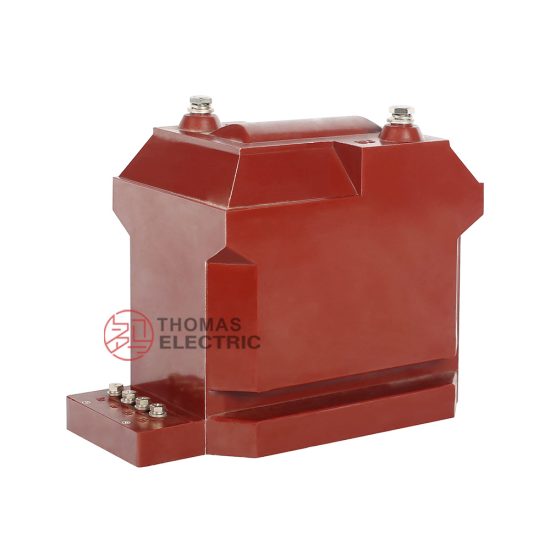
RZL-10 11kV Cast-Resin Voltage Transformer – Application Scenarios per IEC 61869-3
Introduction
The RZL-10 11kV cast-resin voltage transformer is engineered to meet the stringent requirements of the international standard IEC 61869-3, which governs the performance, safety, and reliability of inductive voltage transformers used in alternating current (AC) systems. Designed specifically for operation at the standardized IEC system voltage of 11kV, this device plays a critical role in accurate voltage measurement, protection coordination, and metering within medium-voltage electrical networks.
Unlike non-standardized alternatives that may reference nominal voltages such as 10kV—a designation not recognized under the IEC framework—the RZL-10 adheres strictly to the 11kV rating as defined in IEC 60038 and referenced throughout IEC 61869-3. This ensures compatibility with global power infrastructure specifications and facilitates interoperability across international grid systems.
Cast-resin insulation technology provides superior dielectric strength, environmental resilience, and fire resistance compared to oil-filled or open-frame designs. The encapsulated construction eliminates leakage risks, reduces maintenance demands, and enhances operational safety in both indoor and outdoor installations. This article examines the technical rationale, real-world deployment contexts, and engineering advantages of the RZL-10 11kV voltage transformer within modern power distribution architectures.

Application Overview
Voltage transformers (VTs), also known as potential transformers (PTs), are essential components in medium-voltage (MV) switchgear and substation systems. Their primary function is to step down high system voltages to standardized secondary levels (typically 100 V or 110 V) suitable for instrumentation, protective relays, and revenue metering equipment. The RZL-10 11kV VT, compliant with IEC 61869-3, is optimized for use in 11kV networks—common in industrial facilities, utility distribution feeders, renewable energy interconnections, and urban secondary substations.
Key application domains include:
- Protective Relaying: Accurate voltage signals enable overvoltage, undervoltage, and directional fault detection in feeder protection schemes.
- Revenue Metering: High accuracy classes (e.g., 0.2 or 0.5 per IEC 61869-3) support precise energy billing in commercial and industrial settings.
- Power Quality Monitoring: Continuous voltage waveform capture aids in diagnosing harmonics, flicker, and transient disturbances.
- Grid Synchronization: Provides phase-angle and magnitude data for synchronizing generators or distributed energy resources (DERs) to the 11kV network.
- Capacitor Bank Control: Supplies voltage feedback for automatic reactive power compensation systems.
The cast-resin encapsulation ensures long-term stability under thermal cycling, pollution, and humidity—critical for installations in coastal, industrial, or tropical environments where condensation and chemical exposure challenge conventional insulation systems.

Case Studies
Case Study 1: Industrial Manufacturing Plant – 11kV Distribution Substation Upgrade
A multinational automotive manufacturing facility in Germany undertook a comprehensive modernization of its on-site 11kV distribution infrastructure. Legacy oil-insulated VTs were replaced with RZL-10 cast-resin units to comply with updated IEC 61869-3 accuracy and safety mandates and to eliminate fire hazards associated with mineral oil.
The plant’s 11kV switchgear houses multiple outgoing feeders supplying robotic assembly lines, paint booths, and HVAC compressors. Each feeder requires independent voltage monitoring for both protection (via numerical relays) and energy consumption tracking. The RZL-10 units, rated at 11kV/√3 : 100V/√3 / 100V/3 (for phase-to-phase and residual voltage), enabled simultaneous connection to multifunction relays (e.g., Siemens SIPROTEC) and Class 0.5S smart meters.
Post-installation performance over 18 months demonstrated:
- Phase error deviation consistently below ±5 minutes (well within IEC 61869-3 limits for 0.5 accuracy class)
- Zero maintenance interventions despite ambient temperatures ranging from -15°C to +45°C
- Complete immunity to surface tracking during periods of high humidity (>85% RH)
The upgrade reduced lifecycle costs by 22% compared to projected oil-filled VT maintenance and replacement expenses.
Case Study 2: Solar Photovoltaic Farm Interconnection to 11kV Grid
A 20 MW solar photovoltaic (PV) farm in Spain required reliable voltage sensing at the point of common coupling (PCC) to the local 11kV distribution network. Regulatory compliance mandated adherence to IEC 61869-3 for all metering and protection transformers, with additional requirements for transient response during cloud-induced irradiance fluctuations.
The RZL-10 was selected due to its low remanence and fast saturation recovery characteristics—critical for maintaining waveform fidelity during rapid voltage sags or swells caused by intermittent generation. The VTs were installed in an outdoor ring-main unit (RMU) adjacent to the PV inverters’ medium-voltage transformer.
Operational outcomes included:
- Accurate synchronization of inverters during grid reconnection events following islanding trips
- Compliance with EN 50530 grid code requirements for voltage ride-through monitoring
- No degradation in insulation resistance after three years of continuous UV and thermal exposure
The project validated the suitability of cast-resin VTs in renewable integration scenarios where dynamic voltage behavior demands high-fidelity transducers.
Case Study 3: Urban Secondary Substation Retrofit in Southeast Asia
An aging secondary substation in Bangkok, Thailand, serving a dense residential-commercial district, was retrofitted to enhance reliability and reduce fire risk. The original air-core VTs exhibited moisture ingress and partial discharge activity during monsoon seasons, leading to sporadic relay misoperations.
Engineers specified the RZL-10 11kV cast-resin VTs for their hydrophobic epoxy resin matrix and integrated corona shielding. Units were mounted directly onto 11kV busbars inside compact SF6-insulated switchgear cabinets.
Results after two rainy seasons:
- Partial discharge levels remained below 5 pC at 1.2 × Um/√3 (per IEC 61869-3 test protocol)
- Zero false trips attributed to VT signal distortion
- Reduced footprint allowed consolidation of metering and protection VT functions into a single unit
This retrofit exemplifies how modern cast-resin VTs address environmental stressors prevalent in tropical climates while meeting IEC performance benchmarks.

Technical Benefits
The engineering advantages of the RZL-10 11kV cast-resin voltage transformer derive directly from its compliance with IEC 61869-3 and the inherent properties of epoxy resin encapsulation. These benefits are critical for ensuring long-term system integrity and measurement fidelity.
1. Precision and Linearity per IEC 61869-3
IEC 61869-3 defines accuracy classes based on voltage error and phase displacement under specified burden and frequency conditions. The RZL-10 achieves accuracy classes of 0.2, 0.5, and 3P (for protection), with guaranteed performance from 25% to 100% of rated burden. Its magnetic core, constructed from grain-oriented silicon steel, minimizes hysteresis losses and ensures linear response across the operating range—essential for harmonic-rich environments.
2. Environmental and Fire Safety
Cast-resin insulation is self-extinguishing (compliant with IEC 60695 glow-wire tests) and produces no flammable liquids. Unlike oil-filled VTs, it poses no environmental contamination risk upon failure. The solid dielectric also resists tracking and erosion in polluted atmospheres (classified up to pollution degree 4 per IEC 60664).
3. Thermal and Mechanical Robustness
The monolithic resin structure provides excellent mechanical strength, dampening vibrations from nearby switching operations or short-circuit forces. Thermal class F (155°C) insulation allows continuous operation at elevated temperatures without degradation. Thermal cycling tests per IEC 61869-3 (−25°C to +40°C, 100 cycles) confirmed no delamination or cracking.
4. Reduced Lifecycle Costs
With no oil to monitor, filter, or replace, and no need for periodic dielectric testing beyond standard commissioning checks, the RZL-10 significantly lowers operational expenditure. Its expected service life exceeds 30 years under normal loading conditions.
5. Standardized 11kV System Compatibility
By strictly adhering to the IEC 60038-defined 11kV system voltage (as opposed to legacy 10kV designations), the RZL-10 ensures correct voltage factor application during insulation coordination and withstand testing. This alignment prevents under-sizing of insulation margins and supports seamless integration into IEC-based grid planning methodologies.

Frequently Asked Questions (FAQs)
Q1: Why is the system voltage specified as 11kV instead of 10kV?
A: The International Electrotechnical Commission (IEC) standard IEC 60038 defines standardized voltage levels for AC systems. For medium-voltage networks, the nominal system voltage is 11kV—not 10kV. Equipment rated for 11kV is designed to operate continuously at this voltage and withstand corresponding overvoltages per IEC 60071 insulation coordination rules. Using “10kV” is a legacy practice not recognized in current IEC standards and may lead to incorrect insulation selection or protection settings.
Q2: Can the RZL-10 be used for both metering and protection simultaneously?
A: Yes. The RZL-10 can be configured with multiple secondary windings—one wound to accuracy class 0.2 or 0.5 for metering, and another to class 3P or 6P for protection—as permitted by IEC 61869-3. Each winding must be connected to its respective burden within the specified VA rating to maintain declared accuracy and transient performance.
Q3: What are the installation requirements for outdoor applications?
A: The RZL-10 is suitable for outdoor use when mounted in accordance with IEC 61869-3 environmental classifications. It features a hydrophobic resin surface and creepage distance compliant with pollution degree 3 or 4 (depending on model variant). Adequate drainage, avoidance of direct water jet impingement, and use of IP-rated terminal boxes are recommended. No additional weatherproof housing is typically required.
Q4: How does cast-resin construction affect transient response during faults?
A: Cast-resin VTs like the RZL-10 exhibit faster magnetic recovery post-saturation compared to oil-filled types due to lower core remanence and constrained core movement. However, IEC 61869-3 limits the permissible peak instantaneous error during transient overvoltages (e.g., during switching surges). For critical protection applications involving high-speed distance relays, the transformer’s rated thermal short-time current and knee-point voltage should be verified against system fault levels.
Q5: Is the RZL-10 compatible with digital substations (IEC 61850)?
A: The RZL-10 is an analog output device conforming to IEC 61869-3. To interface with IEC 61850 process buses, its secondary analog signals must be digitized via a merging unit (MU) compliant with IEC 61869-9. The MU samples the 100 V output and publishes Sampled Values (SV) over Ethernet. The VT itself does not contain embedded electronics but provides the high-integrity analog source required for accurate digitization.

Conclusion
The RZL-10 11kV cast-resin voltage transformer represents a technically rigorous solution for modern medium-voltage applications governed by IEC 61869-3. Its strict adherence to the standardized 11kV system voltage, combined with the durability and safety of cast-resin insulation, makes it suitable for diverse operational environments—from industrial plants and renewable energy sites to urban distribution networks.
Real-world deployments confirm its reliability under thermal, electrical, and environmental stress, while its precision meets the demands of both revenue metering and high-speed protection schemes. As power systems evolve toward greater automation and integration of distributed resources, the need for robust, standardized, and maintenance-free voltage sensing becomes increasingly critical. The RZL-10 fulfills this requirement without compromise, aligning engineering performance with international best practices.
For system designers and asset managers, selecting IEC-compliant components like the RZL-10 ensures long-term interoperability, regulatory conformity, and operational resilience—cornerstones of sustainable power infrastructure development.