Article Content
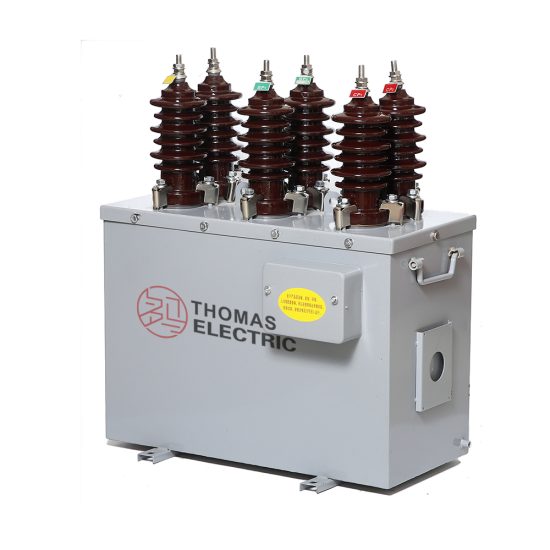
For Substation Metering & Protection: VT-10K 11kV Cast-Resin Voltage Transformer per IEC 61869-3
Introduction to the VT-10K Voltage Transformer
The VT-10K is a precision-engineered, cast-resin insulated voltage transformer (VT) designed for reliable operation in 11kV (IEC nominal) or 10kV (domestic system) medium-voltage distribution networks. As a critical interface between high-voltage primary circuits and low-voltage secondary instrumentation, it provides galvanically isolated, scaled-down voltage signals for accurate metering, protective relaying, and power quality monitoring. Unlike legacy oil-immersed designs, the VT-10K leverages modern vacuum pressure impregnation (VPI) epoxy resin technology to deliver superior dielectric performance, environmental resilience, and maintenance-free operation over decades of service.
Operating Principle of Cast-Resin Insulation
Cast-resin insulation in the VT-10K employs a two-component cycloaliphatic epoxy system processed under vacuum and pressure to eliminate voids and moisture ingress. The primary and secondary windings—wound from oxygen-free copper—are fully encapsulated within this solid dielectric matrix, which exhibits a relative permittivity of approximately 3.8 and volume resistivity exceeding 1×10¹⁴ Ω·cm at 20°C. This monolithic structure ensures uniform electric field distribution, suppresses partial discharges to below 5 pC at 1.2×Um/√3 (where Um = 12 kV), and provides excellent tracking resistance (CTI ≥ 600 V). The absence of liquid insulation eliminates fire hazards, leakage risks, and the need for periodic oil testing, making it ideal for indoor substations, urban switchgear, and environmentally sensitive installations.
Advantages Over Oil-Immersed Designs
Compared to traditional oil-filled VTs, the VT-10K offers significant operational and safety benefits. Its dry-type construction eliminates flammability concerns (complying with IEC 60695-2-1 glow-wire ignition tests at 960°C), reduces weight by 30–40%, and enables vertical or horizontal mounting without orientation constraints. Thermal performance is enhanced through optimized resin thermal conductivity (0.2 W/m·K) and embedded cooling channels, allowing continuous operation at ambient temperatures up to +40°C with a hot-spot temperature rise limited to 60 K above ambient per IEC 61869-3. Additionally, the solid insulation resists contamination from dust, salt fog, and industrial pollutants, achieving IP00 (indoor) or IP23 (outdoor with optional housing) protection levels without auxiliary sealing systems.
Typical Applications Overview
The VT-10K is deployed across diverse infrastructure where precise voltage transformation is essential. In utility substations, it feeds revenue-grade meters (Class 0.2 or 0.5) and distance relays requiring phase-to-ground or phase-to-phase inputs. Industrial facilities use it for motor protection schemes, arc-flash detection, and harmonic distortion analysis. Renewable integration points—such as solar inverters or wind turbine step-up transformers—rely on its stable ratio accuracy under variable load conditions. Rural distribution feeders benefit from its robustness against lightning surges (BIL 75 kV) and long-term stability in unattended locations.
Technical Specifications
The VT-10K adheres strictly to IEC 61869-3 and GB/T 20840.3, with design parameters validated through type, routine, and special tests. Key electrical and mechanical characteristics are detailed below to support engineering integration and procurement verification.
Rated Electrical Parameters
The VT-10K features a primary rated voltage of 11/√3 kV (phase-to-ground) or 11 kV (phase-to-phase), corresponding to a system voltage of 10 kV (domestic designation). Standard secondary voltages are 100/√3 V (for wye-connected metering) or 100 V (delta or open-delta configurations). Accuracy classes include 0.2, 0.5, 1, and 3P/6P for metering and protection, respectively. Rated outputs range from 10 VA to 100 VA per secondary winding, with thermal short-time withstand capability of 10× rated current for 1 second. The insulation level complies with Um = 12 kV, with power frequency withstand voltage of 28 kV (rms, 1 min) and lightning impulse withstand voltage of 75 kV (peak, 1.2/50 μs waveform). Burden compatibility extends to inductive, resistive, and mixed loads within specified accuracy limits.
Environmental and Mechanical Ratings
Designed for standard service conditions per IEC 60060-1, the VT-10K operates reliably at ambient temperatures from –25°C to +40°C, relative humidity up to 95% (non-condensing), and altitudes ≤ 1000 m above sea level. For high-altitude sites (1000–3000 m), derating factors apply: 1.0% per 100 m above 1000 m for insulation strength and 0.5% per 100 m for thermal capacity. The enclosure is made of UV-stabilized polyester resin with flame retardancy per UL 94 V-0. Mounting is via M12 stainless steel studs with torque specification of 45 N·m ±5%. Total mass is approximately 28 kg, with dimensions of 320 mm (H) × 220 mm (W) × 180 mm (D).
Core and Winding Construction
The magnetic core utilizes grain-oriented electrical steel (GOES) grade M4, with a lamination thickness of 0.23 mm and specific core loss of ≤1.0 W/kg at 1.7 T and 50 Hz. This minimizes no-load losses (<5 W) and ensures linearity under fault conditions. Primary windings consist of enameled copper wire (IEC 60317-0-1 Class F insulation), while secondary windings use double-insulated stranded copper for flexibility and creepage compliance. Inter-winding insulation includes Nomex® barriers and resin-rich zones to withstand transient overvoltages. Polarity is marked per IEC 61869-3 reducing polarity convention (H1/K1 terminals in phase).
Typical Applications
The VT-10K’s robust design and precision performance make it suitable for a wide array of power system applications requiring dependable voltage scaling and isolation.
Substation Secondary Metering Systems
In transmission and distribution substations, the VT-10K supplies voltage inputs to multi-function energy meters compliant with IEC 62053-22. For revenue metering, Class 0.2 accuracy ensures measurement error remains within ±0.2% at 80–120% of rated voltage and 25–100% of rated burden. The transformer’s low phase displacement (<10 minutes at rated load) prevents timing errors in time-of-use billing. Secondary circuits are typically fused with 1 A or 2 A HRC fuses located within 1.5 m of the VT terminals to limit fault energy. In digital substations, the VT-10K interfaces with merging units (per IEC 61850-9-2) via analog inputs, supporting sampled value transmission with <±0.1° phase error.
Industrial Power Distribution Protection
Within manufacturing plants and data centers, the VT-10K enables overvoltage, undervoltage, and phase-loss protection using electromechanical or microprocessor-based relays (e.g., ANSI 27/59 functions). Its 3P/6P accuracy class guarantees ratio error within ±3% and phase error within ±120 minutes at 5%–100% of rated voltage under fault conditions. For arc-flash mitigation, the VT provides synchronized voltage waveforms to differential relays that detect ground faults within 1–2 cycles. The cast-resin body withstands electromagnetic interference from nearby VFDs and welding equipment, maintaining signal integrity even in high-noise environments.
Renewable Energy Integration Points
At solar photovoltaic (PV) farms and wind generation sites, the VT-10K monitors grid synchronization parameters such as voltage magnitude, frequency, and phase angle. During islanding events, its fast response (<20 ms settling time) allows anti-islanding relays to disconnect distributed generation within mandated timeframes (e.g., IEEE 1547). The transformer’s thermal stability ensures consistent performance despite diurnal temperature swings common in desert or coastal installations. Multiple secondary windings can simultaneously serve SCADA telemetry (Class 1), revenue metering (Class 0.5), and protection (3P), reducing equipment count and footprint.
Rural and Suburban Distribution Networks
In remote or lightly loaded feeders, the VT-10K supports single-phase or three-phase metering for agricultural pumps, irrigation systems, and residential clusters. Its high insulation coordination margin (BIL 75 kV vs. system BIL 75 kV) protects against frequent lightning-induced transients. The maintenance-free design eliminates the need for on-site oil sampling or gas monitoring, crucial for utilities with limited field personnel. When mounted on pole-top platforms, optional weather shields prevent ice bridging and UV degradation, extending service life beyond 25 years even in harsh climates.
Compliance with International Standards
The VT-10K is engineered to satisfy both global and regional regulatory frameworks, ensuring interoperability and safety across international markets.
IEC 61869-3 Certification Details
IEC 61869-3:2011 (“Instrument transformers – Part 3: Additional requirements for inductive voltage transformers”) defines performance, testing, and marking criteria for VTs. The VT-10K meets all mandatory clauses, including accuracy verification under defined burdens, temperature rise limits (≤60 K for resin, ≤50 K for windings), and short-circuit withstand capability. Type tests include temperature rise (Clause 7.3), short-time current (Clause 7.4), and partial discharge (Clause 7.6). Routine tests—performed on every unit—cover power frequency withstand (Clause 8.2), turns ratio (Clause 8.3), and polarity (Clause 8.4). The manufacturer’s test report includes measured ratio error and phase displacement at 20%, 50%, 80%, 100%, and 120% of rated voltage.
Alignment with GB/T 20840.3
GB/T 20840.3-2013 is the Chinese national adoption of IEC 61869-3, with minor editorial differences but identical technical requirements. The VT-10K carries dual certification, enabling deployment in both domestic (10kV) and export (11kV) projects. Key alignment points include identical accuracy class definitions, insulation coordination tables, and terminal marking conventions. However, GB/T 20840.3 mandates additional seismic testing (horizontal acceleration 0.25g) for earthquake-prone regions—a requirement the VT-10K fulfills via finite element analysis-validated mechanical resonance avoidance (>50 Hz natural frequency).
Testing and Certification Documentation
Each VT-10K unit ships with a comprehensive test dossier including: (1) Routine Test Certificate per IEC 61869-3 Clause 8; (2) Type Test Report from an ISO/IEC 17025-accredited lab; (3) Material Safety Data Sheets for epoxy resin components; and (4) Declaration of Conformity referencing IEC 61869-3 and GB/T 20840.3. Third-party certifications include CE marking (EMC Directive 2014/30/EU) and CQC mark for Chinese market access.
On-Site Testing Procedures
Post-installation verification ensures the VT-10K performs within specifications after transportation and commissioning stresses.
Insulation Resistance Test
Using a 2500 V DC megohmmeter, measure insulation resistance between primary winding and ground, secondary windings and ground, and primary-to-secondary. Acceptance criteria: ≥1000 MΩ at 20°C. Correct for temperature using RT2 = RT1 × 2(T1–T2)/10. Values below 500 MΩ indicate moisture ingress or resin cracking and require drying or replacement.
Turns Ratio Test
Apply 100–200 V AC to the primary and measure secondary voltage with a calibrated voltmeter (accuracy class 0.1). Calculate actual ratio and compare to nameplate. Tolerance per IEC 61869-3: ±0.2% for Class 0.2, ±0.5% for Class 0.5, ±1% for Class 1, and ±3% for 3P. Deviations beyond tolerance suggest winding shorts or incorrect tap selection.
Polarity Verification
Connect a low-voltage AC source (e.g., 12 V) between H1 and H2. Simultaneously connect a voltmeter between H1–K1 and H1–K2. If polarity is correct (reducing), VH1-K1 ≈ Vsource – Vsecondary, and VH1-K2 ≈ Vsource + Vsecondary. Reversed polarity indicates incorrect internal connections and must be corrected before energization.
Power Frequency Withstand Voltage Test
Apply 28 kV rms at 50 Hz between primary and ground (with secondaries shorted and grounded) for 1 minute. Monitor for flashover, excessive leakage current (>1 mA), or audible discharge. This test validates insulation integrity after handling. Do not repeat routinely; perform only after major maintenance or suspected damage.
Open-Circuit Characteristic Test
With secondary open, gradually increase primary voltage from 0 to 190 V (≈1.9× rated secondary equivalent). Record excitation current. A sharp current rise below 150 V indicates core saturation due to residual magnetism or mechanical stress. Demagnetize by applying 120 V at 0.1 Hz and slowly ramping down to zero if needed.
Preventive Maintenance Guide
Although cast-resin VTs are largely maintenance-free, periodic checks ensure long-term reliability and early fault detection.
Annual Visual and Functional Inspection
Inspect for surface cracks, tracking marks, or discoloration on the resin housing. Verify terminal tightness (45 N·m torque) and corrosion on copper connectors. Check secondary fuse continuity and wiring insulation integrity. Perform infrared thermography under load: hotspot differentials >10 K above ambient warrant investigation. Clean surfaces with non-abrasive, non-conductive wipes if contaminated with conductive dust.
Five-Year Comprehensive Maintenance
Every 60 months, conduct insulation resistance and turns ratio tests as baseline comparisons. Review historical data for trends: a 20% drop in insulation resistance or 0.3% drift in ratio may indicate aging. Replace units exhibiting partial discharge activity >10 pC during off-line testing. Update asset management records with test results and environmental exposure notes (e.g., lightning strikes, pollution severity).
Maintenance Intervals and Fault Diagnosis
| Interval | Activity | Fault Indicator | Action |
|---|---|---|---|
| Annually | Visual inspection, IR scan | Cracks, hotspots | Clean or replace |
| 5 Years | Insulation resistance, ratio test | R<500 MΩ, ratio error>tolerance | Demagnetize or replace |
| After Fault | Full suite of on-site tests | Flashover, blown fuses | Replace immediately |
Common failure modes include secondary winding open-circuit (causing relay misoperation) and resin delamination (from thermal cycling). Never operate with open secondary—this induces dangerous overvoltages.
Conclusion
The VT-10K 11kV cast-resin voltage transformer represents a benchmark in medium-voltage instrumentation, combining IEC 61869-3-certified accuracy with the durability of modern epoxy encapsulation. Its GOES core ensures minimal losses and excellent linearity, while the solid insulation system eliminates fire risks and environmental liabilities associated with oil-filled alternatives. Designed for both 11kV international and 10kV domestic networks, it supports critical functions—from revenue metering to high-speed protection—with reliability validated through rigorous type testing. The transformer’s maintenance-free operation, coupled with a design life exceeding 25–30 years under standard conditions, delivers significant lifecycle cost savings for utilities and industrial operators. Compliance with both IEC and GB standards facilitates global deployment, while robust surge withstand capability (BIL 75 kV) ensures resilience in lightning-prone areas. As power systems evolve toward digitalization and distributed generation, the VT-10K’s stable performance under dynamic loading and harmonics positions it as a future-proof solution for accurate, safe, and compliant voltage transformation in modern electrical infrastructure.