Article Content
For Substation Metering & Protection: AGE-1270 11kV Cast-Resin Current Transformer per IEC 61869-2
Introduction to the AGE-1270 Current Transformer
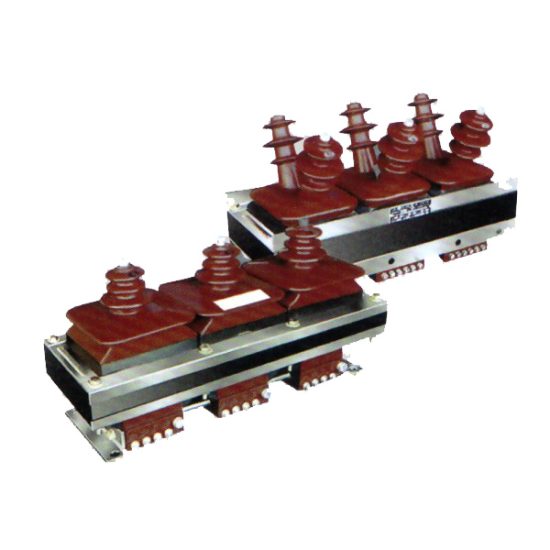
The AGE-1270 is a precision-engineered, cast-resin insulated current transformer (CT) designed for reliable operation in 11 kV (IEC-rated) or 10 kV (domestic system equivalent) medium-voltage networks. It serves dual roles in both revenue-grade metering and protective relaying applications, ensuring accurate current transformation under normal and fault conditions. The unit employs vacuum pressure impregnation (VPI) epoxy resin technology to fully encapsulate its magnetic core and windings, eliminating air voids and moisture ingress pathways that compromise long-term dielectric integrity.
Operating Principle of Cast-Resin Insulation
Cast-resin insulation in the AGE-1270 utilizes a thermosetting epoxy compound processed under vacuum and pressure to infiltrate all interstices within the primary conductor, secondary windings, and grain-oriented electrical steel (GOES) core assembly. This VPI method achieves a homogeneous, void-free solid dielectric with a relative permittivity (εr) of approximately 3.8–4.2 and volume resistivity exceeding 1×10¹⁴ Ω·cm at 20°C. Unlike oil-filled alternatives, the solid resin matrix provides inherent fire resistance (UL 94 V-0 rated), zero leakage risk, and immunity to thermal cycling-induced oil degradation. The resin’s coefficient of thermal expansion closely matches that of copper and steel, minimizing mechanical stress during load transients from -40°C to +70°C ambient operation.
Advantages Over Oil-Immersed Designs
Compared to traditional oil-immersed CTs, the AGE-1270 eliminates flammability hazards, making it suitable for indoor substations, commercial buildings, and confined urban installations where fire codes restrict hydrocarbon-based insulation. Maintenance requirements are significantly reduced—no oil sampling, degassing, or level checks are needed over its 25–30 year service life. Additionally, the compact, monolithic resin housing offers superior mechanical robustness against vibration, seismic activity (tested to IEC 60068-2-6), and environmental contaminants such as salt fog (IEC 60068-2-11) and industrial pollutants. Weight is reduced by 30–40% versus equivalent oil units, simplifying handling and mounting on switchgear busbars or support brackets.
Typical Applications Overview
The AGE-1270 is deployed across utility distribution substations, industrial plants, renewable energy collector systems, and municipal infrastructure. In 10 kV ring-main units (RMUs), it provides inputs to multifunction meters (e.g., Class 0.5S for billing) and overcurrent relays (e.g., 5P10 for feeder protection). Its high short-time thermal withstand rating (typically 20 kA for 1 s) ensures survival during downstream faults without saturation-induced measurement errors. The transformer’s low remanence (<10% of saturation flux density) supports fast DC offset decay, critical for modern digital relays requiring accurate fault current waveform reproduction within 20 ms post-fault inception.
Technical Specifications
The AGE-1270 adheres to stringent dimensional, electrical, and thermal parameters defined by IEC 61869-2 and GB/T 20840.2. Key specifications ensure interoperability with standard 10 kV switchgear while meeting international performance benchmarks.
Rated Electrical Parameters
| Parameter | Value |
|---|---|
| Rated Primary Voltage (Up) | 11 kV (IEC) / 10 kV (domestic) |
| Rated Frequency | 50 Hz or 60 Hz |
| Primary Current Ratings | 50 A to 3150 A (standard); custom up to 4000 A |
| Secondary Current | 1 A or 5 A |
| Accuracy Classes | Metering: 0.2S, 0.5S; Protection: 5P10, 5P20, 10P10 |
| Rated Burden | 2.5 VA to 30 VA (per accuracy class) |
| Short-Time Thermal Current (Ith) | 20 kA for 1 s (standard); 25 kA for 1 s optional |
| Dynamic Withstand Current | 50 kA peak |
| Insulation Level (LI/AC) | 75 kV / 28 kV (1 min power frequency) |
All ratios maintain composite error within ±0.1% for Class 0.2S at 20–120% of rated current. Protection classes guarantee ≤10% error at specified multiples (e.g., 5P10 = ≤10% error at 10×In).
Environmental and Mechanical Ratings
The AGE-1270 operates reliably under standard service conditions per IEC 61869-1: ambient temperature range -40°C to +40°C (with derating above +40°C), relative humidity up to 100% (condensing), and altitude ≤1000 m (derating factor 1.1% per 100 m above 1000 m). The housing is UV-stabilized for outdoor use (IP54 ingress protection) but commonly installed indoors in metal-enclosed switchgear (IP2X). Mounting options include base flange (M10 bolts) or busbar-through design with Ø38 mm or Ø45 mm aperture. Creepage distance exceeds 25 mm/kV for polluted environments (Class III per IEC 60815).
Core and Winding Construction
The magnetic circuit uses CRGO (cold-rolled grain-oriented) silicon steel laminations with thickness of 0.23–0.27 mm, achieving core loss ≤0.9 W/kg at 1.7 T and 50 Hz. Secondary windings employ enameled copper wire (Class H insulation, 180°C rating) with interlayer insulation of Nomex® paper. Multiple secondary windings (up to 3 cores) can be integrated—for example, one 0.2S core for metering, one 5P20 for overcurrent protection, and one 5P10 for earth-fault detection. Terminal blocks are rated for 600 V and accept 2.5–6 mm² stranded conductors with screw-type clamps.
Typical Applications
The AGE-1270’s versatility stems from its dual compliance with international and Chinese standards, enabling deployment across diverse grid architectures.
Substation Secondary Metering
In 10 kV/0.4 kV distribution substations, the AGE-1270 feeds Class 0.5S or 0.2S outputs to AMI (Advanced Metering Infrastructure) systems for accurate energy billing. For instance, a 600/5 A ratio with 15 VA burden drives a smart meter located 50 m away via 2.5 mm² Cu cable (loop resistance ≈0.8 Ω). The CT’s low phase displacement (<±10 minutes at 100% In) ensures minimal reactive energy measurement error. Its thermal stability prevents ratio drift during summer peak loads when ambient temperatures exceed 35°C inside metal-clad switchgear.
Industrial Power Distribution
Manufacturing facilities with 10 kV internal distribution rely on the AGE-1270 for motor protection and load monitoring. A typical 1250 kW induction motor (In ≈ 72 A at 10 kV) uses an 80/1 A CT ratio feeding a 5P10 protection core to a motor protection relay. During startup (6×In), the CT remains linear due to its high saturation point (>20×In), preventing nuisance tripping. The resin housing resists chemical vapors from nearby processes, unlike oil-filled units prone to gasket degradation.
Renewable Energy Integration
Solar PV and wind farms utilize AGE-1270 units at the 10 kV collector bus to interface with SCADA and protection systems. In a 20 MW solar plant, multiple AGE-1270 CTs (e.g., 2000/5 A, 5P20) monitor inverter output feeders. Their fast transient response captures harmonic-rich waveforms (up to 13th order) without significant distortion, crucial for anti-islanding detection. Outdoor-rated versions withstand desert conditions (sand, >50°C) or coastal salinity without performance degradation.
Rural and Suburban Distribution Networks
Utility pole-mounted transformers often integrate AGE-1270 CTs for remote load profiling and fault location. A 100/5 A unit with 5 VA burden connects to a cellular-enabled RTU for real-time current telemetry. The CT’s high impulse withstand (75 kV BIL) protects against lightning-induced surges common in overhead line sections. Its maintenance-free design reduces truck rolls in remote areas, lowering OPEX over decades of service.
Commercial Building Services
Hospitals, data centers, and high-rises install AGE-1270 CTs in 10 kV switchrooms to feed power quality analyzers and arc-flash mitigation relays. A dual-core configuration (0.5S + 5P10) allows simultaneous billing and selective coordination. The non-flammable resin meets stringent building codes (e.g., NFPA 70 Article 450), eliminating oil containment requirements and enabling installation adjacent to occupied spaces.
Compliance with International Standards
The AGE-1270 is certified to both global and Chinese regulatory frameworks, ensuring seamless integration into multinational projects and domestic grid upgrades.
IEC 61869-2 Certification Details
IEC 61869-2 governs instrument transformer performance, safety, and testing. The AGE-1270 complies with all clauses, including:
– Accuracy verification per Clause 6.3 (ratio error and phase displacement limits)
– Temperature rise tests (Clause 7.2): ≤60 K for windings at rated current
– Short-circuit withstand (Clause 7.4): validated at 20 kA/1 s without mechanical damage
– Partial discharge (Clause 7.6): ≤10 pC at 1.2 Um/√3
– Impulse voltage test (Clause 7.7): 75 kV peak, 1.2/50 μs wave
Certification is issued by accredited labs (e.g., KEMA, CESI) with test reports traceable to SI units.
Alignment with GB/T 20840.2
GB/T 20840.2 mirrors IEC 61869-2 but includes China-specific requirements:
– Higher creepage distance for heavy pollution zones (≥31 mm/kV vs. IEC’s 25 mm/kV)
– Mandatory seismic testing for regions with PGA ≥0.2g
– Domestic accuracy classes (e.g., 0.2S identical to IEC)
– Labeling in Chinese characters alongside English
The AGE-1270 meets all GB/T 20840.2 clauses, verified by CEPREI or SGCC-approved test centers. This dual compliance enables use in State Grid and Southern Grid procurement tenders.
Key Differences Between IEC and GB Standards
While technically harmonized, practical differences exist:
– **Testing frequency**: GB/T often requires additional type tests for domestic certification
– **Marking**: GB mandates QR code linking to national database
– **Environmental specs**: GB specifies stricter dust resistance (IP5X minimum outdoors)
– **Documentation**: Chinese-language manuals required for GB projects
Manufacturers address these via modular design—same core unit, region-specific labeling and test packages.
On-Site Testing Procedures
Post-installation verification ensures the AGE-1270 performs within specification before energization.
Insulation Resistance Test
Measure insulation resistance between primary-to-secondary, primary-to-ground, and secondary-to-ground using a 2500 V DC megohmmeter. Acceptance criteria: ≥1000 MΩ at 20°C. Correct for temperature using RT = R20 × 2(20−T)/10. Low readings indicate moisture ingress or resin cracking—retest after 24 h drying if ambient RH >80%. Never perform this test with secondary terminals shorted.
Turns Ratio Test
Apply 1–5 V AC at 50 Hz to the secondary winding and measure induced primary voltage (open-circuit). Calculate actual ratio = Vs/Vp. Tolerance: ±0.25% for metering classes, ±1% for protection. Use a dedicated ratio tester (e.g., Omicron CT Analyzer) for automated comparison against nameplate. Deviations >2% suggest turn-to-turn shorts or incorrect tap selection.
Polarity Verification
Confirm reducing polarity (IEC standard) using a 1.5 V battery and DC milliammeter. Connect (+) battery to P1, (−) to P2; connect (+) meter to S1, (−) to S2. A momentary positive deflection confirms correct polarity. Reversed polarity causes 180° phase shift, leading to relay misoperation or negative meter readings. Document results with timestamped photos.
Power Frequency Withstand Voltage Test
Apply 28 kV RMS (50 Hz) for 60 seconds between primary and grounded secondary/housing. Leakage current must remain <1 mA. Ramp voltage at 1 kV/s to avoid transient overstress. If flashover occurs, inspect for surface contamination—clean with isopropyl alcohol and retest. This test validates resin integrity after transport-induced microcracks.
Secondary Winding Resistance and Burden Check
Measure DC resistance of each secondary winding at 20°C (correct using R20 = RT × [234.5+20]/[234.5+T]). Compare to factory values (±5% tolerance). Then verify connected burden: total impedance (wiring + device) must not exceed rated VA / Is². For 5 A, 15 VA burden = max 0.6 Ω loop resistance. Excess burden causes ratio error and overheating.
Preventive Maintenance Guide
Although maintenance-free by design, periodic checks extend service life and prevent unexpected failures.
Annual Visual and Functional Inspection
Inspect for:
– Cracks, discoloration, or tracking on resin surface
– Loose terminal screws (torque: 2.0 N·m for M4 terminals)
– Corrosion on grounding lugs
– Abnormal heating (use IR camera; ΔT >15 K vs. ambient warrants investigation)
Verify secondary circuits remain shorted when disconnected. Clean surfaces with dry cloth—never solvents that degrade resin.
Five-Year Comprehensive Maintenance
Perform:
– Insulation resistance retest (compare to baseline)
– Ratio and polarity spot-check on one phase
– Burden verification with calibrated shunt
– Torque check on all mechanical fasteners
If installed in high-harmonic environments (>5% THD), add core excitation test to detect aging-induced permeability shifts. Record all data in asset management system for trend analysis.
Maintenance Intervals and Fault Diagnosis
| Interval | Action | Fault Indicator |
|---|---|---|
| Annually | Visual inspection, terminal check | Discoloration, arcing marks |
| 5 years | Electrical tests, burden validation | Ratio drift >1%, IR <500 MΩ |
| After fault | Full suite of on-site tests | Relay misoperation, overheating |
| 10+ years | Partial discharge scan (optional) | PD >20 pC at operating voltage |
Common failure modes include secondary open-circuit (causing core saturation and overvoltage) and moisture ingress through cracked resin—both preventable with proper installation and periodic checks.
Conclusion
The AGE-1270 11kV cast-resin current transformer represents a benchmark in reliability, accuracy, and compliance for modern medium-voltage systems. By leveraging advanced VPI epoxy encapsulation and GOES silicon steel cores, it delivers stable performance across metering (Class 0.2S/0.5S) and protection (5P/10P) applications without the operational liabilities of oil-filled alternatives. Its dual certification to IEC 61869-2 and GB/T 20840.2 ensures global acceptance while meeting stringent Chinese grid requirements. Field-proven in environments ranging from desert solar farms to urban substations, the AGE-1270 maintains calibration integrity over decades, with a design life of 25–30 years under standard loading conditions. The elimination of routine maintenance tasks—coupled with robust short-circuit withstand capability (20 kA/1 s) and superior environmental resilience—translates to lower total cost of ownership and enhanced grid safety. For engineers specifying instrumentation in 10 kV (domestic) or 11 kV (IEC) networks, the AGE-1270 provides a technically rigorous, future-proof solution aligned with international best practices in power system measurement and protection.
Frequently Asked Questions (FAQ)
Q1: Can the AGE-1270 be installed outdoors without additional weatherproofing?
A: Yes. The standard unit is rated IP54 with UV-stabilized resin, suitable for outdoor mounting. However, secondary terminals should be protected with IP66 gland kits in high-rainfall or dusty areas.
Q2: What is the maximum allowable secondary burden for a 0.2S accuracy class?
A: For 5 A secondary, max burden is typically 10–15 VA (2.0–3.0 Ω). Exact value depends on ratio—consult the test report. Exceeding burden degrades accuracy beyond Class 0.2S limits.
Q3: Is the AGE-1270 compatible with 60 Hz systems?
A: Yes. Core design accommodates 50/60 Hz operation. Ratio error and thermal ratings remain valid, though magnetizing current increases slightly at 60 Hz.
Q4: How do I verify polarity during commissioning?
A: Use the DC kick test: apply 1.5 V battery between P1-P2; momentary positive deflection on DC ammeter connected S1-S2 confirms reducing polarity per IEC 61869-2.
Q5: Can multiple secondary cores share the same primary conductor?
A: Yes. The AGE-1270 supports up to three independent cores (e.g., 0.2S + 5P20 + 5P10) within one housing, each with isolated windings and terminals.
Q6: What happens if the secondary is left open-circuited?
A: Dangerous overvoltages (>1 kV) can develop during primary current flow, risking insulation failure and personnel hazard. Always short secondary terminals before disconnecting loads.
Q7: Does the AGE-1270 require drying after storage in humid conditions?
A: Not typically. The hermetic resin seal prevents moisture absorption. However, if condensation is visible, allow 24 h acclimatization before testing.
Q8: Are replacement parts available for terminal blocks?
A: Yes. Terminal kits (including screws and insulating covers) are stocked as spare part #AGE-TB-1270. Original torque specifications must be maintained during replacement.