Article Content
For Substation Metering & Protection: ISA-5 11kV Cast-Resin Current Transformer per IEC 61869-2
Introduction to the ISA-5 Current Transformer
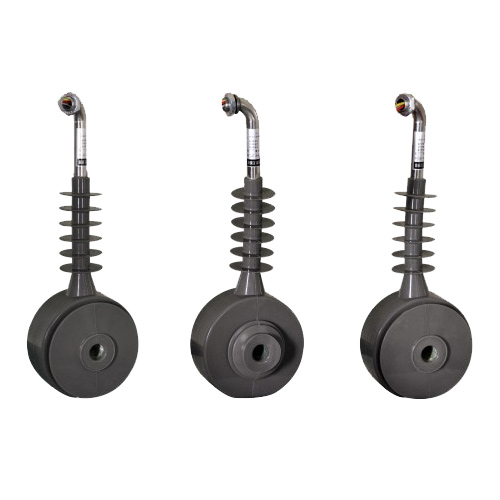
The ISA-5 is a precision-engineered, outdoor-rated cast-resin current transformer (CT) designed for reliable operation in 11kV (IEC nominal) or 10kV (domestic system) medium-voltage networks. It converts high primary currents—ranging from hundreds to thousands of amperes—into standardized secondary currents of 1A or 5A, enabling accurate energy metering, protective relay coordination, and real-time power quality monitoring. Unlike legacy oil-immersed CTs, the ISA-5 employs vacuum pressure impregnated (VPI) epoxy resin insulation, offering superior dielectric strength, environmental resilience, and maintenance-free operation over its 25–30-year service life.
Cast-Resin Insulation Technology
Cast-resin insulation in the ISA-5 utilizes a thermosetting epoxy compound that fully encapsulates the primary conductor, secondary windings, and magnetic core under vacuum and pressure. This VPI process eliminates air voids and moisture ingress pathways, resulting in a homogeneous dielectric structure with a relative permittivity (εr) of approximately 3.8 and volume resistivity exceeding 1×10¹⁴ Ω·cm at 20°C. The cured resin exhibits excellent tracking resistance (CTI ≥ 600 V per IEC 60112) and withstands thermal cycling from –40°C to +100°C without cracking or delamination. Compared to oil-filled alternatives, this solid insulation eliminates fire hazards, oil leakage risks, and the need for periodic oil sampling or gas monitoring, making it ideal for urban substations, indoor switchgear, and environmentally sensitive zones.
Advantages Over Oil-Immersed Designs
The ISA-5’s cast-resin construction provides multiple operational advantages. First, it achieves a higher partial discharge inception voltage (>15 kV peak at 50 Hz), ensuring long-term insulation integrity even under transient overvoltages. Second, its compact mechanical design reduces footprint by up to 30% compared to equivalent oil CTs, facilitating retrofitting in space-constrained installations. Third, the absence of liquid insulation eliminates regulatory compliance burdens related to PCBs or hydrocarbon containment. Finally, the unit’s self-extinguishing resin (UL 94 V-0 rated) meets stringent fire safety codes for public infrastructure. These attributes collectively enhance system reliability while reducing lifecycle costs—particularly in unattended or remote distribution networks where maintenance access is limited.
Typical Deployment Scenarios
The ISA-5 is commonly deployed in 10kV/11kV ring main units (RMUs), pad-mounted transformers, and outdoor pole-top configurations across utility, industrial, and renewable energy applications. In municipal distribution grids, it supports AMI (Advanced Metering Infrastructure) by delivering Class 0.2S accuracy for revenue-grade billing. In industrial plants, dual-core variants provide simultaneous outputs for Class 5P20 protection relays and Class 0.5 metering circuits. For solar farms and wind substations, its robust thermal performance accommodates intermittent load profiles and harmonic-rich waveforms without saturation. Its IP54-rated housing ensures reliable operation in coastal, desert, and high-humidity environments per IEC 60068-2 environmental test standards.
Technical Specifications
The ISA-5 adheres to strict dimensional, electrical, and thermal parameters defined by IEC 61869-2 and GB/T 20840.2. Key specifications are summarized below:
| Parameter | Value |
|---|---|
| Rated Voltage (Um) | 11 kV (IEC) / 10 kV (domestic) |
| Primary Current (Ip) | 50 A to 3000 A (standard); custom up to 4000 A |
| Secondary Current (Is) | 1 A or 5 A (selectable) |
| Accuracy Classes | Metering: 0.2S, 0.5S; Protection: 5P10, 5P20, 10P10 |
| Rated Burden | 2.5 VA to 30 VA (per secondary winding) |
| Insulation Level | Power Frequency Withstand: 28 kV rms / 1 min Lightning Impulse Withstand: 75 kV peak |
| Short-Time Thermal Current | 20×Ip for 1 s (e.g., 60 kA for 3000 A primary) |
| Dynamic Withstand Current | 50×Ip peak (e.g., 150 kA for 3000 A primary) |
| Ambient Temperature Range | –40°C to +40°C (standard); –25°C to +55°C (extended) |
| Altitude Limit | ≤ 1000 m (derating required above 1000 m) |
| Relative Humidity | ≤ 95% non-condensing |
| Core Material | Grain-Oriented Electrical Steel (GOES), M4 grade, 0.3 mm lamination |
Electrical Performance Parameters
The ISA-5’s magnetic circuit uses high-permeability GOES laminations with a maximum core loss of 1.2 W/kg at 1.7 T and 50 Hz. This minimizes excitation current and phase displacement error—critical for Class 0.2S metering where composite error must not exceed ±0.2% at 20–120% of rated current. For protection applications, the 5P20 rating guarantees ≤5% ratio error at 20× rated current with specified burden, ensuring reliable operation during fault conditions. The secondary winding resistance is tightly controlled (±2% tolerance) to maintain burden compatibility with modern digital relays requiring low input impedance. All units undergo factory calibration at 5%, 20%, 100%, and 120% of Ip to validate accuracy curves per IEC 61869-2 Annex B.
Environmental and Mechanical Ratings
Designed for outdoor use, the ISA-5 features a UV-stabilized cycloaliphatic epoxy housing with creepage distance ≥240 mm (corresponding to pollution degree III per IEC 60664). The terminal blocks accommodate copper or aluminum conductors up to 185 mm² cross-section, with torque specifications of 15 N·m for M10 studs. The unit weighs 28–35 kg depending on ratio and is mounted via two M16 threaded inserts spaced 200 mm apart. At altitudes above 1000 m, the power frequency withstand voltage is derated by 1% per 100 m increment; for example, at 2000 m, the test voltage becomes 25.2 kV rms. Humidity resistance is validated through 10-day damp heat testing (IEC 60068-2-78) with post-test insulation resistance >1000 MΩ.
Typical Applications
The ISA-5 serves as a foundational component in diverse medium-voltage infrastructure, providing metrological traceability and fault discrimination across grid segments.
Substation Secondary Metering Systems
In 110/10kV or 35/10kV utility substations, the ISA-5 supplies Class 0.2S secondary current to revenue meters compliant with DL/T 614 or IEC 62053-22. Its low phase error (<±10 minutes at 100% Ip) ensures accurate reactive energy measurement, critical for power factor billing. Dual-ratio models (e.g., 600/5 A and 1200/5 A) enable seasonal load adaptation without hardware changes. Integration with SCADA systems via IEC 61850-9-2 LE sampled values is supported when paired with merging units, though the CT itself remains analog.
Industrial Power Distribution Networks
Within manufacturing facilities, the ISA-5 feeds both protection relays (e.g., SEL-751) and power quality analyzers. A common configuration uses one core wound for 5P20/15 VA (protection) and another for 0.5/10 VA (monitoring). This dual-function design eliminates the need for separate CTs, reducing cost and panel space. The transformer’s high saturation point (>25× Ip at 50 Hz) prevents maloperation during motor inrush or capacitor bank switching transients. In arc furnace or welding plant environments, harmonic filtering in the secondary circuit may be required to mitigate errors from 3rd, 5th, and 7th order harmonics.
Renewable Energy Integration Points
At solar PV inverter interconnection points or wind turbine step-up transformers, the ISA-5 monitors bidirectional power flow and detects islanding conditions. Its linear response down to 1% of rated current enables precise curtailment control during low-irradiance periods. For grid-code compliance (e.g., GB/T 19964), the CT must maintain accuracy during rapid ramp events—achieved here via low remanence core design (<0.3 T residual flux). Units installed in desert climates undergo additional thermal validation to ensure resin integrity at sustained ambient temperatures of 50°C.
Rural and Suburban Distribution Feeders
On overhead 10kV lines serving agricultural or residential loads, the ISA-5’s weatherproof housing resists salt fog, dust, and bird activity. Its lightweight design simplifies pole-top installation using standard crossarms. In China’s rural electrification programs, these CTs support tiered tariff structures by interfacing with smart concentrators that aggregate data from multiple feeders. The 1A secondary option is preferred in long-cable runs (>100 m) to reduce I²R losses and burden voltage drop.
Compliance with International Standards
The ISA-5 is certified to both global and Chinese national standards, ensuring interoperability and regulatory acceptance.
IEC 61869-2 Certification Details
IEC 61869-2 governs instrument transformer performance, safety, and testing. The ISA-5 complies with all mandatory clauses, including:
- Clause 5.3: Accuracy verification under sinusoidal steady-state conditions
- Clause 6.2: Short-circuit withstand capability (thermal and dynamic)
- Clause 7.1: Insulation coordination per IEC 60071-1
- Annex D: Temperature rise limits (≤60 K for windings at rated current)
Each unit undergoes type tests at accredited laboratories, including temperature rise (verified via resistance method), impulse voltage (1.2/50 μs waveform), and partial discharge (≤10 pC at 1.2 Um/√3). Routine tests per Clause 8 include turns ratio, polarity, and power frequency withstand at 80% of type test voltage.
Alignment with GB/T 20840.2
GB/T 20840.2 is China’s adoption of IEC 61869-2 with minor national deviations. Key alignments include identical accuracy class definitions (0.2S, 5P20) and insulation levels. However, GB/T mandates additional requirements:
- Seismic withstand: horizontal acceleration of 0.3g (vs. optional in IEC)
- Extended temperature range: –45°C to +50°C for northern regions
- Domestic labeling in Chinese characters per GB/T 191
The ISA-5 meets all GB-specific criteria, holding a valid China Compulsory Certification (CCC) mark. Test reports reference both IEC and GB clause numbers for dual-market clarity.
Harmonization Between IEC and GB Frameworks
While IEC 61869-2 emphasizes performance-based criteria, GB/T 20840.2 includes prescriptive construction rules—such as minimum resin thickness (≥8 mm at high-field regions) and core grounding provisions. The ISA-5’s design satisfies both by incorporating a grounded electrostatic shield between primary and secondary windings, reducing capacitive coupling and improving transient response. Certification bodies like CEPREI (China) and KEMA (Netherlands) recognize mutual test data, streamlining export approvals. Users should note that GB/T uses 10kV as the nominal system voltage, whereas IEC specifies 11kV; the ISA-5’s insulation level (28 kV/75 kV) covers both interpretations.
On-Site Testing Procedures
Post-installation verification ensures the ISA-5 performs within specification under field conditions.
Insulation Resistance Test
Using a 2500 V DC megohmmeter, measure insulation resistance between:
- Primary conductor and secondary terminals + ground
- Secondary windings and ground
Acceptance criterion: ≥1000 MΩ at 20°C. Correct for temperature using RT2 = RT1 × 2(T1–T2)/10. Values below 500 MΩ indicate moisture ingress or resin degradation, requiring drying or replacement.
Turns Ratio Verification
Apply a low-voltage AC source (5–10 V) to the secondary winding and measure induced primary voltage. Calculate actual ratio as Vs/Vp. Alternatively, use a dedicated CT analyzer injecting 1–5 A into the primary. Tolerance must be within ±0.2% for metering classes and ±1% for protection classes. Deviations suggest winding shorts or incorrect tap selection.
Polarity Confirmation
Connect a 1.5 V battery momentarily between P1 and P2. Observe a DC milliammeter connected to S1 and S2: a positive kick confirms subtractive (reducing) polarity—standard for IEC/GB CTs. Incorrect polarity causes 180° phase reversal, leading to metering errors or relay misoperation. All ISA-5 units are marked with P1/S1 on the same side per IEC 61869-2 Figure 102.
Power Frequency Withstand Test
Apply 28 kV rms at 50 Hz between primary and grounded secondary/housing for 1 minute. Use a calibrated test transformer with overcurrent trip set at 10 mA. No flashover or disruptive discharge is permitted. This test validates insulation integrity after transport-induced microcracks.
Excitation (Knee-Point) Characteristic Test
Gradually increase AC voltage on the secondary winding while measuring current. Plot Vs vs. Ie; the knee-point voltage (where slope drops 45°) must exceed 1.5× rated burden voltage. For a 5P20/15 VA CT, knee-point ≥45 V ensures no saturation at 20× Ip. Low knee-point indicates core damage or excessive air gaps.
Preventive Maintenance Guide
Although cast-resin CTs are largely maintenance-free, periodic checks extend service life and prevent unexpected failures.
Annual Visual and Functional Inspection
Inspect for:
- Surface cracks, tracking, or discoloration on resin housing
- Corrosion or overheating at terminal connections (use thermal imaging)
- Loose mounting hardware or broken insulator skirts
Verify secondary circuit continuity and grounding integrity. Clean surfaces with non-abrasive detergent if contaminated by salt or industrial deposits. Record insulation resistance annually to establish degradation trends.
Five-Year Comprehensive Maintenance
Every 60 months, perform:
- Full ratio and polarity retest
- Excitation curve comparison against baseline
- Burden verification using actual connected load
If excitation current increases by >20% at rated voltage, suspect core lamination damage. Replace if partial discharge exceeds 20 pC during off-line testing. Maintain records per ISO 55000 asset management standards.
Maintenance Intervals and Fault Diagnosis
| Interval | Action | Fault Indicator |
|---|---|---|
| 1 year | Visual + IR scan | Hot spots >15 K above ambient |
| 3 years | Insulation resistance | Rins < 80% of initial value |
| 5 years | Ratio + excitation test | Knee-point drop >10% |
| 10 years | Full IEC routine tests | Any parameter out of spec |
Common failure modes include secondary open-circuit (causing core saturation and overheating) and moisture-induced surface leakage. Never operate with secondary open—always short-circuit before disconnecting meters.
Conclusion
The ISA-5 11kV cast-resin current transformer represents a benchmark in medium-voltage instrumentation, combining metrological precision, rugged construction, and full compliance with IEC 61869-2 and GB/T 20840.2. Its VPI epoxy resin encapsulation eliminates the fire, environmental, and maintenance liabilities associated with oil-filled designs, while the GOES core ensures stable accuracy across metering (0.2S) and protection (5P20) applications. Validated for operation in extreme climates—from –40°C Siberian winters to 55°C Middle Eastern summers—the unit delivers a service life of 25–30 years with minimal intervention. Field-proven in utility substations, industrial plants, and renewable integration points worldwide, the ISA-5 provides the reliability and traceability demanded by modern power systems. Its adherence to international standards facilitates seamless deployment across global markets, while domestic GB certification ensures acceptance in China’s vast distribution network. For engineers specifying CTs in 10kV/11kV infrastructure, the ISA-5 offers a technically rigorous, future-proof solution that balances performance, safety, and lifecycle economics.