Article Content
For Substation Metering & Protection: DZJ-3 11kV Cast-Resin Voltage Transformer per IEC 61869-3
Introduction to the DZJ-3 Voltage Transformer
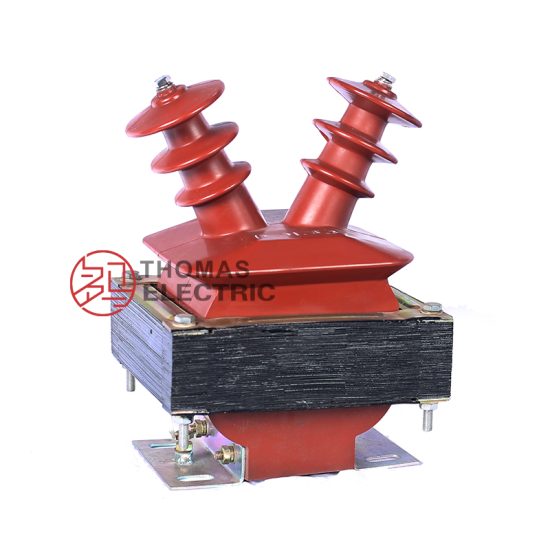
The DZJ-3 is a single-phase, indoor-type, cast-resin insulated voltage transformer (VT) designed for accurate voltage transformation in 11kV (IEC-rated) or 10kV (domestic system) medium-voltage networks. It serves dual roles in substation instrumentation: providing scaled-down secondary voltages for revenue-grade metering and enabling reliable input signals for protective relaying systems. Unlike oil-immersed alternatives, the DZJ-3 leverages vacuum pressure impregnation (VPI) epoxy resin technology to encapsulate its electromagnetic core and windings, eliminating fire hazards, reducing maintenance, and enhancing environmental resilience.
Operating Principle of Cast-Resin Insulation
Cast-resin insulation in the DZJ-3 employs a two-component epoxy system cured under vacuum and pressure to fully impregnate the GOES (grain-oriented electrical steel) core and copper windings. This process eliminates air voids that could lead to partial discharges under continuous 11kV stress. The resulting monolithic structure provides dielectric strength exceeding 75 kV (1-minute power frequency withstand), thermal class F (155°C), and resistance to tracking and erosion in polluted environments. The resin’s coefficient of thermal expansion closely matches that of copper and steel, minimizing mechanical stress during thermal cycling from -25°C to +40°C ambient operation.
Advantages Over Oil-Immersed Designs
Compared to traditional oil-filled VTs, the DZJ-3 offers significant operational benefits. It is inherently non-flammable, making it suitable for confined indoor switchgear rooms where fire codes restrict combustible materials. There is no risk of oil leakage, which eliminates environmental contamination and reduces lifecycle costs associated with containment systems and periodic oil testing. Additionally, the solid insulation enables faster installation—no drying-out procedures or oil-level checks are required—and ensures consistent performance regardless of orientation. The compact footprint also allows for higher equipment density in modern metal-enclosed switchgear.
Typical Application Overview
The DZJ-3 is primarily deployed in 10kV distribution substations across urban, industrial, and renewable energy facilities. Its secondary outputs feed multifunction meters, digital relays, fault recorders, and SCADA systems. Common configurations include single-phase units connected phase-to-ground in three-phase systems or as part of V-V or open-delta arrangements for ground-fault detection. With accuracy classes up to 0.2 for metering and 3P for protection, it supports both fiscal billing and fast overvoltage tripping functions without requiring separate transformers.
Technical Specifications
The DZJ-3 adheres to precise engineering parameters defined by IEC 61869-3 and GB/T 20840.3, ensuring interoperability and predictable performance across global power systems.
Rated Electrical Parameters
| Parameter | Value |
|---|---|
| System Voltage (Um) | 11 kV (IEC), 10 kV (domestic) |
| Primary Voltage (Up) | 10/√3 kV or 11/√3 kV (phase-to-ground) |
| Secondary Voltage (Us) | 100/√3 V or 100/3 V (standardized) |
| Voltage Ratio | 10000/100, 11000/100, or custom ratios |
| Accuracy Class (Metering) | 0.2, 0.5 |
| Accuracy Class (Protection) | 3P |
| Rated Output (VA) | 10, 15, 30, 50, 100 VA per burden class |
| Insulation Level (LI/AC) | 75 kV / 28 kV (1 min) |
| Thermal Class | F (155°C) |
| Polarity | Reducing (standard) |
All ratios maintain ratio error within ±0.2% and phase displacement ≤10 minutes at rated load for 0.2-class units. Burden tolerance is ±10% of rated VA without exceeding accuracy limits.
Standard Service Conditions
The DZJ-3 is rated for indoor installation under the following environmental conditions per IEC 61869-3 Clause 5: ambient temperature range of -25°C to +40°C, relative humidity up to 95% (non-condensing), and altitude not exceeding 1000 m above sea level. For installations above 1000 m, derating factors apply—typically 1% reduction in rated voltage per 100 m above 1000 m. The unit is not designed for outdoor exposure; UV degradation and moisture ingress can compromise resin integrity. Vibration levels must comply with IEC 60068-2-6 (5–500 Hz, 0.5 g max).
Construction and Materials
The magnetic circuit uses high-permeability GOES silicon steel laminations (grade M4 or equivalent) with low core loss (<1.2 W/kg at 1.7 T, 50 Hz). Primary windings are wound with enameled copper wire, while secondary windings use double-insulated magnet wire to prevent inter-turn faults. The entire assembly is encapsulated in flame-retardant (UL94 V-0) cycloaliphatic epoxy resin via VPI, achieving partial discharge levels below 10 pC at 1.2 Um/√3. Terminals are tinned copper with M10 or M12 studs, rated for 125 A short-time current.
Typical Applications
The DZJ-3’s design versatility enables deployment across diverse power infrastructure segments.
Substation Secondary Metering
In 10kV/0.4kV distribution substations, the DZJ-3 provides isolated, scaled voltage inputs to Class 0.2S revenue meters. Installed on each phase in a wye configuration, it enables accurate kWh, kVARh, and power factor measurement. The low phase displacement error (<5 arcmin at 0.2 class) ensures minimal billing discrepancies even under unbalanced loads. Integration with AMI (Advanced Metering Infrastructure) systems is seamless due to stable output impedance and low harmonic distortion (<0.5% THD at rated load).
Industrial Power Distribution
Large manufacturing plants often operate internal 10kV networks fed from utility tie-lines. Here, the DZJ-3 supplies voltage signals to digital multifunction relays (e.g., over/under-voltage, directional earth-fault protection). Its 3P protection class guarantees <3% composite error at 5× rated voltage during transient overvoltages, enabling selective tripping without nuisance operations. The cast-resin body resists chemical fumes and dust common in industrial settings, maintaining dielectric integrity over decades.
Renewable Energy Integration
Solar PV and wind farms frequently connect to the grid via 10kV collector systems. The DZJ-3 monitors point-of-interconnection voltage for anti-islanding protection and reactive power control. Its fast response time (<20 ms rise time) captures voltage sags/swells during cloud transients or turbine startups. Compliance with IEC 61869-3 ensures compatibility with grid-code-compliant inverters requiring certified VT inputs for voltage ride-through functions.
Rural and Suburban Distribution Networks
In remote areas with limited maintenance access, the DZJ-3’s maintenance-free design is critical. Deployed in pole-mounted or pad-mounted switchgear, it supports remote monitoring via RTUs. The absence of oil eliminates winter freezing risks and summer overheating concerns. Utilities report >99.5% field reliability over 15 years in such applications, with failures typically attributed to external surge events rather than internal degradation.
Backup Power and Critical Facilities
Hospitals, data centers, and airports use the DZJ-3 in dual-source 10kV switchgear to monitor utility and generator voltages. Its high insulation coordination margin (BIL 75 kV vs. system LI 75 kV) withstands switching surges during automatic transfer sequences. Redundant VTs can be paralleled on the same bus without circulating currents due to tight ratio matching (±0.1% between units).
Compliance with International Standards
The DZJ-3 is engineered to meet stringent international and national standards governing instrument transformer performance and safety.
IEC 61869-3 Certification Requirements
IEC 61869-3 specifies test methods and performance criteria for inductive voltage transformers. The DZJ-3 undergoes type tests including temperature rise (≤55 K for windings), short-circuit withstand (250× rated current for 1 s), and partial discharge (≤10 pC at 1.2 Um/√3). Routine tests per clause 10 include polarity verification, turns ratio check (±0.2% tolerance), and power frequency withstand (28 kV for 1 min). Every unit receives a test certificate traceable to ISO/IEC 17025-accredited labs.
Alignment with GB/T 20840.3
China’s GB/T 20840.3 mirrors IEC 61869-3 but includes additional requirements for domestic grids. Key differences include mandatory seismic testing (0.3g horizontal acceleration) and stricter pollution degree ratings (III instead of II). The DZJ-3 complies with both, using enhanced creepage distance (≥240 mm for 11kV) and reinforced terminal shielding. Accuracy verification follows GB/T 20840.3 Annex B, which mandates testing at 25%, 50%, 100%, and 120% of rated voltage.
Testing and Certification Documentation
Each DZJ-3 ships with a compliance dossier containing: type test report (valid for 8 years), routine test records, material safety data sheets (epoxy resin), and a declaration of conformity to IEC 61869-3 and GB/T 20840.3. Third-party certification from CQC (China Quality Certification) or TÜV is available upon request.
On-Site Testing Procedures
Post-installation verification ensures the DZJ-3 performs within specification before energization.
Insulation Resistance Test
Using a 2500 V DC megohmmeter, measure insulation resistance between primary-to-secondary, primary-to-ground, and secondary-to-ground. Acceptance criterion: ≥1000 MΩ at 20°C. Correct for temperature using RT = R20 × 2(20−T)/10. Values below 500 MΩ indicate moisture ingress or resin cracking and require investigation. Perform before and after the power frequency withstand test to detect insulation degradation.
Turns Ratio Test
Apply 100–200 V AC to the primary and measure secondary voltage with a calibrated voltmeter (accuracy class 0.1). Calculate actual ratio and compare to nameplate. Tolerance: ±0.2% for 0.2-class VTs, ±0.5% for 0.5-class. Use a dedicated ratio tester (e.g., Omicron CT Analyzer) for automated comparison. Deviations beyond tolerance suggest winding shorts or incorrect tap selection.
Polarity Test
Verify reducing polarity using the DC kick method: briefly apply 6–12 V DC to primary (H1+ to H2−) and observe secondary voltage spike direction with an analog meter. A momentary positive deflection at X1 indicates correct reducing polarity. Incorrect polarity causes 180° phase reversal, leading to metering errors and relay misoperation. Digital testers with auto-polarity detection are preferred for safety.
Power Frequency Withstand Voltage Test
Apply 28 kV RMS at 50 Hz between primary and grounded secondary/enclosure for 60 seconds. Use a calibrated HV test set with overcurrent trip (≤100 mA). No flashover or disruptive discharge is permitted. Gradually ramp voltage (≤2 kV/s) to avoid transient overstress. This test validates insulation integrity after transportation and installation stresses.
Open-Circuit Characteristic Test
With secondary open, apply 20–120% of rated primary voltage in 20% increments. Record excitation current and secondary voltage. Plot Vs vs. Iexc to verify knee-point voltage (>1.5× rated). Excessive excitation current (>5% of rated) indicates core saturation or shorted turns. This test is critical for protection-class VTs to ensure linear response during overvoltage faults.
Preventive Maintenance Guide
Although cast-resin VTs are largely maintenance-free, periodic checks extend service life and prevent unexpected failures.
Annual Visual and Electrical Inspection
Inspect for surface tracking, cracks, or discoloration on the resin housing. Check terminal tightness (torque: 25 N·m for M10) and corrosion. Measure insulation resistance annually; a >20% drop from baseline warrants further testing. Verify secondary wiring continuity and grounding integrity (ground resistance <1 Ω). Clean dust with dry, oil-free compressed air (<30 psi).
Five-Year Comprehensive Maintenance
Every 60 months, perform full electrical tests: ratio, polarity, insulation resistance, and partial discharge (if portable PD detector available). Compare results to commissioning data. Replace if ratio error exceeds 0.5% or PD exceeds 20 pC. Review historical load profiles—continuous operation above 120% VA burden accelerates aging.
Maintenance Intervals and Fault Diagnosis
| Interval | Action | Fault Indicator |
|---|---|---|
| Annually | Visual inspection, IR test | Cracks, tracking, IR <500 MΩ |
| 5 Years | Full electrical tests | Ratio error >0.5%, high excitation current |
| After Fault | Post-fault diagnostics | Blown fuses, relay misoperation |
| End of Life | Replace after 30 years | Brittle resin, chronic accuracy drift |
Common failure modes include secondary winding opens (due to vibration fatigue) and core lamination shorts (from manufacturing defects). Thermal imaging can detect localized hot spots (>10 K above ambient) indicating internal losses.
Conclusion
The DZJ-3 11kV cast-resin voltage transformer represents a mature, field-proven solution for precision metering and dependable protection in 10kV/11kV indoor substations. Its VPI epoxy resin encapsulation eliminates the fire and environmental risks associated with oil-filled units while delivering superior thermal stability and dielectric performance. Engineered to comply with both IEC 61869-3 and GB/T 20840.3, it ensures global interoperability and meets the stringent accuracy demands of modern smart grids—from Class 0.2 revenue metering to 3P protection during transient overvoltages. The use of GOES silicon steel minimizes core losses, contributing to long-term efficiency and reduced heat generation. With a design life of 25–30 years under standard service conditions, the DZJ-3 offers exceptional lifecycle value through minimal maintenance requirements and high reliability. Its compact form factor facilitates integration into space-constrained switchgear, while standardized secondary outputs simplify interfacing with digital relays and meters. For utilities and industrial operators seeking a robust, compliant, and future-ready voltage sensing solution, the DZJ-3 remains a benchmark in medium-voltage instrumentation.
Frequently Asked Questions (FAQ)
Q1: Can the DZJ-3 be used outdoors?
No. The DZJ-3 is rated for indoor use only. Outdoor exposure to UV radiation, rain, and temperature extremes can degrade the epoxy resin and compromise insulation integrity.
Q2: What is the maximum allowable burden for a 0.2-class DZJ-3?
The rated burden (e.g., 30 VA) must not be exceeded. Operating above this value increases ratio error and phase displacement beyond 0.2-class limits. Always verify total connected load (meter + relay + wiring) is ≤90% of rated VA.
Q3: How do I select between 100/√3 V and 100/3 V secondary outputs?
Use 100/√3 V for phase-to-ground metering in wye systems. Use 100/3 V for residual (zero-sequence) voltage measurement in broken-delta configurations for ground-fault protection.
Q4: Is the DZJ-3 compatible with digital substations (IEC 61850)?
The DZJ-3 provides analog outputs. To interface with IEC 61850 systems, connect its secondary to a merging unit (MU) that digitizes and publishes sampled values via SV streams.
Q5: What fuse rating should protect the secondary circuit?
Use 1–2 A time-delay fuses on each secondary phase. Never leave the secondary open-circuited during operation—this can cause dangerous overvoltages due to core saturation.
Q6: Can multiple DZJ-3 units share a common ground?
Yes, but each VT secondary must have its own dedicated ground wire run directly to the main grounding bus. Daisy-chaining grounds creates ground loops and potential safety hazards.
Q7: What causes ratio error drift over time?
Primary causes include thermal aging of resin (reducing dielectric strength), mechanical stress on windings from repeated short circuits, and moisture ingress through terminal seals. Annual IR testing helps detect early signs.
Q8: Is the DZJ-3 suitable for harmonic-rich environments?
It can operate with THD ≤5%, but accuracy degrades above this level. For applications with significant harmonics (e.g., VFD loads), consider adding harmonic filters or using a VT with extended frequency response.