Article Content
LAJ-10Q 11kV Cast-Resin Current Transformer for Substation Metering and Protection – IEC 61869-2 Certified
Introduction to the LAJ-10Q Current Transformer
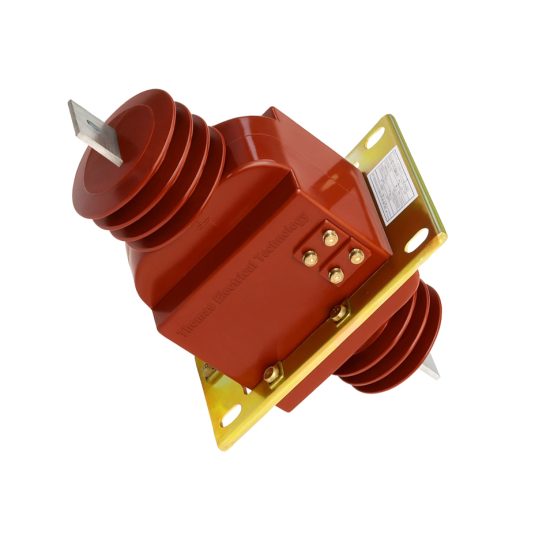
The LAJ-10Q is a high-voltage, indoor-type cast-resin current transformer (CT) engineered for precise current measurement and robust protection functionality in 11kV (IEC-rated) or 10kV (domestic system equivalent) medium-voltage networks. Designed in strict compliance with IEC 61869-2 and GB/T 20840.2, this instrument transformer delivers galvanic isolation between primary and secondary circuits while accurately scaling down high primary currents—typically ranging from 50 A to 3000 A—to standardized secondary values (commonly 1 A or 5 A). Its construction leverages vacuum pressure impregnation (VPI) epoxy resin technology, ensuring superior dielectric strength, mechanical stability, and environmental resilience without the fire hazards or maintenance demands associated with oil-filled alternatives.
Cast-Resin Insulation Technology and Dielectric Performance
The LAJ-10Q employs a VPI (Vacuum Pressure Impregnation) process using cycloaliphatic epoxy resin, which fully encapsulates the wound secondary coil and high-permeability grain-oriented electrical steel (GOES) core. This monolithic structure eliminates air voids and moisture ingress pathways, achieving a power frequency withstand voltage of 42 kV rms for 1 minute and an impulse withstand voltage of 75 kV peak (1.2/50 µs waveform), as mandated by IEC 61869-2 for 11kV systems. The resin’s thermal class is F (155°C), enabling continuous operation at ambient temperatures up to 40°C with a 1.2× rated current overload capability for 8 hours. Unlike oil-immersed CTs, the cast-resin design requires no periodic oil sampling, degassing, or tank inspections, significantly reducing lifecycle costs in indoor substations and switchgear assemblies.
Advantages Over Oil-Immersed and Dry-Type Alternatives
Compared to traditional oil-filled CTs, the LAJ-10Q eliminates flammability risks, making it ideal for confined indoor environments such as commercial buildings, hospitals, and underground substations where fire safety codes prohibit combustible insulation media. Relative to older dry-wound designs, the VPI resin provides uniform stress distribution under transient overvoltages and prevents partial discharge inception below 10 pC at 1.2× Um/√3 (where Um = 12 kV). Additionally, the solid encapsulation resists contamination from dust, humidity, and chemical vapors—critical in industrial settings with aggressive atmospheres. The absence of breathing mechanisms also ensures long-term dimensional stability, preventing winding displacement that could degrade ratio accuracy over time.
Primary Application Domains
The LAJ-10Q is predominantly deployed in metal-enclosed switchgear (e.g., RMU or AIS panels), indoor substations, and industrial power distribution centers operating at 10–11kV. It serves dual roles: supplying scaled current signals to revenue-class kWh meters (accuracy class 0.2S or 0.5S) and feeding protective relays (e.g., overcurrent, earth-fault) requiring 5P10 or 5P20 accuracy classes. Typical installations include utility-owned distribution transformers, manufacturing plant main incomers, data center backup generators, and solar farm collector substations. Its compact footprint (typically 180 mm height × 120 mm width) allows integration into space-constrained switchgear bays without compromising creepage distance (≥240 mm for pollution degree 3).
Technical Specifications
The LAJ-10Q adheres to stringent electrical and environmental parameters defined by international and domestic standards. Below is a comprehensive specification table followed by detailed contextual explanations.
| Parameter | Value |
|---|---|
| Rated Voltage (Ur) | 11 kV (IEC) / 10 kV (GB) |
| Maximum System Voltage (Um) | 12 kV |
| Primary Current (Ip) | 50–3000 A (standard ratios) |
| Secondary Current (Is) | 1 A or 5 A |
| Accuracy Class (Metering) | 0.2S, 0.5S |
| Accuracy Class (Protection) | 5P10, 5P20 |
| Rated Output (Burden) | 2.5–30 VA (at Is = 5 A) |
| Power Frequency Withstand Voltage | 42 kV rms, 1 min |
| Lightning Impulse Withstand Voltage | 75 kV peak |
| Insulation Material | VPI Cycloaliphatic Epoxy Resin |
| Core Material | GOES Silicon Steel (M6 grade) |
| Ambient Temperature Range | −25°C to +40°C |
| Relative Humidity | ≤95% non-condensing |
| Altitude Limit | ≤1000 m above sea level |
Electrical Performance Parameters
The LAJ-10Q supports multiple ratio configurations via multi-tap secondary windings (e.g., 600/1 A, 800/5 A), enabling field adaptability without hardware replacement. For metering applications, the 0.2S class guarantees composite error ≤±0.2% at 20–120% of rated current and ≤±0.4% at 5–20%, critical for revenue-grade billing per IEC 62053-22. Protection-class variants (5P10) maintain composite error ≤±5% at 10× rated current with burden ≤ rated VA, ensuring reliable relay operation during fault conditions. The transformer’s internal burden is minimized through low-resistance copper windings (resistance tolerance ±2%), while the GOES core exhibits hysteresis loss ≤1.2 W/kg at 1.5 T and 50 Hz, reducing thermal drift under continuous load.
Environmental and Mechanical Ratings
Designed for indoor use only, the LAJ-10Q operates reliably within −25°C to +40°C ambient temperatures. At altitudes exceeding 1000 m, derating factors apply: for every 100 m above 1000 m, the rated voltage must be reduced by 1.25%. The resin housing achieves IP00 protection (intended for enclosure within switchgear), with a minimum creepage distance of 240 mm to meet pollution degree 3 requirements per IEC 60664-1. Mechanical robustness is validated through vibration testing (5–150 Hz, 0.5 g acceleration) and thermal cycling (−40°C to +80°C, 10 cycles) without cracking or delamination. Mounting is achieved via two M10 threaded inserts on the base flange, compatible with standard DIN rail or bracket systems.
Typical Applications
The LAJ-10Q’s dual-certification (IEC and GB) and dual-function design make it versatile across diverse power infrastructure segments.
Substation Secondary Metering Systems
In utility-owned 11kV/0.4kV distribution substations, the LAJ-10Q feeds three-phase kWh meters for commercial and industrial consumers. Installed on the HV side of the distribution transformer, it enables accurate energy accounting even under light-load conditions (down to 1% of rated current) thanks to its 0.2S accuracy class. For example, a 1250 kVA transformer with 69 A primary current uses a 75/5 A LAJ-10Q to supply a Class 0.5S meter, ensuring billing accuracy compliant with national regulatory frameworks. The CT’s low phase displacement (<10 minutes at 100% In) prevents reactive energy measurement errors in tariff structures involving kVArh.
Industrial Power Distribution Protection
Within manufacturing facilities, the LAJ-10Q protects critical loads such as induction furnaces, large motors, and rectifier systems. A typical 10kV motor feeder (e.g., 2 MW synchronous motor drawing 144 A) employs a 200/1 A, 5P20 LAJ-10Q connected to a multifunction relay (e.g., Siemens 7SJ62). During a phase-to-phase fault (e.g., 2880 A = 20× In), the CT maintains linearity within ±5% error, allowing the relay to trip within 40 ms. The cast-resin body withstands electromagnetic interference from nearby variable-frequency drives, unlike air-core sensors prone to saturation from harmonic distortion.
Renewable Energy Integration Points
Solar photovoltaic (PV) farms utilize the LAJ-10Q at the 11kV collector substation to monitor array output and provide anti-islanding protection. For a 10 MW plant with four 2.5 MW inverters, each inverter output (≈130 A at 11kV) connects to a dedicated 150/5 A, 0.5S LAJ-10Q. These feed SCADA systems for performance ratio calculations while simultaneously supplying directional overcurrent relays to detect reverse power flow during grid outages. The CT’s immunity to DC offset (from inverter switching transients) ensures stable operation without core remanence issues common in lower-grade cores.
Rural and Suburban Distribution Networks
In rural electrification projects, the LAJ-10Q is mounted in pole-top or pad-mounted switchgear to serve agricultural pumps and small communities. A 100 kVA transformer serving 20 households might use a 100/5 A, 5P10 unit for earth-fault detection in unearthed (IT) systems. Here, the CT’s high excitation impedance (>500 Ω at 5 A secondary) enables sensitive residual current measurement (down to 0.5 A) when three units are connected in a Holmgren configuration. The resin housing resists UV degradation and temperature swings (−20°C winter to +45°C summer), eliminating the need for climate-controlled enclosures.
Commercial Building Main Incomers
High-rise office complexes often install the LAJ-10Q on the 11kV utility feed entering the building’s main switchboard. A 1600 A service uses a 2000/1 A, 0.2S CT to supply both billing meters and power quality analyzers. The analyzer captures harmonics up to the 50th order, relying on the CT’s flat frequency response (±0.5% from 45–65 Hz). During emergency generator testing, the CT accurately tracks load transfer transients without saturation, ensuring uninterrupted monitoring for ISO 50001 energy management certification.
Compliance with International Standards
The LAJ-10Q’s design, testing, and certification rigorously follow IEC 61869-2 (Instrument transformers – Part 2: Additional requirements for current transformers) and its Chinese counterpart GB/T 20840.2. While harmonized in core principles, subtle differences exist in test methodologies and documentation.
IEC 61869-2 Certification Requirements
Per IEC 61869-2, the LAJ-10Q undergoes type tests including temperature rise (ΔT ≤ 60 K for resin at 1.2× In), short-circuit withstand (25× In for 1 s without damage), and accuracy verification across burden ranges. Routine tests on every unit include polarity check, turns ratio (±0.25% tolerance), and power frequency withstand (42 kV for 1 min). The standard mandates marking of rated insulation level (e.g., “12/42/75” indicating Um/kVrms/kVpeak), accuracy class, and standard reference (e.g., “IEC 61869-2”). Third-party certification by bodies like KEMA or CESI validates compliance, with test reports traceable to SI units.
Alignment with GB/T 20840.2 Domestic Standards
GB/T 20840.2 mirrors IEC 61869-2 but specifies additional requirements for Chinese grid operators. Notably, it mandates a higher impulse withstand voltage (95 kV vs. 75 kV) for 10kV systems in lightning-prone regions and requires factory acceptance tests (FAT) witnessed by State Grid personnel. The standard also defines unique accuracy classes like 0.2FS (for fiscal metering) with stricter phase error limits (<5 minutes). Despite these nuances, the LAJ-10Q’s dual-rating (11kV IEC / 10kV GB) ensures seamless deployment in both export markets and domestic Chinese infrastructure projects.
Key Differences Between IEC and GB Frameworks
While IEC 61869-2 emphasizes functional performance and interoperability, GB/T 20840.2 prioritizes grid-specific reliability metrics. For instance, GB requires a 10-year accelerated aging test simulating thermal cycling in northern China’s −40°C winters, whereas IEC focuses on generic climatic categories. Documentation also differs: IEC permits digital test certificates, but GB mandates stamped paper copies with CMA (China Metrology Accreditation) seals. Crucially, both standards prohibit open-circuit operation of CT secondaries—a safety feature enforced via shorting links on the LAJ-10Q’s terminal block.
On-Site Testing Procedures
Post-installation verification ensures the LAJ-10Q performs within specifications before energization. All tests must follow IEC 60044-1 (now superseded by IEC 61869 series) protocols.
Insulation Resistance Test
Using a 2500 V DC megohmmeter, measure insulation resistance between primary-to-secondary and primary-to-ground. Acceptance criteria: ≥1000 MΩ at 20°C. Correct for temperature using RT2 = RT1 × 2(T1−T2)/10. Low readings (<100 MΩ) indicate moisture ingress or resin cracking, requiring drying or replacement. Perform before and after the power frequency withstand test to detect insulation degradation.
Turns Ratio Verification
Apply 1–5 V AC at 50 Hz to the secondary winding and measure induced primary voltage (open-circuit). Calculate ratio as Vp/Vs; compare to nameplate (e.g., 600/5 = 120:1). Tolerance: ±0.25% for metering classes, ±0.5% for protection. Use a calibrated ratio bridge (e.g., Omicron CT Analyzer) for accuracy. Deviations >1% suggest winding shorts or incorrect tap selection.
Polarity Confirmation
Connect a 1.5 V DC battery to secondary terminals (positive to S1). Momentarily close the circuit while monitoring a DC millivoltmeter across primary (P1 to P2). A positive kick confirms subtractive polarity (standard for IEC). Incorrect polarity reverses relay directionality—critical for differential and directional protection schemes. Document results with oscillograph traces if available.
Power Frequency Withstand Voltage Test
Apply 42 kV rms at 50 Hz between primary and grounded secondary/enclosure for 1 minute. Use a calibrated test transformer with overcurrent trip (≤100 mA). No flashover or sustained arcing is permitted. Pre-test: ensure all secondary terminals are shorted and grounded. Post-test: repeat insulation resistance to confirm integrity. Never perform on energized systems.
Short-Circuit Withstand Capability Check
Though not routinely tested on-site, verify design compliance by confirming nameplate markings: “25× In, 1 s” for standard duty. For critical applications, simulate fault current using a portable tester (e.g., Doble M5400) at 10× In for 100 ms. Monitor secondary waveform for saturation—distortion >5% THD indicates inadequate core cross-section. Ensure secondary burden does not exceed rated VA during fault.
Preventive Maintenance Guide
The LAJ-10Q’s maintenance-free design minimizes intervention, but periodic checks extend service life beyond 25 years.
Annual Visual and Electrical Inspection
Inspect for surface tracking, cracks, or discoloration on the resin housing. Clean with isopropyl alcohol if contaminated. Verify terminal tightness (torque: 2.5 N·m for M6 screws). Measure secondary winding resistance annually; a >10% increase suggests broken strands. Check shorting links are engaged when disconnected from meters/relays. Record ambient temperature and load current trends to detect abnormal heating.
Five-Year Comprehensive Maintenance Schedule
Every 60 months, perform insulation resistance, turns ratio, and excitation curve tests. The excitation test applies increasing voltage to secondary until knee-point (typically 300–500 V for 5 A CTs); plot Iexc vs. V. Compare to baseline—shifts right indicate core degradation. Replace if knee-point drops >15%. Also inspect mounting hardware for corrosion, especially in coastal areas with salt-laden air. Update maintenance logs per ISO 55000 asset management standards.
Fault Diagnosis and Troubleshooting
Common issues include ratio errors (caused by incorrect burden or open circuits), overheating (due to excessive burden or harmonic resonance), and insulation failure (from surface contamination). If a protection relay malfunctions, first verify CT polarity and ratio with a portable tester. For metering discrepancies, check for DC offset in the system (e.g., from half-wave rectifiers) which can bias the core. Never operate with secondary open—this induces kV-level voltages, risking insulation puncture and personnel hazard.
| Maintenance Interval | Tasks |
|---|---|
| Monthly | Visual inspection (if accessible), thermal imaging |
| Annually | Terminal torque check, insulation resistance, resistance measurement |
| 5 Years | Excitation curve, ratio verification, full visual audit |
| After Fault | Post-fault ratio and insulation tests mandatory |
Conclusion
The LAJ-10Q 11kV cast-resin current transformer represents a benchmark in reliability, accuracy, and safety for indoor medium-voltage applications. By leveraging VPI epoxy resin encapsulation and GOES silicon steel cores, it achieves exceptional dielectric strength (42 kV withstand) and metrological precision (0.2S class) while eliminating the fire risks and maintenance overhead of oil-filled alternatives. Its dual compliance with IEC 61869-2 and GB/T 20840.2 ensures global deployability—from European utility substations to Chinese industrial parks—with consistent performance across temperature extremes (−25°C to +40°C) and pollution-heavy environments. Rigorous on-site testing protocols and a structured preventive maintenance regime further guarantee operational integrity over a projected service life of 25–30 years. For engineers designing or maintaining 10–11kV distribution networks, the LAJ-10Q delivers the technical robustness required for both revenue-critical metering and life-safety protection functions, embodying the convergence of international standards and practical field reliability.
Frequently Asked Questions (FAQ)
Q1: Can the LAJ-10Q be used outdoors?
A: No. The LAJ-10Q is rated for indoor use only (IP00). Outdoor installations require weatherproof housings or alternative models with UV-stabilized resin and higher IP ratings.
Q2: What happens if the secondary circuit is left open during operation?
A: An open secondary induces dangerously high voltages (several kV) across the terminals, risking insulation failure, arcing, and personnel injury. Always use shorting links when disconnecting loads.
Q3: How do I select the correct burden for my application?
A: Sum the impedances of all connected devices (relays, meters, wiring). For a 5 A system, total burden (in VA) = I² × Z. Ensure this is ≤ the CT’s rated output (e.g., 15 VA). Exceeding burden causes ratio errors.
Q4: Is the LAJ-10Q suitable for harmonic-rich environments like data centers?
A: Yes. The GOES core and resin encapsulation minimize harmonic distortion effects. However, verify that the 15th harmonic current does not exceed 20% of fundamental to prevent overheating.
Q5: What is the maximum altitude for installation without derating?
A: 1000 meters above sea level. Above this, reduce rated voltage by 1.25% per 100 m increment (e.g., at 2000 m, max Ur = 11 kV × 0.875 = 9.6 kV).
Q6: Can I parallel two LAJ-10Q secondaries to increase output?
A: No. Paralleling CT secondaries causes circulating currents and inaccurate measurements. Use a single CT with adequate VA rating or a summation CT instead.
Q7: How often should I perform an excitation test?
A: Every 5 years as part of preventive maintenance, or immediately after a through-fault event exceeding 10× rated current.
Q8: Does the LAJ-10Q require grounding of the secondary circuit?
A: Yes. Per IEC 61869-2, one secondary terminal (typically S2) must be grounded at a single point to prevent capacitive coupling voltages and ensure personnel safety.