Article Content
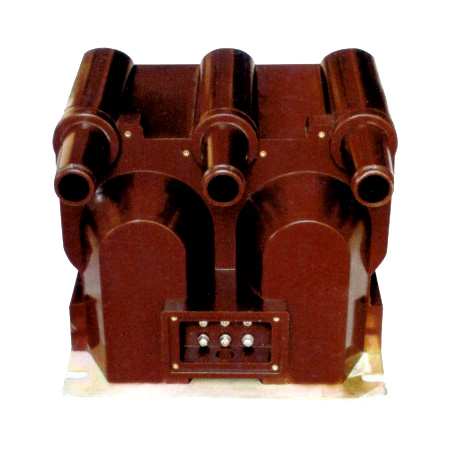
For Substation Metering & Protection: MER-1 11kV Cast-Resin Voltage Transformer per IEC 61869-3
Introduction to the MER-1 Voltage Transformer
The MER-1 is a single-phase, indoor/outdoor-rated cast-resin voltage transformer (VT) engineered for precision voltage transformation in 11kV (IEC) / 10kV (domestic) medium-voltage distribution systems. Designed in strict accordance with IEC 61869-3 and GB/T 20840.3, it converts high primary voltages to standardized secondary outputs—typically 100 V or 110 V—for interfacing with revenue-class meters, protective relays, synchrocheck devices, and SCADA systems. Its robust construction ensures long-term stability under electrical, thermal, and environmental stress.
Operating Principle of Cast-Resin Insulation
The MER-1 employs vacuum pressure impregnation (VPI) epoxy resin technology to fully encapsulate its magnetic core and windings. This process eliminates air voids and moisture ingress pathways by saturating the entire active assembly under vacuum before curing under pressure. The resulting monolithic structure provides superior dielectric strength (≥75 kV rms for 1 min at power frequency), partial discharge inception voltage exceeding 20 kV, and excellent tracking resistance (CTI ≥600). Unlike oil-filled units, cast-resin insulation is non-flammable (IEC 60695-11-10 compliant), requires no maintenance for fluid levels or gas monitoring, and exhibits minimal aging under continuous thermal cycling between –25°C and +40°C ambient conditions.
Advantages Over Oil-Immersed Designs
Compared to traditional oil-immersed VTs, the MER-1 offers significant operational and safety benefits. Its dry-type construction eliminates fire hazards, making it suitable for indoor substations, commercial buildings, and confined urban installations where flammability codes restrict oil-filled equipment. The absence of oil also removes risks of leakage, contamination, and environmental remediation costs. Mechanically, the rigid epoxy housing provides higher short-circuit withstand capability and vibration resistance—critical in seismic zones or near heavy industrial machinery. Furthermore, the MER-1’s compact footprint (typically 280 mm height × 180 mm width × 150 mm depth) enables space-efficient integration into ring main units (RMUs) and metal-clad switchgear without compromising creepage distance (≥240 mm for 11kV systems per IEC 60664).
Typical Applications Overview
The MER-1 is deployed across diverse infrastructure segments requiring accurate voltage sensing with high reliability. Primary use cases include utility-owned primary substations for billing-grade energy metering (Class 0.2 or 0.5 per IEC 61869-3), industrial plant feeders for overvoltage/undervoltage protection coordination, and renewable interconnection points (e.g., solar farms) where grid-code compliance demands precise voltage waveform fidelity. Its dual-winding configuration supports simultaneous connection to metering and protection circuits, while optional residual (open-delta) windings enable ground-fault detection in unearthed or impedance-earthed networks. The transformer’s low burden tolerance (down to 2.5 VA) ensures accuracy even when driving modern digital relays with minimal input impedance.
Technical Specifications
The MER-1 is engineered to deliver repeatable performance under defined service conditions. All parameters are validated per IEC 61869-3 test protocols at rated frequency (50 Hz or 60 Hz).
| Parameter | Value |
|---|---|
| Primary Voltage (Up) | 11 kV (IEC) / 10 kV (GB) |
| Secondary Voltage (Us) | 100 V or 110 V (standard); 100/√3 V for phase-to-earth |
| Voltage Ratio | 11000/100 V, 11000/110 V, 10000/100 V, etc. |
| Accuracy Class (Metering) | 0.2, 0.5 (per IEC 61869-3 Table 2) |
| Accuracy Class (Protection) | 3P, 6P (composite error ≤3% or 6% at 5× rated voltage) |
| Rated Output (Burden) | 10 VA, 15 VA, 30 VA (selectable per winding) |
| Insulation Level (LI/AC) | 75 kV lightning impulse / 28 kV power frequency (1 min) |
| Partial Discharge | <10 pC at 1.2 × Um/√3 (Um = 12 kV) |
| Core Material | Grain-oriented electrical steel (GOES), 0.27 mm thickness |
| Temperature Rise | ≤60 K above ambient at rated burden (IEC 60076-2) |
| Ambient Temperature Range | –25°C to +40°C (extended: –40°C to +55°C on request) |
| Altitude Limit | ≤1000 m (derating required above 1000 m per IEC 60071-2) |
| Relative Humidity | ≤95% non-condensing |
Standard Service Conditions
The MER-1 is rated for standard service conditions as defined in IEC 60038 and IEC 61869-1. Operation is guaranteed within an ambient temperature range of –25°C to +40°C, with relative humidity not exceeding 95% (non-condensing). At altitudes above 1000 m, the dielectric strength must be derated by 1% per 100 m increment due to reduced air density; for example, at 2000 m, the power frequency withstand voltage becomes 25.2 kV instead of 28 kV. The transformer is designed for continuous operation at system frequencies of 50 Hz ±0.5 Hz or 60 Hz ±0.6 Hz. Transient overvoltages up to 1.2 × Um (where Um = 12 kV) are permissible for durations ≤8 hours without degradation.
Accuracy and Burden Characteristics
Voltage transformers are highly sensitive to connected burden. The MER-1 maintains its declared accuracy class only when the total secondary load (including wiring impedance) falls within the specified rated output. For instance, a Class 0.2 unit rated at 10 VA will exhibit composite error ≤±0.2% only if the actual burden is between 2.5 VA and 10 VA. Below 25% of rated burden, phase displacement may exceed limits due to magnetizing current dominance. Each winding is independently tested for ratio error and phase displacement at 20%, 50%, 100%, and 120% of rated voltage. Tolerance bands are strictly enforced: for Class 0.5, ratio error must be within ±0.5% and phase displacement ≤±20 minutes at 100% voltage and rated burden.
Typical Applications
The MER-1’s design versatility enables deployment across multiple sectors requiring reliable voltage transformation with minimal lifecycle cost.
Substation Secondary Metering
In utility-owned 11kV/0.4kV distribution substations, the MER-1 provides the reference voltage for revenue metering systems. Connected to Class 0.2S kWh meters, it ensures billing accuracy compliant with EN 50470 or DL/T 614 standards. The transformer’s low phase displacement (<10 minutes at 100% load) prevents timing errors in time-of-use tariff calculations. Dual secondary windings allow one output to feed the main meter while the other drives a check meter or data logger for audit purposes. In ring-main configurations, three MER-1 units (one per phase) are mounted directly on busbar supports inside RMUs, eliminating external cabling and reducing installation errors.
Industrial Power Distribution
Large manufacturing facilities often operate their own 10kV internal networks fed from utility tie-lines. Here, the MER-1 supplies voltage signals to multifunction protection relays (e.g., overvoltage ANSI 59, undervoltage ANSI 27) and power quality analyzers. Its 3P or 6P protection class ensures correct relay operation during fault conditions—such as ferroresonance or single-phase reclosing—where secondary voltage may transiently exceed 2× rated value. The cast-resin housing resists chemical vapors common in petrochemical plants, while the IP54 rating (with optional IP55) protects against dust and water ingress in harsh environments.
Renewable Energy Integration
Solar photovoltaic (PV) and wind farms connect to the grid via 10/11kV collection systems. Grid codes (e.g., BDEW, CEI 0-16) mandate precise voltage measurement for reactive power control and low/high voltage ride-through (LVRT/HVRT) compliance. The MER-1’s fast response time (<20 ms settling after step change) and harmonic distortion rejection (THD <0.5% up to 13th harmonic) make it ideal for inverter-based resource monitoring. Residual windings detect ground faults in unearthed collector arrays, triggering isolation before insulation damage occurs.
Rural and Suburban Distribution Networks
In remote areas with limited maintenance access, the MER-1’s maintenance-free design reduces operational expenditure. Mounted on pole-top platforms or pad-mounted switchgear, it serves agricultural cooperatives, telecom towers, and rural microgrids. Its ability to operate at 100% rated burden continuously—even under daily load swings from 10% to 120%—ensures consistent metering accuracy despite variable consumer demand. The transformer’s lightweight (≈25 kg) simplifies manual handling during installation in locations inaccessible to cranes.
Compliance with International Standards
The MER-1 is certified to both international and Chinese national standards, ensuring global interoperability and regulatory acceptance.
IEC 61869-3 Certification Details
IEC 61869-3 specifies requirements for electromagnetic voltage transformers for measurement and protection. The MER-1 undergoes full type testing per Clause 7, including temperature rise, short-circuit withstand, insulation coordination, and accuracy verification. Key tests include: power frequency withstand (28 kV rms for 1 min), lightning impulse (75 kV peak, 1.2/50 µs waveform), and partial discharge measurement at 1.2 × Um/√3. Accuracy classes are validated using calibrated reference standards traceable to national metrology institutes. The manufacturer’s test report includes ratio error vs. burden curves and phase displacement plots across the full operating range.
Alignment with GB/T 20840.3
GB/T 20840.3 is the Chinese equivalent of IEC 61869-3, with minor deviations in insulation levels and marking requirements. While IEC uses Um = 12 kV for 11kV systems, GB defines the system voltage as 10kV with Um = 11.5 kV. Consequently, the MER-1’s domestic variant is tested at 24 kV (AC) and 60 kV (LI) for GB compliance. However, the same physical unit meets both standards due to conservative design margins. Markings include both “11kV” (IEC) and “10kV” (GB) labels, along with dual accuracy class designations (e.g., “0.2/3P”).
Testing and Certification Requirements
Certification requires witnessed testing by accredited laboratories (e.g., KEMA, CESI, or China National Electric Apparatus Quality Supervision Center). Routine tests—performed on every unit—include turns ratio verification (±0.2% tolerance), polarity check, and insulation resistance (>1000 MΩ at 2500 V DC). Type tests are repeated every five years or after design changes. The MER-1 carries CE marking for EU markets and CQC certification for China, with documentation available in English and Chinese.
On-Site Testing Procedures
Post-installation verification ensures the MER-1 performs within specifications before energization.
Insulation Resistance Test
Using a 2500 V DC megohmmeter, measure insulation resistance between primary and secondary windings, and between windings and earthed tank. Acceptance criterion: ≥1000 MΩ at 20°C. Correct for temperature using RT2 = RT1 × 2(T1–T2)/10. Values below 500 MΩ indicate moisture ingress or resin cracking and require drying or replacement.
Turns Ratio Test
Apply 100–200 V AC to the primary and measure secondary voltage with a calibrated voltmeter (accuracy class 0.1 or better). Calculate actual ratio and compare to nameplate. Tolerance: ±0.2% for metering classes, ±0.5% for protection classes. Deviations beyond tolerance suggest turn-to-turn shorts or incorrect tap selection.
Polarity Test
Connect a low-voltage DC source (e.g., 6 V battery) to the primary with positive to H1. Momentarily close the circuit while observing a DC millivoltmeter connected to X1 (positive) and X2. A positive kick confirms subtractive (reducing) polarity, which is standard for IEC VTs. Incorrect polarity causes 180° phase reversal, leading to metering errors or relay misoperation.
Power Frequency Withstand Voltage Test
Apply 28 kV rms (for IEC) or 24 kV rms (for GB) at 50 Hz between primary and secondary/ground for 1 minute. Use a calibrated test transformer with overcurrent trip set at 10 mA. No flashover or sustained discharge indicates pass. This test validates insulation integrity after transport-induced mechanical stress.
Open-Circuit Characteristic Test
With secondary open, gradually increase primary voltage from 0 to 120% of rated value while recording excitation current. Plot Iexc vs. Vp. A sharp current rise below 100% voltage indicates core saturation due to manufacturing defect. The knee point should occur above 130% rated voltage for healthy units.
Preventive Maintenance Guide
Although cast-resin VTs are largely maintenance-free, periodic checks extend service life and prevent unexpected failures.
Periodic Inspection Schedule
Conduct visual inspections annually: check for surface tracking, cracks, or discoloration on the resin housing; verify terminal tightness (torque: 15 N·m for M8 bolts); and clean dust/debris with dry compressed air (<0.3 MPa). Every five years, perform electrical tests (insulation resistance, ratio, polarity) as outlined in the on-site testing section. In coastal or industrial atmospheres, inspect creepage distance annually for salt or chemical deposits that could reduce flashover margin.
Fault Diagnosis and Troubleshooting
Common failure modes include: (1) Secondary open-circuit during operation—causes core saturation and overheating; always short secondary before disconnecting loads. (2) Partial discharge activity—detected via ultrasonic sensors or PD meters; values >20 pC warrant replacement. (3) Accuracy drift—often due to burden mismatch; verify connected load against nameplate rating. If ratio error exceeds ±1.0%, the unit should be removed from service.
| Maintenance Interval | Activities |
|---|---|
| Annual | Visual inspection, terminal torque check, cleaning |
| 5 Years | Insulation resistance, turns ratio, polarity, open-circuit test |
| After Fault | Full electrical retest plus partial discharge measurement |
Conclusion
The MER-1 11kV cast-resin voltage transformer represents a benchmark in reliability, accuracy, and compliance for medium-voltage applications. By leveraging VPI epoxy resin encapsulation and GOES core technology, it delivers stable performance across 25–30 years of service life with minimal maintenance. Its dual compliance with IEC 61869-3 and GB/T 20840.3 ensures seamless integration into global power systems—from urban substations to remote renewable sites. The transformer’s robust insulation system withstands harsh environmental conditions, while its precision engineering meets stringent metering (Class 0.2) and protection (3P/6P) requirements. With comprehensive on-site testability and a structured preventive maintenance program, the MER-1 minimizes lifecycle costs and maximizes grid reliability. For engineers specifying voltage instrumentation in 10/11kV networks, the MER-1 provides a technically sound, standards-compliant solution that balances performance, safety, and longevity.