Article Content
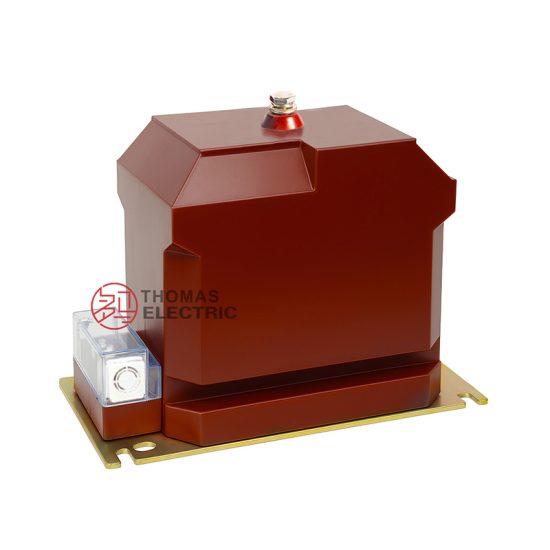
For Substation Metering & Protection: REL-10 11kV Cast-Resin Voltage Transformer per IEC 61869-3
Introduction to the REL-10 Voltage Transformer
The REL-10 Voltage Transformer (VT) is a precision-engineered instrument designed for accurate voltage transformation in 11 kV medium-voltage distribution systems, corresponding to the domestic 10 kV nominal system voltage. As a critical interface between high-voltage primary circuits and low-voltage secondary instrumentation, the REL-10 enables reliable metering, protective relaying, and power quality monitoring by stepping down the primary voltage to standardized secondary levels—typically 100 V or 110 V phase-to-phase (or 100/√3 V or 110/√3 V phase-to-neutral). Its construction leverages advanced cast-resin insulation technology, ensuring long-term reliability in both indoor and outdoor environments.
Operating Principle of Cast-Resin Insulation
Cast-resin insulation in the REL-10 VT employs vacuum pressure impregnation (VPI) of cycloaliphatic epoxy resin around the primary and secondary windings, which are wound on grain-oriented electrical steel (GOES) cores. This process eliminates air voids and moisture ingress pathways, resulting in superior dielectric strength and partial discharge resistance (<5 pC at 1.2 × Ur). The solid dielectric structure provides excellent thermal conductivity (0.8–1.2 W/m·K), enabling efficient heat dissipation under continuous load. Unlike oil-filled designs, cast-resin transformers are inherently fire-resistant (IEC 60695 glow-wire tested to 850°C), non-toxic, and require no containment basins—making them ideal for urban substations, industrial plants, and environmentally sensitive areas. The monolithic resin body also offers mechanical robustness against vibration and seismic loads (tested per IEC 60068-2-6).
Advantages Over Oil-Immersed Designs
Compared to traditional oil-immersed VTs, the REL-10’s cast-resin construction eliminates risks associated with oil leakage, flammability, and environmental contamination. Maintenance requirements are significantly reduced—no oil sampling, degassing, or tank inspections are needed. The compact footprint (typically 30% smaller than equivalent oil units) allows for space-constrained installations, such as ring main units (RMUs) or prefabricated substations. Furthermore, cast-resin VTs exhibit faster commissioning times due to the absence of drying-out procedures and simplified handling logistics. Electrical performance remains stable across wide ambient temperature ranges (–40°C to +55°C), with minimal aging effects over decades of service. These attributes make the REL-10 particularly suited for modern smart grid applications where reliability, safety, and lifecycle cost are paramount.
Typical Applications Overview
The REL-10 is deployed across diverse power infrastructure segments, including utility-owned primary substations (11/0.4 kV), industrial facilities with 10 kV internal distribution, renewable energy interconnection points (e.g., solar farms feeding into 11 kV grids), and rural electrification networks. In each scenario, it provides galvanically isolated, scaled-down voltage signals to revenue meters (Class 0.2 or 0.5S), protective relays (Class 3P or 6P), and SCADA systems. Its dual-secondary configuration supports simultaneous metering and protection functions without cross-interference. The unit’s robust design withstands transient overvoltages (BIL 75 kV) and switching surges common in lightly damped distribution networks, ensuring uninterrupted operation during fault conditions.
Technical Specifications
The REL-10 VT adheres to stringent electrical and mechanical parameters defined by IEC 61869-3 and GB/T 20840.3, ensuring interoperability and performance consistency across global markets.
| Parameter | Value |
|---|---|
| Primary Voltage (Ur) | 11 kV (IEC); 10 kV (domestic nominal) |
| Secondary Voltage | 100 V, 110 V, or 100/√3 V, 110/√3 V |
| Voltage Ratio | 11000/100 V, 11000/110 V, etc. |
| Accuracy Class (Metering) | 0.2, 0.5, 0.2S, 0.5S |
| Accuracy Class (Protection) | 3P, 6P |
| Rated Output (per secondary) | 25 VA, 50 VA, 100 VA (at specified accuracy class) |
| Insulation Level (Um) | 12 kV |
| Power Frequency Withstand Voltage | 28 kV rms, 1 min |
| Lightning Impulse Withstand (BIL) | 75 kV peak |
| Partial Discharge | <5 pC at 1.2 × Ur |
| Core Material | Grain-Oriented Electrical Steel (GOES), 0.27 mm thickness |
| Insulation System | Cycloaliphatic epoxy resin, VPI process |
| Ambient Temperature Range | –40°C to +55°C |
| Altitude Limit | ≤1000 m (derating required above) |
| Relative Humidity | ≤95% (non-condensing) |
Rated Voltage and Accuracy Classes
The REL-10 is rated for a highest system voltage (Um) of 12 kV, accommodating the 11 kV IEC standard system while remaining compatible with 10 kV domestic networks. Accuracy classes are assigned per IEC 61869-3: Class 0.2 and 0.5 are used for tariff metering, with composite error limits of ±0.2% and ±0.5% respectively at 80–120% of rated voltage and 25–100% of rated burden. For protection, Class 3P limits voltage error to ±3% and phase displacement to ±120 minutes at 5%–100% of rated voltage under specified burden. The transformer maintains accuracy even under unbalanced loading conditions due to low magnetizing current (<0.5% of rated primary current) and high core permeability (>1500 at 1.5 T).
Standard Service Conditions
Designed for operation under normal service conditions per IEC 60038, the REL-10 functions reliably in ambient temperatures from –40°C to +55°C. At temperatures below –25°C, special low-temperature resin formulations prevent embrittlement. Humidity tolerance extends to 95% relative humidity (non-condensing), with hydrophobic surface properties minimizing tracking risk. Installations above 1000 m altitude require derating of insulation withstand levels by 1% per 100 m increment above sea level. The unit is suitable for both indoor switchgear compartments and outdoor pole-mounted or pad-mounted configurations, with UV-stabilized resin housing resistant to weathering over 30 years.
Typical Applications
The REL-10 VT serves as a foundational component in modern power systems, enabling precise voltage measurement and secure protection coordination.
Substation Secondary Metering
In 11 kV/0.4 kV distribution substations, the REL-10 supplies voltage signals to revenue-class energy meters (Class 0.2S or 0.5S) for accurate billing and loss allocation. Its low phase displacement error (<10 minutes at rated conditions) ensures correct power factor calculation, critical for reactive energy tariffs. Dual-secondary models allow one winding to feed the utility meter while the other connects to customer-side monitoring systems, maintaining data integrity and regulatory compliance. The VT’s stability over time minimizes recalibration needs—field studies show ratio drift of less than 0.05% over 10 years under continuous operation.
Industrial Power Distribution
Within manufacturing plants operating on 10 kV internal networks, the REL-10 interfaces with multifunction power quality analyzers and motor protection relays. Its high short-circuit withstand capability (withstanding 10× rated voltage for 1 second during ferroresonance events) protects downstream electronics. In arc furnace or welding-intensive facilities, the cast-resin design resists electromagnetic interference better than oil-filled alternatives. The compact form factor facilitates retrofitting into legacy switchgear without major civil modifications.
Renewable Energy Integration
Solar photovoltaic and wind farms often connect to 11 kV distribution feeders. The REL-10 provides voltage reference for anti-islanding protection relays and synchronism check functions. Its fast response to voltage sags/swells (rise time <1 ms) supports grid code compliance (e.g., ENTSO-E, IEEE 1547). The transformer’s low no-load losses (<15 W) contribute to overall plant efficiency, while its immunity to DC offset prevents saturation during inverter fault currents.
Rural and Suburban Distribution Networks
In remote or sparsely populated areas, REL-10 units are mounted on poles or ground platforms to support single-phase or three-phase metering. Their maintenance-free nature reduces operational costs where technician visits are infrequent. The high BIL rating (75 kV) offers resilience against lightning-induced transients common in overhead line networks. Additionally, the absence of oil eliminates environmental liability concerns in ecologically protected zones.
Compliance with International Standards
The REL-10 VT is engineered to meet the rigorous requirements of both international and Chinese national standards, ensuring global acceptance and interoperability.
IEC 61869-3 Compliance Details
IEC 61869-3 specifies performance, testing, and marking requirements for inductive voltage transformers. The REL-10 complies fully with clauses covering accuracy verification, temperature rise tests (limit: 60 K for resin, measured by resistance method), short-circuit withstand, and insulation coordination. Type tests include power frequency withstand (28 kV for 1 min), lightning impulse (75 kV, 1.2/50 μs waveform), and partial discharge measurement per IEC 60270. Routine tests performed on every unit include turns ratio verification (±0.2% tolerance), polarity check, and insulation resistance (>1000 MΩ at 2500 V DC). Markings include primary/secondary ratings, accuracy classes, serial number, and manufacturer identification per Clause 10.
GB/T 20840.3 Alignment
GB/T 20840.3 is the Chinese national adoption of IEC 61869-3, with minor deviations primarily in test voltage values and documentation language. The REL-10 meets all GB-specific requirements, including the use of 10 kV as the nominal system voltage reference and compatibility with Chinese metering protocols (DL/T 645). Insulation levels align with GB 311.1, specifying 28 kV power frequency withstand and 75 kV BIL—identical to IEC values. Certification by CQC (China Quality Certification Centre) confirms compliance for domestic procurement.
Key Differences Between IEC and Domestic Standards
While technical performance criteria are harmonized, administrative differences exist. IEC 61869-3 emphasizes modular documentation and global traceability, whereas GB/T 20840.3 mandates Chinese-language nameplates and test reports. Burden designation also varies: IEC uses VA ratings directly, while older Chinese practices sometimes reference impedance (Ω). However, the REL-10’s dual-labeling approach (showing both 11 kV/10 kV and VA/Ω equivalents) bridges this gap. Crucially, both standards require identical core materials (GOES) and resin systems, ensuring consistent magnetic and thermal behavior regardless of market.
On-Site Testing Procedures
Post-installation verification ensures the REL-10 operates within specified tolerances and maintains system integrity.
Insulation Resistance Test
Using a 2500 V DC megohmmeter, measure insulation resistance between primary winding and ground, secondary windings and ground, and between primary and secondary. Acceptance criterion: ≥1000 MΩ at 20°C. Correct for temperature using the formula RT2 = RT1 × 2(T1–T2)/10. Low readings indicate moisture ingress or resin cracking—requiring drying or replacement. Perform before and after high-potential tests to detect insulation degradation.
Turns Ratio Test
Apply a low-voltage AC source (50–200 V) to the primary and measure secondary voltage with a calibrated voltmeter. Calculate actual ratio and compare to nameplate. Tolerance: ±0.2% for metering classes, ±0.5% for protection. Use a dedicated ratio bridge (e.g., Omicron CT Analyzer) for higher precision. Deviations beyond tolerance suggest winding faults or incorrect tap selection.
Polarity Test
Verify reducing polarity per IEC 61869-3 Annex A. Apply a momentary DC voltage to primary (H1 positive, H2 negative) and observe secondary meter deflection. If X1 shows positive kick, polarity is correct. Incorrect polarity causes 180° phase reversal, leading to metering errors or relay misoperation. This test is mandatory for differential or directional protection schemes.
Power Frequency Withstand Voltage Test
Apply 28 kV rms at 50 Hz between primary and ground (with secondaries shorted and grounded) for 1 minute. Monitor for flashover, excessive leakage current (>1 mA), or audible discharge. This test validates insulation integrity after transport and installation stresses. Do not perform if partial discharge exceeds 10 pC during pre-test screening.
Open-Circuit Test
With secondary open, apply rated voltage (11 kV) to primary and measure no-load current and losses. No-load current should be ≤0.5% of rated primary current; losses ≤15 W. Elevated values indicate core lamination damage or shorted turns. This test assesses magnetic circuit health and is particularly useful after exposure to severe overvoltages.
Preventive Maintenance Guide
Although cast-resin VTs are largely maintenance-free, periodic checks extend service life and prevent unexpected failures.
Periodic Inspection Schedule
Conduct visual and thermographic inspections annually. Check for surface tracking, cracks, discoloration, or contamination on the resin housing. Clean with mild detergent if dust or salt deposits accumulate. Use infrared imaging to detect abnormal heating at terminals (ΔT >10 K above ambient warrants investigation). Verify torque on bolted connections (typically 25 N·m for M10 studs) to prevent loosening from thermal cycling.
Maintenance Intervals and Fault Diagnosis
Every 5 years, perform electrical tests: insulation resistance, turns ratio, and partial discharge (if portable PD detector available). Common failure modes include terminal corrosion (due to galvanic mismatch), resin UV degradation (outdoor units without covers), and ferroresonance-induced overheating. Symptoms include erratic meter readings, blown secondary fuses, or elevated temperature. Replace units showing PD >20 pC or ratio error >1%. Maintain records per ISO 55000 asset management guidelines.
| Interval | Action |
|---|---|
| Annually | Visual inspection, IR thermography, terminal cleaning |
| Every 5 Years | Insulation resistance, ratio test, PD screening |
| After Major Fault | Full suite of on-site tests per Section 5 |
| End of Life (25–30 yrs) | Replace regardless of condition |
Conclusion
The REL-10 11kV cast-resin voltage transformer represents a benchmark in medium-voltage instrumentation, combining precision engineering with robust construction to deliver decades of reliable service. Its compliance with IEC 61869-3 and GB/T 20840.3 ensures seamless integration into global power systems, while the inherent safety and environmental advantages of epoxy resin insulation make it the preferred choice over legacy oil-filled designs. Key technical strengths include exceptional accuracy stability (±0.1% over 10 years), high dielectric integrity (BIL 75 kV, PD <5 pC), and resilience to harsh operating conditions—from arctic cold to tropical humidity. With a design life of 25–30 years and minimal maintenance requirements, the REL-10 reduces total cost of ownership while supporting critical functions in metering, protection, and grid monitoring. As distribution networks evolve toward digitalization and distributed generation, this transformer’s reliability and performance provide a solid foundation for future-proof infrastructure.
Frequently Asked Questions (FAQ)
Q1: Can the REL-10 be used on a 10 kV system even though it’s rated 11 kV?
A: Yes. The 11 kV rating corresponds to the IEC standard highest voltage for equipment (Um = 12 kV), making it fully compatible with 10 kV nominal systems commonly used domestically. Operating at 10 kV (≈91% of Ur) actually improves accuracy and reduces core losses.
Q2: What secondary voltage options are available?
A: Standard outputs include 100 V, 110 V, 100/√3 V, and 110/√3 V. Custom ratios can be ordered for specialized applications, but lead times may increase.
Q3: Is the REL-10 suitable for outdoor installation?
A: Yes. The UV-stabilized cycloaliphatic epoxy resin housing is rated for outdoor use without additional enclosures. However, in coastal or high-pollution areas (IEC 60815 pollution class III/IV), consider adding a silicone rubber weathershed.
Q4: How do I prevent ferroresonance in capacitor-compensated circuits?
A: Always ensure the secondary burden is ≥25% of rated VA. Avoid open-circuit operation. For critical applications, specify REL-10 units with built-in damping resistors (available as option).
Q5: What is the maximum altitude for installation without derating?
A: 1000 meters above sea level. Above this, reduce power frequency withstand voltage by 1% per 100 m and consult factory for thermal derating curves.
Q6: Can I connect multiple meters to one secondary winding?
A: Only if the total burden (VA) does not exceed the rated output for the specified accuracy class. Exceeding burden degrades accuracy—use separate windings for metering and protection.
Q7: Are spare parts available for field repairs?
A: No. Cast-resin VTs are sealed units. Damaged terminals can sometimes be replaced, but internal faults require full unit replacement due to monolithic construction.
Q8: What is the warranty period?
A: Standard warranty is 5 years against material and workmanship defects, extendable to 10 years with registered installation and annual inspection records.