Article Content
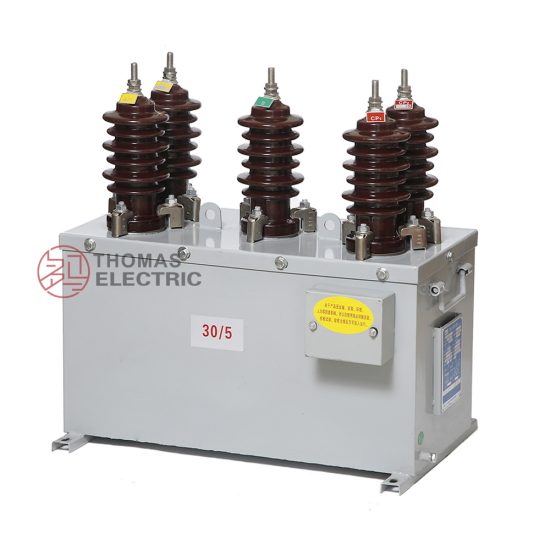
For Substation Metering & Protection: SZW-10 11kV Cast-Resin Current Transformer per IEC 61869-2
Introduction to the SZW-10 Current Transformer
The SZW-10 is a 11kV (IEC-rated) / 10kV (domestic system equivalent) cast-resin current transformer engineered for high-fidelity current measurement and robust protective relay coordination in medium-voltage power distribution networks. As a core component of secondary instrumentation circuits, it accurately scales primary currents—ranging from hundreds to thousands of amperes—down to standardized secondary outputs of 1A or 5A, enabling safe interfacing with meters, relays, and monitoring systems. Its design leverages vacuum pressure impregnation (VPI) epoxy resin technology, ensuring superior dielectric integrity, mechanical stability, and environmental resilience compared to traditional oil-immersed alternatives.
Operating Principle of Cast-Resin Insulation
Cast-resin insulation in the SZW-10 employs a thermosetting epoxy compound that fully encapsulates the primary conductor, magnetic core, and secondary windings under vacuum conditions followed by pressure impregnation. This VPI process eliminates air voids and moisture ingress pathways, resulting in a homogeneous dielectric structure with high partial discharge inception voltage (>20 kV at 50 Hz). The resin matrix provides excellent tracking resistance (CTI > 600), thermal conductivity (~0.8 W/m·K), and coefficient of thermal expansion closely matched to copper and silicon steel, minimizing mechanical stress during thermal cycling. Unlike oil-filled units, the solid insulation eliminates fire hazards, leakage risks, and maintenance associated with fluid containment, making it ideal for indoor substations, urban switchgear, and environmentally sensitive installations.
Advantages Over Oil-Immersed Designs
The SZW-10’s cast-resin construction offers distinct operational and safety benefits over oil-immersed CTs. First, it is inherently non-flammable, complying with IEC 60695 flammability requirements without requiring fire barriers or containment pits. Second, its sealed solid insulation is impervious to humidity, dust, and chemical contaminants, enabling reliable operation in coastal, industrial, or high-altitude environments up to 3000 m above sea level. Third, the absence of liquid dielectric eliminates the need for periodic oil sampling, degassing, or tank inspections, reducing lifecycle costs. Additionally, the compact form factor—enabled by higher dielectric strength of epoxy resin (≥20 kV/mm)—facilitates integration into space-constrained switchgear such as RMUs and ring-main units. Finally, the unit exhibits negligible aging under normal operating conditions, contributing to a service life exceeding 25 years.
Typical Applications Overview
The SZW-10 is deployed across diverse 10kV distribution infrastructure where precision, reliability, and compliance are paramount. Primary use cases include utility-owned substations for revenue metering (Class 0.2S or 0.5S), industrial facilities requiring differential or overcurrent protection (Class 5P or 10P), and renewable energy interconnection points (e.g., solar farms) needing harmonic-resilient current sensing. Its dual-winding configuration supports simultaneous metering and protection functions, eliminating the need for multiple transformers. The unit is suitable for both indoor metal-enclosed switchgear and outdoor pole-mounted installations when housed in appropriate enclosures.
Technical Specifications
The SZW-10 adheres to stringent electrical and mechanical parameters defined by IEC 61869-2 and GB/T 20840.2, ensuring interoperability and performance consistency across global markets.
| Parameter | Value |
|---|---|
| Rated System Voltage (IEC) | 11 kV |
| Rated System Voltage (Domestic) | 10 kV |
| Rated Frequency | 50/60 Hz |
| Primary Current Ratings | 50 A to 3000 A (standard); custom up to 4000 A |
| Secondary Current | 1 A or 5 A (dual ratios available) |
| Accuracy Classes | Metering: 0.2S, 0.5S; Protection: 5P10, 5P20, 10P10, 10P20 |
| Rated Output (Burden) | 2.5 VA to 30 VA per winding |
| Short-Time Thermal Current | 25 kA for 1 s (at 50 Hz) |
| Dynamic Withstand Current | 62.5 kA peak |
| Insulation Level (LI/AC) | 75 kV / 28 kV (1 min, 50 Hz) |
| Partial Discharge | <10 pC at 1.2 × Um/√3 |
| Ambient Temperature Range | –25°C to +40°C (extended: –40°C to +55°C) |
| Relative Humidity | Up to 95% non-condensing |
| Altitude | ≤ 1000 m standard; derating above 1000 m per IEC 60071 |
Core and Winding Construction
The magnetic circuit utilizes grain-oriented electrical steel (GOES) with a maximum core loss of 1.2 W/kg at 1.5 T and 50 Hz, ensuring low excitation current and high linearity under both steady-state and transient conditions. Secondary windings are wound with oxygen-free copper wire, insulated with Class F (155°C) enamel, and embedded directly into the epoxy matrix to prevent movement-induced fatigue. Primary conductors are either solid copper bars (for ≤1250 A) or multi-stranded flexible busbars (for >1250 A) to minimize skin effect losses. Each winding is individually tested for continuity and insulation resistance prior to resin casting.
Environmental and Mechanical Ratings
The SZW-10 is rated for both indoor and outdoor service when mounted in IP2X or higher enclosures. The housing features UV-stabilized cycloaliphatic epoxy resin, resistant to cracking under thermal shock (tested per IEC 60060-1). Mounting provisions include M12 threaded inserts compatible with standard switchgear brackets. The creepage distance exceeds 25 mm/kV for pollution degree 3 environments, satisfying IEC 60815 requirements. Weight ranges from 8 kg (50/5 A) to 22 kg (3000/5 A), facilitating manual handling during installation.
Typical Applications
The SZW-10 serves critical roles across modern power infrastructure, combining metrological accuracy with fault-current resilience.
Substation Secondary Metering
In utility-owned 10kV/0.4kV distribution substations, the SZW-10 provides Class 0.2S or 0.5S accuracy for revenue-grade energy metering. Its low phase displacement (<±10 arcmin at 100% In) ensures minimal billing error even under light-load conditions common in residential feeders. Dual secondary windings allow one output to feed a smart meter while the other connects to a SCADA RTU, enabling real-time load profiling without compromising billing integrity. The transformer’s thermal stability prevents ratio drift during summer peak loads, maintaining compliance with national regulatory frameworks such as China’s DL/T 448.
Industrial Power Distribution
Within manufacturing plants, data centers, and mining operations, the SZW-10 supports protective relaying schemes including overcurrent (51), earth fault (50N/51N), and differential protection (87). For example, in a 10kV motor feeder, a 400/5 A, 10P20 unit ensures the relay operates reliably at 20× rated current (8 kA) while maintaining composite error <10%. The high saturation point (Vk ≥ 500 V for 10P20) prevents maloperation during motor starting inrush or downstream faults. Its compact size allows retrofitting into legacy switchgear without panel modifications.
Renewable Energy Integration
Solar photovoltaic (PV) and wind farms frequently connect to 10kV grids via step-up transformers. The SZW-10’s low remanence and high linearity enable accurate measurement of bidirectional power flow and harmonic-rich waveforms (up to 13th order). In a 10 MW solar plant, 630/1 A, 0.5S units feed revenue meters while 5P10 windings trigger anti-islanding protection during grid outages. The cast-resin design withstands rapid temperature swings between desert days and nights, avoiding the micro-cracking seen in older polyester-cast units.
Rural and Suburban Distribution Networks
In remote areas with limited maintenance access, the SZW-10’s maintenance-free operation is critical. Pole-mounted units monitor single-phase or three-phase feeders for load balancing and theft detection. A typical 200/5 A, 0.5S configuration feeds a GPRS-enabled meter, transmitting consumption data hourly. The transformer’s immunity to salt fog and sand abrasion ensures decades of service in coastal or arid regions. Its robust short-circuit withstand capability protects against frequent lightning-induced faults common in overhead-line networks.
Compliance with International Standards
The SZW-10 is certified to IEC 61869-2:2012 (“Instrument transformers – Part 2: Additional requirements for current transformers”) and aligns with China’s GB/T 20840.2-2014, ensuring global acceptance.
IEC 61869-2 Compliance Details
IEC 61869-2 defines performance criteria for accuracy, thermal rating, and dielectric strength. The SZW-10 meets all mandatory clauses: ratio error and phase displacement are verified at 1%, 5%, 20%, 100%, and 120% of rated current per Table 2 of the standard. For protection class 10P20, the limit for composite error is ≤10% at 20× rated current. Dielectric tests include 1-minute AC withstand at 28 kV and lightning impulse at 75 kV (1.2/50 µs waveform). Partial discharge is measured per IEC 60270, with acceptance threshold <10 pC at 1.2 × Um/√3 (≈7.6 kV).
GB/T 20840.2 Alignment and Key Differences
GB/T 20840.2 mirrors IEC 61869-2 but includes localized requirements: Chinese standards mandate additional short-time current tests at 42 kA for 3 s in some provincial grids, though the SZW-10 exceeds this with 25 kA/1 s (equivalent thermal stress). GB also specifies stricter vibration resistance (10–55 Hz, 0.35 mm amplitude) for earthquake-prone zones. Notably, GB permits ±0.5% ratio tolerance for 0.5S class versus IEC’s ±0.75%, which the SZW-10 achieves through precision core annealing and winding tension control. Certification is issued by CNAS-accredited labs such as KEMA or CESI.
Testing and Certification Requirements
Each SZW-10 undergoes type, routine, and sample tests. Type tests (performed annually) include temperature rise (Δθ ≤ 60 K for windings), short-circuit withstand, and impulse tests. Routine tests—conducted on every unit—cover polarity, turns ratio (tolerance ±0.25% for metering classes), insulation resistance (>1000 MΩ at 2500 V DC), and partial discharge. Sample tests (per batch) verify mechanical strength and climatic endurance. Certificates include test reports traceable to IEC 17025 standards and bear CE, CCC, and RoHS marks where applicable.
On-Site Testing Procedures
Post-installation verification ensures the SZW-10 performs within specifications before energization.
Insulation Resistance Test
Using a 2500 V DC megohmmeter, measure insulation resistance between primary-to-secondary, primary-to-ground, and secondary-to-ground. Acceptance criterion: ≥1000 MΩ at 20°C. Correct for temperature using RT2 = RT1 × 2(T1–T2)/10. Low readings indicate moisture ingress or resin degradation—requiring drying or replacement. Perform before and after dielectric tests to detect insulation damage.
Turns Ratio Test
Apply a low-voltage AC source (e.g., 120 V) to the primary and measure secondary voltage. Calculate actual ratio = Vp/Vs. Compare to nameplate; tolerance is ±0.25% for 0.2S/0.5S, ±0.5% for 5P/10P. Use a dedicated ratio tester (e.g., Omicron CT Analyzer) for automated comparison. Deviations >1% suggest shorted turns or wiring errors.
Polarity Test
Verify reducing polarity per IEC 61869-2 Annex B. Connect a 1.5 V battery between P1 and P2. Momentarily close the circuit; a DC voltmeter across S1–S2 should show a positive kick. Incorrect polarity causes relay misoperation or meter reversal. Confirm with a phase-angle meter during ratio testing—phase shift must be near 0°.
Power Frequency Withstand Voltage Test
Apply 28 kV RMS at 50 Hz between primary and grounded secondary/housing for 1 minute. Leakage current must remain <10 mA. Use a calibrated HV test set with automatic trip on flashover. Conduct only after insulation resistance confirms dryness. This test validates resin integrity post-transportation.
Short-Circuit Test (for CT)
Unlike VTs, CTs require verification of knee-point voltage (Vk) for protection classes. Inject increasing AC current into secondary until Vk is reached (e.g., ≥500 V for 10P20). Plot excitation curve; Vk is where slope drops sharply. Ensure Vk ≥ (If/In) × (Rct + Rb) × k, where k=1.2 safety factor. Low Vk indicates core saturation risk during faults.
Preventive Maintenance Guide
Although cast-resin CTs are largely maintenance-free, periodic checks extend service life and prevent failures.
Annual Inspection Protocol
Visually inspect for cracks, tracking, or discoloration on the resin surface. Clean with dry cloth—never solvents. Check terminal tightness (torque: 12 N·m for M6 screws). Measure insulation resistance; values <500 MΩ warrant investigation. Verify secondary burden impedance matches design (e.g., 2.5 Ω for 5 A, 15 VA). Record ambient temperature and load current to trend thermal performance.
Five-Year Comprehensive Maintenance
Perform full suite of on-site tests: ratio, polarity, insulation resistance, and excitation curve. Compare results to commissioning data—drift >0.5% in ratio or >10% in Vk indicates aging. Inspect mounting hardware for corrosion. In coastal areas, apply silicone grease to terminals to inhibit salt creepage. Update asset management records with test outcomes.
Maintenance Intervals and Fault Diagnosis
| Interval | Task | Fault Indicator |
|---|---|---|
| Annually | Visual inspection, IR measurement | Cracks, carbon tracks, IR <500 MΩ |
| Every 5 years | Full electrical tests | Ratio error >1%, Vk drop >15% |
| After fault event | Post-fault diagnostics | Distorted excitation curve, overheated terminals |
Common failure modes include open-circuited secondaries (causing dangerous overvoltage) and core saturation due to excessive burden. Always short CT secondaries before disconnecting meters.
Conclusion
The SZW-10 11kV cast-resin current transformer represents a benchmark in medium-voltage instrumentation, combining IEC 61869-2-certified accuracy with rugged, maintenance-free construction. Its VPI epoxy resin encapsulation and GOES core deliver exceptional dielectric strength, thermal stability, and linearity across metering (0.2S/0.5S) and protection (5P/10P) applications. By eliminating the fire risk, leakage potential, and servicing demands of oil-filled alternatives, the SZW-10 reduces total cost of ownership while enhancing safety in both indoor switchgear and outdoor substations. Rigorous compliance with international and domestic standards—including GB/T 20840.2—ensures seamless integration into global power systems, from urban distribution networks to renewable energy interconnects. With a design life of 25–30 years under standard operating conditions, the SZW-10 provides decades of reliable service with minimal intervention. Its proven performance in harsh environments—from high-humidity coastal zones to arid deserts—further underscores its engineering robustness. For utilities and industrial operators seeking a future-proof solution for 10kV current measurement and protection, the SZW-10 offers unmatched technical fidelity and operational resilience.