Article Content
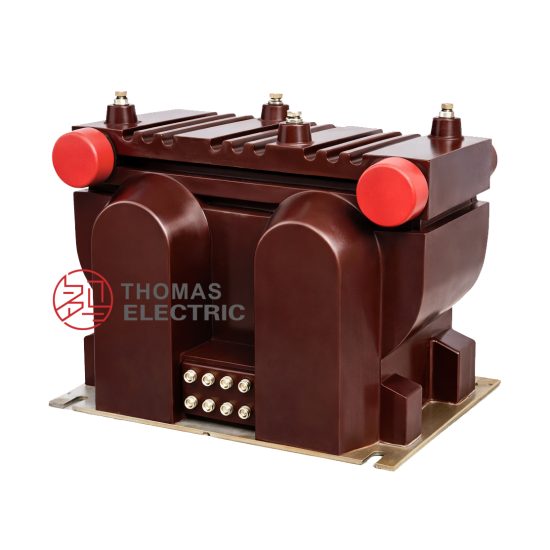
For Substation Metering & Protection: SZV-10R 11kV Cast-Resin Voltage Transformer per IEC 61869-3
Introduction to the SZV-10R Voltage Transformer
The SZV-10R is a precision-engineered, indoor-type cast-resin voltage transformer (VT) designed for reliable operation in 11 kV (IEC-rated) / 10 kV (domestic system) medium-voltage networks. It provides galvanic isolation between high-voltage primary circuits and low-voltage secondary instrumentation or protective relaying systems, ensuring accurate voltage transformation while maintaining personnel and equipment safety. Its solid dielectric insulation system eliminates fire hazards and environmental risks associated with oil-filled alternatives.
Operating Principle of Cast-Resin Insulation
Cast-resin insulation in the SZV-10R utilizes vacuum pressure impregnation (VPI) epoxy resin technology, which fully encapsulates the primary and secondary windings along with the magnetic core. This process removes air voids and moisture, resulting in a homogeneous dielectric structure with high partial discharge inception voltage (>20 kV). The resin matrix exhibits excellent thermal conductivity (0.8–1.2 W/m·K), enabling efficient heat dissipation during continuous operation. Unlike oil-immersed transformers, the SZV-10R requires no maintenance related to fluid levels or gas monitoring, making it ideal for confined indoor switchgear installations where space and safety are critical constraints.
Advantages Over Oil-Immersed Designs
Compared to traditional oil-immersed VTs, the SZV-10R offers superior fire resistance (compliant with IEC 60695 flammability tests), zero risk of oil leakage, and immunity to altitude-induced pressure changes. Its compact footprint—typically 30% smaller than equivalent oil-filled units—facilitates integration into modern metal-enclosed switchgear. Additionally, the absence of combustible materials allows installation in public buildings, underground substations, and industrial facilities with stringent fire codes. The epoxy resin also provides mechanical rigidity that dampens vibration-induced winding displacement, enhancing long-term ratio stability under dynamic load conditions.
Typical Applications Overview
The SZV-10R is deployed across utility substations, industrial plants, renewable energy interconnection points, and commercial complexes requiring precise voltage measurement for billing (metering class) or fault detection (protection class). In ring-main units (RMUs) and pad-mounted switchgear, its robust design withstands frequent switching transients without degradation in accuracy. The transformer supports dual secondary windings—one for 0.5 or 0.2S class metering and another for 3P or 6P class protection—enabling simultaneous revenue-grade energy accounting and high-speed relay coordination in 10 kV distribution feeders.
Technical Specifications
The SZV-10R adheres to strict electrical and mechanical parameters defined by IEC 61869-3 and GB/T 20840.3, ensuring interoperability across global power systems.
| Parameter | Value |
|---|---|
| Rated Primary Voltage (IEC) | 11 kV |
| System Voltage (Domestic) | 10 kV |
| Voltage Ratio | 11000/√3 V : 100/√3 V (standard); optional 110 V or 115 V secondaries |
| Accuracy Class | Metering: 0.2S, 0.5; Protection: 3P, 6P |
| Rated Output (per winding) | 10–100 VA (configurable) |
| Insulation Level (Um/Ur) | 12 kV / 75 kV (power frequency), 95 kV (lightning impulse) |
| Core Material | Grain-Oriented Electrical Steel (GOES), 0.27 mm thickness |
| Frequency | 50 Hz or 60 Hz |
| Temperature Rise | ≤60 K (at rated burden) |
| Partial Discharge | <10 pC at 1.2 × Ur/√3 |
Standard Service Conditions
The SZV-10R is rated for indoor operation under standard service conditions per IEC 60060-1: ambient temperature range of –25°C to +40°C, relative humidity up to 95% non-condensing, and installation altitude ≤1000 m above sea level. For altitudes exceeding 1000 m, derating factors apply—specifically, a 1% reduction in rated voltage per 100 m above 1000 m. The transformer is not suitable for explosive atmospheres unless housed in certified enclosures meeting IEC 60079 standards. Condensation-prone environments require supplementary heating or ventilation to prevent surface tracking on the resin housing.
Thermal and Dielectric Performance
Thermal performance is validated through temperature-rise tests per IEC 61869-3 Clause 7.4, confirming that winding hot-spot temperatures remain below 110°C under continuous full-load operation. Dielectric integrity is verified via power-frequency withstand tests at 75 kV for 1 minute and lightning impulse tests at 95 kV (1.2/50 μs waveform). The cast-resin body maintains structural integrity under short-circuit currents up to 20 kA for 1 second, with no cracking or delamination observed post-test. These characteristics ensure decades of maintenance-free service even in thermally stressed urban substations.
Typical Applications
The SZV-10R serves diverse roles in modern power infrastructure, leveraging its dual-class accuracy and robust construction.
Substation Secondary Metering
In utility-owned 10 kV/0.4 kV distribution substations, the SZV-10R’s 0.2S-class secondary winding interfaces with smart meters for time-of-use billing and grid loss analysis. Its low phase-angle error (<10 minutes at 25%–100% burden) ensures compliance with EN 50470-1 for revenue metering. For example, in a European DSO’s ring-main unit, three SZV-10R units provide synchronized three-phase voltage inputs to an IEC 61850-9-2 LE merging unit, enabling digital substation automation with sub-millisecond timestamp accuracy.
Industrial Power Distribution
Heavy industries—such as steel mills, chemical plants, and data centers—deploy the SZV-10R for both energy management and motor protection. A typical 10 kV motor control center (MCC) uses the VT’s 3P-class winding to feed overvoltage and undervoltage relays (e.g., Siemens 7SJ62), tripping within 20 ms during ferroresonance events. The resin insulation resists chemical vapors and dust ingress (IP00 rating sufficient for enclosed switchgear), eliminating maintenance downtime common with oil-filled units in harsh environments.
Renewable Energy Integration
Solar photovoltaic (PV) and wind farms connect to 10 kV grids via step-up transformers, requiring precise voltage monitoring for anti-islanding and reactive power control. The SZV-10R’s linear response under distorted waveforms (THD ≤5%) ensures accurate RMS voltage measurement despite inverter harmonics. In a 20 MW solar plant in Spain, SZV-10R units supply voltage signals to SCADA systems that adjust STATCOM output to maintain ±2% voltage regulation at the point of common coupling (PCC).
Rural and Suburban Distribution Networks
In remote areas with limited access, the SZV-10R’s maintenance-free design reduces operational costs. Mounted in pole-top or pad-mounted switchgear, it enables remote voltage monitoring via cellular RTUs. For instance, a rural electrification project in Southeast Asia uses SZV-10R VTs with 0.5-class outputs to detect voltage sags caused by tree contact on overhead lines, triggering automated sectionalizers to isolate faults without crew dispatch.
Compliance with International Standards
The SZV-10R is engineered to meet the rigorous requirements of IEC 61869-3 (Instrument Transformers – Part 3: Voltage Transformers) and its Chinese counterpart, GB/T 20840.3.
IEC 61869-3 Compliance Details
IEC 61869-3 defines performance criteria for accuracy, thermal capability, and dielectric strength. The SZV-10R complies with all mandatory clauses, including ratio error limits (±0.2% for 0.2S class at 20–100% burden), phase displacement (<5 minutes for 0.2S), and short-circuit withstand (20 kA/1s). Type tests—including temperature rise, impulse, and partial discharge—are conducted in accredited laboratories per IEC 60060. Routine tests (ratio, polarity, insulation resistance) are performed on every unit, with certificates traceable to national metrology institutes.
Alignment with GB/T 20840.3
GB/T 20840.3 mirrors IEC 61869-3 but includes China-specific requirements such as enhanced seismic resistance (0.3g horizontal acceleration) and stricter partial discharge limits (<5 pC). The SZV-10R meets these via reinforced core clamping and optimized resin curing cycles. Notably, GB/T permits 10 kV as the nominal system voltage (vs. IEC’s 11 kV), but the transformer’s insulation coordination remains identical—Um = 12 kV in both standards—ensuring seamless interchangeability in Sino-foreign joint ventures.
Testing and Certification Requirements
Certification requires submission of type test reports from ISO/IEC 17025-accredited labs. Key deliverables include: (1) accuracy verification per IEC 61869-3 Annex B, (2) thermal endurance test at 1.1 × rated voltage for 24 hours, and (3) pollution severity assessment (creepage distance ≥240 mm/kV for medium pollution). The SZV-10R carries CE, CCC, and KEMA marks, facilitating deployment across EU, Chinese, and emerging markets.
On-Site Testing Procedures
Post-installation verification ensures the SZV-10R performs within specification before energization.
Insulation Resistance Test
Using a 2500 V DC megohmmeter, measure insulation resistance between primary-to-secondary, primary-to-ground, and secondary-to-ground. Acceptance criterion: ≥1000 MΩ at 20°C. Correct for temperature using R20 = Rt × 1.5(t–20)/10. Low readings indicate moisture ingress or resin cracking—requiring drying or replacement. Perform before and after high-potential testing to detect insulation degradation.
Turns Ratio Test
Apply 100–200 V AC to the primary and measure secondary voltage with a calibrated multimeter. Calculate ratio error: [(Vp/Vs)measured – N] / N × 100%, where N is the nominal ratio (e.g., 110). Tolerance: ±0.2% for 0.2S class. Use a dedicated turns ratio tester (e.g., Omicron CT Analyzer) for automated comparison against factory data stored in QR-coded nameplates.
Polarity Test
Verify reducing polarity per IEC 61869-3 Figure 4. Connect a 6–12 V battery across primary terminals (H1+, H2–). Momentarily close the circuit while monitoring secondary with a DC voltmeter (X1+, X2–). A positive kick confirms correct polarity. Incorrect polarity causes 180° phase shift, leading to false tripping in differential protection schemes.
Power Frequency Withstand Voltage Test
Apply 75 kV RMS at 50 Hz between primary and grounded secondary/core for 1 minute. Leakage current must remain <1 mA. Gradually ramp voltage at 1 kV/s to avoid transient overstress. This test validates insulation integrity after transportation-induced microcracks. Never perform if ambient humidity exceeds 80%—condensation may cause flashover.
Open-Circuit Test (for VT)
With secondary open, apply rated voltage (11 kV/√3) to primary and measure no-load current and losses. No-load current should be <0.5% of rated primary current; core losses ≤15 W. Excessive values indicate core lamination shorts or poor GOES grain alignment. This test is critical after exposure to severe overvoltages (e.g., lightning strikes).
Preventive Maintenance Guide
Although cast-resin VTs require minimal upkeep, scheduled inspections extend service life beyond 30 years.
Periodic Inspection Protocol
Conduct annual visual checks for: (1) surface cracks or tracking on resin housing, (2) loose terminal connections (torque: 12 N·m for M8 bolts), (3) corrosion on grounding lugs, and (4) abnormal heating via infrared thermography (ΔT >10 K warrants investigation). Clean dust with dry, lint-free cloth—never use solvents that degrade epoxy. Verify secondary burden impedance annually using a portable burden tester to ensure it remains within rated VA.
Maintenance Intervals and Fault Diagnosis
Every 5 years, perform insulation resistance and partial discharge tests. Partial discharge >20 pC indicates internal voids—replace if rising trend observed. Common faults include: (1) secondary open-circuit during operation (causes core saturation and overheating), (2) incorrect burden causing ratio drift, and (3) moisture ingress at terminal seals (evidenced by white powder deposits).
| Interval | Action |
|---|---|
| Annual | Visual inspection, IR thermography, burden verification |
| 5 Years | Insulation resistance, partial discharge test |
| 10 Years | Full recalibration against reference standard |
Conclusion
The SZV-10R 11kV cast-resin voltage transformer represents a benchmark in reliability, accuracy, and safety for medium-voltage applications. By leveraging VPI epoxy resin encapsulation and GOES core technology, it eliminates the fire, leakage, and maintenance liabilities of oil-immersed alternatives while delivering IEC 61869-3-certified performance across metering and protection functions. Its dual-winding configuration supports concurrent revenue-grade energy measurement and high-speed fault detection, making it indispensable in modern digital substations and industrial power systems. Rigorous compliance with both international (IEC) and domestic (GB) standards ensures seamless integration into global grids, while its robust mechanical design withstands thermal cycling, pollution, and switching transients over a projected service life of 25–30 years. For utilities and industrial operators seeking a future-proof, low-total-cost-of-ownership solution for 10 kV networks, the SZV-10R provides unmatched technical assurance and operational longevity.
Frequently Asked Questions (FAQ)
Q1: Can the SZV-10R be used in outdoor switchgear?
A: No. The SZV-10R is rated for indoor use only (IP00). For outdoor applications, select the SZV-10RW variant with UV-stabilized resin and IP54 protection.
Q2: What is the maximum allowable secondary burden for 0.2S accuracy?
A: At 0.2S class, the burden must be between 25% and 100% of rated VA (e.g., 25–100 VA for a 100 VA unit). Operation below 25% burden increases ratio error beyond tolerance.
Q3: How do I ground the SZV-10R during installation?
A: Connect the transformer frame and secondary neutral (X2) to a dedicated earth bar with a minimum 16 mm² copper conductor. Never leave the secondary open-circuited during operation.
Q4: Is the SZV-10R compatible with 60 Hz systems?
A: Yes. Core dimensions are optimized for both 50 Hz and 60 Hz, with identical accuracy performance. Confirm frequency rating on the nameplate.
Q5: What causes excessive heating in the SZV-10R?
A: Primary causes include secondary short-circuit, overvoltage (>1.2 × Ur), or harmonic resonance. Check burden impedance and system THD—replace if core losses exceed 20 W.
Q6: Can I parallel two SZV-10R secondaries for higher burden?
A: No. Paralleling VT secondaries risks circulating currents due to minute ratio mismatches. Use a single unit with adequate VA rating instead.
Q7: What is the delivery lead time for custom ratios?
A: Standard ratios (100/√3 V) ship in 2 weeks. Custom secondaries (e.g., 115 V) require 6–8 weeks for core recalibration and type testing.