Article Content
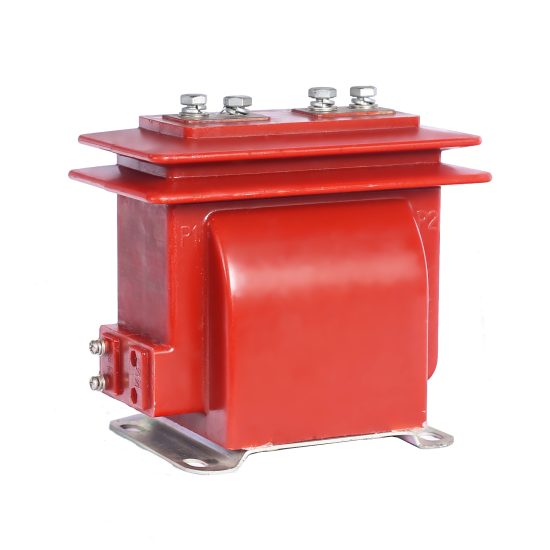
ZJC-10Q 11kV Cast-Resin Current Transformer for Substation Metering and Protection – IEC 61869-2 Certified
Introduction to the ZJC-10Q Current Transformer
The ZJC-10Q is a precision-engineered, indoor-type cast-resin current transformer (CT) designed for reliable operation in 11 kV distribution systems—equivalent to the 10 kV nominal voltage used in domestic Chinese power networks. This device leverages vacuum pressure impregnation (VPI) epoxy resin technology to provide robust insulation, environmental resilience, and long-term stability under demanding electrical conditions. Unlike traditional oil-immersed CTs, the ZJC-10Q eliminates fire hazards, leakage risks, and maintenance-intensive fluid management, making it ideal for urban substations, industrial facilities, and renewable energy interconnection points where safety and space constraints are critical.
Operating Principle of Cast-Resin Insulation
Cast-resin insulation in the ZJC-10Q is achieved through a vacuum pressure impregnation (VPI) process that fully encapsulates the magnetic core and windings in high-purity cycloaliphatic epoxy resin. This technique ensures complete void elimination, preventing partial discharge inception even under prolonged overvoltage stress. The resin matrix provides dielectric strength exceeding 20 kV/mm and thermal class F (155°C) performance, enabling stable operation across ambient temperatures from -40°C to +40°C. The homogeneous structure resists moisture ingress, UV degradation, and chemical corrosion, which is essential for installations in coastal or industrial atmospheres. Additionally, the solid insulation system maintains mechanical integrity during short-circuit events, withstanding electrodynamic forces up to 63 kA peak without deformation.
Advantages Over Oil-Immersed Designs
Compared to oil-filled counterparts, the ZJC-10Q offers significant operational and safety benefits. Its dry-type construction eliminates the risk of flammable oil leaks, satisfying stringent fire safety codes in indoor switchgear rooms and underground substations. The absence of oil also removes the need for periodic oil sampling, degassing, or tank inspections, reducing lifecycle costs by an estimated 30–40% over a 25-year service life. Furthermore, the compact footprint—typically 30% smaller than equivalent oil-immersed units—facilitates retrofitting into legacy panels with limited clearance. Thermal performance is enhanced through direct heat conduction from windings to the resin body, enabling higher overload capacity (up to 1.5× rated current continuously) without derating. These attributes make the ZJC-10Q particularly suited for smart grid applications requiring minimal maintenance and high reliability.
Typical Application Overview
The ZJC-10Q serves dual roles in both revenue-grade metering and protective relaying within medium-voltage networks. In utility substations, it interfaces with digital energy meters compliant with IEC 62053-22 (Class 0.2S or 0.5S) to ensure billing accuracy under varying load profiles. Simultaneously, its protection-class windings (e.g., 5P10 or 5P20) feed fault current data to microprocessor-based relays for overcurrent, earth-fault, and differential schemes. Common deployment scenarios include ring main units (RMUs), pad-mounted transformers, and solar inverter step-up transformers where precise current scaling from primary currents (ranging from 100 A to 3150 A) down to standardized 1 A or 5 A secondary signals is required. The unit’s modular design supports multiple secondary taps, allowing field configuration without replacement.
Technical Specifications
The ZJC-10Q adheres to rigorous electrical and mechanical parameters defined by IEC 61869-2 and GB/T 20840.2, ensuring interoperability across global and domestic grids. Key specifications include a highest voltage for equipment (Um) of 12 kV, corresponding to a 11 kV system voltage (10 kV in China). Primary current ratings span 100 A to 3150 A in standard steps, with dual or triple secondary windings configurable for metering (0.2S/0.5S) and protection (5P10/5P20) classes. Rated outputs range from 5 VA to 30 VA per winding, selected based on connected burden (e.g., 10 VA for digital meters, 15 VA for electromechanical relays).
Electrical and Insulation Parameters
Insulation coordination follows IEC 60071-1, with a power frequency withstand voltage of 28 kV RMS for 1 minute and a lightning impulse withstand voltage of 75 kV peak (1.2/50 µs waveform). The partial discharge level is guaranteed below 10 pC at 1.2 Um/√3, verified per IEC 60270. Secondary terminals are rated for 660 V insulation and feature screw-type clamps compatible with 2.5–6 mm² copper conductors. Polarity is marked per IEC 61869-2 reducing polarity convention (P1 toward source, S1 as positive output). Accuracy compliance includes composite error limits: ≤0.2% for Class 0.2S at 20–120% of rated current, and ≤10% composite error at 10× rated current for 5P10 protection class.
Environmental and Mechanical Ratings
Designed for indoor installation, the ZJC-10Q operates reliably under standard service conditions per IEC 60060-1: ambient temperature -40°C to +40°C, relative humidity ≤95% non-condensing, and altitude ≤1000 m above sea level (with derating factors applied beyond this). The enclosure is made of self-extinguishing epoxy resin (UL 94 V-0 rated) with IP00 protection, intended for mounting within grounded metal switchgear compartments. Mounting options include flange or bracket systems compatible with standard RMU dimensions. The unit weighs approximately 12–18 kg depending on ratio, with dimensions of 220 mm (H) × 180 mm (W) × 150 mm (D). Creepage distance exceeds 240 mm for pollution degree 3 environments.
Typical Applications
The ZJC-10Q current transformer is engineered for versatility across modern power infrastructure, delivering metrological precision and protective reliability in diverse settings.
Substation Secondary Metering
In utility-owned 11 kV/0.4 kV distribution substations, the ZJC-10Q provides the foundational current signal for advanced metering infrastructure (AMI). Its Class 0.2S accuracy ensures compliance with regulatory requirements for revenue metering, even under low-load conditions (down to 1% of rated current). For example, in a 1250 kVA transformer feeder with a 630 A primary current, the CT’s 630/5 A ratio feeds a Class 0.5S kWh meter, maintaining ±0.5% error across daily load cycles. The cast-resin body prevents drift due to temperature fluctuations, a common issue in oil-filled units, thereby enhancing long-term billing integrity. Integration with SCADA systems via IEC 61850-compliant merging units is facilitated by stable phase angle error (<±10 minutes).
Industrial Power Distribution
Within manufacturing plants and data centers, the ZJC-10Q supports both energy management and arc-flash mitigation. Protection-class windings (e.g., 5P20) supply inputs to SEL-751 or Siemens 7SJ62 relays for instantaneous overcurrent tripping during motor stall or bus fault events. In a 10 kV motor control center feeding a 1600 kW induction motor (rated current ~110 A), a 200/1 A ZJC-10Q with 15 VA output ensures relay pickup accuracy at 20× overload (2200 A). The dry-type design eliminates explosion risks in classified areas, aligning with NFPA 70E and IEC 60079 standards for hazardous locations.
Renewable Energy Integration
Solar and wind farms increasingly deploy the ZJC-10Q at the point of interconnection (POI) to meet grid code requirements. For a 10 MW photovoltaic plant stepping up to 11 kV via a 12.5 MVA transformer, dual-ratio CTs (e.g., 800/1 A for normal operation, 1600/1 A for fault) enable adaptive protection settings. The CT’s low remanence (<10%) due to GOES core material ensures rapid saturation recovery after DC-offset faults, critical for inverter-based resource (IBR) fault ride-through compliance per IEEE 1547-2018. Additionally, its immunity to harmonic distortion (tested up to 13th order) preserves metering accuracy despite inverter switching harmonics.
Rural and Suburban Distribution Networks
In remote or cost-sensitive deployments, the ZJC-10Q’s maintenance-free operation reduces O&M burdens. Mounted on pole-top reclosers or pad-mounted switchgear in 10 kV rural feeders, it enables automated sectionalizing and outage detection. A typical 400/5 A unit with 10 VA output powers both a Class 1.0 energy meter for consumer billing and a 5P10 winding for recloser overcurrent logic. The resin housing withstands wide diurnal temperature swings (-30°C to +50°C in desert climates) without cracking, unlike brittle porcelain alternatives. Its lightweight design simplifies aerial installation using standard hot-stick tools.
Compliance with International Standards
The ZJC-10Q is certified to IEC 61869-2:2012 (“Instrument transformers – Part 2: Additional requirements for current transformers”) and fully aligned with China’s GB/T 20840.2-2014, ensuring global acceptance while meeting domestic regulatory mandates.
IEC 61869-2 Certification Details
IEC 61869-2 defines performance criteria for accuracy, thermal rating, and short-time current withstand. The ZJC-10Q undergoes type tests including temperature rise (≤60 K for resin, per Clause 6.5), short-circuit withstand (63 kA for 1 s, Clause 6.6), and accuracy verification across burden ranges (Clause 7.3). Composite error for protection classes is validated at specified multiples of rated current (e.g., 10× for 5P10) with burden at rated VA. The certification includes verification of marking legibility, terminal identification, and polarity consistency. Third-party testing by accredited labs (e.g., KEMA, CESI) confirms compliance, with test reports available upon request.
Alignment with GB/T 20840.2
While GB/T 20840.2 mirrors IEC 61869-2 structurally, key differences exist in test methodologies and labeling. For instance, GB requires additional seismic testing (horizontal acceleration 0.3g) for earthquake-prone regions and specifies Chinese-character markings on nameplates. Dielectric tests use slightly higher voltages: 32 kV AC for 1 min versus IEC’s 28 kV, reflecting China’s conservative insulation coordination practices. However, the core performance metrics—accuracy classes, thermal ratings, and short-circuit strength—are harmonized, allowing the ZJC-10Q to serve dual-certification markets without redesign. This alignment facilitates export to Belt and Road Initiative countries adopting Chinese standards.
On-Site Testing Procedures
Post-installation verification ensures the ZJC-10Q performs within specification before energization. All tests follow IEC 61869-2 Annex B and IEEE C57.13 guidelines.
Insulation Resistance Test
Using a 2500 V DC megohmmeter, measure insulation resistance between primary-to-secondary, primary-to-ground, and secondary-to-ground. Acceptance criteria: ≥1000 MΩ at 20°C. Values below 500 MΩ indicate moisture ingress or resin cracking and require investigation. Temperature correction per IEEE 43: Rcorr = Rmeas × 2(40−T)/10. Perform before and after dielectric tests to detect insulation degradation.
Turns Ratio Test
Apply low-voltage AC (5–10 V) to the secondary winding and measure induced primary voltage. Calculate actual ratio: Nactual = Vsec/Vprim. Tolerance per IEC 61869-2: ±0.25% for metering classes, ±1% for protection. Example: For 600/5 A CT, measured ratio must be 120 ±0.3. Use a dedicated turns ratio tester (e.g., Omicron CT Analyzer) for automated validation across all taps.
Polarity Test
Verify reducing polarity using the DC kick method: momentarily connect a 9 V battery between P1 and P2; observe galvanometer deflection at S1–S2. Positive kick at S1 confirms correct polarity. Incorrect polarity causes 180° phase shift, leading to false tripping in differential schemes. Digital relays may auto-detect polarity, but physical verification remains mandatory per IEC 61869-2 Clause 8.4.
Power Frequency Withstand Voltage Test
Apply 28 kV RMS at 50 Hz between primary and grounded secondary/enclosure for 1 minute. Monitor for flashover, excessive leakage current (>1 mA), or audible discharge. Conduct at 80% of factory test voltage to avoid cumulative stress. Ensure all secondary terminals are shorted and grounded during the test to prevent resonant overvoltages.
Short-Circuit Test (for CT)
Simulate fault conditions by injecting 10× rated current at rated frequency into the primary (using a variable ratio current transformer). Verify secondary output remains within composite error limits (e.g., ≤10% for 5P10). Monitor core temperature rise; exceedance of 60 K indicates inadequate thermal design. This test validates performance under real-world fault scenarios, especially critical for protection coordination studies.
Preventive Maintenance Guide
Although cast-resin CTs require minimal maintenance, periodic checks ensure decades of reliable service.
Annual Inspection Protocol
Visually inspect for surface tracking, cracks, or dust accumulation on the resin housing. Clean with dry cloth or low-pressure air; avoid solvents that may degrade epoxy. Check terminal tightness (torque: 2.5 N·m for M6 screws) and verify grounding continuity (<0.1 Ω resistance). Thermographic scanning under load can reveal abnormal heating at connections, indicating loose hardware or excessive burden.
Five-Year Comprehensive Maintenance
Perform insulation resistance and turns ratio tests as baseline comparisons. If insulation resistance drops >20% from initial values, investigate for internal moisture. Re-calibrate accuracy if connected to critical metering circuits, using a reference standard traceable to national labs. Replace units exhibiting partial discharge >20 pC during offline testing, as this precedes insulation failure. Maintain records per ISO 55000 asset management standards.
Conclusion
The ZJC-10Q 11kV cast-resin current transformer represents a benchmark in medium-voltage instrumentation, combining IEC 61869-2 certified accuracy with the durability of modern epoxy encapsulation. Its dual functionality for metering (Class 0.2S/0.5S) and protection (5P10/5P20) eliminates the need for separate devices, reducing capital expenditure and panel space. The use of grain-oriented electrical steel (GOES) cores minimizes hysteresis losses and ensures linear response across wide current ranges, while VPI resin technology guarantees immunity to environmental stressors such as humidity, pollution, and thermal cycling. Compliance with both international (IEC) and Chinese (GB) standards facilitates global deployment without compromise. With a design life of 25–30 years under standard operating conditions, the ZJC-10Q delivers exceptional total cost of ownership through zero fluid maintenance, fire-safe operation, and consistent metrological performance. As distribution networks evolve toward digitalization and distributed generation, this CT’s harmonic resilience and compatibility with modern relays position it as a future-proof solution for next-generation substations. Its proven reliability in thousands of installations worldwide underscores its role as a cornerstone component in safe, accurate, and efficient power systems.