Article Content
For Substation Metering & Protection: ZWJ-12 11kV Cast-Resin Voltage Transformer per IEC 61869-3
Introduction to the ZWJ-12 Voltage Transformer
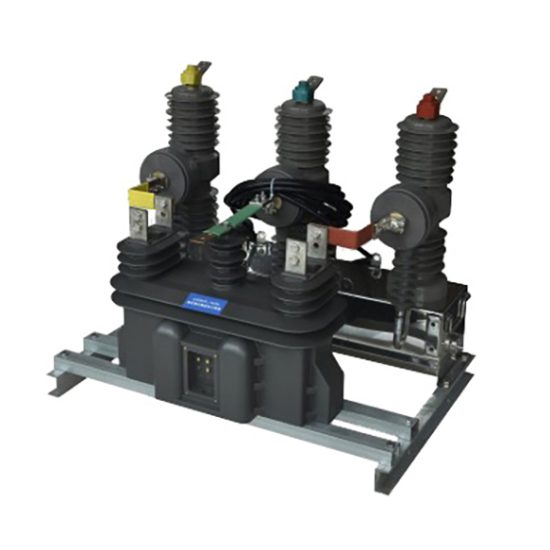
The ZWJ-12 is a single-phase, indoor/outdoor-rated cast-resin voltage transformer (VT) engineered for precise voltage transformation in 11kV (IEC nominal) or 10kV (domestic system) medium-voltage networks. Designed for integration into ring main units (RMUs), switchgear panels, and pad-mounted substations, it provides standardized secondary outputs—typically 100 V or 110 V—for interfacing with revenue-class meters, protective relays, and SCADA systems. Its core function is to isolate high-voltage primary circuits from low-voltage instrumentation while maintaining metrological integrity under normal and transient conditions.
Operating Principle of Cast-Resin Insulation
Cast-resin insulation in the ZWJ-12 employs vacuum pressure impregnation (VPI) technology using cycloaliphatic epoxy resin. This process eliminates air voids and moisture ingress by fully encapsulating the primary and secondary windings along with the GOES (grain-oriented electrical steel) magnetic core. The resulting monolithic structure exhibits superior dielectric strength (≥42 kV rms for 1 min power frequency withstand) and partial discharge levels below 10 pC at 1.2 × Um/√3. Unlike oil-filled alternatives, the solid insulation eliminates fire hazards, environmental contamination risks, and maintenance-intensive oil sampling. Thermal class F (155°C) resin ensures stable performance across -40°C to +40°C ambient ranges, with thermal endurance validated per IEC 60076-14.
Advantages Over Oil-Immersed Designs
Compared to traditional oil-immersed VTs, the ZWJ-12 offers significant operational and safety benefits. Its dry-type construction eliminates flammability concerns, making it suitable for confined urban substations and indoor installations where fire codes restrict combustible materials. The absence of oil also removes the need for conservator tanks, Buchholz relays, and periodic dielectric testing of insulating fluid. Furthermore, the compact footprint—enabled by high permittivity resin and optimized core geometry—reduces space requirements by up to 30% versus equivalent oil units. Long-term reliability is enhanced through resistance to thermal cycling fatigue; the coefficient of thermal expansion between copper windings and epoxy resin is closely matched, minimizing mechanical stress during load transients.
Typical Applications Overview
The ZWJ-12 is deployed across diverse infrastructure segments requiring accurate voltage sensing. In utility-owned 10kV distribution feeders, it enables kWh metering for billing and loss allocation. Within industrial plants, it supplies synchronized voltage inputs to differential and distance protection schemes for motors and transformers. Renewable energy sites—particularly solar farms with 10kV collector systems—use the ZWJ-12 for grid synchronization and anti-islanding detection. Its robust design also supports deployment in coastal or high-humidity regions where salt fog and condensation would degrade conventional insulation systems. All applications leverage its Class 0.2 or 0.5 accuracy (per IEC 61869-3) under burdens up to 30 VA.
Technical Specifications
The ZWJ-12 adheres to stringent electrical and environmental parameters defined by international and domestic standards. Below is a comprehensive specification table followed by service condition details.
| Parameter | Value |
|---|---|
| Primary Voltage (Up) | 11 kV (IEC) / 10 kV (GB) |
| Secondary Voltage (Us) | 100 V or 110 V (standard); 100/√3 V optional |
| Voltage Ratio | 11000/100, 11000/110, 10000/100, etc. |
| Accuracy Class | 0.2, 0.5, 3P (for metering/protection) |
| Rated Output (Burden) | 10–100 VA (depending on class) |
| Insulation Level (LI/AC) | 75 kV / 28 kV (per GB/T 20840.3) |
| Power Frequency Withstand | 28 kV rms, 1 min |
| Lightning Impulse Withstand | 75 kV peak, 1.2/50 μs |
| Partial Discharge | <10 pC at 1.2 × (12/√3) kV |
| Core Material | GOES (Grain-Oriented Electrical Steel), 0.27 mm lamination |
| Insulation System | Cycloaliphatic epoxy resin, VPI process, Thermal Class F |
| Ambient Temperature Range | -40°C to +40°C |
| Altitude Limit | ≤1000 m (derating required above) |
| Relative Humidity | Up to 95% non-condensing |
| Service Life | ≥25 years under rated conditions |
Standard Service Conditions
The ZWJ-12 is rated for continuous operation under standard service conditions as defined in IEC 61869-3 Clause 5. These include an ambient temperature range of -40°C to +40°C, with a 24-hour average not exceeding +35°C. Relative humidity may reach 95% provided no condensation occurs—a critical consideration for tropical or coastal installations. The transformer is designed for altitudes up to 1000 m above sea level; for installations between 1000–3000 m, external clearances must be increased per IEC 60071-2, though internal insulation remains unaffected due to the solid resin encapsulation. Pollution degree is classified as III (medium), suitable for industrial atmospheres with conductive dust or salt deposits.
Electrical Performance Parameters
Under rated burden and sinusoidal excitation at 50 Hz, the ZWJ-12 maintains voltage error within ±0.2% and phase displacement ≤10 minutes for Class 0.2 units. For protection-class 3P, composite error remains below 3% at 5× rated voltage. The magnetizing current is typically ≤0.5% of rated primary current, ensuring minimal impact on system fault current calculations. Thermal stability is verified through temperature rise tests: winding temperature rise does not exceed 60 K above ambient when loaded at 1.2× rated burden for 8 hours. Short-time thermal withstand capability is 1 s at 100× rated primary current without degradation.
Typical Applications
The ZWJ-12’s versatility stems from its compliance with both metrological and protection requirements across multiple sectors.
Substation Secondary Metering
In 10kV/0.4kV distribution substations, the ZWJ-12 provides the reference voltage for three-phase kWh meters used in utility billing. Installed on the 10kV busbar, it feeds Class 0.2 secondary outputs to static meters compliant with IEC 62053-22. Accuracy is maintained even under light-load conditions (down to 1% of rated burden), crucial for residential feeders with variable consumption profiles. The transformer’s low phase displacement ensures correct power factor measurement, directly impacting reactive energy billing. In smart grid deployments, its stable output supports time-synchronized phasor measurement units (PMUs) for state estimation.
Industrial Power Distribution
Within manufacturing facilities, the ZWJ-12 interfaces with multifunction protection relays (e.g., Siemens 7SJ, SEL-351) for feeder overvoltage, undervoltage, and loss-of-potential detection. Its 3P accuracy class guarantees reliable operation during system disturbances such as motor starting surges or capacitor bank switching. The compact size allows mounting inside metal-enclosed switchgear without derating, even in high-ambient environments like steel mills. Ground-fault detection schemes often use open-delta VT configurations—three ZWJ-12 units wired to detect zero-sequence voltage during single-line-to-ground faults.
Renewable Energy Integration
Solar photovoltaic (PV) plants with 10kV collector systems rely on the ZWJ-12 for grid code compliance. It supplies voltage signals to inverters for anti-islanding protection per IEEE 1547 or GB/T 19964, triggering disconnection if grid voltage deviates beyond ±10% for >2 seconds. During low-voltage ride-through (LVRT) events, the VT’s linear response down to 0.15× rated voltage enables accurate voltage sag measurement. In wind farms, it supports synchronization checks before reconnecting turbines post-fault, ensuring phase angle differences remain below 10 degrees.
Rural and Suburban Distribution Networks
In remote or lightly loaded rural feeders, the ZWJ-12’s low excitation current minimizes no-load losses, improving overall system efficiency. Its immunity to oil leakage makes it ideal for pole-mounted or pad-mounted installations where maintenance access is limited. Utilities deploy it in automated distribution systems for voltage regulation—feeding data to line regulators or capacitor banks via RTUs. The transformer’s resistance to UV exposure (when fitted with optional silicone rubber sheds) ensures longevity in uncovered outdoor cabinets common in developing regions.
Harsh Environment Deployments
Coastal substations benefit from the ZWJ-12’s sealed resin body, which resists salt fog corrosion that degrades porcelain bushings and oil seals. In mining operations, its non-flammable construction meets ATEX Zone 2 requirements for surface installations. High-altitude sites (e.g., Andean or Himalayan grids) utilize the unit with adjusted external creepage distances, while internal performance remains unchanged due to the absence of gaseous insulation. These attributes reduce lifecycle costs by eliminating routine oil testing and bushing cleaning.
Compliance with International Standards
The ZWJ-12 is certified to both global and Chinese national standards, ensuring interoperability and regulatory acceptance.
IEC 61869-3 Compliance Details
IEC 61869-3 specifies performance, testing, and marking requirements for inductive voltage transformers. The ZWJ-12 meets all clauses, including accuracy verification under burdens from 25% to 100% of rated VA, temperature rise limits (≤60 K for windings), and short-circuit withstand (thermal and dynamic). Type tests include temperature rise, short-circuit, impulse, and partial discharge measurements. Routine tests—performed on every unit—comprise power frequency withstand, turns ratio, polarity, and insulation resistance checks. Markings include primary/secondary ratings, accuracy class, vector group (single-phase: I/I), and manufacturer data per Clause 10.
Alignment with GB/T 20840.3
GB/T 20840.3 is the Chinese adoption of IEC 61869-3 with minor modifications. Key differences include the use of 10kV as the nominal system voltage (vs. 11kV in IEC) and slightly higher lightning impulse levels (75 kV vs. IEC’s 70 kV for 12 kV class). The ZWJ-12 is dual-marked to satisfy both: its insulation coordination uses 12 kV Um (maximum system voltage), enabling compatibility with 10kV (GB) and 11kV (IEC) networks. Chinese certification bodies (e.g., CEPREI) validate compliance through witnessed type tests, including seismic withstand (0.3g horizontal acceleration) for earthquake-prone regions.
Testing and Certification Requirements
Full certification requires successful completion of type, routine, and special tests. Type tests are conducted once per design and include:
– Temperature rise test at 1.1× rated voltage and 100% burden
– Short-circuit test with 100× rated current for 1 s
– Lightning impulse test (±75 kV, 15 shots)
– Partial discharge test per IEC 60270
Routine tests on every unit verify:
– Turns ratio tolerance: ±0.2% for Class 0.2
– Polarity: reducing polarity confirmed via DC kick test
– Power frequency withstand: 28 kV rms for 1 min
– Insulation resistance: ≥1000 MΩ at 2500 V DC
Special tests (on request) include seismic, chopped wave impulse, and harmonics response. Certificates from TÜV, SGS, or CQC accompany each batch.
On-Site Testing Procedures
Post-installation verification ensures the ZWJ-12 performs within specifications before energization.
Insulation Resistance Test
Using a 2500 V DC megohmmeter, measure insulation resistance between primary winding and ground, secondary winding and ground, and primary-to-secondary. Acceptance criteria: ≥1000 MΩ at 20°C. Correct for temperature using RT = R20 × 2(20−T)/10. Low readings indicate moisture ingress or resin cracking—requiring drying or replacement. Perform before and after power frequency tests to detect insulation degradation.
Turns Ratio Test
Apply 100–200 V AC to the primary and measure secondary voltage. Calculate ratio as Vp/Vs. Tolerance: ±0.2% for Class 0.2, ±0.5% for Class 0.5. Use a precision ratio bridge (e.g., Omicron CT Analyzer) for accuracy. Deviations beyond tolerance suggest winding shorts or incorrect tap selection. Verify all secondary taps if multi-tap design is used.
Polarity Test
Confirm reducing polarity (standard for IEC VTs) via DC method: connect battery (+) to primary H1, (-) to H2; connect galvanometer between secondary X1 and X2. Momentary closure should show positive kick at X1. Incorrect polarity causes relay misoperation—especially in differential schemes. Recheck after transportation, as vibration can loosen terminal links.
Power Frequency Withstand Voltage Test
Apply 28 kV rms (50 Hz) between primary and ground/secondary for 1 minute. Use a calibrated test transformer with overcurrent trip (≤5 mA). No flashover or disruptive discharge permitted. Ramp voltage at 1 kV/s to avoid transient overstress. This test validates insulation integrity after handling and installation stresses.
Open-Circuit Characteristic Test
For VTs, perform open-circuit test to assess core saturation. Gradually increase primary voltage from 0 to 190% of rated (20.9 kV) while measuring secondary voltage and excitation current. Plot Vs vs. Iexc. Knee point should exceed 150% rated voltage. Excessive excitation current (>1% rated) indicates core damage or shorted laminations.
Preventive Maintenance Guide
Although cast-resin VTs require minimal maintenance, scheduled inspections extend service life and prevent failures.
Periodic Inspection Protocol
Conduct annual visual and electrical checks:
– Inspect housing for cracks, tracking, or UV degradation (outdoor units)
– Clean surface with dry cloth; avoid solvents that attack epoxy
– Verify terminal tightness (torque: 15 N·m for M8 bolts)
– Measure insulation resistance (trend analysis: >20% drop warrants investigation)
– Check grounding continuity (<0.1 Ω resistance)
Thermal imaging during peak load can reveal abnormal hot spots indicating internal faults.
Maintenance Intervals and Fault Diagnosis
Follow this schedule:
| Interval | Action |
|---|---|
| Annually | Visual inspection, IR scan, insulation resistance |
| Every 5 Years | Full electrical test suite (ratio, polarity, withstand) |
| After Fault | Immediate post-fault testing before re-energization |
Common faults include:
– High excitation current: Core lamination shorts; replace unit.
– Ratio drift: Winding deformation; requires factory repair.
– Surface tracking: Clean with isopropyl alcohol; apply RTV silicone if severe.
– Terminal overheating: Retorque connections; check for oxidation.
Never attempt field repair of internal components—resin encapsulation is non-serviceable.
Conclusion
The ZWJ-12 11kV cast-resin voltage transformer represents a mature, standards-compliant solution for accurate voltage measurement and reliable protection in 10kV/11kV distribution systems. Its VPI epoxy resin insulation system, combined with GOES core technology, delivers exceptional dielectric strength, thermal stability, and environmental resilience—outperforming legacy oil-immersed designs in safety, footprint, and lifecycle cost. Certified to both IEC 61869-3 and GB/T 20840.3, it seamlessly integrates into global and domestic infrastructure, supporting applications from urban substations to remote renewable sites. Rigorous type testing ensures metrological accuracy (Class 0.2/0.5) and protection fidelity (Class 3P) under real-world burdens and transients. With a design life exceeding 25 years and minimal maintenance requirements, the ZWJ-12 offers utilities and industrial operators a dependable, future-proof investment in grid intelligence and asset protection. Its compatibility with modern digital relays and smart metering systems further cements its role in the evolving energy landscape.
Frequently Asked Questions (FAQ)
Q1: Can the ZWJ-12 be installed outdoors without additional protection?
Yes. The standard housing includes UV-stabilized cycloaliphatic resin suitable for outdoor use. For coastal areas, optional silicone rubber sheds enhance pollution performance.
Q2: What is the maximum allowable burden for Class 0.2 accuracy?
The ZWJ-12 maintains Class 0.2 accuracy up to 30 VA burden at unity power factor. Exceeding this increases voltage error beyond ±0.2%.
Q3: How do I verify polarity during commissioning?
Use the DC kick test: momentary application of battery voltage to primary should produce a positive deflection on a galvanometer connected to secondary terminals X1–X2.
Q4: Is the ZWJ-12 suitable for 50 Hz and 60 Hz systems?
It is optimized for 50 Hz. For 60 Hz operation, consult the manufacturer—core losses and excitation current will increase by ~20%.
Q5: What happens if the secondary is accidentally short-circuited?
Unlike CTs, VT secondaries must NEVER be shorted. This causes excessive primary current, overheating, and potential resin cracking. Always fuse secondaries (e.g., 6 A fast-acting).
Q6: Can multiple ZWJ-12 units share a common ground?
Yes, but each must have a dedicated ground conductor back to the main earthing bar—daisy-chaining grounds is prohibited per IEC 61869-3 Clause 8.4.
Q7: What is the recommended torque for primary cable lugs?
15 N·m for M8 terminals. Under-torquing causes heating; over-torquing risks thread stripping in aluminum housings.