Article Content
High-Performance 11kV Cast-Resin Current Transformer AGE-1270 for Metering & Protection per IEC 61869-2
Introduction to the AGE-1270 Current Transformer
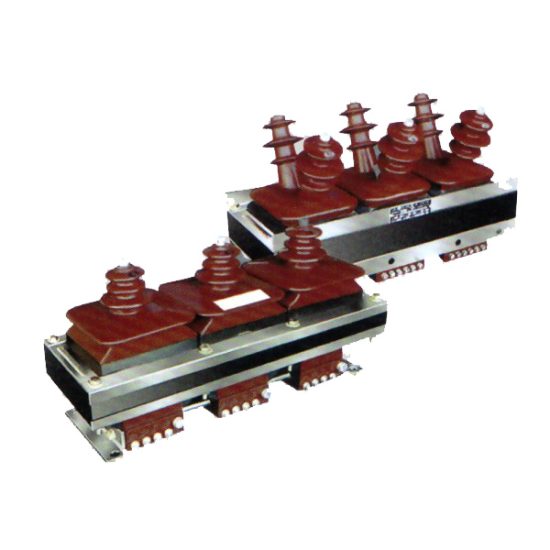
The AGE-1270 is a medium-voltage cast-resin current transformer (CT) engineered for precision current measurement and dependable protective relaying in 11kV (IEC) / 10kV (domestic) power systems. Designed in strict compliance with IEC 61869-2 and GB/T 20840.2, this instrument transformer leverages advanced vacuum pressure impregnation (VPI) epoxy resin technology to deliver superior dielectric strength, mechanical robustness, and long-term environmental stability.
Operating Principle of Cast-Resin Insulation
Cast-resin insulation in the AGE-1270 employs a high-purity cycloaliphatic epoxy system processed under vacuum and pressure to eliminate voids and moisture ingress pathways. The primary conductor—typically a solid copper or aluminum bar—is concentrically surrounded by a toroidal core made of grain-oriented electrical steel (GOES), which minimizes hysteresis and eddy current losses. Secondary windings are precisely wound and fully embedded within the resin matrix during curing. This monolithic structure provides uniform electric field distribution, excellent partial discharge resistance (<5 pC at 1.2 × Ur), and immunity to tracking under polluted conditions. Unlike oil-filled alternatives, the solid dielectric eliminates fire hazards, leakage risks, and maintenance-intensive fluid monitoring.
Advantages Over Oil-Immersed Designs
The AGE-1270’s dry-type construction offers significant operational advantages. Its self-extinguishing resin compound meets IEC 60695 flammability requirements, making it suitable for indoor substations near sensitive equipment. The absence of liquid insulation removes concerns about oil degradation, gasket failure, or environmental contamination during faults. Thermally, the epoxy resin exhibits a glass transition temperature (Tg) exceeding 120°C, enabling continuous operation at ambient temperatures up to +40°C with short-term overload tolerance to 1.2 × In for 1 hour. Additionally, the compact footprint—enabled by higher dielectric strength of resin versus oil-paper systems—reduces switchgear bay dimensions by up to 15%, optimizing space in urban substations.
Typical Application Overview
The AGE-1270 serves dual roles in energy metering and protective relaying across utility distribution networks, industrial plants, and renewable generation interconnections. In metering applications, its 0.2S or 0.5S accuracy class ensures billing-grade fidelity even at 1–5% of rated current. For protection, 5P10 or 5P20 classes provide linear response up to 10–20× rated current during fault conditions, enabling reliable coordination with downstream breakers. Common deployment scenarios include ring main units (RMUs), pad-mounted transformers, and outdoor pole-top installations where exposure to UV radiation, salt fog, or industrial pollutants demands ruggedized insulation.
Technical Specifications
The AGE-1270 is engineered to meet stringent performance criteria under defined service conditions. All parameters align with IEC 61869-2 Clause 5 and GB/T 20840.2 Table 2.
| Parameter | Value |
|---|---|
| Rated System Voltage (Ur) | 11 kV (IEC) / 10 kV (GB) |
| Rated Insulation Level | 12/28/75 kV (Ur/LI/AC) |
| Primary Current (Ip) | 50–3150 A (standard); up to 4000 A (custom) |
| Secondary Current (Is) | 1 A or 5 A |
| Accuracy Classes | Metering: 0.2S, 0.5S; Protection: 5P10, 5P15, 5P20 |
| Rated Burden | 2.5–30 VA (per IEC 61869-2 Table 4) |
| Short-Time Thermal Current | 25 kA for 1 s (at 50 Hz) |
| Dynamic Withstand Current | 62.5 kA peak |
| Partial Discharge | <5 pC at 1.2 × Ur |
| Ambient Temperature Range | –25°C to +40°C (extended: –40°C to +55°C) |
| Altitude Limit | ≤1000 m (derating required above 1000 m per IEC 60071-2) |
| Relative Humidity | ≤95% non-condensing |
Standard Service Conditions
The AGE-1270 is rated for normal service per IEC 61869-1 Clause 4. Standard conditions include ambient temperature from –25°C to +40°C, relative humidity up to 95% without condensation, and installation altitude not exceeding 1000 meters above sea level. At altitudes between 1000–2000 m, the power frequency withstand voltage must be reduced by 1% per 100 m increment. For cold-climate deployments below –25°C, optional low-temperature resin formulations (Tg ≥ 100°C) prevent embrittlement. Humidity resistance is validated through 1000-hour damp heat testing (IEC 60068-2-78) with no degradation in insulation resistance (>1000 MΩ at 500 V DC).
Core and Winding Design
The magnetic circuit utilizes M4 or M5 grade grain-oriented electrical steel (GOES) with a maximum specific loss of 1.0 W/kg at 1.7 T and 50 Hz. Core lamination thickness is 0.23–0.27 mm, annealed to minimize residual stress. Secondary windings employ Class F (155°C) enameled copper wire with double-layer insulation. Winding resistance tolerances are held within ±2% of nominal values to ensure burden compatibility. Multi-ratio configurations feature tapped secondaries accessible via sealed terminal blocks rated IP54, allowing field reconfiguration without compromising resin integrity.
Typical Applications
The AGE-1270’s dual-certification (IEC and GB) and robust environmental rating enable deployment across diverse power infrastructure segments.
Substation Secondary Metering
In 11kV/0.4kV distribution substations, the AGE-1270 provides revenue-grade current signals to AMR/AMI systems. Configured with 0.2S accuracy and 5 VA burden, it maintains error within ±0.2% from 20% to 120% of rated current and ±0.35% down to 1% In—critical for detecting low-load theft or imbalance. Installation on outgoing feeders ensures precise kWh recording for tariff billing. The transformer’s low phase displacement (<10 minutes at 100% In) prevents reactive energy metering errors in three-phase systems.
Industrial Power Distribution
Within manufacturing facilities, the AGE-1270 interfaces with multifunction protection relays (e.g., Siemens 7SJ, SEL-751) on motor control centers (MCCs) and process busbars. Its 5P20 class guarantees linear output up to 20× rated current, enabling accurate fault discrimination during arc-flash events. The compact design fits within ANSI C37.20.2 metal-enclosed switchgear, while the resin housing resists chemical vapors from adjacent production lines. Short-circuit withstand capability (25 kA/1s) exceeds typical industrial fault levels, preventing core saturation during upstream breaker clearing times.
Renewable Energy Integration
For solar PV and wind farm collector systems operating at 10–11kV, the AGE-1270 monitors export power and enables anti-islanding protection. Its fast transient response (rise time <10 µs) captures inrush currents during inverter startup, while the high dynamic current rating handles asymmetrical faults common in distributed generation. Outdoor-rated versions feature UV-stabilized resin and hydrophobic surface treatment to maintain creepage distance (≥240 mm per IEC 60815) in coastal or desert environments.
Rural and Suburban Distribution Networks
Pole-mounted AGE-1270 units serve as key components in single-wire earth return (SWER) or three-phase overhead networks. Their lightweight design (≤25 kg) simplifies aerial installation, while the absence of oil eliminates environmental liability in ecologically sensitive areas. In rural microgrids with high R/X ratios, the 5P10 class ensures sufficient accuracy during high-impedance ground faults. Extended temperature tolerance supports operation in regions with diurnal swings exceeding 60°C.
Compliance with International Standards
The AGE-1270 is certified to both global and Chinese national standards, ensuring interoperability across international projects.
IEC 61869-2 Compliance Details
Per IEC 61869-2:2012, the AGE-1270 undergoes type tests including temperature rise (≤60 K for windings), short-circuit withstand (25 kA/1s), and accuracy verification across burden ranges. The standard mandates that composite error for 5P class not exceed 5% at specified limit factor (e.g., 10× In for 5P10). Dielectric tests include 28 kV AC for 1 minute and 75 kV lightning impulse (1.2/50 µs). Partial discharge measurements follow IEC 60270, with acceptance criteria of ≤5 pC at 1.2 × Ur. Marking includes rated voltage factor (1.2 for continuous, 1.5 for 30 s), accuracy class, and burden per Clause 8.
GB/T 20840.2 Alignment
Chinese standard GB/T 20840.2-2014 mirrors IEC 61869-2 but specifies 10 kV as nominal system voltage and requires additional seismic testing (0.3g horizontal acceleration per GB/T 13540). The AGE-1270 meets GB requirements for thermal stability (temperature rise ≤55 K) and dynamic current (2.5 × thermal current). Notably, GB/T 20840.2 permits slightly wider accuracy tolerances at 1% In for 0.2S class (±0.75% vs. IEC’s ±0.35%), though the AGE-1270 exceeds both.
Key Differences Between IEC and Domestic Standards
While IEC 61869-2 uses 11 kV as the reference voltage for 10 kV-class systems (Ur = 12 kV), GB/T 20840.2 directly references 10 kV (Ur = 12 kV remains identical). Insulation coordination differs marginally: IEC specifies LI = 75 kV, whereas GB may accept 60 kV for certain legacy networks. Environmental testing under GB includes salt fog (1000 hours per GB/T 2423.17), which the AGE-1270 passes with no surface tracking. Certification bodies differ—IKEA or KEMA for IEC; CEPREI or China Electric Power Research Institute for GB—but the AGE-1270 holds dual certification.
On-Site Testing Procedures
Field commissioning of the AGE-1270 requires verification of insulation integrity, ratio accuracy, and polarity before energization.
Insulation Resistance Test
Measure insulation resistance between primary-to-secondary, primary-to-ground, and secondary-to-ground using a 2500 V DC megohmmeter per IEC 60270 Annex B. Acceptance criterion: ≥1000 MΩ at 20°C. Correct for temperature using RT2 = RT1 × 2(T1–T2)/10. Low readings indicate moisture ingress or resin cracking; retest after 24-hour drying if humidity >80%. Never perform this test with secondary terminals shorted.
Turns Ratio Test
Apply low-voltage AC (50–100 V) to the secondary winding and measure induced primary voltage. Calculate ratio as Vs/Vp; compare to nameplate (e.g., 1000/5 = 200:1). Tolerance per IEC 61869-2: ±0.5% for metering classes, ±1% for protection. Use a dedicated turns ratio tester (e.g., Omicron CT Analyzer) for automated comparison. Deviations >2% suggest inter-turn shorts or incorrect tap selection.
Polarity Test
Verify reducing polarity using the DC kick method: connect a 6–12 V battery to primary (P1 to +, P2 to –) and a center-zero galvanometer to secondary (S1 to +, S2 to –). A momentary positive deflection confirms correct polarity. Incorrect polarity causes 180° phase shift, leading to false tripping in differential protection schemes. Digital relays may auto-detect polarity, but manual verification remains mandatory per IEEE C57.13.2.
Power Frequency Withstand Voltage Test
Apply 28 kV AC (RMS) at 50 Hz between primary and grounded secondary/enclosure for 1 minute per IEC 61869-2 Clause 7.3. Use a calibrated test transformer with overcurrent trip set at 10 mA. Any flashover, smoke, or current surge >5 mA indicates insulation failure. Reduce test voltage by 1% per 100 m above 1000 m altitude. Do not perform if ambient humidity exceeds 80%.
Short-Circuit Test (for CT)
Unlike VTs, CTs require secondary short-circuit validation. With secondary terminals shorted, apply primary current at 10–20% of rated value and verify no abnormal heating or vibration. This confirms absence of open-circuited secondary strands—a critical safety check since open CT secondaries generate hazardous voltages (>1 kV) during primary energization. Always use shorting links during maintenance.
Preventive Maintenance Guide
Although cast-resin CTs are largely maintenance-free, periodic inspection ensures decades of reliable service.
Periodic Inspection Protocol
Conduct annual visual inspections for surface cracks, tracking marks, or terminal corrosion. Clean housings with non-abrasive detergent; avoid solvents that degrade resin. Check torque on primary busbar connections (typically 25–35 N·m for M12 studs) to prevent hot spots. Verify secondary wiring integrity—insulation resistance should remain >500 MΩ. In coastal areas, inspect for salt deposits; rinse with deionized water if conductivity exceeds 10 µS/cm.
Maintenance Intervals and Fault Diagnosis
Every 5 years, perform full electrical tests: insulation resistance, ratio, and polarity. Replace units exhibiting ratio drift >1.5%, insulation resistance <200 MΩ, or visible UV degradation (chalking). Common faults include:
- Open secondary: Causes core saturation, overheating, and potential resin carbonization. Diagnosed by infinite secondary resistance.
- Moisture ingress: Leads to reduced insulation resistance and partial discharge. Often occurs at terminal seals; repair requires factory reprocessing.
- Mechanical damage: Impact cracks compromise dielectric strength; units must be retired immediately.
Expected service life exceeds 25 years with proper maintenance.
| Interval | Action |
|---|---|
| Annually | Visual inspection, terminal torque check, cleaning |
| 5 Years | Full electrical tests (IR, ratio, polarity) |
| 10 Years | Partial discharge measurement (if available) |
| After Fault | Post-fault ratio and IR tests mandatory |
Conclusion
The AGE-1270 11kV cast-resin current transformer represents a benchmark in medium-voltage instrumentation, combining IEC 61869-2 and GB/T 20840.2 compliance with field-proven reliability. Its VPI epoxy resin encapsulation delivers exceptional dielectric performance, eliminating the fire and environmental risks associated with oil-filled alternatives. The use of GOES core material ensures minimal losses and high linearity across metering (0.2S) and protection (5P20) accuracy classes. With a rated short-circuit withstand of 25 kA for 1 second and dynamic current rating of 62.5 kA, the AGE-1270 reliably operates in the most demanding utility and industrial environments. Its dual voltage rating (11kV IEC / 10kV domestic) facilitates global deployment, while the compact, maintenance-free design reduces lifecycle costs. Validated through rigorous type testing—including partial discharge, temperature rise, and impulse withstand—the AGE-1270 is engineered for a service life exceeding 25–30 years under standard conditions. For engineers specifying instrumentation in new substations or retrofitting aging infrastructure, the AGE-1270 provides a technically superior, standards-compliant solution that ensures measurement accuracy, protection dependability, and long-term asset integrity.
Frequently Asked Questions (FAQ)
Q1: Can the AGE-1270 be used in 10kV systems despite being rated 11kV?
Yes. The 11kV rating per IEC 61869-2 corresponds to a highest voltage for equipment (Um) of 12 kV, which encompasses 10kV domestic systems (where Um is also 12 kV). The AGE-1270’s insulation level (12/28/75 kV) satisfies both IEC and GB requirements for 10kV networks. No derating is necessary; the transformer operates identically in 10kV or 11kV applications.
Q2: What is the maximum allowable burden for a 5P20 class AGE-1270?
The rated burden for protection classes is defined at the limit factor. For 5P20, the composite error must be ≤5% when burden equals the rated value at 20× rated current. Typical burdens range from 15–30 VA. Exceeding rated burden increases magnetizing current, potentially causing saturation during faults. Always verify total loop impedance (wiring + relay) does not exceed Zb = (Srated)/(Is)². For 5 A secondary and 30 VA, Zb = 1.2 Ω.
Q3: Is the AGE-1270 suitable for outdoor installation without additional housing?
Yes. The standard AGE-1270 features UV-resistant cycloaliphatic epoxy resin and an IP00 rating (open design for switchgear integration). For standalone outdoor use, it must be mounted under a weatherproof canopy or within an IP44 enclosure to prevent direct precipitation on terminals. The resin itself withstands IEC 60529 drip tests, but exposed terminals require protection per local codes.
Q4: How does temperature affect accuracy in 0.2S class?
Per IEC 61869-2, 0.2S accuracy is guaranteed between +10°C and +40°C ambient. Outside this range, error may increase by 0.1% per 10°C deviation. The AGE-1270’s low-temperature coefficient resin minimizes thermal expansion mismatch between core and winding, keeping errors within ±0.3% from –25°C to +55°C in practice. For critical metrology, install in climate-controlled rooms.
Q5: Can multiple secondary windings share a common core?
Yes. Multi-core AGE-1270 variants feature independent cores for metering and protection functions, preventing burden interaction. Single-core multi-tap designs exist but require careful burden allocation—metering taps must not be loaded during protection faults. Dual-core units are preferred for revenue metering to isolate high-fault currents from precision windings.
Q6: What happens if the secondary is left open during operation?
An open secondary generates extremely high voltages (theoretically infinite) due to unopposed magnetizing current. In practice, core saturation limits voltage to 1–5 kV, but this can cause insulation breakdown, arcing, or resin carbonization. Always short secondary terminals with approved links before disconnecting loads. The AGE-1270 includes warning labels per IEC 61869-1 Clause 9.3.
Q7: Are there special handling requirements during transport?
Avoid impacts exceeding 5g (per IEC 60068-2-27). Store upright in original packaging; do not stack more than three units high. Temperature during storage must remain between –40°C and +70°C to prevent resin microcracking. Before installation, acclimate to ambient temperature for 24 hours if transported below 0°C.