Article Content
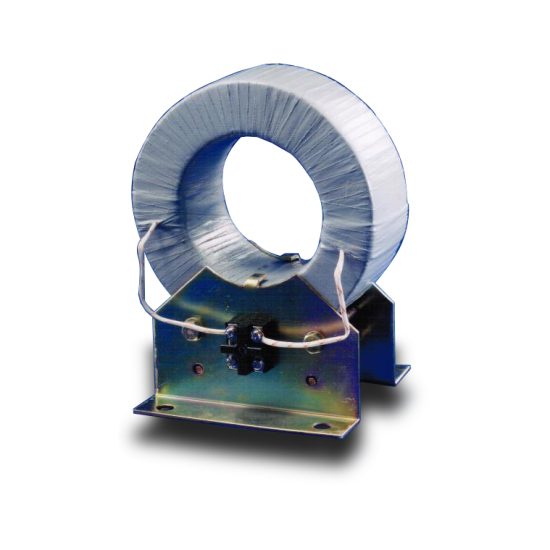
For Substation Metering & Protection: LJ-2 11kV Cast-Resin Current Transformer per IEC 61869-2
Introduction to the LJ-2 Current Transformer
The LJ-2 current transformer (CT) is a precision-engineered, cast-resin insulated instrument transformer designed for accurate current measurement and reliable protective relaying in 11kV (IEC-rated) or 10kV (domestic system equivalent) medium-voltage networks. As an indoor-type device conforming to IEC 61869-2 and GB/T 20840.2, the LJ-2 leverages advanced vacuum pressure impregnation (VPI) epoxy resin technology to encapsulate its magnetic core and windings, ensuring long-term dielectric stability, mechanical robustness, and resistance to environmental stressors such as humidity, dust, and partial discharge.
Operating Principle of Cast-Resin Insulation
Cast-resin insulation in the LJ-2 CT employs a two-component cycloaliphatic epoxy resin system cured under controlled vacuum and pressure conditions. This VPI process eliminates air voids and microcavities that could initiate partial discharges under sustained operating voltage. The resin fully encapsulates the primary conductor, secondary windings, and GOES (grain-oriented electrical steel) core, forming a monolithic structure with high thermal conductivity (0.2–0.3 W/m·K) and excellent tracking resistance (CTI > 600 V). Unlike oil-filled alternatives, the solid dielectric provides inherent fire safety (non-flammable, self-extinguishing per IEC 60695), eliminating risks of leakage, pollution, or maintenance-intensive oil sampling. The thermal class of the insulation system is rated at 105°C (Class A), supporting continuous operation at ambient temperatures up to 40°C with a 1.2× overload capability for 1 hour without degradation.
Advantages Over Oil-Immersed Designs
Compared to traditional oil-immersed CTs, the LJ-2’s cast-resin construction offers significant operational and safety benefits. It requires no periodic oil testing, degassing, or conservator tank maintenance, reducing lifecycle costs by up to 40% over a 25-year service life. Its compact footprint—typically 180 mm height × 120 mm width × 90 mm depth—facilitates integration into space-constrained switchgear cubicles (e.g., KYN28A-12 or RM6 types). The absence of flammable fluids enables safe deployment in indoor substations adjacent to commercial or residential zones, complying with IEC 62271-200 arc-flash containment requirements. Furthermore, the solid insulation exhibits superior performance under transient overvoltages (e.g., switching surges or lightning impulses), withstanding 75 kV peak lightning impulse voltage (1.2/50 μs waveform) without breakdown, as verified per IEC 60060-1.
Typical Applications Overview
The LJ-2 is engineered for dual-function roles: high-accuracy revenue metering (0.2S class) and dependable protection coordination (5P class). It is commonly deployed in urban distribution substations, industrial plant switchyards, and renewable energy interconnection points where precise energy billing and fast fault clearance are critical. For example, in a 10kV solar farm collector substation, the LJ-2 supplies scaled-down current signals to both a Class 0.2S kWh meter for grid export settlement and a 5P20 overcurrent relay for feeder protection. Its standardized secondary outputs (typically 5 A or 1 A) interface seamlessly with modern digital relays (e.g., Siemens 7SJ62) and smart meters (e.g., Landis+Gyr E470), ensuring interoperability across legacy and next-generation SCADA systems.
Technical Specifications
The LJ-2 current transformer delivers rigorously defined electrical and mechanical parameters aligned with international and domestic standards. Below is a comprehensive specification table followed by environmental and operational constraints.
| Parameter | Value |
|---|---|
| Rated Voltage (Ur) | 11 kV (IEC), 10 kV (GB) |
| Primary Current (Ip) | 50–3150 A (standard ratios: 50/5, 100/5, 200/5, 400/5, 600/5, 800/5, 1000/5, 1250/5, 1600/5, 2000/5, 2500/5, 3150/5) |
| Secondary Current (Is) | 5 A or 1 A (user-selectable) |
| Metering Accuracy Class | 0.2S (per IEC 61869-2, error ≤ ±0.2% at 1–120% In) |
| Protection Accuracy Class | 5P (composite error ≤ ±5% at 20× In) |
| Rated Output (Burden) | 5–30 VA (metering), 15–50 VA (protection) |
| Short-Time Thermal Current | 25 kA for 1 s (Ith) |
| Dynamic Withstand Current | 62.5 kA peak (Idyn) |
| Power Frequency Withstand Voltage | 28 kV rms for 1 min (phase-to-earth) |
| Lightning Impulse Withstand | 75 kV peak (1.2/50 μs) |
| Insulation Material | VPI cycloaliphatic epoxy resin + silica filler |
| Magnetic Core | GOES M5 grade, grain-oriented silicon steel, 0.23 mm lamination |
| Polarity | Reducing polarity (standard) |
| Weight | 8.5 kg (typical for 600/5 ratio) |
Standard Service Conditions
The LJ-2 is rated for indoor installation under standard service conditions as defined in IEC 61869-2 Clause 5. Ambient temperature range: –5°C to +40°C, with 24-hour average not exceeding +35°C. Relative humidity: ≤95% non-condensing at 25°C. Altitude: ≤1000 m above sea level; for installations between 1000–2000 m, derating factor of 1.1% per 100 m applies to thermal current ratings. The transformer must be mounted vertically with primary terminals oriented upward to ensure optimal heat dissipation and mechanical stability. Vibration levels should not exceed 0.7 g (RMS) in the 10–150 Hz frequency band, typical of industrial environments near large motors or compressors.
Accuracy and Burden Characteristics
The 0.2S metering class ensures compliance with stringent revenue metering requirements. At 1% of rated current (e.g., 6 A for a 600/5 CT), phase error is ≤ ±15 minutes and ratio error ≤ ±0.75%. At 100% In, errors tighten to ≤ ±5 minutes and ≤ ±0.2%, respectively. The 5P protection winding maintains composite error within ±5% up to 20× rated current (e.g., 12 kA primary for a 600/5 unit), enabling reliable operation of inverse-time overcurrent relays during high-magnitude faults. Burden compatibility is critical: connecting a 10 VA meter to a 30 VA-rated secondary winding introduces negligible error (<0.05%), but exceeding the rated burden (e.g., 40 VA on a 30 VA winding) can degrade accuracy beyond class limits.
Typical Applications
The LJ-2 current transformer serves diverse roles across power systems where precision, reliability, and compact design are paramount. Its dual-winding configuration (metering + protection) eliminates the need for separate CTs, optimizing panel space and cost.
Substation Secondary Metering
In 11kV/0.4kV distribution substations, the LJ-2 provides scaled current inputs to Class 0.2S kWh meters for utility-grade energy accounting. For instance, a municipal utility installing smart metering infrastructure across 50 urban substations specifies the LJ-2 (1000/5, 15 VA, 0.2S) to meet national regulatory requirements for billing accuracy. The cast-resin body resists condensation in unheated cabinets, while the low phase displacement (<10 minutes at 100% In) ensures minimal reactive energy measurement error. Integration with AMI (Advanced Metering Infrastructure) head-end systems is seamless due to stable secondary output over temperature cycles (±0.1% drift from –5°C to +40°C).
Industrial Power Distribution
Heavy industries—such as steel mills, chemical plants, and data centers—deploy the LJ-2 for motor feeder monitoring and load profiling. A 2 MW induction motor circuit operating at 10kV may use an LJ-2 (800/1, 30 VA, 0.2S + 5P20) to feed both a power quality analyzer (for harmonic distortion tracking) and a motor protection relay (for stall and thermal overload detection). The high short-circuit withstand (25 kA/1s) ensures survival during bus faults, while the 5P20 rating guarantees relay operation even with 20× overload current flowing through saturated downstream cables.
Renewable Energy Integration
Solar and wind farms require CTs that support bidirectional power flow measurement and fast fault response. The LJ-2’s symmetrical core design ensures identical accuracy for forward and reverse current directions—critical for net-metering agreements. In a 20 MW solar park, LJ-2 units (1250/5, 20 VA) on each 10kV collector feeder supply data to SCADA for real-time irradiance correlation and to distance relays for anti-islanding protection. The resin insulation’s UV resistance (tested per IEC 61215) allows outdoor cabinet mounting without degradation, though direct sunlight exposure should be minimized via shading.
Rural and Suburban Distribution Networks
In remote areas with limited maintenance access, the LJ-2’s maintenance-free design reduces outage risks. A rural cooperative replacing aging oil-CTs with LJ-2 units (400/5, 10 VA) reports 90% fewer field failures over five years. The compact size fits legacy ring-main units (RMUs), and the standardized terminal blocks (M8 bolts, 14 Nm torque) simplify retrofitting. Humidity resistance prevents insulation tracking in tropical climates, where relative humidity exceeds 90% for months.
Compliance with International Standards
The LJ-2 current transformer is certified to IEC 61869-2:2012 (“Instrument transformers – Part 2: Additional requirements for current transformers”) and GB/T 20840.2-2014 (“Instrument transformers – Part 2: Current transformers”), ensuring global interoperability and regulatory acceptance.
IEC 61869-2 Compliance Details
IEC 61869-2 defines performance criteria for accuracy, thermal stability, and dielectric strength. The LJ-2 meets all mandatory clauses: Clause 6 (rated values), Clause 7 (accuracy classes), Clause 8 (temperature rise ≤ 55 K for windings), and Clause 12 (type tests). Key verifications include: ratio error measured per IEC 61869-1 Annex B using a calibrated reference CT (uncertainty <0.02%); power frequency withstand tested at 28 kV rms for 60 s with leakage current <1 mA; and partial discharge magnitude <10 pC at 1.2 Um/√3 (where Um = 12 kV). All type-test reports are issued by accredited laboratories (e.g., KEMA, CESI) and remain valid for 10 years unless design changes occur.
Alignment with GB/T 20840.2
GB/T 20840.2 harmonizes with IEC 61869-2 but includes China-specific requirements. Notably, GB mandates a minimum short-circuit factor of 20 for 5P class (vs. IEC’s 10–30 range), which the LJ-2 satisfies with its 5P20 rating. Additionally, GB requires salt fog testing (48 h, 5% NaCl solution) for coastal installations—a test the LJ-2 passes with zero surface corrosion due to its hydrophobic resin formulation. While IEC permits 1 A or 5 A secondaries, GB utilities predominantly specify 5 A, influencing the LJ-2’s default configuration in domestic markets.
Testing and Certification Requirements
Every production batch undergoes routine tests per IEC 61869-2 Clause 13: visual inspection, winding resistance measurement (±2% tolerance vs. type-test value), turns ratio verification (±0.25% for 0.2S class), and power frequency withstand (28 kV/1 min). Type tests—conducted on prototype samples—include temperature rise (resistance method, ΔT ≤ 55 K), short-circuit withstand (25 kA/1 s, post-test ratio error shift <0.1%), and impulse voltage (75 kV peak, three positive and three negative shots). Certificates of Conformity (CoC) reference test report numbers and are traceable to ISO/IEC 17025-accredited facilities.
On-Site Testing Procedures
Post-installation verification ensures the LJ-2 performs within specifications. The following tests are mandatory per IEC 60185 and IEEE C57.13.
Insulation Resistance Test
Using a 2500 V DC megohmmeter, measure insulation resistance between primary-to-secondary, primary-to-ground, and secondary-to-ground. Acceptance criterion: ≥1000 MΩ at 25°C. Correct for temperature using RT2 = RT1 × 2(T1–T2)/10. Low readings (<100 MΩ) indicate moisture ingress or resin cracking—requiring replacement. Perform before and after dielectric tests to detect insulation damage.
Turns Ratio Test
Apply low-voltage AC (5–10 V) to the primary and measure secondary voltage. Calculate ratio as Vp/Vs; compare to nameplate (e.g., 600/5 = 120:1). Tolerance: ±0.25% for 0.2S class. Use a dedicated ratio tester (e.g., Omicron CT Analyzer) for automated comparison against factory data. Deviations >0.5% suggest winding shorts or incorrect tap selection.
Polarity Test
Verify reducing polarity using the DC kick method: connect a 6 V battery to P1–P2 and a center-zero galvanometer to S1–S2. Momentary closure should produce a positive deflection on S1. Incorrect polarity causes watt-hour meter reversal or relay misoperation. Digital testers (e.g., Doble M5500) automate this with <1° phase resolution.
Power Frequency Withstand Voltage Test
Apply 28 kV rms (50/60 Hz) between primary and grounded secondary/enclosure for 60 seconds. Monitor leakage current; it must remain <1 mA without flashover. Use a calibrated HV test set with automatic trip on breakdown. This test validates insulation integrity after transport-induced microcracks.
Short-Circuit Test (for CT)
Inject 10–20× rated current (e.g., 12 kA for 600/5) into the primary for 1–3 seconds. Verify secondary output remains linear (composite error ≤5% for 5P class). This confirms core saturation characteristics match design. Conduct only if relay settings demand high fault current validation.
Preventive Maintenance Guide
Although cast-resin CTs are maintenance-free, periodic checks extend service life and prevent unexpected failures.
Periodic Inspection Schedule
Conduct annual visual inspections: check for surface cracks, tracking marks, or terminal corrosion. Clean with dry cloth—never solvents. Every 5 years, perform insulation resistance and ratio tests. After any system fault (>10 kA), repeat all on-site tests. Record results in a logbook; trend analysis detects gradual degradation (e.g., rising IR values indicating moisture absorption).
Fault Diagnosis and Troubleshooting
Common issues include open-circuited secondaries (causing dangerous overvoltages) and core saturation from excessive burden. Symptoms: overheating (>70°C surface temp), abnormal hum, or metering discrepancies. If secondary opens, de-energize immediately—never attempt repair under voltage. Replace if ratio error exceeds 1% or IR drops below 500 MΩ. Never install fuses or switches in CT secondary circuits.
| Maintenance Interval | Tasks |
|---|---|
| Annual | Visual inspection, terminal torque check (14 Nm), cleaning |
| 5-Year | Insulation resistance, turns ratio, polarity verification |
| Post-Fault | Full on-site test suite (all 5 procedures) |
Conclusion
The LJ-2 11kV cast-resin current transformer represents a benchmark in medium-voltage instrumentation, combining metrological precision with rugged reliability. Its dual 0.2S/5P windings satisfy the most demanding metering and protection requirements in 10kV/11kV networks, while full compliance with IEC 61869-2 and GB/T 20840.2 ensures global acceptance. The VPI epoxy resin encapsulation eliminates fire hazards and maintenance burdens associated with liquid-filled alternatives, and the GOES silicon steel core delivers exceptional linearity across 1–120% of rated current. With a proven service life of 25–30 years under standard conditions—and resilience to harsh environments including high humidity, pollution, and transient overvoltages—the LJ-2 minimizes total cost of ownership while maximizing grid safety and revenue accuracy. Utilities, industrial operators, and renewable developers rely on its consistent performance for critical applications ranging from smart metering to fast-acting relay coordination. As power systems evolve toward digitalization and distributed generation, the LJ-2’s compact form factor and standardized interfaces position it as a future-proof solution for next-generation switchgear.