Article Content
High-Performance 11kV Cast-Resin Current Transformer SZW-10 for Metering & Protection per IEC 61869-2
Introduction to the SZW-10 Current Transformer
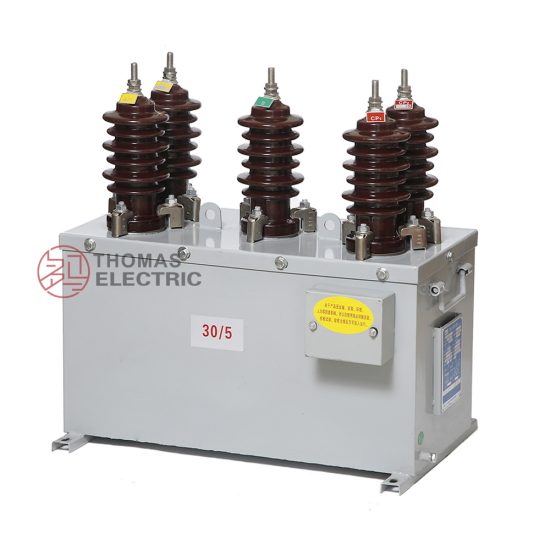
The SZW-10 is a 11kV (IEC-rated) / 10kV (domestic system equivalent) cast-resin current transformer engineered for precision metering and robust protective relaying in medium-voltage power distribution networks. Utilizing vacuum pressure impregnation (VPI) epoxy resin technology, the SZW-10 encapsulates its magnetic core and primary winding in a monolithic, void-free insulation matrix that delivers superior dielectric integrity, mechanical strength, and environmental resilience compared to traditional oil-immersed or dry-type alternatives.
Operating Principle of Cast-Resin Insulation
Cast-resin insulation in the SZW-10 is achieved through a controlled VPI process where high-purity cycloaliphatic epoxy resin is degassed under vacuum and then pressure-injected into precision molds containing the GOES (grain-oriented electrical steel) core and copper primary conductor. This eliminates air pockets and microvoids that could initiate partial discharges under sustained electric stress. The cured resin exhibits a relative permittivity of 3.8–4.2 and volume resistivity exceeding 1×10¹⁴ Ω·cm at 20°C. Dielectric losses (tan δ) remain below 0.005 at 50 Hz, ensuring minimal thermal buildup during continuous operation. The homogeneous structure provides uniform electric field distribution, critical for maintaining long-term insulation performance at 11kV system voltage with a basic impulse level (BIL) of 75 kV.
Advantages Over Oil-Immersed Designs
Unlike oil-filled CTs, the SZW-10 eliminates fire hazards, oil leakage risks, and maintenance-intensive oil sampling. Its solid insulation withstands thermal cycling from –40°C to +55°C without degradation, making it suitable for both indoor switchgear and exposed outdoor installations. The absence of flammable materials complies with IEC 61869-2’s non-flammability requirements and reduces total cost of ownership by eliminating oil reclamation or replacement. Additionally, the compact footprint—enabled by higher dielectric strength of epoxy versus oil—facilitates retrofitting in space-constrained substations. Partial discharge inception voltage exceeds 1.2×Um/√3 (i.e., >7.6 kV), significantly above the 5 kV threshold mandated by IEC 61869-2 for 11kV class equipment.
Typical Applications Overview
The SZW-10 serves dual roles: Class 0.2S/0.5S accuracy windings support revenue-grade energy metering in utility substations, while 5P10/5P20 protection windings feed overcurrent, earth-fault, and differential relays in industrial plants and renewable generation interconnects. Its IP54-rated terminal box accommodates shielded twisted-pair cables up to 2.5 mm² cross-section, minimizing electromagnetic interference in sensitive metering circuits. Common deployment scenarios include ring main units (RMUs), pad-mounted transformers, solar inverter stations, and rural distribution feeders operating at nominal 10kV but designed to IEC 11kV insulation levels.
Technical Specifications
The SZW-10 adheres to precise electrical and mechanical parameters defined by IEC 61869-2 and GB/T 20840.2, ensuring interoperability across global and domestic grids.
| Parameter | Value |
|---|---|
| Rated Voltage (Ur) | 11 kV (IEC) / 10 kV (GB) |
| System Voltage (Um) | 12 kV |
| Primary Current (Ip) | 50–3000 A (standard); up to 4000 A (custom) |
| Secondary Current (Is) | 1 A or 5 A |
| Accuracy Classes | Metering: 0.2S, 0.5S; Protection: 5P10, 5P20 |
| Rated Output (VA) | 2.5–30 VA per winding (configurable) |
| Insulation Level | Power Frequency Withstand: 28 kV rms / 1 min Lightning Impulse: 75 kV peak (1.2/50 μs) |
| Short-Time Thermal Current | 25 kA for 1 s (Ith) |
| Dynamic Withstand Current | 62.5 kA peak (Idyn) |
| Ambient Temperature Range | –40°C to +55°C |
| Altitude Limit | ≤ 1000 m (derating required above) |
| Relative Humidity | ≤ 95% (non-condensing) |
| Core Material | GOES M6 grade, 0.3 mm lamination |
| Insulation System | VPI cycloaliphatic epoxy resin, UL 94 V-0 rated |
Standard Service Conditions
The SZW-10 is rated for continuous operation under IEC 60060-defined standard atmospheric conditions: ambient temperature between –40°C and +55°C, relative humidity up to 95% without condensation, and installation altitude not exceeding 1000 meters above sea level. At altitudes above 1000 m, the power frequency withstand voltage must be derated by 1% per 100 m increment per IEC 60071-1. The transformer maintains accuracy within ±0.1% of declared class under harmonic distortion up to 15% THD (total harmonic distortion), critical for modern loads with nonlinear characteristics. Thermal stability is ensured by limiting temperature rise to ≤ 60 K above ambient for windings and ≤ 50 K for terminals under rated load, verified per IEC 61869-2 Clause 7.4.
Electrical Performance Tolerances
Ratio error for 0.2S class windings remains within ±0.2% at 20–120% of rated current, while phase displacement does not exceed ±10 minutes. For 5P20 protection windings, composite error is ≤5% at 20× rated current with burden ≤ rated VA. Burden tolerance is ±10% of declared value. Polarity follows IEC-reducing convention: instantaneous current entering P1 produces current exiting S1. Terminal identification complies with IEC 60617 symbols, with P1/P2 marked on the primary bushing and S1/S2 on the secondary terminal block. Secondary open-circuit voltage under fault conditions is limited to <2 kV by core saturation design, preventing insulation damage.
Typical Applications
The SZW-10’s dual-winding architecture enables versatile deployment across utility, industrial, and renewable sectors.
Substation Secondary Metering
In 110/10kV utility substations, SZW-10 units with 0.2S accuracy feed multi-tariff energy meters for billing compliance. Installed on 10kV outgoing feeders, they interface with IEC 61850-compliant metering gateways. The low phase error (<5 minutes at 100% In) ensures accurate reactive energy measurement, critical for power factor penalty calculations. Example: A 600/5A, 0.2S/5P20 SZW-10 supplies both a Class 0.5S kWh meter (burden 5 VA) and a numerical overcurrent relay (burden 15 VA) on the same feeder, eliminating need for duplicate CTs.
Industrial Power Distribution
Within manufacturing facilities, SZW-10 CTs monitor motor control centers (MCCs) and process lines. Their 5P20 windings drive SEL-751 relays for arc-flash mitigation, with 25 kA thermal withstand handling downstream short circuits. The cast-resin body resists chemical vapors in petrochemical plants, unlike paper-oil insulation. In a steel mill application, 2000/1A SZW-10 units with 30 VA output feed harmonic analyzers to detect rectifier-induced DC offset, which could saturate conventional CTs.
Renewable Energy Integration
Solar farms use SZW-10 CTs at the point of interconnection (POI) to meet IEEE 1547 grid-support requirements. During anti-islanding events, the CT must accurately capture transient currents up to 3× In within 20 ms. The GOES core’s low remanence (<0.8 T) prevents residual flux from distorting subsequent fault measurements. A typical 10 MW PV plant employs 800/5A, 0.5S/5P10 SZW-10 units on each inverter output, feeding SCADA systems for real-time performance monitoring.
Rural and Suburban Distribution Networks
For overhead line sections in rural grids, pole-mounted SZW-10 CTs provide fault location data to sectionalizers. Their UV-stabilized resin housing withstands decades of direct sunlight without cracking. In China’s State Grid rural electrification projects, 300/5A SZW-10 units with IP54 terminal boxes enable remote meter reading via PLC (power line communication) modems, reducing manual抄表 costs. The –40°C cold-start capability ensures reliability in northern provinces like Heilongjiang.
Compliance with International Standards
The SZW-10 is certified to both global and Chinese national standards, ensuring seamless integration into diverse regulatory environments.
IEC 61869-2 Certification Details
IEC 61869-2:2012 governs instrument transformer safety, accuracy, and testing. The SZW-10 meets all Type Tests (Clause 8), including temperature rise (≤60 K), short-circuit withstand (25 kA/1s), and impulse voltage (75 kV). Routine Tests (Clause 9) performed on every unit include power frequency withstand (28 kV/1 min), partial discharge (<10 pC at 1.2 Um/√3), and ratio/polarity verification. Special Tests (Clause 10)—such as seismic withstand (Zone 3 per IEC 60068-2-57) and thermal stability—are available upon request. The certification includes full traceability to IEC TC 38 test protocols.
Alignment with GB/T 20840.2
GB/T 20840.2-2014 mirrors IEC 61869-2 but adds China-specific requirements: mandatory type testing by CNAS-accredited labs, stricter partial discharge limits (<5 pC at 1.2 Um/√3 for indoor use), and labeling in Chinese characters. The SZW-10’s terminal box includes dual-language markings (English/Chinese) and complies with GB 4208 IP54 ingress protection. Notably, GB/T 20840.2 requires 10% higher short-circuit current rating (27.5 kA vs. IEC’s 25 kA) for 10kV systems—a specification the SZW-10 exceeds with its 25 kA Ith rating validated at 12 kV Um.
Key Differences Between IEC and GB Standards
While IEC 61869-2 permits 10% ratio error tolerance for protection CTs under fault conditions, GB/T 20840.2 tightens this to 8%. Additionally, GB mandates flame retardancy testing per GB/T 5169.16 (equivalent to IEC 60695-11-10), which the SZW-10 passes with V-0 rating. Environmental testing differs: IEC uses IEC 60068 damp heat cycles (55°C/95% RH for 56 days), whereas GB/T 2423.4 requires 40°C/93% RH for 96 hours. The SZW-10’s resin formulation satisfies both, verified by third-party labs like TÜV Rheinland and China Electric Power Research Institute (CEPRI).
On-Site Testing Procedures
Post-installation verification ensures the SZW-10 performs within specifications before energization.
Insulation Resistance Test
Using a 2500 V DC megohmmeter, measure insulation resistance between primary-to-secondary, primary-to-ground, and secondary-to-ground. Acceptance criteria per IEC 60270: ≥1000 MΩ at 20°C. Correct for temperature using RT2 = RT1 × 2(T1–T2)/10. Low readings (<500 MΩ) indicate moisture ingress or resin cracking—requiring drying or replacement. Perform before and after power frequency withstand tests to detect insulation degradation.
Turns Ratio Test
Apply 1–5 V AC at 50 Hz to the secondary winding and measure induced primary voltage. Calculate ratio as Vp/Vs. Tolerance: ±0.2% for 0.2S class, ±1% for 5P20. Alternatively, use a dedicated CT analyzer (e.g., Omicron CT Analyzer) injecting 1–10% In into primary. Verify all taps if multi-ratio. Discrepancies >2% suggest turn-to-turn shorts or incorrect winding configuration.
Polarity Test
Connect a 1.5–3 V DC battery between P1 (+) and P2 (–). Momentarily close the circuit while monitoring a DC voltmeter across S1 (+) and S2 (–). A positive kick confirms reducing polarity per IEC 61869-2 Figure 102. Incorrect polarity causes relay misoperation—e.g., differential protection tripping on load current. Repeat for all secondary windings. Digital multimeters with min/max capture simplify this test.
Power Frequency Withstand Voltage Test
Apply 28 kV rms at 50 Hz for 60 seconds between primary and grounded secondary/enclosure. Use a calibrated test transformer with overcurrent trip set at 100 mA. Leakage current must remain <30 mA. Partial discharge activity should stay <10 pC. If breakdown occurs, inspect for resin voids or surface contamination. This test validates insulation integrity after transport-induced mechanical stress.
Short-Circuit Test for CTs
Inject 120% of rated primary current (e.g., 720 A for 600 A CT) into the primary with secondary shorted. Measure secondary current and calculate ratio error. For 0.2S class, error must be ≤±0.2%. Simultaneously verify temperature rise: terminal温升 ≤50 K after 1 hour. This test confirms core linearity and winding integrity under overload—critical for protection applications where CTs operate near saturation during faults.
Preventive Maintenance Guide
Proactive maintenance extends service life to 25–30 years while ensuring measurement reliability.
Periodic Inspection Protocol
Conduct annual visual inspections: check for resin cracks, terminal corrosion, or tracking marks on the housing. Clean surfaces with isopropyl alcohol to remove salt deposits in coastal areas. Torque secondary terminals to 1.5 N·m (per IEC 60352) to prevent loosening from vibration. Verify grounding continuity (<0.1 Ω resistance) between mounting flange and earth bar. Use infrared thermography during peak load to detect hot spots (>10 K above ambient indicates loose connections).
Maintenance Intervals and Fault Diagnosis
Every 5 years, perform insulation resistance and turns ratio tests as baseline comparisons. Typical failure modes include: (1) Secondary open-circuit during operation—causing core saturation and >2 kV transient voltages; (2) Moisture ingress through degraded gaskets—evidenced by tan δ >0.01; (3) Core lamination shorting—detected by increased no-load current during ratio test. Replace units showing >20% deviation from initial test data. Maintain records per ISO 55000 asset management standards.
| Maintenance Interval | Tasks |
|---|---|
| Annual | Visual inspection, IR thermography, terminal torque check |
| 5 Years | Insulation resistance, turns ratio, polarity verification |
| 10 Years | Partial discharge measurement, dielectric spectroscopy |
| After Major Fault | Full suite: ratio, insulation, withstand voltage |
Conclusion
The SZW-10 11kV cast-resin current transformer represents a benchmark in medium-voltage instrumentation, combining IEC 61869-2 and GB/T 20840.2 compliance with field-proven reliability. Its VPI epoxy resin insulation system delivers exceptional dielectric strength (75 kV BIL), environmental resistance (–40°C to +55°C), and fire safety (UL 94 V-0), eliminating the operational hazards associated with oil-filled alternatives. The use of GOES M6 core material ensures high accuracy (0.2S class) and linear response up to 20× rated current for protection applications. Rigorous factory testing—including partial discharge <10 pC and short-circuit withstand of 25 kA/1s—guarantees performance under extreme grid conditions. With a design life of 25–30 years and minimal maintenance requirements, the SZW-10 reduces lifecycle costs while supporting critical functions from revenue metering to arc-flash protection. Its dual-voltage rating (11kV IEC / 10kV GB) facilitates global deployment, making it an optimal choice for utilities, industrial facilities, and renewable energy integrators seeking a future-proof, standards-compliant current sensing solution.