Article Content
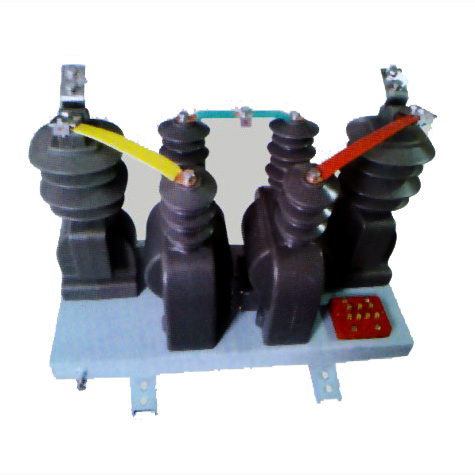
Outdoor/Indoor 11kV Cast-Resin Voltage Transformer AGE-1232 – IEC 61869-3 Compliant
Introduction to the AGE-1232 Voltage Transformer
The AGE-1232 is a precision-engineered, cast-resin insulated voltage transformer (VT) designed for reliable operation in 11kV medium-voltage networks, corresponding to the domestic 10kV system voltage commonly used in China and select regional grids. As a critical interface between high-voltage primary circuits and low-voltage secondary instrumentation, this VT enables accurate voltage measurement for revenue metering, protective relaying, and power quality monitoring. Its design adheres strictly to IEC 61869-3 and GB/T 20840.3, ensuring global interoperability and performance consistency.
Operating Principle of Cast-Resin Insulation
Cast-resin insulation in the AGE-1232 employs vacuum pressure impregnation (VPI) of cycloaliphatic epoxy resin around the magnetic core and windings. This process eliminates air voids and moisture ingress pathways, resulting in superior dielectric strength and partial discharge resistance—typically below 5 pC at 1.2 × Ur (rated voltage). The solid dielectric structure provides uniform electric field distribution, minimizing stress concentrations at winding terminations. Unlike oil-filled units, the resin matrix offers inherent fire resistance (compliant with IEC 60695 flammability tests), making it suitable for indoor installations near personnel or sensitive equipment. Thermal conductivity of the cured resin (~0.8 W/m·K) facilitates efficient heat dissipation from copper losses, supporting continuous operation under rated load without thermal runaway.
Advantages Over Oil-Immersed Designs
Compared to traditional oil-immersed VTs, the AGE-1232’s cast-resin construction eliminates risks associated with oil leakage, environmental contamination, and fire hazards. Maintenance requirements are significantly reduced—no oil sampling, degassing, or tank integrity checks are needed. The compact mechanical envelope allows for closer phase spacing in switchgear, reducing overall substation footprint. Additionally, the absence of liquid insulation ensures consistent performance across wide ambient temperature ranges (-40°C to +40°C), as resin properties remain stable without viscosity changes or gas evolution. Electromagnetic compatibility is enhanced due to the grounded metallic shield embedded within the resin, which attenuates external interference affecting secondary accuracy.
Typical Application Overview
The AGE-1232 is deployed across utility substations, industrial plants, renewable energy farms, and commercial complexes where precise voltage transformation is essential. In 11kV ring main units (RMUs), it supplies signals to digital multifunction meters and overvoltage relays. In solar photovoltaic (PV) substations, it enables grid synchronization and anti-islanding protection by providing accurate phase-angle data. Its robust design supports both indoor switchgear mounting and outdoor pole-top configurations with appropriate IP-rated enclosures (typically IP54). Secondary outputs are standardized at 100 V or 110 V (line-to-line) and 100/√3 V or 110/√3 V (phase-to-neutral), compatible with global metering and protection device inputs.
Technical Specifications
The AGE-1232 is engineered to meet stringent electrical and environmental performance criteria under IEC 61869-3. Key parameters are defined for both international (11kV) and domestic (10kV) system voltages, ensuring flexibility across markets.
| Parameter | Value |
|---|---|
| Primary Rated Voltage (Ur) | 11 kV (IEC) / 10 kV (GB) |
| Secondary Rated Voltage | 100 V, 110 V, or 100/√3 V, 110/√3 V |
| Voltage Ratio | 11000/100, 11000/110, 11000/(100/√3), etc. |
| Accuracy Class (Metering) | 0.2, 0.5 (per IEC 61869-3) |
| Accuracy Class (Protection) | 3P, 6P |
| Rated Output (VA) | 25, 50, 100 VA (selectable per burden requirement) |
| Insulation Level (Um) | 12 kV |
| Lightning Impulse Withstand | 75 kV peak (1.2/50 μs) |
| Power Frequency Withstand | 28 kV rms for 1 min |
| Core Material | Grain-oriented electrical steel (GOES), M4 grade |
| Insulation System | VPI cycloaliphatic epoxy resin, UL 94 V-0 rated |
| Ambient Temperature Range | -40°C to +40°C |
| Altitude Limit | ≤ 1000 m (derating required above) |
| Relative Humidity | ≤ 95% non-condensing |
Rated Voltage and System Compatibility
The AGE-1232 is rated for 11kV systems per IEC 60038, which corresponds to a highest voltage for equipment (Um) of 12kV. This aligns with standard European and international MV networks. For Chinese domestic applications operating at nominal 10kV, the same unit is utilized without modification, as the insulation coordination (28 kV power frequency withstand and 75 kV lightning impulse) exceeds the requirements for 10kV class equipment (typically 24 kV and 60 kV respectively). This dual-compatibility simplifies inventory management for multinational utilities.
Accuracy and Burden Characteristics
Metering accuracy classes 0.2 and 0.5 guarantee voltage transformation errors within ±0.2% and ±0.5% respectively at 80–120% of rated voltage and 25–100% of rated burden. Protection classes 3P and 6P limit composite error to ≤3% and ≤6% under fault conditions up to 5× rated voltage. The GOES core minimizes hysteresis and eddy current losses, ensuring stable ratio and phase angle performance across temperature cycles. Burden selection must account for total secondary circuit impedance—including wiring resistance and instrument input impedance—to avoid exceeding the rated VA and degrading accuracy.
Typical Applications
The AGE-1232 serves diverse roles in modern power systems, leveraging its high accuracy, reliability, and environmental resilience.
Substation Secondary Metering
In 11kV/0.4kV distribution substations, the AGE-1232 provides voltage inputs to Class 0.2S revenue meters for billing purposes. Its low phase displacement (<±10 minutes at 0.2 class) ensures accurate kWh and kVARh integration. When paired with matching current transformers (CTs), it forms part of a complete metering core compliant with IEC 62053-22. The VT is typically installed in the incoming feeder or bus section, with secondary cabling routed to a centralized metering panel. Redundant VTs may be employed for critical feeders to support dual-metering architectures.
Industrial Power Distribution
Large manufacturing facilities use the AGE-1232 for power quality monitoring and motor protection. In arc furnace or rolling mill applications, voltage sags and swells are captured via waveform recorders connected to the VT secondary. Overvoltage relays (e.g., 59-type) utilize the 3P-class output to detect sustained overvoltages that could damage capacitor banks or drive systems. The cast-resin design resists chemical fumes and dust common in industrial environments, eliminating the need for sealed enclosures beyond standard IP54.
Renewable Energy Integration
Solar and wind farms integrate the AGE-1232 into collector substation switchgear to enable grid code compliance. It supplies voltage phasor data to synchrophasor measurement units (PMUs) and provides inputs to vector shift relays for islanding detection. During low-voltage ride-through (LVRT) events, the VT must maintain accuracy down to 15% of nominal voltage—a requirement met by the low-excitation characteristics of the GOES core. Outdoor installations benefit from UV-stabilized resin housing, preventing degradation under prolonged solar exposure.
Rural and Suburban Distribution Networks
In remote areas with limited maintenance access, the AGE-1232’s maintenance-free operation is critical. Mounted on pole-top platforms alongside reclosers, it enables remote voltage monitoring via SCADA systems. The lightweight design (≈45 kg) simplifies helicopter or manual lifting during installation. Its immunity to freezing temperatures prevents the operational failures seen in oil-filled units during winter months, ensuring year-round reliability in temperate and arctic climates.
Compliance with International Standards
The AGE-1232 is certified to IEC 61869-3:2011 (Instrument transformers – Part 3: Additional requirements for inductive voltage transformers) and GB/T 20840.3-2013 (identical adoption of IEC 61869-3 in China).
IEC 61869-3 Certification Requirements
Compliance mandates rigorous type testing, including temperature rise (≤60 K for resin at rated burden), short-circuit withstand (not applicable for VTs, but open-circuit stability verified), and electromagnetic compatibility (EMC) per IEC 61000-4 series. Partial discharge measurements must not exceed 10 pC at 1.2 × Ur/√3 for phase-to-ground units. Accuracy verification is performed across the full operating range (20–120% Ur, 25–100% burden) using calibrated reference standards traceable to national laboratories. Each production unit undergoes routine tests: turns ratio, polarity, and power frequency withstand.
Alignment with GB/T 20840.3
GB/T 20840.3 mirrors IEC 61869-3 but includes supplementary clauses for Chinese grid conditions, such as enhanced seismic withstand (0.3g horizontal acceleration) and stricter humidity cycling tests. The AGE-1232 meets these through reinforced core clamping and moisture-resistant terminal seals. Domestic certification requires approval from CEPREI or similar bodies, with test reports archived for grid operator audits. Notably, GB permits 10kV nominal systems, while IEC specifies 11kV; the AGE-1232 bridges this gap via its 12kV Um rating.
Key Differences Between IEC and GB Standards
While harmonized, minor differences exist: GB/T 20840.3 mandates a 1-minute power frequency test at 30 kV for 10kV class VTs (vs. 28 kV in IEC for 11kV), reflecting conservative local practices. Additionally, GB requires secondary terminal markings in Chinese characters alongside IEC symbols. The AGE-1232 accommodates both through dual-language nameplates and marginally higher insulation margins. EMC immunity levels are identical, ensuring seamless deployment in cross-border projects like Belt and Road infrastructure.
On-Site Testing Procedures
Post-installation verification ensures the AGE-1232 performs within specification before energization.
Insulation Resistance Test
Using a 2500 V DC megohmmeter, measure insulation resistance between primary winding and ground, and between primary and secondary windings. Acceptance criterion: ≥1000 MΩ at 20°C. Correct for temperature using RT = R20 × 2(20−T)/10. Low values indicate moisture ingress or resin cracking—requiring drying or replacement. Perform before and after power frequency withstand tests to detect insulation degradation.
Turns Ratio Test
Apply a low-voltage AC signal (50–100 V) to the primary and measure secondary voltage with a calibrated voltmeter. Calculate actual ratio and compare to nameplate. Tolerance: ±0.2% for 0.2-class VTs. Use a dedicated ratio bridge (e.g., Omicron CT Analyzer) for automated comparison. Deviations beyond tolerance suggest winding shorts or incorrect tap selection.
Polarity Test
Verify reducing polarity per IEC 61869-3: momentarily apply DC voltage to primary (H1 positive, H2 negative); observe secondary voltage spike direction on an oscilloscope or analog meter. The instantaneous positive deflection at X1 confirms correct polarity. Incorrect polarity causes 180° phase reversal, leading to metering errors or relay misoperation in differential schemes.
Power Frequency Withstand Voltage Test
Apply 28 kV rms at 50 Hz between primary and grounded secondary/core for 1 minute. Monitor for flashover, excessive leakage current (>1 mA), or audible discharge. Conduct at 80% of factory test voltage if retesting after transport. Ensure all secondary terminals are shorted and grounded during the test to prevent resonant overvoltages.
Open-Circuit Characteristic Test
Gradually increase primary voltage from 0 to 190% Ur while measuring secondary voltage and excitation current. Plot the knee-point curve; saturation should occur above 150% Ur. Excessive excitation current at nominal voltage indicates core defects or shorted turns. This test validates performance under ferroresonance conditions common in isolated neutral systems.
Preventive Maintenance Guide
Although cast-resin VTs require minimal maintenance, periodic checks extend service life and prevent unexpected failures.
Annual Visual and Electrical Inspection
Inspect for surface tracking, UV degradation (chalky residue), or mechanical damage. Clean terminals with isopropyl alcohol; check torque on bolted connections (8–10 N·m). Perform insulation resistance and ratio tests annually in harsh environments (coastal, industrial). Record trends—declining insulation resistance or rising excitation current may precede failure.
Five-Year Comprehensive Assessment
Every 60 months, conduct partial discharge measurement using IEC 60270 methods. Acceptable level: ≤10 pC at 1.2 × Ur/√3. Also verify secondary burden impedance matches original design—added meters or longer cables can overload the VT. Replace silica gel breathers if present (though rare in cast-resin units), and inspect grounding continuity (<0.1 Ω).
Maintenance Intervals and Fault Diagnosis
| Interval | Action | Fault Indicator |
|---|---|---|
| Annually | Visual inspection, IR test | Cracks, discoloration, IR <500 MΩ |
| 5 Years | PD test, burden verification | PD >15 pC, ratio error >0.5% |
| After Fault | Full suite of commissioning tests | Relay misoperation, meter drift |
Common faults include secondary winding opens (causing infinite burden and core saturation) and terminal corrosion (increasing contact resistance). Never operate with secondary open—this induces dangerous overvoltages.
Conclusion
The AGE-1232 11kV cast-resin voltage transformer represents a benchmark in medium-voltage instrumentation, combining IEC 61869-3 and GB/T 20840.3 compliance with robust engineering for global deployment. Its VPI epoxy resin insulation delivers exceptional dielectric integrity, fire safety, and environmental resilience, outperforming legacy oil-immersed alternatives in both indoor and outdoor settings. Precision GOES cores ensure metrological stability across temperature and burden variations, supporting accuracy classes as tight as 0.2 for revenue metering and 3P for critical protection functions. With a design service life of 25–30 years under standard operating conditions, the AGE-1232 minimizes lifecycle costs through maintenance-free operation and high reliability. Its dual compatibility with 11kV (IEC) and 10kV (domestic) systems streamlines procurement for multinational utilities and industrial operators. Rigorous type testing and adherence to international standards guarantee consistent performance, making it an optimal choice for modern substations, renewable integration points, and industrial power networks demanding accuracy, safety, and longevity.
Frequently Asked Questions (FAQ)
Q1: Can the AGE-1232 be used on a 10kV system even though it’s rated 11kV?
Yes. The AGE-1232 is rated for 11kV per IEC 60038, which defines the standard system voltage for 12kV class equipment (Um = 12kV). Many regions, including China, operate nominal 10kV networks that fall within this Um category. The transformer’s insulation levels (28 kV power frequency withstand, 75 kV lightning impulse) exceed the minimum requirements for 10kV systems (typically 24 kV and 60 kV), ensuring safe and compliant operation. No derating or modification is necessary.
Q2: What is the maximum altitude for installation without derating?
The standard AGE-1232 is rated for altitudes up to 1000 meters above sea level. Above this, air density decreases, reducing dielectric strength. For installations between 1000–2000 m, the power frequency withstand voltage must be reduced by 1% per 100 m increment above 1000 m. Alternatively, specify an altitude-corrected version with enhanced creepage distance and internal shielding during ordering.
Q3: Is the secondary winding polarity marked according to IEC standards?
Yes. Primary terminals are labeled H1 (high potential) and H2 (grounded end). Secondary terminals follow IEC 61869-3: X1 denotes the polarity-marked terminal (instantaneously positive when H1 is positive), and X2 is the return. Reducing polarity is standard, ensuring compatibility with metering and protection devices that assume this convention. Nameplates include both IEC symbols and, for GB compliance, Chinese character equivalents.
Q4: How does temperature affect accuracy?
The AGE-1232 maintains specified accuracy (e.g., 0.2 class) across -5°C to +40°C ambient. Outside this range, ratio error may drift by up to ±0.1% per 10°C deviation due to copper resistance and core permeability changes. However, the cast-resin matrix provides excellent thermal stability compared to oil, with minimal expansion mismatch between windings and insulation. For extreme climates, select models with extended temperature compensation windings.
Q5: Can multiple metering devices be connected to one AGE-1232?
Yes, provided the total secondary burden (sum of all device VA ratings plus wiring losses) does not exceed the VT’s rated output (e.g., 50 VA). Calculate burden as Zb = V2/S, where V is secondary voltage (e.g., 100 V) and S is total apparent power. For example, two 10 VA meters and 2 Ω wiring resistance yield Zb = (100)2/(20) = 500 Ω equivalent, but actual impedance is √(R2 + X2). Always verify with a burden calculator to avoid accuracy degradation.
Q6: What causes ferroresonance, and how is the AGE-1232 protected?
Ferroresonance occurs in isolated-neutral systems when VT magnetizing reactance resonates with system capacitance during single-phase switching. The AGE-1232 mitigates this through a low-saturation GOES core and optional damping resistors (typically 100–500 Ω, 500 W) connected across secondary windings. These dissipate resonant energy, limiting overvoltages to <2.0 pu. System studies should confirm resonance risk before installation.
Q7: Are there special handling requirements during transport?
Yes. Although robust, the AGE-1232 must be transported upright to prevent mechanical stress on bushings. Avoid impacts exceeding 5g (verified by shock indicators). Store indoors if possible; prolonged outdoor storage requires covering to prevent UV exposure and moisture accumulation on terminals. Before commissioning, perform insulation resistance and ratio tests to confirm integrity after transit.
Q8: How does the AGE-1232 compare to dry-type wound VTs?
Dry-type wound VTs use taped or molded insulation without full resin encapsulation, offering lower cost but reduced partial discharge performance and moisture resistance. The AGE-1232’s VPI cast-resin process creates a monolithic, void-free structure with superior long-term reliability, especially in humid or polluted environments. It also provides better short-circuit mechanical strength due to rigid core-winding bonding. For critical applications, cast-resin is preferred despite higher initial cost.