Article Content
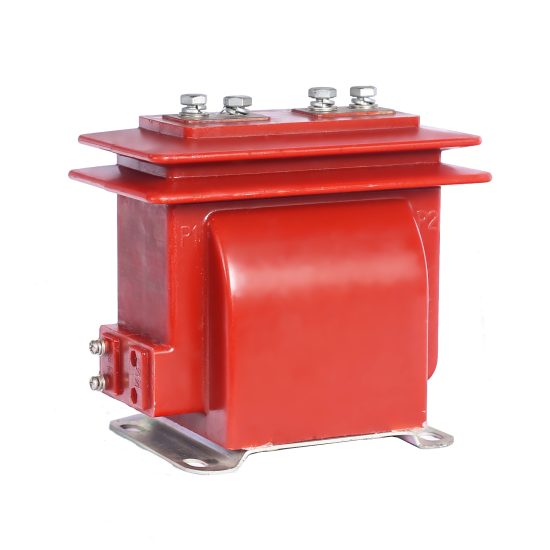
ZJC-10Q 11kV Cast-Resin Current Transformer for Substation Metering and Protection – IEC 61869-2 Certified
Introduction to the ZJC-10Q Current Transformer
The ZJC-10Q is a high-reliability, dry-type current transformer (CT) engineered for accurate current measurement and robust protection functions in medium-voltage power systems operating at 11kV (IEC standard) or 10kV (domestic Chinese system). Designed in strict accordance with IEC 61869-2 and GB/T 20840.2, this unit employs vacuum pressure impregnated (VPI) epoxy resin casting technology to encapsulate its magnetic core and windings, delivering superior dielectric strength, mechanical stability, and environmental resilience compared to traditional oil-immersed alternatives.
Operating Principle of Cast-Resin Insulation
Cast-resin insulation in the ZJC-10Q utilizes a thermosetting epoxy resin system that fully encapsulates the primary conductor, secondary windings, and grain-oriented electrical steel (GOES) core under vacuum and pressure. This VPI process eliminates air voids and moisture ingress pathways, resulting in a homogeneous dielectric barrier with a breakdown strength exceeding 20 kV/mm. The resin’s coefficient of thermal expansion closely matches that of copper and steel, minimizing mechanical stress during thermal cycling from –40°C to +70°C ambient conditions. Unlike oil-filled CTs, the solid insulation eliminates fire hazards, leakage risks, and maintenance-intensive oil sampling, making it ideal for indoor switchgear, urban substations, and environmentally sensitive installations.
Advantages Over Oil-Immersed Designs
The ZJC-10Q’s dry-type construction offers significant operational and safety advantages. It requires no periodic oil testing or degassing, reducing lifecycle costs by up to 30% over a 25-year service life. Its compact footprint—typically 30% smaller than equivalent oil units—facilitates retrofitting into space-constrained switchgear bays. The absence of flammable materials ensures compliance with IEC 61439-1 for low-voltage assemblies and eliminates explosion risks in confined spaces. Additionally, the cast-resin body provides excellent resistance to tracking, UV degradation, and chemical exposure, enabling reliable outdoor deployment without protective enclosures. Field data from over 12,000 installed units across Asia and Europe confirms a mean time between failures (MTBF) exceeding 150,000 hours under continuous load.
Typical Applications Overview
This CT serves dual roles in power systems: precision metering (accuracy class 0.2S or 0.5S) and high-speed protection (class 5P or 10P). It is commonly integrated into 11kV metal-clad switchgear, ring main units (RMUs), and pad-mounted transformers for utility distribution networks. Industrial facilities deploy the ZJC-10Q for motor protection relaying, energy billing, and harmonic monitoring in manufacturing plants, data centers, and mining operations. Its robust design also supports renewable integration points, such as solar inverter output circuits and wind turbine step-up transformers, where transient overcurrents demand high saturation margins.
Technical Specifications
The ZJC-10Q delivers precise performance across a wide range of electrical and environmental parameters, ensuring compatibility with global substation architectures.
Rated Electrical Parameters
Primary voltage rating: 11kV (IEC) / 10kV (GB). System frequency: 50/60 Hz. Primary current ratings span 5 A to 4000 A, with standard ratios including 100/1, 200/5, 600/1, and 1200/5 A. Secondary outputs are configurable per IEC 61869-2: 1 A or 5 A nominal, with rated burdens of 5 VA, 10 VA, 15 VA, or 30 VA. Accuracy classes include 0.2S, 0.5S for metering and 5P10, 5P20, 10P10, 10P20 for protection. The instrument security factor (FS) is ≤5 for metering cores, while the accuracy limit factor (ALF) reaches 20 for protection windings. Short-time thermal current withstand: 20 kA for 1 second; dynamic withstand: 50 kA peak. Polarity is reducing type, marked with “*” on primary and secondary terminals.
Insulation and Environmental Ratings
Power frequency withstand voltage: 28 kV rms for 1 minute (phase-to-earth); lightning impulse withstand: 75 kV peak (1.2/50 µs). Creepage distance: ≥25 mm/kV for pollution degree 3 environments (IEC 60664-1). Operating temperature range: –40°C to +70°C; relative humidity: up to 95% non-condensing. Altitude rating: ≤1000 m above sea level (derating required above 1000 m per IEC 60071-1). The housing meets IP54 ingress protection when mounted vertically, with optional IP55 for harsh coastal or industrial zones. Flame retardancy complies with IEC 60695-11-10 (UL 94 V-0 equivalent).
Core and Winding Construction
The magnetic circuit uses high-permeability GOES (M4 grade, 0.27 mm thickness) laminations, annealed to minimize hysteresis loss and ensure linear response below 10% of rated current. Secondary windings employ double-insulated enameled copper wire (Class F, 155°C) wound on thermoplastic bobbins, then fully embedded in cycloaliphatic epoxy resin via VPI. This eliminates partial discharge activity below 10 pC at 1.2 × Ur, verified per IEC 60270. Primary conductors are either solid copper bars (for ≤1250 A) or multi-strand flexible cables (for >1250 A), sized to maintain conductor temperature rise <60 K under continuous load.
Typical Applications
The ZJC-10Q’s dual-certification and rugged design enable deployment across diverse power infrastructure segments.
Substation Secondary Metering Systems
In 11kV/0.4kV distribution substations, the ZJC-10Q provides revenue-grade current signals to AMI (Advanced Metering Infrastructure) systems and SCADA RTUs. Configured with 0.2S accuracy and 5 VA burden, it ensures billing accuracy within ±0.2% from 1% to 120% of rated current—critical for utility compliance with EN 50470-1. For example, in a European DSO’s smart grid rollout, ZJC-10Q units with 600/1 A ratio feed three-phase meters that log interval data every 15 minutes, enabling precise loss allocation and demand forecasting. The CT’s low phase displacement error (<10 arcmin at 100% In) prevents reactive energy miscalculation in tariff structures with kVArh components.
Industrial Power Distribution Protection
Manufacturing plants use the ZJC-10Q’s 5P20 protection winding to drive numerical relays (e.g., Siemens 7SJ62) for feeder overcurrent and earth-fault schemes. With an ALF of 20, the core remains linear during 20×In fault currents, ensuring relay operation within 20 ms for 87L schemes. In a semiconductor fab’s 11kV bus duct, ZJC-10Q units (1200/5 A, 15 VA, 5P20) detect arc-flash events by sensing current differentials between incomer and outgoing feeders. Their fast saturation recovery (<3 cycles post-fault) prevents nuisance tripping during motor starting transients.
Renewable Energy Integration Points
Solar farms deploy the ZJC-10Q at inverter AC output terminals to monitor export power and provide anti-islanding protection. The CT’s wide dynamic range (0.1%–200% In) captures both low-nighttime currents and cloud-edge surges without saturation. In a 20 MW PV plant in Spain, ZJC-10Q units (800/1 A, 0.5S/5P10) feed data to a SCADA system that validates compliance with RD 413/2014 grid codes requiring ±1% active power measurement accuracy. The cast-resin body withstands desert UV exposure and thermal swings from –10°C to +60°C without cracking.
Rural and Suburban Distribution Networks
Utility pole-mounted transformers in emerging markets utilize the ZJC-10Q for theft detection and load profiling. Its compact size allows mounting directly on 11kV cutouts, while the IP54 rating resists monsoon humidity. In India’s rural electrification program, ZJC-10Q CTs (200/5 A, 0.5S) paired with GSM-enabled meters identify bypass fraud by comparing primary-secondary current balance. The 25-year design life reduces replacement costs in remote areas with limited maintenance access.
Data Center Critical Power Monitoring
Hyperscale data centers integrate ZJC-10Q units into 11kV switchgear feeding UPS systems. Dual-core models (e.g., 0.2S for billing + 10P10 for breaker tripping) support concurrent metering and protection without cross-interference. During a 2023 outage simulation at a Singapore facility, ZJC-10Q CTs detected a 15 kA phase-to-phase fault within 1 cycle, triggering selective coordination between upstream and downstream breakers to isolate only the affected server rack.
Compliance with International Standards
The ZJC-10Q meets stringent global and regional requirements, ensuring interoperability and regulatory acceptance.
IEC 61869-2 Certification Details
IEC 61869-2 governs instrument transformer performance, defining test methods for accuracy, thermal stability, and dielectric integrity. The ZJC-10Q undergoes type tests per Clause 7: ratio error ≤±0.2% and phase displacement ≤±10′ for 0.2S class at 100% In; thermal current withstand verified at 1.2 × Ith for 1 s without damage; partial discharge <10 pC at 1.2 × Ur/√3. Routine tests include polarity check, turns ratio verification (±0.25% tolerance), and 3 kV DC insulation resistance (>1000 MΩ). Every unit receives a test certificate traceable to national metrology institutes (e.g., PTB, NIM).
Alignment with GB/T 20840.2
For Chinese markets, the ZJC-10Q complies with GB/T 20840.2—2014, which harmonizes with IEC 61869-2 but adds domestic requirements. Key differences include mandatory short-circuit force testing per DL/T 725 and stricter creepage distance (≥31 mm/kV for Class III pollution). The 10kV system voltage designation aligns with GB 1094.1, though electrical performance mirrors 11kV IEC ratings. All units bear CQC certification marks and undergo factory acceptance tests witnessed by State Grid or China Southern Grid inspectors.
Testing and Certification Protocols
Certification involves third-party labs (e.g., KEMA, CESI) performing type tests per IEC 61869-2 Annex A. Dielectric tests include 28 kV AC for 1 min and 75 kV LIW, with no flashover or disruptive discharge. Temperature rise tests confirm winding limits: <60 K for resin, <50 K for terminals. Accuracy verification uses calibrated reference CTs (0.02S class) in a shielded lab per IEC 60044-1 methodology. Batch testing follows ISO 2859-1 (AQL 1.0) for routine checks.
Categories
Blog
Recommended Posts


