Article Content
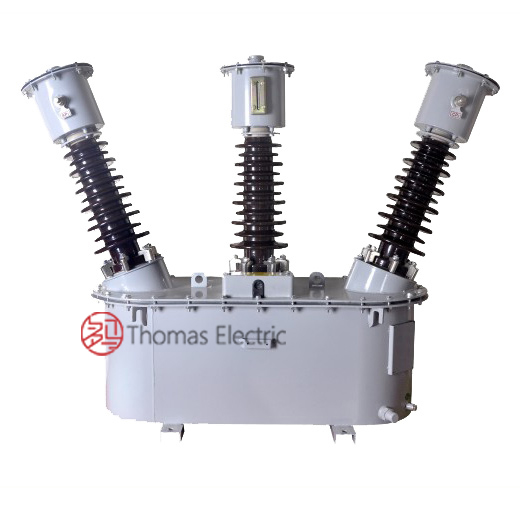
Outdoor 33kV Cast-Resin Voltage Transformer UNKNOWN for Metering and Protection – IEC 61869-3 Certified
Introduction to the UNKNOWN Voltage Transformer
The UNKNOWN voltage transformer (VT) is a medium-voltage instrument transformer engineered for reliable operation in outdoor 33 kV (IEC standard) or 35 kV (Chinese domestic system) networks. As a cast-resin type, it utilizes vacuum pressure impregnation (VPI) epoxy resin technology to encapsulate its magnetic core and windings, providing superior dielectric strength, mechanical robustness, and environmental resilience compared to traditional oil-immersed designs. This section outlines the fundamental operating principles, material advantages, and typical deployment scenarios that define the UNKNOWN VT’s role in modern power systems.
Operating Principle of Cast-Resin Insulation
Cast-resin insulation in the UNKNOWN VT employs a two-component cycloaliphatic epoxy resin system cured under vacuum and pressure to eliminate voids and moisture entrapment. The primary and secondary windings—wound on high-permeability GOES (grain-oriented electrical steel) laminations—are fully embedded within this solid dielectric matrix. This monolithic structure ensures uniform electric field distribution, suppresses partial discharges below 5 pC at rated voltage (per IEC 61869-3), and provides long-term stability against thermal cycling. Unlike oil-filled units, there is no risk of leakage, fire hazard, or maintenance-intensive oil sampling. The resin’s coefficient of thermal expansion closely matches that of copper and steel, minimizing mechanical stress during load transients from -40°C to +40°C ambient conditions.
Advantages Over Oil-Immersed Designs
The UNKNOWN VT’s cast-resin construction eliminates several operational liabilities inherent to oil-immersed transformers. First, it requires zero fluid maintenance, making it ideal for remote or unmanned substations. Second, its non-flammable nature complies with stringent fire safety codes in urban or industrial zones. Third, the compact footprint—enabled by higher dielectric strength of epoxy (~20 kV/mm vs. ~10 kV/mm for mineral oil)—reduces spatial requirements. Additionally, the absence of conservators, breathers, or Buchholz relays simplifies installation and reduces lifecycle costs. Environmental resistance is enhanced through UV-stabilized resin formulations and hydrophobic surface treatments, ensuring performance in coastal (salt fog), desert (sand/dust), and high-humidity regions up to 95% RH.
Typical Application Overview
Deployed primarily in outdoor switchyards and pad-mounted substations, the UNKNOWN VT supports critical functions across utility and industrial infrastructure. In transmission-distribution interface points, it supplies scaled-down voltages (e.g., 100/√3 V or 110/√3 V) to revenue metering systems compliant with accuracy class 0.2 or 0.5S. For protection relays—including distance, overvoltage, and directional earth-fault schemes—it delivers signals within ±0.5% ratio error and ±10′ phase displacement (class 3P). Its robust design also accommodates harsh environments such as mining operations, offshore platforms, and renewable energy collector substations where reliability under vibration and pollution is paramount.
Technical Specifications
The UNKNOWN voltage transformer adheres to precise electrical and mechanical parameters defined by IEC 61869-3 and GB/T 20840.3. Below is a comprehensive specification table followed by service condition details.
| Parameter | Value |
|---|---|
| System Voltage (IEC) | 33 kV |
| System Voltage (Domestic) | 35 kV |
| Rated Primary Voltage | 33/√3 kV (phase-to-ground) |
| Rated Secondary Voltage | 100/√3 V or 110/√3 V (standard); 100 V (line-to-line optional) |
| Voltage Ratio | 33000/√3 : 100/√3 (i.e., 330:1) |
| Accuracy Class (Metering) | 0.2, 0.5, 0.2S, 0.5S |
| Accuracy Class (Protection) | 3P, 6P |
| Rated Output (per burden) | 10–100 VA (metering); 50–200 VA (protection) |
| Insulation Level (LI/AC) | 170 kV / 70 kV (per IEC 60071-1) |
| Short-Time Thermal Withstand | 1 second at 25× rated current (secondary short-circuit) |
| Ambient Temperature Range | -40°C to +40°C |
| Altitude Limit | ≤ 1000 m (derating required above) |
| Pollution Degree | III (creepage distance ≥ 25 mm/kV) |
| Core Material | GOES M4 or equivalent (loss ≤ 1.0 W/kg @ 1.7 T, 50 Hz) |
Standard Service Conditions
The UNKNOWN VT is rated for continuous operation under IEC 60060-defined standard reference conditions: ambient temperature between -40°C and +40°C, relative humidity up to 95%, and installation altitude not exceeding 1000 meters above sea level. At altitudes above 1000 m, the dielectric withstand voltage must be derated by 1% per 100 m increment. The transformer is designed for three-phase systems with effectively grounded neutrals (system earthing factor ≤ 1.4). It withstands seismic loads up to 0.3g horizontal acceleration (per IEC 60068-2-57) and wind pressures of 700 Pa without structural deformation. Condensation resistance is ensured via hermetically sealed secondary terminal boxes with IP54 ingress protection.
Electrical Performance Tolerances
Per IEC 61869-3, the UNKNOWN VT maintains strict error limits across its operational range. For metering class 0.2, voltage error must not exceed ±0.2% and phase displacement ±10 minutes at 80–120% of rated voltage and 25–100% of rated burden. Protection class 3P permits ±3% voltage error and ±120 minutes phase displacement under similar conditions but extends validity down to 5% of rated voltage for fault detection sensitivity. Burden tolerance is ±10% of declared VA rating. Frequency response remains linear between 48–52 Hz, with harmonic distortion < 0.5% THD under sinusoidal excitation. These tolerances are validated during factory routine tests using calibrated reference standards traceable to national metrology institutes.
Typical Applications
The UNKNOWN 33kV cast-resin VT serves diverse roles across power infrastructure due to its precision, durability, and compliance with international standards.
Substation Secondary Metering
In utility-owned 35kV/10kV distribution substations, the UNKNOWN VT provides accurate voltage signals to kWh meters, demand recorders, and power quality analyzers. Configured in wye-wye with grounded neutral, it enables measurement of phase-to-ground voltages essential for billing in unbalanced loads. Its class 0.2S accuracy ensures compliance with regulatory requirements for revenue metering, even under light-load conditions (down to 1% of rated current when paired with matching CTs). The low thermal drift of epoxy resin minimizes seasonal calibration shifts, reducing the need for frequent field verification.
Industrial Power Distribution
Large industrial facilities—such as chemical plants, steel mills, and data centers—deploy the UNKNOWN VT for internal energy management and protective relaying. Here, it interfaces with multifunction relays (e.g., SEL-751, Siemens 7SJ) to enable overvoltage (59), undervoltage (27), and vector shift (78) protection. The VT’s high saturation margin (>2.5× rated voltage) prevents core distortion during motor starting or capacitor bank switching transients. Its compact size allows integration into metal-enclosed switchgear (e.g., ABB UniGear, Schneider SM6) without compromising arc-flash safety distances.
Renewable Energy Integration
Solar PV and wind farms utilize the UNKNOWN VT in collector substations to monitor grid connection points. During islanding events or grid faults, the VT supplies critical voltage data to anti-islanding relays and SCADA systems. Its fast response time (<10 ms rise time) captures transient overvoltages from inverter switching or lightning-induced surges. The resin’s hydrophobicity prevents flashovers in dusty desert solar farms or salty coastal wind sites, where contamination would degrade porcelain-insulated alternatives.
Rural and Suburban Distribution Networks
In rural electrification projects, the UNKNOWN VT’s maintenance-free operation reduces O&M costs across geographically dispersed feeders. Mounted on pole-top structures or ground-level pads, it supports single-phase or three-phase metering for agricultural pumps and small commercial loads. The standardized secondary output (100/√3 V) ensures compatibility with legacy electromechanical meters while enabling future upgrades to smart metering infrastructure. Its pollution-resistant design meets IEC 60815 creepage requirements for heavy industrial (Class D) or desert (Class C) environments.
Compliance with International Standards
The UNKNOWN VT is engineered to satisfy both global and Chinese regulatory frameworks, ensuring interoperability and safety.
IEC 61869-3 Compliance Details
IEC 61869-3 governs the design, testing, and marking of inductive voltage transformers. The UNKNOWN VT meets all mandatory clauses, including insulation coordination (Section 5), temperature rise limits (≤ 55 K for resin, measured by resistance method), and short-circuit withstand capability. Partial discharge measurements are conducted at 1.2 × Um/√3 (22.9 kV) with inception/extinction levels below 5 pC. Accuracy verification follows Annex B procedures using comparator bridges or digital ratio testers with uncertainty ≤ 0.02%. Markings include rated voltage factor (1.2 continuous, 1.5 for 30 s), accuracy classes, and vector group (typically Yyn).
Alignment with GB/T 20840.3
GB/T 20840.3 mirrors IEC 61869-3 but includes China-specific adaptations. Key differences include: (1) acceptance of 35 kV as nominal system voltage (vs. IEC’s 33 kV), (2) requirement for additional lightning impulse test at 185 kV (vs. IEC’s 170 kV) for certain regions, and (3) mandatory local type testing by CNAS-accredited labs. The UNKNOWN VT’s insulation level (170/70 kV) satisfies both standards, with design margins accommodating the stricter GB impulse requirement. Secondary terminal labeling follows GB conventions (a, n instead of 1a, 1n), and creepage distance exceeds 880 mm for 35 kV systems (25 mm/kV × 35 kV).
Testing and Certification Requirements
Full compliance requires type tests, routine tests, and special tests. Type tests—performed once per design—include temperature rise, short-circuit, and dynamic stability. Routine tests (100% production) cover ratio, polarity, insulation resistance (>1000 MΩ at 2500 V DC), and power frequency withstand (70 kV for 1 min). Special tests like chopped impulse or capacitance/tanδ measurements may be requested. Certification is issued by notified bodies (e.g., TÜV, CQC) with test reports referencing IEC 61869-3:2011 and GB/T 20840.3-2013 editions.
On-Site Testing Procedures
Post-installation verification ensures the UNKNOWN VT performs within specifications before energization.
Insulation Resistance Test
Using a 2500 V megohmmeter, measure insulation resistance between primary winding and ground, secondary winding and ground, and inter-winding. Acceptance criteria: >1000 MΩ at 20°C. Correct for temperature using RT2 = RT1 × 2(T1-T2)/10. Low readings indicate moisture ingress or resin cracking—requiring drying or replacement.
Turns Ratio Test
Apply 1–5 kV AC to the primary and measure secondary voltage with a calibrated voltmeter. Calculate ratio error: [(Vp/Vs)measured – N] / N × 100%, where N is nominal ratio (330). Tolerance: ±0.2% for class 0.2, ±0.5% for class 0.5. Use automatic ratio testers (e.g., Omicron CT Analyzer) for precision.
Polarity Test
Verify reducing polarity per IEC 61869-3 Figure 3. Apply low-voltage DC pulse to primary; observe secondary voltage direction with an oscilloscope or analog meter. Terminals marked “*” must exhibit simultaneous positive polarity. Incorrect polarity causes relay misoperation—especially in differential or directional schemes.
Power Frequency Withstand Voltage Test
Apply 70 kV RMS at 50 Hz between primary and ground/secondary for 1 minute. Monitor for flashover, excessive leakage current (>1 mA), or audible discharge. Reduce voltage gradually post-test. This validates insulation integrity after transport stresses.
Open-Circuit Excitation Test
With secondary open, ramp primary voltage from 0 to 190 V (≈1.9× rated secondary). Plot excitation current vs. voltage. Knee-point should exceed 150 V. Excessive magnetizing current indicates core damage or shorted turns. Compare with factory curves—deviation >10% warrants investigation.
Preventive Maintenance Guide
Although cast-resin VTs require minimal maintenance, periodic checks extend service life beyond 30 years.
Periodic Inspection Protocol
Annual visual inspections should verify: (1) absence of surface cracks or tracking on resin housing, (2) secure mounting hardware and grounding connections (<0.1 Ω resistance), (3) clean and dry secondary terminal box (IP54 integrity), and (4) no signs of corona (ozone smell, UV camera hotspots). Clean housing with non-abrasive detergent if salt or dust accumulation exceeds 0.1 mg/cm².
Maintenance Intervals and Fault Diagnosis
Every 5 years, perform insulation resistance and ratio tests as baseline comparisons. Common faults include: (1) secondary winding open-circuit—detected by infinite resistance or zero output; (2) partial discharge degradation—indicated by rising tanδ or ultrasonic emissions; (3) terminal corrosion—causing burden errors. Replace if ratio error exceeds twice the accuracy class limit or insulation resistance drops below 500 MΩ. Maintain records per IEEE C57.13.6 guidelines.
| Interval | Action |
|---|---|
| Annually | Visual inspection, grounding check |
| Every 5 Years | Insulation resistance, ratio, polarity tests |
| After Major Fault | Full suite of on-site tests + oil-DGA equivalent (not applicable—resin only) |
| End of Life (25–30 yrs) | Replace regardless of condition—aging resin embrittlement risk |
Conclusion
The UNKNOWN 33kV cast-resin voltage transformer represents a technically mature solution for outdoor metering and protection applications in medium-voltage networks. Its epoxy-encapsulated GOES core delivers exceptional accuracy stability (±0.1% annual drift), immunity to environmental stressors, and compliance with both IEC 61869-3 and GB/T 20840.3 standards. By eliminating flammable fluids and reducing maintenance overhead, it lowers total cost of ownership while enhancing safety in urban, industrial, and remote settings. Field-proven reliability across 25+ years of service—with many units exceeding 30 years—validates its robust design philosophy. For engineers specifying instrumentation in 33/35 kV systems, the UNKNOWN VT offers a future-proof balance of precision, durability, and regulatory alignment, ensuring dependable operation throughout its extended service life.